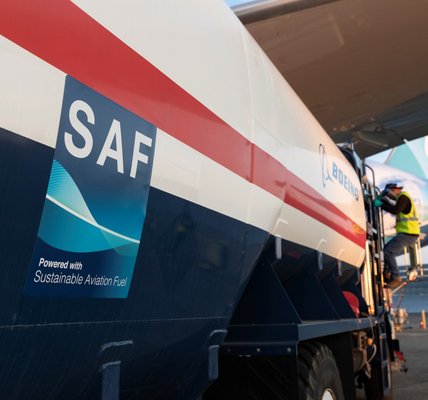




















- India has formally recognised SAF-blended aviation fuel within its regulated ATF framework, giving legal and technical clarity to airlines, refiners and airports while introducing a phased SAF blending roadmap for international flights up to 2030.
- India’s SAF push is now moving beyond pilot projects into commercial-scale development, with companies such as Praj Industries, GPS Renewables, Honeywell, TruAlt Bioenergy and Indian Oil advancing ethanol-to-jet fuel production and supply partnerships.
- India’s large agricultural residue base and expanding ethanol ecosystem could support a major SAF industry, but scaling production will still require significant investment, policy incentives, supply-chain development and long-term market support.
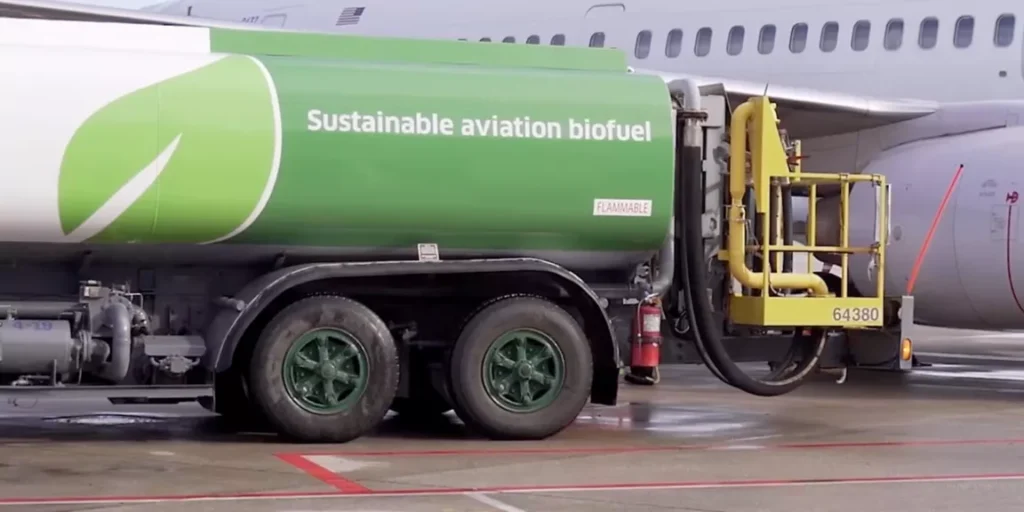
Photo: Honeywell
For years, Sustainable Aviation Fuel (SAF) in India remained confined to conference discussions, pilot projects, and policy wish lists. Airlines spoke about it, refiners explored it, and aviation forums debated it, but commercial-scale momentum remained limited. But all that changed on April 17, 2026.
In what is now viewed as India’s biggest SAF policy breakthrough yet, the Ministry of Petroleum and Natural Gas amended the Aviation Turbine Fuel (Regulation of Marketing) Order, 2001, formally bringing SAF-blended Aviation Turbine Fuel under India’s regulated fuel framework.
The move’s impact is significant. For the first time, SAF blends have received formal regulatory recognition alongside conventional jet fuel, removing one of the largest barriers slowing adoption—legal and regulatory uncertainty.
The notification also updated Indian fuel standards—IS 1571 and IS 17081—to include synthesised hydrocarbon blends, ensuring SAF-blended fuel remains fully compatible with existing aircraft engines, airport infrastructure and fuel supply systems.
The government also reaffirmed its SAF blending roadmap for international flights: 1 per cent by 2027, 2 per cent by 2028 and 5 per cent by 2030. These targets align India with the mandatory phase of the International Civil Aviation Organisation’s Carbon Offsetting and Reduction Scheme for International Aviation (CORSIA), which begins in 2027. For India’s aviation sector, this represents a structural shift rather than another symbolic announcement.
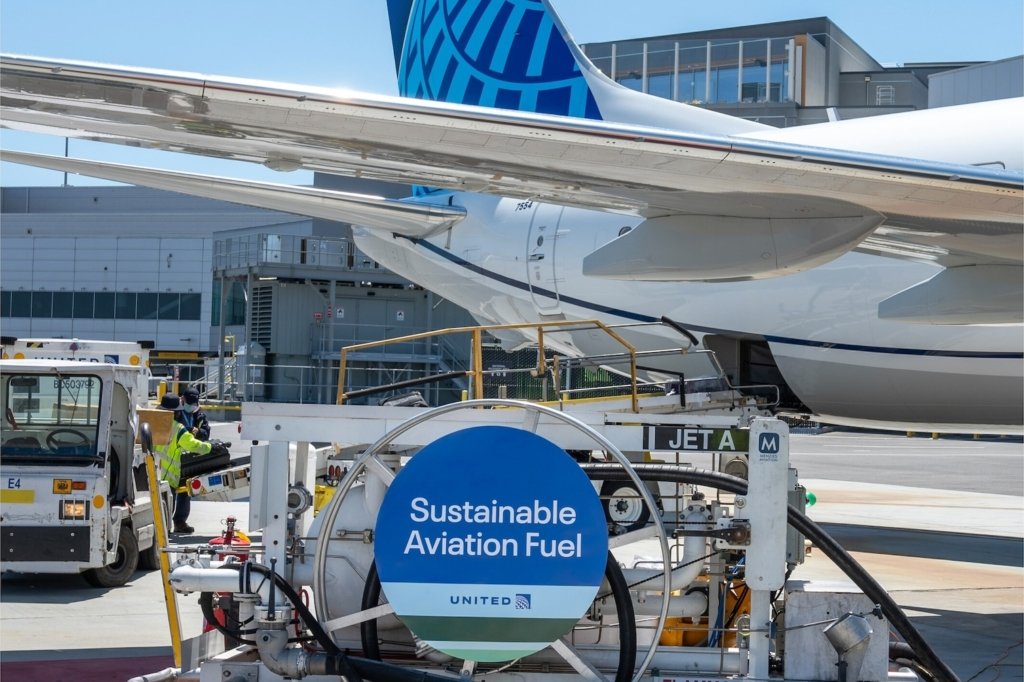
Unlike Europe and parts of the United States, where SAF production is often constrained by feedstock shortages, India believes it possesses a critical advantage: agricultural waste.
The country generates vast quantities of crop residue annually. SAF producers now see that same biomass as a future aviation fuel source.
The April 17 notification has effectively opened the doors for multiple production pathways, particularly Alcohol-to-Jet (ATJ) and Ethanol-to-Jet (ETJ) technologies. The strategy aligns with India’s rapidly expanding ethanol ecosystem, developed through its petrol-blending programme.
Rather than relying on used cooking oil, as many Western SAF producers do, India is attempting to leverage its ethanol surplus and agricultural base to create a domestic aviation fuel industry while reducing crude oil imports, which still account for nearly 85-87 per cent of India’s oil dependency.
The industry is now moving from experimentation towards commercial production. At the forefront is Indian Oil Corporation’s Panipat refinery, which became the first Indian refinery to receive ISCC CORSIA certification for SAF production in August 2025. The refinery is upgrading an existing diesel desulphuriser unit to produce SAF using used cooking oil, targeting annual production of 30,000 metric tonnes.
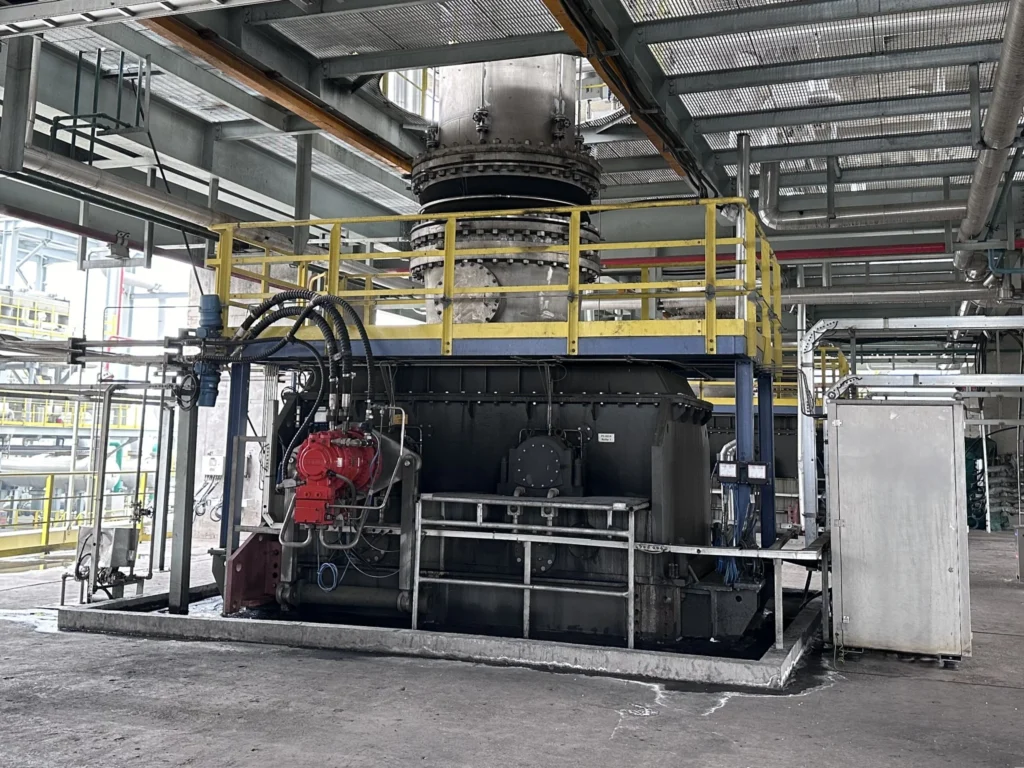
India’s first commercial-scale Ethanol-to-Jet SAF plant is also taking shape in Andhra Pradesh.
The project, being developed by NTPC and GPS Renewables at Atchuthapuram, will use technology licensed from Lummus Technology. The facility is expected to produce 1,800 tonnes of SAF annually.
Hindustan Petroleum Corporation Limited has a SAF demonstration plant at its Visakh refinery using co-processing technology that integrates used cooking oil into existing refinery systems. The company plans to scale production to 10,000 metric tonnes annually from January 2027.
Meanwhile, Bharat Petroleum Corporation Limited is developing SAF units across Kochi, Mumbai and Bina refineries, exploring both HEFA and Alcohol-to-Jet pathways. Its first dedicated SAF facility is expected later this year.
Another major development came when Honeywell and TruAlt Bioenergy announced plans for one of India’s largest dedicated SAF facilities with a projected annual production capacity of 80,000 tonnes.
Indian airlines are also moving to secure future SAF supply lines ahead of mandatory blending rules. Air India has partnered with Indian Oil Corporation to source ISCC CORSIA-certified SAF from Panipat and is also working with the Council of Scientific and Industrial Research and Indian Institute of Petroleum on indigenous SAF development.
The Tata Group’s airlines—Air India and Air India Express—are collaborating with CSIR-IIP on Single Reactor HEFA technology for producing “drop-in” SAF compatible with existing aircraft. Vistara earlier demonstrated operational viability through a Seattle-Delhi ferry flight using a 30 per cent SAF blend.
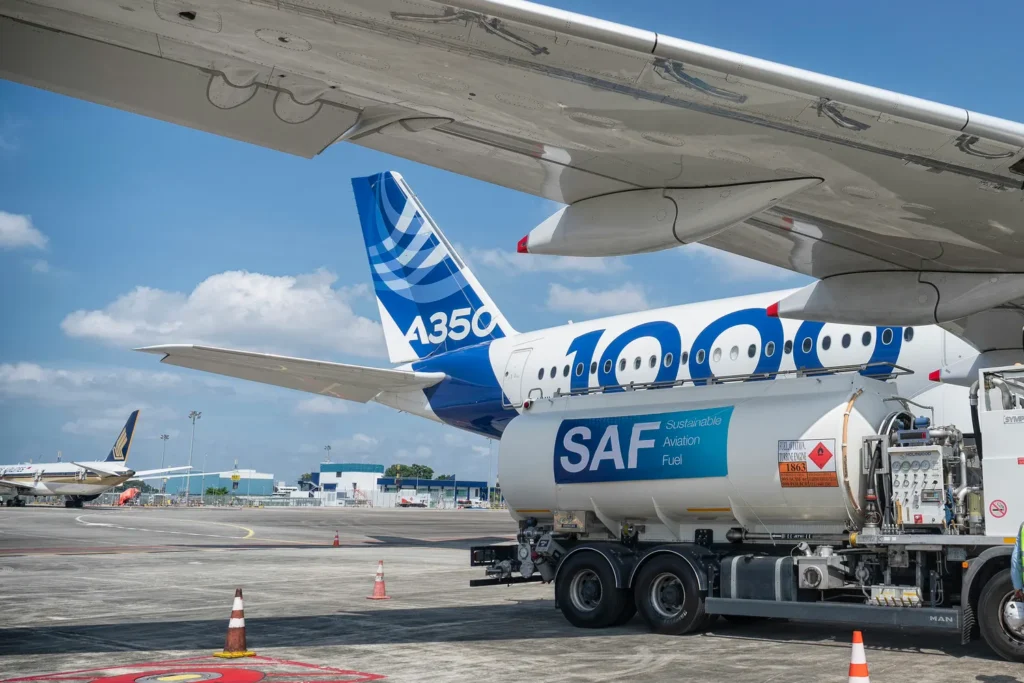
IndiGo partnered with CSIR-IIP in 2021 and is part of the global “Clean Skies for Tomorrow” initiative targeting 10 per cent SAF usage by 2030. Akasa Air has similarly adopted a multi-partner SAF strategy through agreements with Indian Oil and HPCL.
Despite the policy push, SAF remains far more expensive than conventional jet fuel. Industry stakeholders are now seeking production-linked incentives, tax support and carbon credit mechanisms to make SAF commercially viable at scale. The real challenge now is scale—and whether India can build a competitive SAF ecosystem quickly enough before the global aviation industry’s green transition leaves late movers behind.
Also Read: Air India’s Search for Its Next Maharaja

With more than four decades across print and audiovisual media, Tirthankar (TG) Ghosh is a veteran journalist specialising in aviation, air cargo and logistics. His reporting combines deep industry knowledge, original research and sharp analysis to produce authoritative, evidence-led journalism.