



- Korean Air has implemented Ramco’s Aviation Suite at its Engine Maintenance Center, integrating maintenance, finance and support functions into a single platform.
- Over 400 mechanics and engineers at the facility are now using mobile-based digital tools to carry out maintenance tasks, replacing manual processes.
- The platform will support Korean Air’s planned 2027 engine maintenance cluster, positioned as Asia’s largest engine MRO hub.
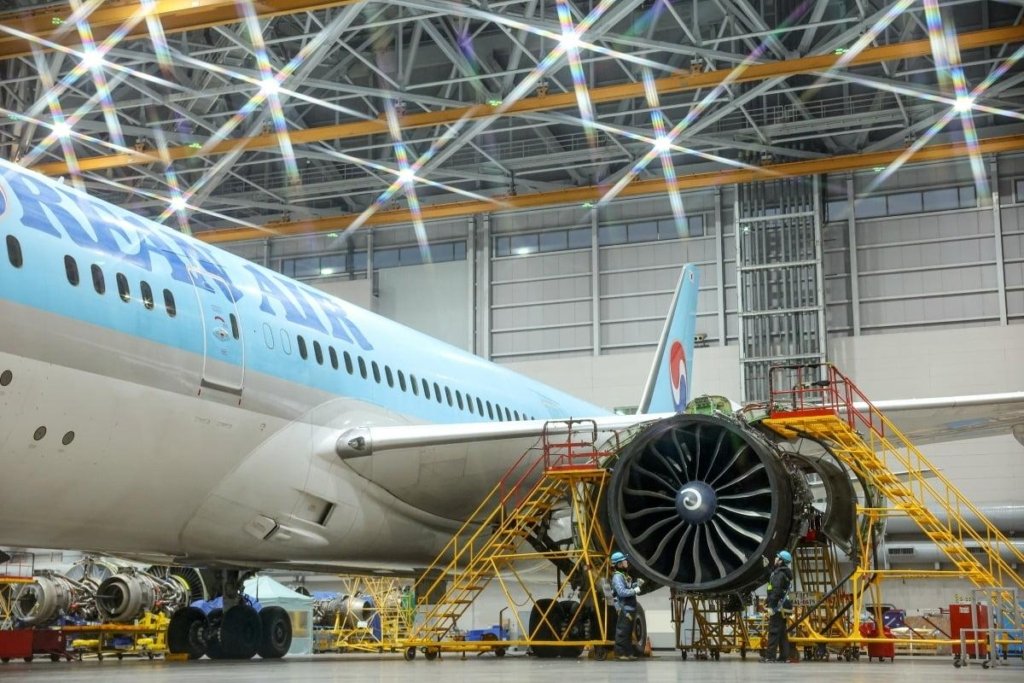
Korean Air has implemented Ramco Systems’ Aviation Suite at its Engine Maintenance Centre, bringing engine maintenance, finance, customer support and billing functions onto a single integrated platform as part of its broader maintenance strategy.
The Aviation Suite is an enterprise software platform designed to manage end-to-end aviation maintenance operations, covering planning, engineering, execution and compliance across line, base and engine maintenance, while integrating supply chain, inventory and financial systems within a single environment.
The platform also links with Korean Air’s automated storage and retrieval system, supporting warehouse management, and connects the airline with suppliers and customers through standardised digital interfaces.
At the operational level, the system provides real-time visibility into engine maintenance activity, including production throughput, capacity utilisation, cost structures and revenue performance.
This allows management to monitor performance against workload and financial metrics more closely, particularly in a segment where turnaround time and cost control remain critical.
Supporting scale-up of engine MRO capabilities
The implementation is aligned with Korean Air’s plans to expand its engine maintenance operations through a new engine maintenance cluster scheduled to open in 2027, which the airline has positioned as Asia’s largest engine MRO hub.
The Ramco platform is expected to form part of the digital backbone for this expansion, supporting increased volumes and operational complexity as capacity scales. Korean Air has an established history in engine overhauls, having begun such work in 1976 and rebuilding nearly 5,000 engines for both its own fleet and third-party operators.
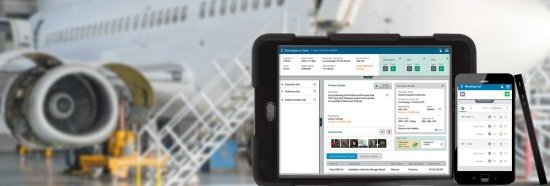
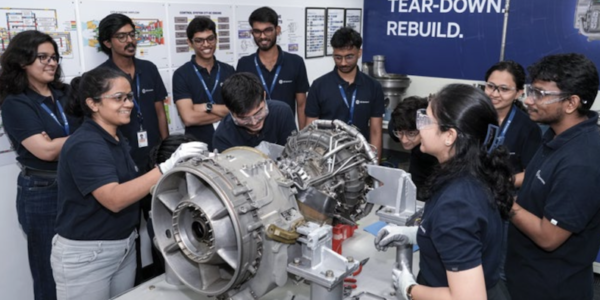
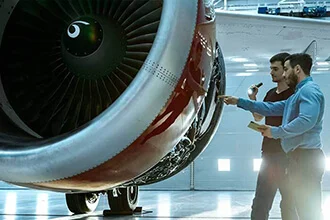
As part of the transition, more than 400 mechanics and engineers at Korean Air’s Engine Maintenance Centre are now using Ramco’s “Mechanic Anywhere” mobile application to carry out maintenance tasks digitally.
The shift away from manual documentation is intended to reduce process delays, improve workflow efficiency and support faster turnaround of engines through the shop.
Chan Woo Jung, Senior Vice President and Head of Maintenance & Engineering Division at Korean Air, said the implementation reflects a broader operational shift. “This milestone represents a bold step toward redefining how we operate in the aviation industry. By partnering with Ramco, we are embracing a digital-first approach that will allow us to scale with confidence and deliver exceptional value, addressing the complexity and precision required in engine maintenance where efficiency is critical to meeting customer demands.”
He added: “Looking ahead, this transformation supports our vision for our upcoming engine maintenance cluster, where predictive maintenance, real-time intelligence and data-driven, automated processes will enable us to achieve new levels of operational excellence and agility.”
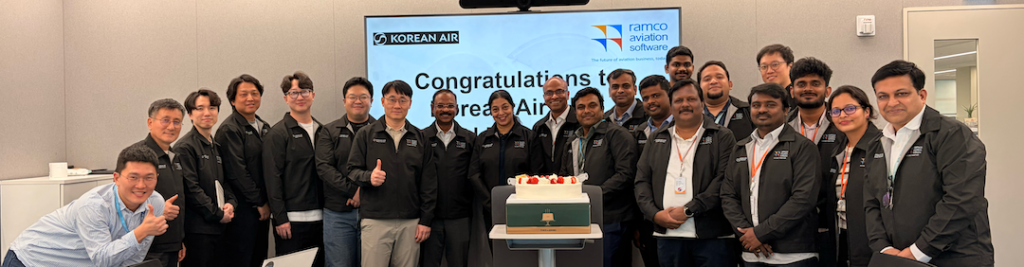
Photo: Ramco
Sam Jacob, Executive Vice President and SBU Head – Aviation, Aerospace and Defence at Ramco Systems, said: “It has been an honour to work with Korean Air to digitally transform their engine maintenance operations. Through real-time visibility, mobile-first workflows and seamless integration, we enable forward-thinking organisations like Korean Air to lead the industry with speed and resilience.”
He added: “With this digital transformation, Korean Air is future-proofing operations for an era of smart and sustainable maintenance, repair and overhaul.”
Ramco’s aviation software is used by more than 90 aviation organisations globally, supporting over 24,000 users managing more than 4,000 aircraft across airlines, third-party MRO providers, helicopter operators and defence organisations.
Also Read: Safran: Advancing Hybrid-Electric Propulsion for the Next Generation