









AISATS’s Multi-Modal Cargo Hub at Noida International Airport: North India’s Gateway to Global Trade


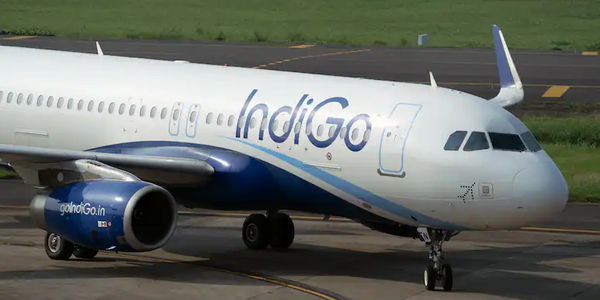
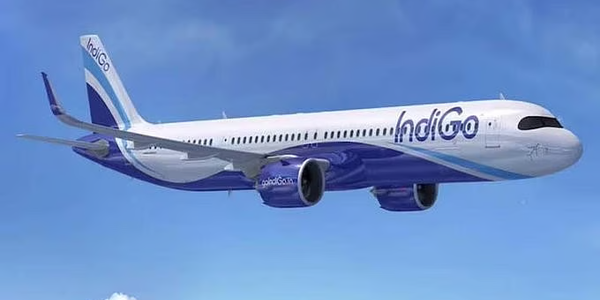
With commercial operations at Noida International Airport set to begin on June 15, 2026, the countdown has truly begun for what could become North India’s most transformative cargo gateway. While passenger airlines such as IndiGo prepare to launch services connecting Jewar with more than 16 Indian cities, the airport’s cargo ecosystem is positioning itself for a far larger strategic role—linking the manufacturing clusters of the Yamuna Expressway region with global supply chains.
At the heart of this transformation is AISATS, whose Multi-Modal Cargo Hub is designed not merely as another cargo terminal, but as a digitally integrated logistics ecosystem bringing together warehousing, bonded trucking, cold-chain infrastructure and multimodal connectivity under one umbrella. In this interview, Ramanathan Rajamani, CEO of AISATS, explains to Tirthankar Ghosh how Noida International Airport could emerge as a globally competitive cargo hub to drive India’s next phase of export growth.
With the inauguration complete and domestic cargo operations expected to commence, what are the specific ‘Day One’ milestones for the Integrated Cargo Terminal (ICT) that forwarders should look out for?
AISATS is redefining India’s cargo and logistics landscape with its Multi-Modal Cargo Hub (MMCH) at Noida International Airport (NIA). Designed to address the growing demands of India’s expanding trade and manufacturing sectors, the hub represents a significant step forward in strengthening the country’s logistics efficiency and global competitiveness.
While the airport has recently been inaugurated, commercial flight operations are expected to commence in due course, with the start of domestic cargo operations aligned accordingly. Our Integrated Cargo Terminal at the MMCH is equipped to handle approximately 255,000 metric tonnes of cargo annually in its initial phase, with scalability built into its design to accommodate future growth.
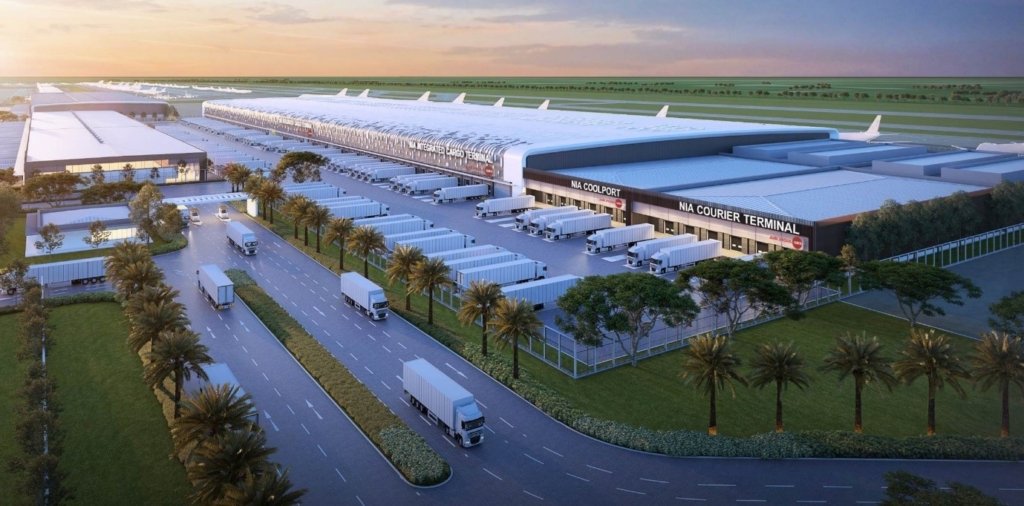
This futuristic infrastructure will provide freight forwarders with warehousing facilities, a Consolidation Centre, streamlined truck processing, digital shipment documentation, mechanised cargo handling, and several other features to ensure smooth onboarding.
Our immediate priority is to establish predictable turnaround times, transparent cargo visibility, and dependable service levels from the very first day of operations. We want the trade community to experience a facility built around speed, ease of doing business, and operational reliability.
The Integrated Warehousing & Logistics Zone (IWLZ) is a first-of-its-kind development in India. How will this integrated design enhance efficiency and help reduce cargo dwell time compared to traditional cargo handling models?
Traditionally, cargo ecosystems have operated through fragmented nodes where warehousing, customs processing, and terminal movement take place at separate locations, adding time, handling layers, and cost. At Noida, our Integrated Warehousing & Logistics Zone and Integrated Cargo Terminal have been planned as one connected ecosystem.
This means cargo can move seamlessly from storage to build-up, customs processing, and airline handover within a single zone. The result is lower truck turnaround times, fewer hand-offs, faster consolidation, and significantly reduced dwell time. It creates a more efficient and globally aligned logistics model for India.
Following your MoU with Continental Carriers for bonded trucking, how do you see Noida International Airport evolving as a broader cargo gateway for North India’s logistics ecosystem?
Yes, that is very much the direction in which modern cargo ecosystems are evolving. Airports today are no longer standalone terminals; they are networked gateways linked with inland logistics nodes. Through bonded trucking and partnerships with freight stations and logistics operators, Noida will become an extended cargo gateway for North India.
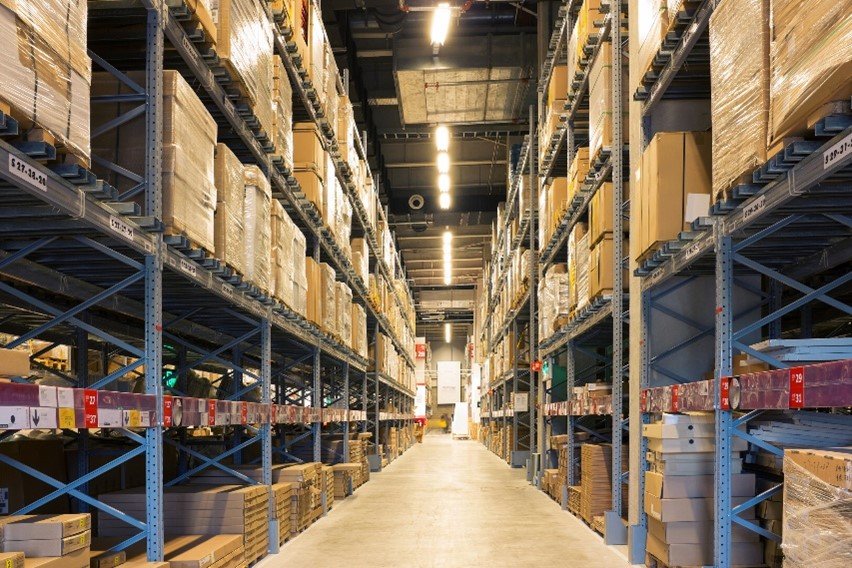
This allows exporters to complete upstream processes closer to their manufacturing locations while using NIA as an efficient air gateway.
It improves supply-chain flexibility and reduces congestion at legacy hubs.
Furthermore, this will offer exporters a cost-effective and streamlined gateway to accelerate cargo movement through airlines operating from Noida International Airport.
Could you share how digital technologies are being leveraged at the AISATS MMCH to enhance efficiency and ensure smooth cargo and truck movement?
Our objective is to build a cargo terminal where technology removes friction before it occurs. We have a Dedicated Trucking Zone with added amenities to facilitate the smooth movement of cargo.
We are deploying truck-slotting systems, digitally enabled gate access, automated documentation workflows, real-time dock allocation, tech-enabled asset visibility, predictive dashboards for flow management, and several other digital features.
This allows cargo vehicles to arrive within scheduled windows rather than queue unpredictably. By integrating systems across gate, warehouse, and terminal operations, we will materially improve processing speed and minimise congestion.
How is AISATS strengthening cold-chain capabilities and ensuring reliable temperature-controlled cargo handling at NIA in keeping with the requirements of pharma and perishable exporters in the Yamuna Expressway region?
Temperature-sensitive cargo requires precision and discipline. Our facility has been designed with dedicated cold-chain infrastructure, temperature-zoned storage, rapid dock-to-storage transfer processes, and continuous monitoring systems. The objective is to minimise exposure risk at every touchpoint, from truck arrival to aircraft loading.
In fact, we have dedicated truck docking zones for temperature-sensitive cargo to ensure there is no breach in temperature integrity for sensitive products. For pharma and perishables exporters, this creates a highly reliable cold-chain environment aligned with international quality expectations.
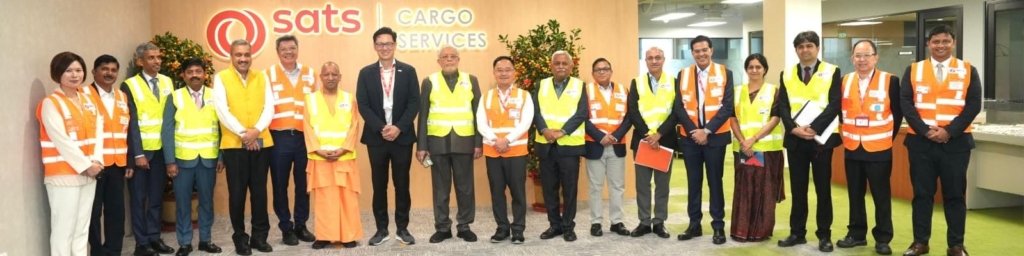
How does AISATS see NIA integrating with the surrounding industrial and logistics ecosystem to support sectors such as electronics, textiles, and e-commerce?
The success of an airport cargo hub depends as much on off-airport connectivity as on on-airport infrastructure. We see strong alignment with the broader development vision of the Yamuna Expressway region, where manufacturing, warehousing, and mobility infrastructure are being developed in parallel.
As these clusters mature, proximity to Noida International Airport will create natural logistics advantages for sectors such as electronics, textiles, engineering goods, and agriculture.
At the same time, our customer-oriented cargo ecosystem—comprising general cargo facilities, a dedicated Coolport, an express terminal, warehousing spaces, trucking zones, and strong digital integration—is designed to deliver speed, flexibility, and ease of doing business for a wide range of supply-chain users.
With leading airlines such as IndiGo and Akasa Air as launch partners, how do you see the cargo mix evolving between belly cargo and freighter operations in the initial phase?
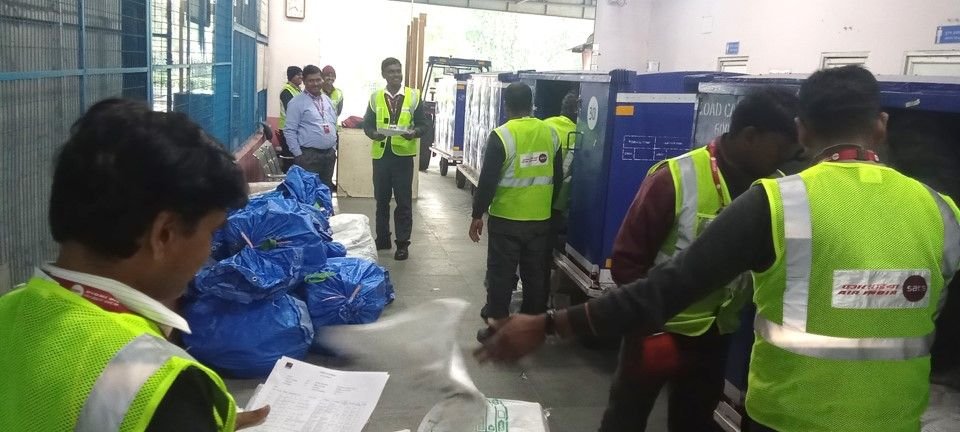
In the initial phase, belly cargo from passenger carriers is expected to form an important share of throughput, particularly for domestic express, e-commerce, and high-frequency shipments.
As volumes scale and export flows deepen, we expect growing interest in dedicated freighter operations as well. Our infrastructure is being built to support both models efficiently.
As sustainability becomes increasingly important for global supply chains, how does NIA’s net-zero vision enhance its appeal to global manufacturers and exporters?
Sustainability is increasingly becoming a commercial differentiator in global supply chains. A net-zero airport ecosystem, combined with efficient cargo design and modern operating practices, offers companies an opportunity to lower logistics-related emissions while improving service performance.
At AISATS, sustainability is not a standalone initiative but an integral part of the way we plan and operate our business.
Over the years, AISATS has consistently introduced cleaner and more efficient operating solutions, including the progressive adoption of electric ground support equipment, energy-efficient infrastructure, paperless digital cargo processes, and resource-optimised terminal operations.
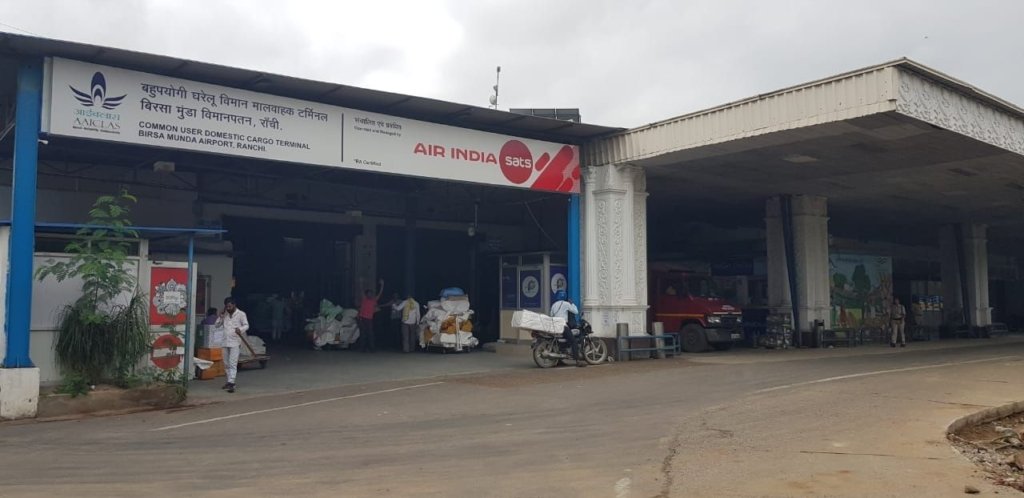
Aligned with this, AISATS has embedded sustainability and future-readiness into the design and operations of the MMCH.
This positions AISATS as a preferred partner for global manufacturers and shippers seeking sustainable, resilient, and globally benchmarked logistics solutions, while also positioning NIA as a future-ready cargo infrastructure hub.
Multimodal connectivity is a key enabler for cargo efficiency. How do you see future integration with rail networks, including the Dedicated Freight Corridor, strengthening NIA’s position as a logistics hub?
The Dedicated Freight Corridor will be transformative for North India’s logistics sector, and connectivity with airport-led cargo hubs will be a natural next step in that evolution.
As multimodal linkages mature over time, the combination of road, rail, and air integration around Noida will create one of the most efficient logistics zones in the country.
Our long-term planning fully recognises the strategic importance of seamless air-to-rail cargo movement, which has been incorporated into the overall infrastructure development plan and is being executed in a phased manner.
Also Read: The Frictionless Airport: Everything Is Ready Except the System

With more than four decades across print and audiovisual media, Tirthankar (TG) Ghosh is a veteran journalist specialising in aviation, air cargo and logistics. His reporting combines deep industry knowledge, original research and sharp analysis to produce authoritative, evidence-led journalism.