

















KLM Fokker F.III Forêt de Mormal Crash
On 25 June 1925, a KLM Fokker F.III registered H-NABM crashed in the Forêt de Mormal, near Locquignol in northern France, while operating a scheduled passenger flight from the Netherlands to Paris. The aircraft struck trees in poor visibility and was destroyed. All four people on board—the pilot and three passengers—were killed.
The accident occurred during the early period of international commercial aviation, when aircraft were operating scheduled passenger services across Europe with comparatively limited navigation and weather information.
The Aircraft
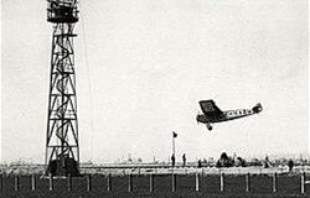
The aircraft involved was a Fokker F.III, registration H-NABM. It was one of the F.III aircraft operated by KLM during the 1920s.
The particular aircraft had an unusual construction history. It was built by KLM in 1924 using parts from other Fokker aircraft and some new components supplied by the Fokker factory. The aircraft used an Armstrong Siddeley Puma engine rated at 240 horsepower. It had a cruising speed of approximately 135 kilometres per hour, a maximum take-off weight of about 1,900 kilograms and a range of approximately 1,000 kilometres. The aircraft was designed to accommodate up to five passengers.
H-NABM was registered on 16 June 1922 in the historical aircraft records, although the aircraft that crashed in 1925 was a rebuilt aircraft carrying the same registration. It was entered into KLM service after its construction and remained in operation until the accident at Forêt de Mormal.
Before the fatal flight, the aircraft had been taken out of service for cleaning and inspection. It had been flown to the operating base on the Wednesday before the accident and was approved for service.
The Scheduled Flight
The flight was part of KLM’s international passenger service between the Netherlands and Paris.
On the morning of 25 June 1925, the aircraft involved in the first part of the journey was Fokker F.III H-NABK. It departed Schiphol at approximately 9:00 a.m. and flew toward Waalhaven Airport near Rotterdam.
At Waalhaven, H-NABK was taken out of service for the remainder of the journey, and the passengers continued their trip aboard H-NABM. The Fokker departed Waalhaven at approximately 9:53 a.m. with three passengers and approximately 22 kilograms of mail on board.
The planned destination was Le Bourget Airport in Paris.
The flight route passed through Belgium before continuing toward northern France. At the time of departure, the weather forecast was considered suitable for the flight. There was no decision to cancel the service or divert it through Brussels.
Weather Conditions
Weather conditions became a major factor during the flight.
Near the Belgian-French border, the aircraft encountered significantly worse weather than conditions earlier in the journey. Visibility was reduced by clouds and poor weather.
The pilot descended to a lower altitude in an effort to maintain visual contact with the ground. The planned route toward Paris passed near the Forêt de Mormal, a large forested area in northern France with uneven and elevated terrain.
The aircraft also deviated from its intended route by approximately six kilometres.
The combination of the route deviation, low clouds and the terrain created difficult flying conditions. Some of the higher portions of the forest reached approximately 150 metres and were obscured by the low cloud.
The Flight Over Forêt de Mormal
Witnesses later reported hearing and seeing the aircraft over the forest.
According to the investigation described in historical records, the aircraft appeared to be flying in the area while attempting to maintain visibility of the ground. Witnesses believed that the aircraft was circling.
The investigation later considered that the pilot may have been attempting to find an area where the ground could be seen clearly through the low cloud.
The aircraft was flying at a low altitude over the forest. When the pilot became aware of the trees, the aircraft made a sharp turn to the right.
During the turn, a wing struck the trees.
The aircraft then overturned and entered the forest at an angle estimated at approximately 30 to 40 degrees. The crash occurred at approximately 11:30 a.m. local time.
The Crash
The impact was severe.
The aircraft cut through approximately 40 metres of trees. The Armstrong Siddeley Puma engine was thrown forward during the impact and struck a large tree.
The Fokker F.III was completely destroyed.
Wreckage was distributed across an area of approximately 100 square metres. The four occupants were killed in the crash.
Lumberjacks working in the forest had seen the aircraft shortly before the accident. After observing the aircraft descend suddenly, they began searching for the crash site.
The wreckage was located at approximately 3:00 p.m., several hours after the accident. Forest rangers and police subsequently arrived at the site.
The bodies of the occupants were recovered from the wreckage and surrounding debris.
The People on Board
There were four people aboard H-NABM: one pilot and three passengers.
The pilot was Hendrik Klunder, who had been born in Rotterdam on 16 March 1893. He had previously served with the Dutch military aviation service, the Luchtvaartafdeling at Soesterberg.
Klunder had recently completed his six-month examination and had been approved for his flying duties on 22 June 1925, only three days before the accident.
One of the passengers was Jhr. L.P.A. van Brandeler, born in The Hague on 28 March 1888. He lived in Domburg and worked as an official of the Public Prosecution Service in Zeeland.
Another passenger was T. J. Labouchère, who lived in Vogelzang. He was director of an export company in The Hague and was expected to succeed his father as director of De Porceleyne Fles in Delft.
The third passenger was Henri Groginsky, who lived in Brooklyn in the United States.
All four occupants died in the crash.
Investigation
Following the accident, French aviation authorities were asked to conduct an investigation.
A French investigation body, the Direction des Services de la navigation aérienne, was established to examine the circumstances of the crash. Its report was completed during the second half of July 1925.
A separate investigation was also conducted in the Netherlands by the Rijksstudiedienst voor de Luchtvaart, the government aviation research service of the period.
KLM also carried out its own investigation. Representatives included Dr. Groeneveld Meyer and engineer Behagen.
The investigations examined the aircraft, the flight route, weather conditions, the crash site and the circumstances immediately before the impact.
Parts of the aircraft were examined as part of the investigation. Because the aircraft had been completely destroyed, only selected portions of the wreckage were retained for examination. Some sections of the wing were removed for investigation by the Dutch aviation authorities.
Cause of the Accident
The accident was attributed to the aircraft flying into terrain in poor visibility.
Historical accounts describe the crash as a controlled flight into terrain, with the aircraft descending to an altitude at which the surrounding forest terrain could no longer be safely cleared.
The route deviation of approximately six kilometres brought the aircraft into an area where the terrain was higher and the clouds were particularly low. The pilot was attempting to maintain visual contact with the ground when the aircraft encountered the forest.
The right wing struck trees during a sharp turn, after which the aircraft crashed into the forest.
Some historical sources have described a possible failure involving the right aileron during the turn, while other accounts emphasize the low visibility and terrain. The surviving investigation records do not provide a single universally stated mechanical explanation for the accident.
Location of the Crash
For many years, the crash was commonly associated with Landrecies, a town approximately 30 kilometres from the actual crash site.
Later historical research established that the crash site was located within the municipality of Locquignol, which contains the Forêt de Mormal. Research conducted by aviation historian Herman Dekker in 2006, including discussions with local authorities, helped clarify the location.
The distinction is important because many historical aviation databases and publications continued to list Landrecies as the accident location.
The actual site was in the forest of Mormal in the municipality of Locquignol, France.
Recovery of the Wreckage
The aircraft was completely destroyed in the impact.
The local authorities recovered the bodies and dealt with the aircraft’s remaining contents. The mail and other belongings from the aircraft were taken into custody by the public prosecutor’s office at Avesnes.
Most of the wreckage was not considered valuable enough to transport back to the Netherlands. Selected aircraft components, particularly parts of the wing, were retained for examination.
The crash site therefore remained primarily a local location associated with the accident rather than becoming a source of a large preserved aircraft collection.
Effect on KLM
The Forêt de Mormal crash was the second fatal accident involving KLM, following the disappearance of Fokker F.III H-NABS over the English Channel on 24 April 1924.
The accident occurred while KLM was expanding its European passenger network.
At the time, the airline was operating Fokker F.III aircraft on international routes, but newer Fokker F.VII and F.VIIa aircraft were beginning to enter service. These newer aircraft gradually took over many of the duties previously performed by the F.III.
The accident also generated discussion in the Netherlands about aviation insurance and the effect of fatal accidents on commercial air travel. Contemporary reports considered whether the accident could affect passenger demand and airline ticket sales.
The Fokker F.III
The Fokker F.III was one of the early aircraft used for scheduled passenger transportation in Europe.
It was designed during the early development of commercial aviation and was used by KLM and several other European operators.
The aircraft involved in the Forêt de Mormal accident was capable of carrying passengers and mail and was operating on an international scheduled service between the Netherlands and France.
By 1925, KLM was already introducing the Fokker F.VII family, which offered greater capacity and became increasingly important to the airline’s European operations. The F.III gradually became less central to KLM’s fleet.
Final Record of H-NABM
Fokker F.III H-NABM was destroyed in the Forêt de Mormal crash on 25 June 1925.
The accident killed pilot Hendrik Klunder and passengers L.P.A. van Brandeler, T.J. Labouchère and Henri Groginsky.
The aircraft crashed in the forest near Locquignol after encountering poor visibility and low cloud while flying toward Paris. The wreckage was located several hours after the accident and was examined by French authorities, Dutch aviation investigators and KLM representatives.
The aircraft was not returned to service and its registration was removed from the aircraft register following the accident. Historical aircraft records list H-NABM as lost at Locquignol, France, on 25 June 1925.
The Forêt de Mormal crash remains recorded as one of the early fatal accidents in KLM’s history and as an accident involving one of the airline’s Fokker F.III aircraft during the development of scheduled international passenger aviation in Europe.

Ajeet Yadav is an aviation enthusiast covering airline news, airports, aircraft, and industry developments through well-researched and reliable reporting.