


















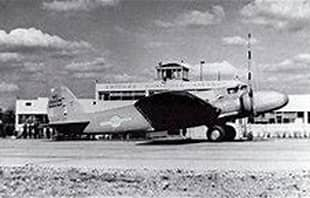
United Air Lines Trip 23 10 October 1933
The United Air Lines Trip 23 crash was a tragic aviation accident that happened on 10 October 1933 near Chesterton, Indiana, United States. The aircraft was a Boeing 247, one of the most advanced passenger aircraft of its time, operated by United Air Lines. The aircraft was flying from Newark, New Jersey, to Chicago, Illinois, when it exploded in the air and crashed near Chesterton.
All seven people aboard were killed. The accident became especially important because investigators concluded that the aircraft had been destroyed by a bomb explosion. It was one of the earliest major cases of deliberate sabotage involving a passenger airliner and is often regarded as the first proven case of an airliner being destroyed by a bomb in flight.
The disaster shocked the American public because commercial aviation was still a developing industry. It also created an important lesson about the dangers of explosives and the need for stronger security in air transportation.
United Air Lines and Early Commercial Aviation
During the early 1930s, commercial aviation in the United States was growing rapidly.
Airlines were connecting major cities with regular passenger and mail services. Flying was much faster than traveling by train, although it was still considered relatively dangerous by modern standards.
United Air Lines was one of the important American airlines of the period. It operated routes between major cities across the United States.
The airline used modern aircraft such as the Boeing 247.
The Boeing 247 represented a major step forward in passenger aviation. It was faster and more comfortable than many earlier aircraft and was designed specifically for airline service.
The aircraft involved in the disaster was therefore considered a modern commercial airplane.
The Boeing 247
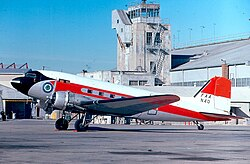
The aircraft involved in the accident was a Boeing 247 operated by United Air Lines.
The Boeing 247 was an all-metal, twin-engine passenger aircraft.
It was one of the first modern airliners to combine several important features, including:
- An all-metal stressed-skin structure
- Two powerful radial engines
- Retractable landing gear
- A streamlined design
- A comfortable passenger cabin
The aircraft could carry passengers and crew on scheduled domestic flights.
Its modern design made it much faster than many earlier passenger aircraft.
The Boeing 247 was an important aircraft in the development of American commercial aviation.
Unfortunately, the aircraft involved in Trip 23 became associated with one of the earliest cases of airline bombing.
The Flight on 10 October 1933
On 10 October 1933, United Air Lines Trip 23 was operating a scheduled flight from Newark, New Jersey, toward Chicago, Illinois.
The aircraft carried seven people:
- Four passengers
- Three crew members
The crew included the pilot, co-pilot, and a flight attendant.
The aircraft departed from Newark and began flying west.
At first, there was nothing unusual about the flight.
The passengers were traveling normally, expecting to reach Chicago.
The crew was operating what appeared to be an ordinary scheduled service.
Nobody aboard knew that an explosive device had apparently been placed inside the aircraft.
The Flight Over Indiana
As the Boeing 247 approached Indiana, the flight continued normally.
The aircraft was flying near Chesterton, in Porter County.
The weather was not the main problem in the accident.
Instead, something much more serious was happening inside the aircraft.
An explosive device had been placed in the passenger cabin area.
Investigators later determined that the explosion occurred while the aircraft was in flight.
Because the aircraft was flying at altitude, the consequences were catastrophic.
The Explosion
At approximately 8:20 p.m., a powerful explosion occurred aboard the Boeing 247.
The explosion destroyed a large part of the aircraft.
Witnesses on the ground reported seeing the aircraft break apart in the sky.
The wreckage fell into a wooded and rural area near Chesterton, Indiana.
There was no opportunity for the crew to make an emergency landing.
The aircraft had been destroyed suddenly.
All seven people aboard were killed.
The accident was immediately treated as a major aviation disaster.
Discovery of the Wreckage
Emergency personnel and local residents went to the crash site.
The wreckage was scattered over an area because the aircraft had broken apart in the air.
This made the investigation more difficult.
Investigators had to collect pieces of the aircraft and determine what had happened before the crash.
At first, investigators considered the usual possibilities.
Aircraft accidents could be caused by mechanical failure, engine problems, structural failure, weather, or pilot error.
However, evidence at the crash site quickly suggested something very different.
There were signs that an explosion had occurred inside the aircraft.
Evidence of a Bomb
Investigators examined the wreckage carefully.
They found evidence of an explosive device.
The damage pattern suggested that the explosion had originated inside the aircraft rather than being caused by an external collision.
Investigators eventually concluded that a bomb containing dynamite had exploded aboard the aircraft.
The bomb had apparently been placed inside a suitcase or similar container.
The explosion was powerful enough to destroy the aircraft in the air.
This finding changed the nature of the investigation completely.
The accident was no longer simply an aviation disaster.
It was a criminal investigation.
One of the First Airliner Bombings
The Trip 23 disaster is historically significant because it is generally regarded as the first confirmed case of an airliner being destroyed by a bomb in flight.
Before this accident, commercial aircraft had experienced crashes caused by mechanical problems, weather, navigation errors, and other factors.
The deliberate destruction of a passenger aircraft was a new and frightening threat.
The case demonstrated that an airplane could be attacked from inside without the crew being aware of the danger.
This raised serious questions about airline security.
The Investigation
Investigators from federal and local authorities examined the accident.
Because there was evidence of a deliberate explosion, investigators focused on identifying who might have placed the bomb aboard the aircraft.
The FBI became involved in the investigation.
Investigators studied the victims, their backgrounds, travel plans, business connections, and possible motives.
They also examined the remains of the bomb and fragments of the aircraft.
However, identifying the person responsible proved extremely difficult.
There were no modern airport security systems.
Passengers could board aircraft with far fewer checks than passengers experience today.
Baggage screening was extremely limited.
This made it possible for someone to carry an explosive device onto an aircraft.
No Criminal Was Convicted
Despite the investigation, the person responsible for the bombing was never conclusively identified or convicted.
This is one of the most frustrating parts of the Trip 23 story.
Investigators had strong evidence that a bomb caused the crash, but they could not establish who had placed the bomb.
Several theories were considered.
Possible motives included personal disputes, financial problems, business conflicts, and other forms of revenge.
However, no theory was proven beyond doubt.
The case therefore remains officially unsolved in terms of the identity of the bomber.
Why the Case Was So Difficult
Investigating a crime in 1933 was much harder than investigating one today.
There were no modern DNA databases.
There were no airport surveillance cameras.
There were no digital passenger records.
There were no electronic boarding records that could show exactly who entered the aircraft and what baggage they carried.
Investigators depended on witness statements, physical evidence, paper records, and interviews.
The explosion itself also destroyed much of the evidence.
The aircraft was scattered over the crash site, and many parts were badly damaged.
This made it extremely difficult to reconstruct exactly how the bomb had been brought aboard.
The Impact on Airline Security
The Trip 23 bombing highlighted a serious weakness in early airline security.
At the time, passengers were not subjected to the kind of screening now considered normal.
There were no metal detectors.
There were no X-ray baggage scanners.
There were no comprehensive security checkpoints.
A person could potentially carry dangerous materials onto an aircraft without being detected.
The disaster demonstrated the need for better security procedures.
Although modern airport security developed mainly in response to later threats, incidents such as Trip 23 helped demonstrate that aircraft could be deliberately attacked.
Public Reaction
The crash caused considerable concern among the American public.
Air travel was still relatively new.
Many people already worried about the risks of flying.
A mechanical accident was frightening enough, but the idea that someone could deliberately destroy an aircraft was even more disturbing.
Newspapers reported the explosion and investigation.
The fact that the aircraft had been deliberately destroyed made the story especially shocking.
People began asking how an explosive device could have been placed aboard a commercial airliner.
The Importance of the Boeing 247
The aircraft itself was also historically significant.
The Boeing 247 was one of the aircraft that helped transform airline travel.
It was faster and more advanced than many earlier airliners.
The design demonstrated the potential of all-metal aircraft construction and aerodynamic engineering.
However, Trip 23 showed that even a modern aircraft could not protect passengers from every type of threat.
Aircraft engineering could improve reliability, but security against deliberate attacks required different kinds of measures.
Aviation Safety After the Crash
The accident contributed to the growing understanding that aviation safety involved more than aircraft design.
Safety also included:
- Passenger screening
- Baggage control
- Airport security
- Criminal investigations
- Emergency procedures
- Protection against sabotage
The aviation industry would gradually develop stronger procedures.
The idea that passengers and baggage needed to be controlled before boarding became increasingly important over the decades.
Modern aviation security is based on many years of experience, including lessons from early incidents such as the Trip 23 bombing.
The Human Tragedy
Behind the historical significance of the accident were seven individual lives.
The passengers had boarded the aircraft expecting an ordinary journey.
The crew was performing a normal job.
None of them could have known that an explosive device was hidden inside the aircraft.
Their deaths affected families, friends, colleagues, and communities.
The disaster also affected the employees of United Air Lines.
For the airline, the loss of an aircraft was serious, but the loss of seven people was much more important.
The accident became a painful reminder of the risks associated with early commercial aviation.
Legacy of United Air Lines Trip 23
The Trip 23 bombing remains an important case in aviation and criminal history.
It demonstrated that commercial aircraft could be deliberately destroyed by explosives.
It also became an early example of aviation sabotage.
Although the identity of the bomber was never conclusively established, investigators were able to determine the basic cause of the disaster.
The case also helped demonstrate why airline security could not be ignored.
Over the following decades, aviation security would become increasingly sophisticated.
Airports eventually introduced passenger screening, baggage inspection, controlled boarding areas, and other security procedures.
Modern security systems are the result of many years of experience with aviation threats.
Conclusion
The United Air Lines Trip 23 disaster of 10 October 1933 was a tragic and historically important aviation accident.
A Boeing 247 operating a scheduled flight from Newark to Chicago was destroyed by an explosion while flying near Chesterton, Indiana.
All seven people aboard were killed.
Investigators found evidence that the aircraft had been destroyed by a dynamite bomb, making the disaster one of the earliest confirmed cases of an airliner being deliberately destroyed by an explosive device.
The identity and motive of the bomber were never conclusively established. The investigation was made difficult by the destruction of the aircraft and the limited forensic and investigative technology available in 1933.
The tragedy nevertheless had a lasting impact.
It showed that aviation security was an important part of passenger safety. Aircraft could be made stronger and engines could be made more reliable, but deliberate sabotage presented a completely different challenge.
The 10 October 1933 Trip 23 bombing therefore occupies an important place in aviation history. It was not simply an aircraft crash. It was a warning about a new type of threat to commercial aviation and an early event in the long development of airline and airport security.

Ajeet Yadav is an aviation enthusiast covering airline news, airports, aircraft, and industry developments through well-researched and reliable reporting.