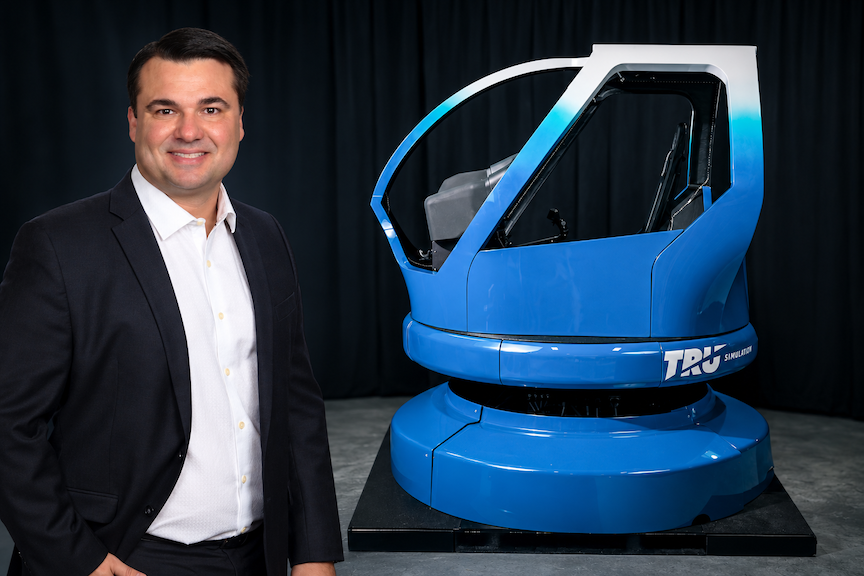










Virtual reality is changing how flight simulators are designed, with applications extending beyond visual displays to more advanced pilot training. Using VR with physical cockpits, aircraft controls and motion systems offers new possibilities for delivering immersive training without losing the practical elements of operating an aircraft. TRU Simulation has developed Veris, a VR-based flight training device initially designed for the Bell 505, with a physical cockpit, realistic controls and full-motion capability. Jerry Messaris, President and CEO of TRU Simulation, explains the technology behind Veris, its applications in pilot training and the company’s plans to extend the platform to other aircraft.
What led to the development of Veris, and what was the idea behind it?
The Veris Virtual Reality Flight Training Device began with an opportunity to rethink how advanced flight training could be delivered.
We wanted to expand access to high-fidelity training in a way that could support a broader range of operating environments and customer needs. That led us to combine the growing capabilities of virtual reality with our proven simulator technologies in a compact, cost-effective platform.
The result was Veris, a clean-sheet design that brings together immersive virtual reality, a physical cockpit, realistic controls and full motion.
Why did you combine VR with a physical cockpit and full-motion system?
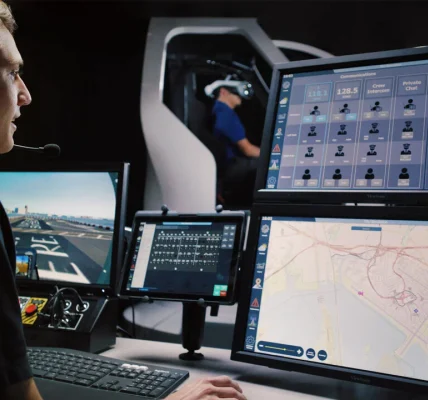
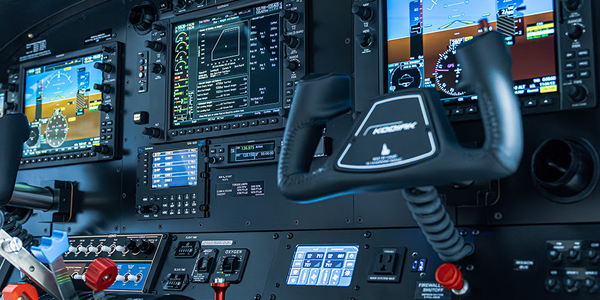
Each element contributes something different to the training experience. The physical cockpit and tactile panels allow pilots to interact with switches, avionics and controls in a way that closely reflects the aircraft.
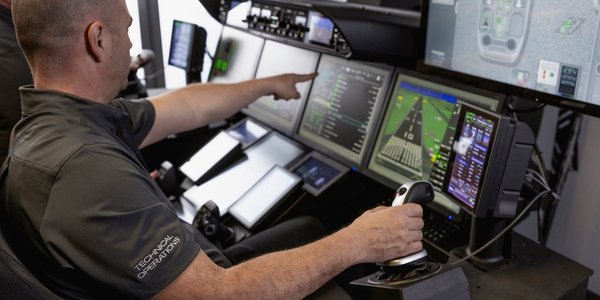
The virtual reality headset creates an immersive visual environment, while the fully electric six-degrees-of-freedom motion system produces flight cues and vibrations. Together, these technologies combine visual, tactile and motion cues to create a cohesive training experience that closely replicates the actual aircraft.
How is Veris being used in Bell 505 pilot training today?
The Bell 505 Veris has received Federal Aviation Administration (FAA) qualification as a Level 7 Flight Training Device, with EASA Level 3 qualification expected soon.
Bell Training Academy is the launch customer for the platform, and TRU is advancing production of devices that will support Bell 505 pilot training.
What can pilots train on Veris that would normally have to be done in the aircraft?
The Veris allows pilots to practice demanding manoeuvres, aircraft failures and other abnormal situations that would be difficult, costly or impractical to reproduce during training in an aircraft.
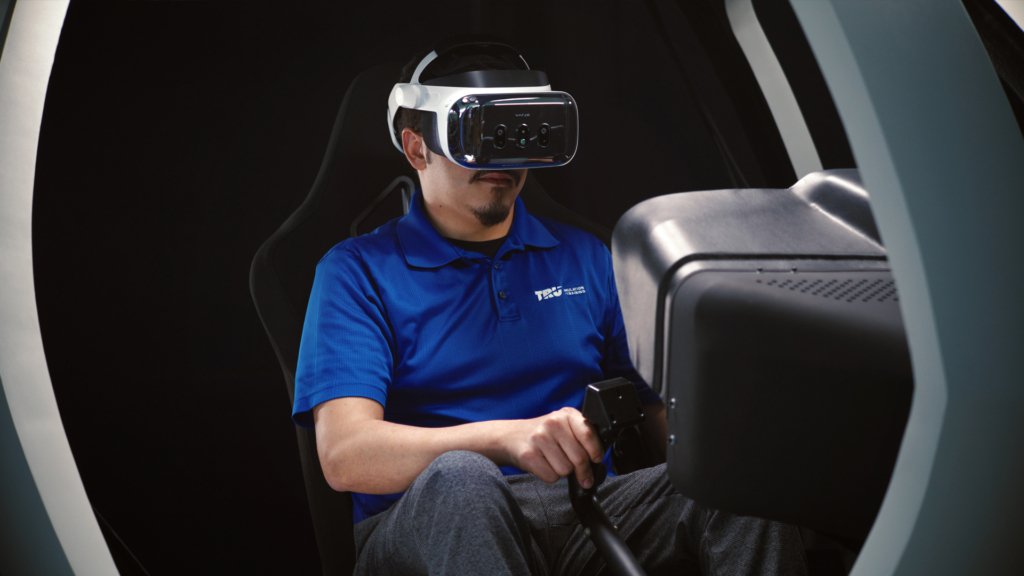
Its immersive, 360-degree visual environment surrounds the pilot with detailed terrain, airports, lighting and weather conditions, supporting day or night training across varied locations.
We also tailor the training scenarios to meet each customer’s mission requirements and reflect the conditions and operations they are most likely to encounter.
This helps pilots build proficiency, decision-making skills and operational experience in a controlled environment before facing those situations in flight.
How accurately does Veris simulate the Bell 505’s flight characteristics and control response?
The Bell 505 Veris uses the Original Equipment Manufacturer (OEM) flight data package and was extensively evaluated by Bell pilots throughout its development to validate the accuracy of its flight characteristics.
It also incorporates TRU’s proprietary REALFeel control-loading system, the same technology used in its Level D Full Flight Simulators (FFS), to provide realistic flight-control response and sensations.
These technologies, along with tactile cockpit panels and representative aircraft systems, support a high-fidelity Bell 505 training experience.
You can also use Veris without the VR headset. When would you use it this way?
The Veris was designed for both immersive flight training and selected training without the headset.
Because the device incorporates real avionics and aircraft components, instructors can use it without VR for activities such as avionics familiarisation, procedural training and cockpit flows. The headset can then be used when the lesson calls for the immersive flight training
The Bell 505 Veris is now FAA Level 7 qualified. What did that qualification require you to prove about the device?
At TRU Simulation, we develop and qualify our training devices to the highest levels of fidelity.
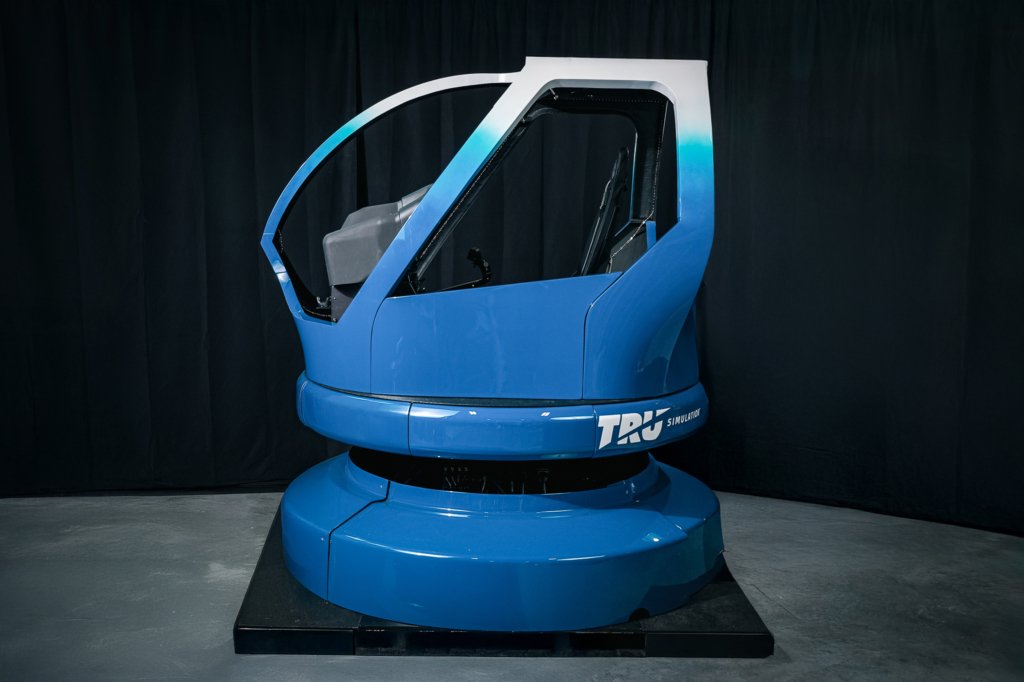
For the Bell 505 Veris, FAA Level 7 qualification required us to demonstrate rigorous standards for flight and systems modelling and a close representation of the physical aircraft, with requirements that align in many areas with those of Level D Full Flight Simulators.
The Veris also goes beyond the basic Level 7 requirements by incorporating a full six-degrees-of-freedom motion system to accurately replicate motion cues and vibration.
That level of fidelity gives customers confidence in Veris as a training tool they can rely on to help pilots build and maintain proficiency.
You are now taking Veris to the Skyhawk and H125. How much of the system can remain common across different aircraft?
The flexibility of the Veris platform allows it to be adapted across fixed-wing and rotorcraft applications. This approach allows the devices to share a similar appearance and many of the same core technologies, while the cockpit panels, controls, avionics and aircraft models are tailored to each aircraft.
With the Cessna Skyhawk Veris, we’re taking that approach a step further with a dual-seat design that allows training from either seat, supporting training from private pilot through flight instructor.
As we expand the Veris product line, we can build on this proven foundation while configuring each device for the aircraft and the customer’s mission.
Also Read: AI in Maintenance Training: From Efficiency to Transformation