











TWA Flight 3 Crash 16 January 1942
The TWA Flight 3 crash was one of the most tragic aviation accidents in the United States during the early years of the Second World War. The accident happened on 16 January 1942, when a Douglas DC-3 operated by Transcontinental & Western Air (TWA) crashed into Potosi Mountain near Las Vegas, Nevada.
All 22 people aboard the aircraft were killed. Among the passengers were the famous American actress Carole Lombard, her mother Elizabeth Peters, and Otto Winkler, who worked as a press agent for actor Clark Gable. Fifteen U.S. Army personnel were also aboard the aircraft.
The official investigation by the Civil Aeronautics Board (CAB) concluded that the main cause was a navigation error by the captain after the aircraft departed Las Vegas. The aircraft followed an incorrect course and eventually struck the mountain.
TWA and Commercial Aviation
Transcontinental & Western Air, commonly known as TWA, was one of America’s major airlines during the 1930s and 1940s.
The airline operated long-distance passenger services across the United States. Its routes connected the eastern and western parts of the country.
During this period, flying was becoming an important form of transportation. The development of aircraft such as the Douglas DC-3 made airline travel faster and more comfortable.
However, aviation technology was still developing.
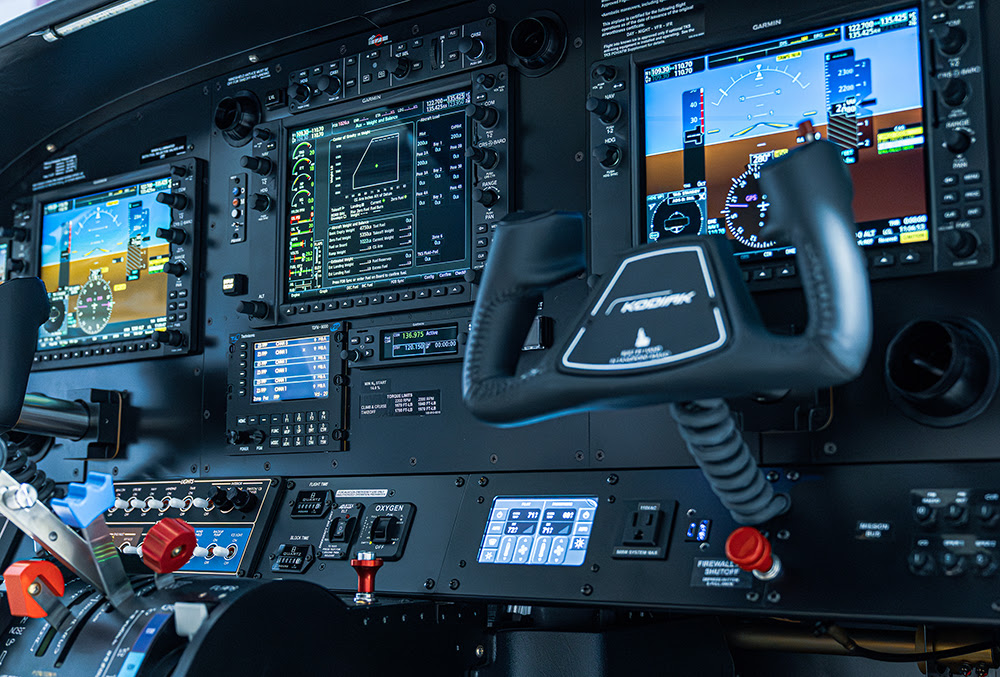
Pilots did not have GPS, satellite navigation, modern terrain-warning systems, or digital flight computers. They depended on maps, radio navigation, compasses, visual references, and careful calculations.
The Aircraft
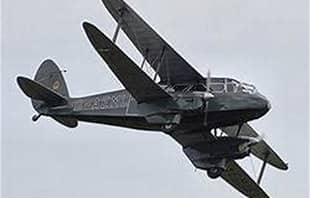
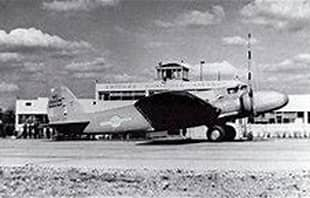
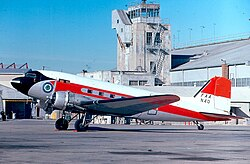
TWA Flight 3 was operated by a Douglas DC-3-382, registration NC1946. It was a twin-engine passenger aircraft.
The DC-3 was one of the most important aircraft in aviation history.
It was designed for passenger transportation and had a strong all-metal structure. Its two engines gave it good performance and reliability for the period.
Many airlines around the world used the DC-3.
The aircraft involved in Flight 3 was considered airworthy at the time of the accident. The CAB investigation found no evidence of a structural, control-system, engine, or propeller failure before the crash.
The Flight Route
TWA Flight 3 was a scheduled service between New York and Los Angeles.
The aircraft made several stops along its route.
Its journey included:
- New York
- Indianapolis
- St. Louis
- Albuquerque
- Las Vegas
- Burbank, California
The aircraft eventually arrived at Las Vegas.
It was scheduled to continue from Las Vegas to Burbank, near Los Angeles.
The flight had already experienced delays earlier in the journey. The CAB report noted that the aircraft had arrived at Albuquerque several hours late because of delays at earlier stations, including a lengthy weather-related delay at St. Louis.
The Passengers
The flight carried 19 passengers and three crew members.
Among the passengers was Carole Lombard, one of Hollywood’s most popular actresses.
Lombard was only 33 years old.
She had become famous for her comedy films and was married to actor Clark Gable, one of the biggest stars of the era.
Lombard had been traveling after taking part in a successful war-bond campaign.
Her death made the accident especially well known across the United States.
Carole Lombard’s Journey
Carole Lombard had traveled to Indiana with her mother to participate in a war-bond campaign.
The campaign raised a large amount of money for the American war effort.
Afterward, Lombard wanted to return to California quickly.
The group originally considered traveling by train, but they eventually chose to fly.
Lombard, her mother, and Otto Winkler boarded TWA Flight 3.
The aircraft later stopped at Las Vegas for refueling.
None of them could have known that this would be their final journey.
The U.S. Army Passengers
Fifteen U.S. Army personnel were also aboard the aircraft.
They were traveling back toward the West Coast for military assignments.
The United States had entered the Second World War only about five weeks earlier, following the attack on Pearl Harbor.
The country was rapidly mobilizing.
Military personnel were traveling throughout the United States as part of the war effort.
The presence of these soldiers made the accident particularly significant during an already tense period.
The Las Vegas Stop
Flight 3 arrived at Las Vegas at approximately 6:36 p.m. Pacific time.
The aircraft was refueled.
It was then prepared for the final part of the journey to Burbank.
The aircraft departed Las Vegas at approximately 7:07 p.m.
The planned route required the aircraft to fly southwest toward California.
The crew had access to radio navigation facilities.
Under normal circumstances, these facilities could help the pilots remain on the correct route.
The Weather
One important fact about the accident is that the weather was not considered poor.
Weather Bureau records indicated that the ceiling and visibility in the area were essentially unlimited, with high clouds.
Other airline pilots flying near the area shortly after the accident also reported satisfactory weather.
This meant that fog, heavy rain, or poor visibility did not explain the crash.
The main problem was navigation.
Navigation in 1942
Navigation was very different from modern aviation.
Today, pilots can use GPS and digital moving maps.
In 1942, pilots depended on:
- Radio ranges
- Magnetic compasses
- Maps
- Dead reckoning
- Visual landmarks
- Radio communication
Radio navigation was extremely useful, but pilots still needed to interpret the information correctly.
A small heading error could become very serious when flying near mountains.
The Incorrect Course
After leaving Las Vegas, Flight 3 followed a course that was not appropriate for the planned route.
The CAB investigation found that the aircraft was flown on a course of approximately 215 degrees from Las Vegas.
The proper course for the intended route was different. The flight plan itself contained a course of 218 degrees for one portion, but the Board determined that the route and navigation information required a different course and that the aircraft was not correctly positioned for its intended path.
The result was that the aircraft moved toward the mountains instead of safely passing them.
The Mountains Around Las Vegas
The area southwest of Las Vegas contains high mountains.
Potosi Mountain is part of the Spring Mountains.
The mountain rises to more than 8,000 feet above sea level.
An aircraft departing Las Vegas at night had to maintain an appropriate route and altitude to avoid the surrounding terrain.
This made accurate navigation especially important.
The Final Minutes
Flight 3 departed Las Vegas at 7:07 p.m.
About 15 minutes later, it reached the area of Potosi Mountain.
The aircraft was still flying at approximately cruising speed.
It was not climbing or descending dramatically.
The CAB found that the aircraft struck an almost vertical rock cliff at an elevation of approximately 7,700 feet above sea level. The mountain’s crest was around 8,500 feet.
The impact destroyed the aircraft.
Witnesses See the Aircraft
Several people in the area observed the aircraft after it left Las Vegas.
Some witnesses reported that the airplane appeared to be farther northwest than airline aircraft normally flew in that region.
This observation became important during the investigation.
The aircraft’s unusual position was consistent with the conclusion that it had followed an incorrect course.
The Crash
The aircraft struck the rocky mountainside at approximately 7:20 p.m.
The impact caused a large fire.
People in the surrounding area saw flames.
The crash site was difficult to reach because the aircraft had struck a steep mountain.
Search parties were organized to find the wreckage.
Discovery of the Wreckage
The wreckage was eventually located on Potosi Mountain.
The site was approximately 33 miles southwest of the Las Vegas airport.
The aircraft had struck the mountain at a very high elevation.
The steep terrain made rescue and recovery operations extremely difficult.
There were no survivors.
The Human Tragedy
All 22 people aboard Flight 3 were killed.
The passengers included soldiers, business travelers, and civilians.
The death of Carole Lombard attracted enormous public attention.
Her mother also died.
Otto Winkler, Clark Gable’s press agent, was among the victims.
The loss was felt particularly strongly in Hollywood.
Clark Gable
Carole Lombard’s husband, Clark Gable, was devastated by her death.
The couple had been married for only a few years.
Lombard’s sudden death was a major personal tragedy for Gable.
It also received enormous media attention.
The crash became one of the best-known aviation disasters involving a Hollywood celebrity.
The Civil Aeronautics Board Investigation
The Civil Aeronautics Board began an investigation immediately after receiving notice of the accident.
The Board examined the aircraft, the route, navigation facilities, weather, crew qualifications, and other evidence.
The final report was adopted in July 1942.
Investigators found that the aircraft had been properly certified as airworthy.
The captain and first officer were properly qualified.
The engines and propellers were operating normally at the time of impact.
No Mechanical Failure
One of the most important findings was that there was no evidence of a mechanical failure before the crash.
The investigation found no evidence of:
- Engine failure
- Propeller failure
- Structural failure
- Flight-control failure
The aircraft was functioning when it struck the mountain.
This meant that the investigation focused on navigation and pilot actions.
Radio Navigation Facilities
The available radio range facilities were operating normally.
However, because of wartime emergency conditions, only one beacon between Las Vegas and Silver Lake was operating.
This reduced the number of navigation aids available to pilots.
The United States had recently entered the war, and aviation facilities were being modified because of national security concerns.
Wartime Restrictions
The accident happened only weeks after Pearl Harbor.
There was concern about possible enemy aircraft entering American airspace.
Some navigation beacons that could help aircraft were affected by wartime procedures.
This created additional challenges for civilian aviation.
However, the CAB did not conclude that the wartime shutdown of navigation facilities was the direct cause of the crash.
The Board focused primarily on the captain’s failure to follow the proper course using the navigation facilities that were available.
The Probable Cause
The Civil Aeronautics Board identified the probable cause very clearly.
It concluded that the captain failed to follow the proper course after departing Las Vegas by making proper use of the available navigation facilities.
This meant that the accident was primarily a navigation error.
The aircraft was under control.
The engines were working.
The weather was suitable.
But the aircraft was flying in the wrong direction.
Because the mountains were directly in its path, the navigation error became fatal.
Controlled Flight Into Terrain
The accident is an early example of what is now called controlled flight into terrain, or CFIT.
In a CFIT accident, the aircraft is functioning normally and the pilots are still controlling it, but the aircraft unintentionally flies into terrain.
Modern aviation has developed many systems to reduce this risk.
These include:
- Ground-proximity warning systems
- Terrain-awareness systems
- Digital navigation
- GPS
- Moving maps
- Better mountain-route procedures
None of these technologies existed in 1942.
Why the Accident Happened at Night
Night flying made the navigation problem more dangerous.
During daylight, pilots might have been able to see mountain ranges and other landmarks.
At night, the mountains could be invisible until the aircraft was dangerously close.
Even with clear weather, darkness removes many visual references.
The crew therefore needed to follow the correct navigation route.
Importance of Altitude
Altitude was another important protection.
The aircraft was supposed to fly at an altitude that would provide safe clearance over terrain.
But simply maintaining altitude was not enough if the aircraft was on the wrong heading.
Potosi Mountain was high enough that an aircraft at the wrong position could strike the mountain even while maintaining a normal cruising altitude.
The Role of Pilot Judgment
The accident also demonstrates the importance of pilot decision-making.
Pilots must constantly compare:
- Heading
- Position
- Altitude
- Navigation information
- Route
- Terrain
If one piece of information does not make sense, the crew must investigate the problem.
Modern cockpit procedures make such cross-checking more systematic.
Crew Coordination
Crew coordination was also less standardized in the early 1940s.
Today, the captain and first officer have clearly defined responsibilities.
They cross-check navigation and aircraft settings.
If one pilot makes an error, the other pilot is expected to notice and challenge it.
These procedures developed partly from lessons learned from accidents.
The Impact on Hollywood
Carole Lombard’s death had a major impact on Hollywood.
She was one of the leading actresses of her generation.
Her films had made her extremely popular.
She was known for her energetic personality and comedy performances.
Her death at such a young age shocked the entertainment industry.
Carole Lombard’s Legacy
Lombard’s films continued to be shown after her death.
She became remembered as one of Hollywood’s most important actresses of the 1930s.
Her death also became closely connected with the history of aviation because she was one of the most famous passengers to die in an American commercial aircraft accident.
The War-Bond Campaign
One of the tragic details of the story is that Lombard had been traveling after supporting the American war effort.
She had participated in a war-bond campaign in Indiana.
Her appearance helped raise a significant amount of money.
She was returning to California when she boarded Flight 3.
Her journey therefore occurred in the context of America’s early wartime mobilization.
Impact on Aviation Safety
The accident reinforced the importance of accurate navigation.
It also demonstrated the dangers of flying near mountainous terrain at night.
Airlines needed to ensure that crews understood their routes and navigation facilities.
Pilots needed to verify their headings carefully.
Modern Navigation
Today, a flight from Las Vegas to Southern California would be very different.
The crew would have precise GPS navigation.
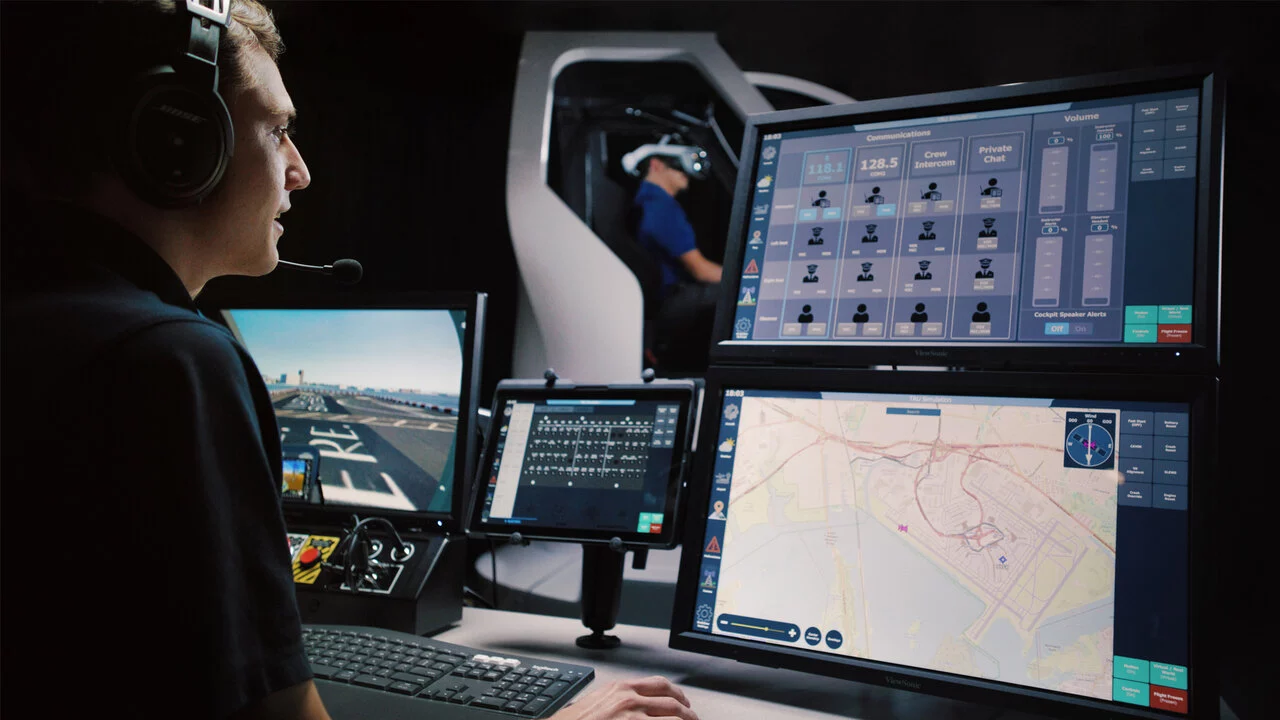
A moving map would display the aircraft’s position.
Terrain databases would show mountains.
Ground-proximity systems could warn pilots if they approached terrain.
Air traffic controllers could also monitor the aircraft.
These technologies greatly reduce the possibility of a navigation error causing a mountain collision.
No Flight Data Recorder
Investigators in 1942 did not have a flight-data recorder.
They therefore could not simply download information showing the aircraft’s exact heading and altitude during the final minutes.
Instead, investigators reconstructed the flight using:
- Witness statements
- Navigation records
- Aircraft wreckage
- Radio information
- Weather reports
- Flight plans
This required careful analysis.
The Importance of the Official Report
The CAB report remains an important historical document.
It provides detailed information about the aircraft, crew, route, weather, navigation facilities, and crash site.
The report makes clear that the weather was satisfactory and that the aircraft had no evidence of mechanical failure before impact.
The official conclusion therefore centered on navigation.
Remembering the 22 Victims
The 22 people aboard Flight 3 should be remembered individually.
Carole Lombard was famous, but the other passengers and crew were equally important as human beings.
Fifteen Army personnel were traveling to continue their military duties.
The crew members were performing their professional responsibilities.
The accident ended all of their lives.
A Tragedy During a Time of War
The crash occurred only weeks after America entered the Second World War.
The country was experiencing enormous changes.
Military forces were mobilizing.
Civilian industries were being reorganized.
Transportation networks were becoming increasingly important.
The loss of military personnel and civilians in the Flight 3 crash added to the country’s wartime grief.
Lessons From TWA Flight 3
The accident provides several important aviation lessons.
First, navigation must always be checked carefully.
Second, pilots must use all available navigation aids correctly.
Third, mountain routes require special attention.
Fourth, night flying can remove important visual references.
Fifth, cockpit crew members must cross-check each other’s decisions.
Finally, modern technology can provide valuable protection against human error.
The Long-Term Legacy
TWA Flight 3 became one of the most famous American airline crashes of the early 1940s.
Its historical importance comes from several factors.
It involved a modern commercial aircraft.
It occurred during the early months of America’s involvement in World War II.
It killed a famous Hollywood actress.
And, most importantly, it demonstrated how a navigation error could cause a controlled aircraft to fly directly into a mountain.
Conclusion
The TWA Flight 3 crash of 16 January 1942 was a tragic event that claimed the lives of all 22 people aboard a Douglas DC-3.
The aircraft was flying from New York to Los Angeles and had made several stops before reaching Las Vegas. After refueling, it departed Las Vegas at approximately 7:07 p.m. on its way to Burbank. About 15 minutes later, it struck Potosi Mountain at an elevation of approximately 7,700 feet.
The passengers included the famous actress Carole Lombard, her mother, Clark Gable’s press agent Otto Winkler, and 15 U.S. Army personnel.
The investigation found that the aircraft was airworthy and that its engines and flight controls were functioning normally. The weather was also suitable for the flight.
The main problem was navigation.
The aircraft was flown on an improper course after leaving Las Vegas. The Civil Aeronautics Board concluded that the captain failed to follow the proper course by making use of the navigation facilities available to him.
The accident demonstrated the danger of navigation errors, especially when flying at night near high mountains.
At the time, pilots did not have GPS, digital maps, terrain-warning systems, or modern flight computers. They depended on radio navigation, maps, compasses, and their own judgment.
Today, aviation has many additional layers of protection. Modern aircraft can determine their position with great accuracy and can warn pilots when they are approaching dangerous terrain.
The tragedy of TWA Flight 3 therefore became part of the long history of aviation safety. It showed the importance of accurate navigation, careful route planning, crew coordination, and awareness of terrain.
The accident also remains closely connected with the memory of Carole Lombard, one of Hollywood’s most famous actresses, whose promising life ended at only 33 years of age.
Most importantly, however, the story should remember all 22 victims. Their deaths were a tragedy for their families, friends, colleagues, and the wider communities to which they belonged.
TWA Flight 3 remains a powerful reminder that aviation safety has been built over many decades through technology, training, investigation, and the lessons learned from past accidents.

Ajeet Yadav is an aviation enthusiast covering airline news, airports, aircraft, and industry developments through well-researched and reliable reporting.