









Hillman’s Airways de Havilland Dragon Rapide Crash
The Hillman’s Airways de Havilland Dragon Rapide Crash was a tragic aviation accident that took place on 2 October 1934 in the United Kingdom. The accident involved a de Havilland Dragon Rapide, a popular British twin-engine passenger aircraft operated by Hillman’s Airways. The crash occurred during a period when commercial aviation was growing quickly, but aircraft technology, navigation systems, weather forecasting, and safety procedures were still developing.
Hillman’s Airways was one of the British airlines that helped build regular air services during the 1930s. The company operated passenger and mail routes, connecting Britain with other destinations. The Dragon Rapide was well suited to this type of operation because it was relatively fast, economical, and capable of carrying passengers on short and medium-distance routes.
The accident on 2 October 1934 became part of the early history of British commercial aviation. It also illustrates the risks faced by airline passengers and crews at a time when flying was still a developing form of transportation.
Hillman’s Airways
Hillman’s Airways was a British airline that operated during the early years of commercial aviation.
The company was founded by Edward Hillman and became involved in passenger and mail services. Like many airlines of the period, it operated a relatively small fleet and concentrated on particular routes.
The airline was part of the growth of British civil aviation during the 1920s and 1930s.
Airlines such as Hillman’s Airways were important because they helped make air travel more accessible.
Before the growth of commercial aviation, most long-distance journeys were made by train or ship.
Aircraft offered a much faster alternative.
A passenger could travel between cities in a few hours instead of spending a full day or more on the journey.
However, flying in the 1930s was still very different from flying today.
The de Havilland Dragon Rapide
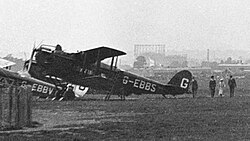
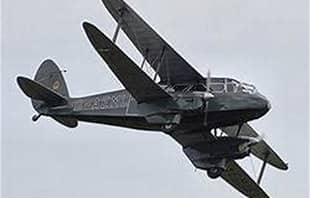
The aircraft involved in the accident was a de Havilland Dragon Rapide.
The Dragon Rapide was one of Britain’s best-known passenger aircraft of the 1930s.
It was a twin-engine aircraft designed by de Havilland Aircraft Company.
The aircraft was developed as a faster and improved version of earlier de Havilland passenger designs.
The Dragon Rapide was particularly successful with small airlines because it was relatively simple to operate and maintain.
It could carry passengers on short routes and could also be used for mail and other commercial work.
The aircraft became a familiar sight at British airports during the 1930s.
Commercial Aviation in 1934
The year 1934 was an important period for commercial aviation.
Airlines were expanding their networks.
Aircraft were becoming more reliable.
Passengers were increasingly willing to use airplanes for business and personal travel.
But aviation still had serious limitations.
Pilots had fewer instruments than modern pilots.
Navigation was less precise.
Weather information was limited.
There was no GPS.
There were no modern weather radar systems.
There were no flight-data recorders or cockpit voice recorders.
When an accident occurred, investigators had to depend on the wreckage, witness accounts, weather reports, and technical records.
The Flight on 2 October 1934
On 2 October 1934, the Hillman’s Airways Dragon Rapide was operating a commercial flight.
The aircraft carried passengers and crew as part of the airline’s scheduled operations.
The flight was expected to be routine.
The passengers had boarded the aircraft expecting to reach their destination safely.
The crew prepared the aircraft and began the journey.
At some point during the flight, however, the aircraft encountered serious difficulties.
The flight ended in a crash.
The accident resulted in fatalities and led to an investigation by aviation authorities.
The Crash
The Dragon Rapide crashed during the flight.
The impact caused serious damage to the aircraft.
Emergency personnel and local authorities responded to the scene.
The wreckage was examined to determine what had happened.
Because commercial aircraft accidents were still relatively uncommon compared with road accidents but highly visible in the press, the crash received considerable attention.
Investigators needed to establish whether the accident had been caused by:
- Mechanical failure
- Structural problems
- Weather
- Navigation difficulties
- Pilot error
- A combination of factors
The investigation was important not only for Hillman’s Airways but also for the wider British aviation industry.
Early Aviation Accident Investigations
Accident investigations in the 1930s were much simpler than modern investigations.
Today, investigators can examine flight-data recorders, cockpit voice recordings, radar information, GPS data, digital maintenance records, and satellite tracking.
In 1934, most of this technology did not exist.
Investigators therefore had to examine the aircraft itself.
They studied the engines, propellers, wings, fuselage, control surfaces, and landing gear.
They searched for evidence of fire, structural failure, or mechanical problems.
They also questioned witnesses.
A witness might have seen the aircraft shortly before the crash.
Another person might have heard an unusual sound.
Such information could help investigators reconstruct the final moments.
The Importance of Aircraft Maintenance
Aircraft maintenance was extremely important during the early development of commercial aviation.
Airliners were subjected to repeated takeoffs and landings.
Their engines operated for many hours.
Wings and fuselage structures experienced stress during every flight.
Regular inspections were necessary to identify defects before they became dangerous.
Airlines needed skilled mechanics and engineers to maintain their aircraft.
The accident reminded the aviation industry that maintenance was an essential part of passenger safety.
Pilot Training
Pilot training was another important part of airline safety.
Commercial pilots had to understand aircraft handling, navigation, weather, and emergency procedures.
However, training systems were still developing.
A pilot flying a small aircraft on a regional route had to make many decisions independently.
Weather could change quickly.
Navigation could become difficult.
Mechanical problems could occur without warning.
Pilots had to rely heavily on experience.
The development of standardized pilot training later became an important part of improving aviation safety.
Weather Conditions
Weather was one of the major challenges facing aircraft during the 1930s.
Pilots did not have access to modern weather radar or detailed computer-generated forecasts.
They relied on reports from weather stations and airports.
Fog was particularly dangerous.
It could hide hills, buildings, trees, and other obstacles.
Rain could reduce visibility.
Strong winds could make an aircraft difficult to control.
Storms could create severe turbulence.
For a relatively small aircraft such as the Dragon Rapide, difficult weather could become a serious operational challenge.
Navigation Challenges
Navigation was also difficult compared with modern flying.
Today’s aircraft can use satellite navigation and highly accurate electronic systems.
In 1934, pilots depended on:
- Maps
- Magnetic compasses
- Visual landmarks
- Radio communication
- Radio navigation aids where available
If visibility was good, pilots could often identify towns, roads, rivers, railway lines, and coastlines.
But if clouds or fog covered the ground, these landmarks disappeared.
A small navigation error could therefore become serious.
This was particularly important for airlines operating unfamiliar routes.
The Human Cost
The technical details of an accident should not hide the human tragedy.
The people aboard the Hillman’s Airways aircraft were traveling for ordinary reasons.
Some passengers may have been traveling for business.
Others may have been visiting family or traveling between cities.
The crew members were performing their normal professional duties.
They expected the flight to end safely.
Instead, the aircraft crashed.
The loss of life caused deep grief for families and friends.
For the airline, the accident was also a serious emotional and operational blow.
Public Confidence in Air Travel
In the 1930s, aviation had an unusual position in society.
Flying was exciting and modern.
People were fascinated by airplanes and their ability to cross long distances quickly.
At the same time, aircraft crashes could create fear.
Every major accident received newspaper coverage.
Passengers and potential passengers naturally wanted to know whether flying was safe.
Airlines therefore had to maintain public confidence.
Safety improvements were important not only for saving lives but also for the future growth of commercial aviation.
Hillman’s Airways and the British Airline Industry
Hillman’s Airways was part of a competitive British airline industry.
Several companies operated passenger and mail routes.
The government also played an increasing role in regulating civil aviation.
The industry was gradually becoming more organized.
Aircraft had to meet technical standards.
Pilots required qualifications.
Air routes were becoming more structured.
Airports and navigation facilities were improving.
Accidents were investigated so that safety problems could be identified.
These changes helped prepare Britain for the much larger aviation industry that developed later.
The Dragon Rapide’s Importance
The Dragon Rapide itself became one of the most successful British light passenger aircraft of its generation.
Its design was simple and practical.
The aircraft could operate from relatively small airports.
It was used by airlines, private operators, governments, and other organizations.
Many Dragon Rapides remained in service for years.
The accident involving Hillman’s Airways should therefore not be interpreted as evidence that every Dragon Rapide was unsafe.
Aircraft accidents can result from many different circumstances.
The wider aviation industry continued to use and develop the type.
Lessons from Early Accidents
Every aviation accident provided an opportunity to learn.
Investigators could identify problems with aircraft design.
Airlines could improve maintenance procedures.
Pilots could receive better training.
Governments could introduce stronger safety regulations.
Navigation facilities could be expanded.
Weather forecasting could be improved.
Search-and-rescue procedures could also be developed.
These improvements were gradual.
There was no single moment when aviation suddenly became safe.
Instead, safety developed through decades of experience.
The Hillman’s Airways accident forms part of this larger process.
Development of British Aviation Safety
During the years following the accident, Britain continued to develop its aviation infrastructure.
Airports received better communications equipment.
Radio navigation became more important.
Aircraft engines became more reliable.
Structural engineering improved.
Pilot training became increasingly professional.
Weather services became more advanced.
Air traffic control also developed.
These changes greatly reduced many of the risks that early airline passengers faced.
Modern commercial aviation is built on the knowledge gained through this long history.
Why the Accident Is Remembered
The 2 October 1934 Hillman’s Airways de Havilland Dragon Rapide crash is remembered because it occurred during the formative years of British commercial aviation.
It represents a period when small airlines were building the foundations of modern air travel.
The aircraft involved was a type that became an important part of Britain’s aviation history.
The tragedy also reminds us how different flying was in the 1930s.
Passengers traveled without many of the safety systems that are taken for granted today.
Pilots operated with limited weather and navigation information.
Airlines and governments were still learning how to manage a rapidly growing industry.
The Broader History of Commercial Aviation
The 1930s were a turning point for aviation.
Aircraft were becoming capable of longer flights.
Airlines were establishing regular international and domestic routes.
Passenger numbers were increasing.
Governments were creating aviation regulations.
Aircraft manufacturers were competing to build faster and more efficient airplanes.
At the same time, accidents revealed weaknesses in technology and operating procedures.
The industry responded by improving aircraft and training.
This process continued throughout the twentieth century.
Conclusion
The Hillman’s Airways de Havilland Dragon Rapide Crash of 2 October 1934 was a tragic event during the early development of British commercial aviation.
The accident involved a de Havilland Dragon Rapide, an aircraft operated by Hillman’s Airways, a British regional airline of the period. The aircraft crashed during a commercial flight, resulting in loss of life and prompting an investigation.
The disaster occurred at a time when air travel was developing rapidly. Airlines were creating regular passenger and mail services, and aircraft such as the Dragon Rapide were helping connect communities across Britain.
However, the aviation industry of 1934 lacked many of the technologies that make modern flying safer. Pilots had limited navigation equipment, weather information was less accurate, and there were no flight recorders or satellite tracking systems. Accident investigators therefore had to depend mainly on wreckage, witness statements, weather information, and aircraft records.
The accident illustrates the risks faced by early airline passengers and crews. It also forms part of the larger story of aviation safety. Aircraft design, maintenance, pilot training, navigation, weather forecasting, communications, and government regulation all improved during the decades that followed.
The Dragon Rapide itself went on to become one of Britain’s best-known light passenger aircraft. Its long service history shows that the development of aviation involved both technological progress and lessons learned from accidents.
The tragedy of 2 October 1934 should therefore be remembered not only as an aircraft crash but also as part of the history of how commercial aviation developed. The passengers and crew who lost their lives were part of an industry that was still in its early stages. Their story helps us understand the challenges faced by early aviators and the long process through which air travel became safer, more reliable, and more widely available.

Ajeet Yadav is an aviation enthusiast covering airline news, airports, aircraft, and industry developments through well-researched and reliable reporting.