








KLM Douglas DC-3 Copenhagen Accident January 26, 1947
The KLM Douglas DC-3 Copenhagen Accident of January 26, 1947, was a tragic event in the early history of post-war European aviation. The accident involved a Douglas DC-3 operated by KLM Royal Dutch Airlines and occurred near Copenhagen, Denmark.
The disaster happened at a time when European airlines were rebuilding their services after the end of World War II. The war had caused enormous damage to transportation systems across Europe, but it had also produced major advances in aircraft technology. After 1945, airlines began using former military aircraft for passenger services and reopening international routes.
KLM was one of the world’s oldest airlines and had an important role in restoring international air connections. The Copenhagen accident was therefore a major event for the airline and for European aviation.
KLM Royal Dutch Airlines
KLM Royal Dutch Airlines was founded in 1919 and is one of the oldest airlines in the world operating under its original name.
Before World War II, KLM had developed an extensive international network.
The airline was particularly famous for its long-distance services between Europe and Asia.
During World War II, normal airline operations were severely disrupted.
After the war ended, KLM began rebuilding its network.
The company needed aircraft, trained crews, mechanics, and airport facilities.
The demand for international travel was also growing.
People wanted to travel again after years of war.
KLM became an important part of Europe’s return to normal civilian transportation.
The Douglas DC-3
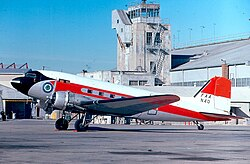
The aircraft involved in the accident was a Douglas DC-3.
The DC-3 was one of the most influential passenger aircraft in aviation history.
It had first entered airline service before World War II.
The aircraft offered better speed, comfort, and reliability than many earlier passenger airplanes.
During the war, the military version of the aircraft was known as the C-47 Skytrain.
Thousands of C-47s were used by Allied forces.
After the war, many military aircraft were transferred to civilian operators.
KLM and other airlines used DC-3s and related aircraft to restart passenger operations.
Post-War Europe
The accident occurred only about sixteen months after World War II ended.
Europe was still recovering from the destruction caused by the conflict.
Railways, roads, ports, and airports had been damaged.
Many countries were facing shortages of fuel and equipment.
Airlines were also dealing with limited resources.
Despite these problems, the demand for air transportation was strong.
Aircraft could travel between countries much faster than trains or ships.
This made commercial aviation particularly important in rebuilding international connections.
Copenhagen as an Aviation Center
Copenhagen was an important location for European aviation.
Copenhagen Airport, located at Kastrup, served as an important gateway between Scandinavia and the rest of Europe.
The airport handled international flights operated by several airlines.
Scandinavia was geographically separated from much of continental Europe, making air transportation especially valuable.
KLM operated flights through the region as part of its international network.
The airport also had experience with wartime aviation, but post-war commercial operations brought increasing numbers of passenger aircraft.
The Flight
On January 26, 1947, the KLM Douglas DC-3 was operating a scheduled flight involving Copenhagen.
The aircraft was carrying passengers and crew.
The flight was part of the growing international passenger network that connected European cities.
The aircraft arrived in the Copenhagen area and prepared for landing.
The weather and airport environment were important considerations.
Landing an aircraft requires careful control of speed, altitude, and direction.
The crew also had to follow the airport’s approach procedures.
During this operation, the aircraft encountered difficulties.
The Crash
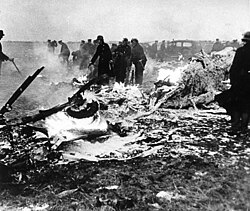
The KLM DC-3 crashed at Copenhagen on January 26.
The accident caused a large number of fatalities.
The aircraft was destroyed in the crash.
Emergency services quickly responded.
Firefighters, police officers, airport workers, and medical personnel went to the scene.
The disaster shocked KLM and the aviation community.
It was one of the significant accidents involving European commercial aviation during the immediate post-war period.
Airport Emergency Response
Airport rescue services in the 1940s were developing rapidly.
Modern airports have specialized rescue and firefighting teams trained specifically for aircraft emergencies.
They have dedicated vehicles, medical equipment, communication systems, and emergency plans.
In 1947, airport emergency services were less advanced.
Firefighters still had to respond quickly, but equipment and communications were more limited.
The Copenhagen airport authorities faced the difficult task of dealing with a destroyed passenger aircraft.
Weather Conditions
Weather can strongly affect an aircraft’s ability to land safely.
Denmark can experience winter conditions such as cold temperatures, low clouds, fog, snow, and poor visibility.
January is a winter month, and weather conditions can change quickly.
For pilots operating in the 1940s, weather forecasting was less advanced than it is today.
There was no satellite weather imagery.
Modern weather radar was not available in its current form.
Pilots depended on weather observations from ground stations and reports received through radio.
If visibility became poor, pilots had fewer tools available to them.
Navigation Technology
Navigation was another important challenge.
Modern pilots use satellite navigation, digital charts, and computerized flight-management systems.
In 1947, pilots relied on:
- Radio navigation
- Magnetic compasses
- Paper charts
- Dead reckoning
- Visual references
Dead reckoning involved estimating an aircraft’s position from its heading, speed, time, and wind.
Even a small error could cause an aircraft to be slightly away from its planned route.
During a landing approach, a small error could become dangerous.
This was particularly true when visibility was poor.
The Importance of the Approach
The approach and landing phases of a flight are among the most demanding.
The pilots must control the aircraft precisely.
They must maintain the correct airspeed and descent rate.
They must also confirm their position and communicate with the airport.
A modern aircraft can use sophisticated instrument landing systems to help with this process.
In 1947, the technology available to pilots was more limited.
The crew therefore had to rely heavily on instruments, radio navigation, and experience.
Investigation of the Accident
Following the crash, an investigation was carried out.
Investigators examined the aircraft and the circumstances surrounding the accident.
They considered several possible factors.
These included:
- Weather
- Aircraft condition
- Pilot actions
- Navigation
- Airport procedures
- Radio communication
- Maintenance
- Approach conditions
Investigators also examined the wreckage for evidence of mechanical failure.
The condition of the engines, propellers, controls, and other components could provide important information.
Witnesses were also interviewed.
The Challenge of Accident Investigation
Investigating an aircraft accident in 1947 was difficult.
Modern aircraft carry flight-data recorders and cockpit voice recorders.
These systems provide investigators with information about what happened during the final stages of a flight.
The KLM DC-3 did not have this modern equipment.
Investigators therefore had to rely on physical evidence, witness reports, radio communications, weather records, maintenance documents, and other available information.
This could make it difficult to reconstruct the exact sequence of events.
Pilot Training
Pilot training was an important part of the post-war aviation industry.
Many pilots had gained experience during World War II.
They had flown military transport aircraft and other aircraft under difficult conditions.
However, commercial aviation required additional skills.
Airline pilots needed to understand:
- Passenger operations
- Instrument flying
- Civilian navigation
- Weather planning
- Fuel management
- Airport procedures
- Emergency operations
Airlines gradually developed standardized training programs.
The goal was to make commercial flight operations safer and more consistent.
Aircraft Maintenance
Aircraft maintenance was another important issue.
The DC-3 was a strong and reliable aircraft, but it still required regular inspections.
Airlines had to maintain engines, propellers, landing gear, electrical systems, instruments, and flight controls.
Many post-war aircraft had previously been used by military organizations.
This meant airlines had to carefully inspect aircraft before returning them to civilian service.
Maintenance programs became increasingly systematic as the airline industry grew.
The Growth of European Air Travel
The accident happened during a major period of growth.
European airlines were reopening routes that had been interrupted by the war.
Passengers were once again traveling between countries.
Airlines needed aircraft that could operate reliably and economically.
The DC-3 was an ideal aircraft for this period.
It was already available in large numbers and had a strong operating record.
However, increased passenger traffic also meant more pressure on airports and aviation infrastructure.
Human Factors
Human factors are important in aviation.
Pilots must make decisions based on the information available to them.
During difficult weather or an emergency, the workload can increase rapidly.
A crew may have to manage navigation, aircraft controls, radio communication, and weather information simultaneously.
In the 1940s, many tasks were performed manually.
There were fewer automated systems to assist pilots.
Modern aviation has developed cockpit procedures and crew coordination techniques to help manage these pressures.
Lessons From the Accident
The Copenhagen accident highlighted several important aviation safety principles.
Accurate Navigation
Aircraft must have reliable navigation information.
Weather Awareness
Pilots need accurate and timely weather reports.
Proper Pilot Training
Crews must understand both the aircraft and the airport procedures.
Aircraft Maintenance
Regular inspection and maintenance are essential.
Airport Safety
Airports need reliable navigation, communication, and emergency facilities.
Accident Investigation
Every accident should be investigated carefully so that lessons can be learned.
Development of Aviation Safety
After World War II, aviation safety improved rapidly.
Radar became increasingly important.
Radio navigation systems became more reliable.
Air traffic control became more organized.
Weather forecasting improved.
Instrument landing systems were introduced and expanded.
Aircraft engines became more reliable.
Pilot training became more standardized.
Aircraft maintenance procedures became more detailed.
These improvements helped reduce many of the risks faced by pilots in the 1940s.
KLM’s Future
The accident was a tragedy for KLM, but the airline continued to develop.
KLM expanded its international services during the post-war period.
It introduced newer aircraft and improved its operating procedures.
The company eventually became one of Europe’s major international carriers.
Its long history demonstrates how quickly commercial aviation developed after World War II.
The DC-3 generation was eventually replaced by larger piston aircraft and later by jet aircraft.
The Legacy of the DC-3
The DC-3 became one of the most important aircraft ever produced.
Its influence on commercial aviation was enormous.
Before the DC-3, many passenger airlines struggled to make regular services profitable.
The DC-3 helped make passenger air travel more practical.
Its military version became a vital transport aircraft during World War II.
After the war, its civilian versions continued operating around the world.
Even decades later, some DC-3 aircraft remained in service.
Remembering the Victims
Behind every aviation accident are individual stories.
The passengers aboard the KLM aircraft were traveling for many different reasons.
Some were traveling for business.
Others were visiting family or returning home.
The crew members were responsible for carrying out the flight safely.
The crash caused great pain for the families of those who died.
The tragedy was also felt by KLM employees and the wider aviation community.
Remembering these victims is an important part of understanding aviation history.
Modern Aviation Comparison
A modern flight approaching Copenhagen would have access to technology that was unavailable in 1947.
Pilots now use satellite navigation and advanced flight-management systems.
Air traffic controllers can track aircraft using sophisticated surveillance systems.
Weather information is available in real time.
Aircraft can receive warnings about dangerous terrain and weather.
Modern airports have advanced instrument landing systems.
Aircraft also carry flight recorders that help investigators understand accidents.
These developments have made flying much safer.
Conclusion
The KLM Douglas DC-3 Copenhagen Accident of January 26, 1947, was a tragic event during the rebuilding of European commercial aviation after World War II.
KLM was restoring its international network, and the Douglas DC-3 was one of the most important aircraft supporting the expansion of passenger services. The aircraft had a strong reputation, but aviation safety depended on much more than the aircraft itself.
Pilots in 1947 worked with limited navigation technology. They relied on radio navigation, paper charts, instruments, weather reports, and visual references. Airports were also developing, and emergency services did not have the advanced equipment available today.
The Copenhagen accident demonstrated the importance of accurate navigation, reliable weather information, pilot training, aircraft maintenance, airport facilities, and careful investigation.
In the decades that followed, commercial aviation changed dramatically. Radar, improved navigation, better weather forecasting, instrument landing systems, standardized pilot training, and advanced aircraft technology made air travel increasingly safe.
The accident remains part of the history of KLM and European aviation. It also represents an important lesson from the post-war period: aviation safety improves when the entire system learns from accidents and continuously develops better technology, training, procedures, and infrastructure.
The passengers and crew lost in the Copenhagen accident became part of a difficult chapter in aviation history. Their story helps us understand how far commercial aviation has progressed since the 1940s and why the safety standards used by airlines today are so important.

Ajeet Yadav is an aviation enthusiast covering airline news, airports, aircraft, and industry developments through well-researched and reliable reporting.