






Upstream by Design: Taking India’s Aviation Foam Capability to the World

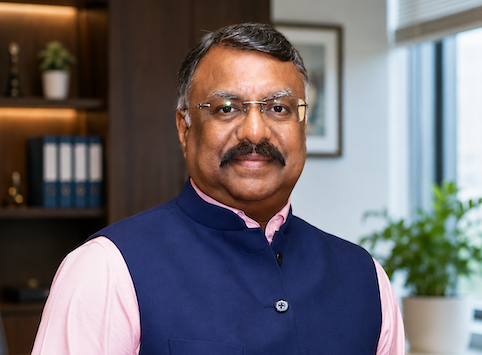
India’s aerospace sector is undergoing a strategic transformation, shifting from post-service maintenance to upstream design and manufacturing. At the forefront of this evolution, local enterprises are aligning global airworthiness standards with scalable industrial capacity. By developing and scaling specialised cabin materials, the domestic supply chain is addressing longstanding import bottlenecks. These advancements not only reduce lead times and freight costs but also enhance long-term cabin durability, positioning Indian manufacturing as a more competitive player in the international aviation market, says Dr Praveen Srivastava, Founder of AeroChamp Aviation and Co-founder of Aerosafe-Aviation Foams.
What led you to start AeroChamp Aviation, and why did you choose to focus on aircraft interiors rather than MRO?
I founded AeroChamp Aviation in 2018, after two decades working in aircraft interiors at senior levels in large companies. The founding decision was deliberate on two counts. First, with a PhD and a background in material science, R&D has always been central to how I think about building a business. Second, while virtually every company in India at the time was focused on Maintenance, Repair and Overhaul, I wanted to be positioned differently—upstream, in design and production.
The rationale was straightforward: maintenance is the last link in the aerospace supply chain. Before any product enters service, it must be conceptualised, designed, validated, certified, and manufactured. India is at a point where the world is beginning to take it seriously as an aerospace supply chain hub. We chose to occupy that upstream space—not because MRO is unimportant, but because we believed the greater long-term opportunity lay in design and production.
AeroChamp took time to stabilise, and COVID-19 set everyone back. But from 2022 onward, once we were on steady ground, I shifted my focus entirely to developing materials for aircraft interiors—across design, material research, and final production.
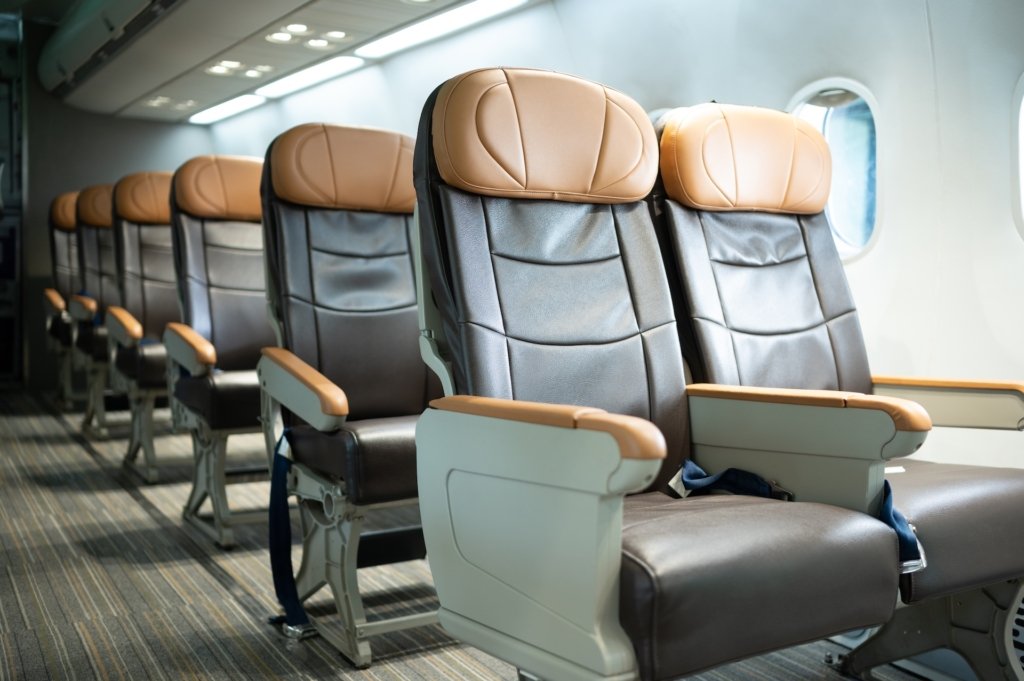
We also recognised we could not scale independently across every product category, so we began forming collaborations and joint ventures with large OEMs—some from adjacent industries with no prior aerospace experience, others seeking to enter the aerospace industry but lacking knowledge of its regulatory requirements. Together, we developed a broad range of products.
Today, AeroChamp operates from Navi Mumbai, with a business development office in Jebel Ali, Dubai, and a satellite office in Orlando, Florida.
How is Aerosafe structured, and what role does Sheela Foam Limited play?
Aerosafe is an umbrella brand co-owned by AeroChamp Aviation and Sheela Foam Limited. The products are co-developed by both companies and manufactured in Sheela Foam’s facilities—nine factories across India—making Sheela Foam the fifth-largest slabstock foam producer in the world.
What is important to understand is that none of that capacity had previously been directed at aerospace or aviation—until this collaboration. Sheela Foam brings over 50 years of foam manufacturing expertise and world-class R&D infrastructure; AeroChamp brings the aerospace domain knowledge—the understanding of airworthiness, cabin specifications, and the regulatory frameworks this industry demands.
Together, we have developed aviation-grade foams and brought them to market under the Aerosafe brand.
What does Aerosafe manufacture for aircraft interiors?
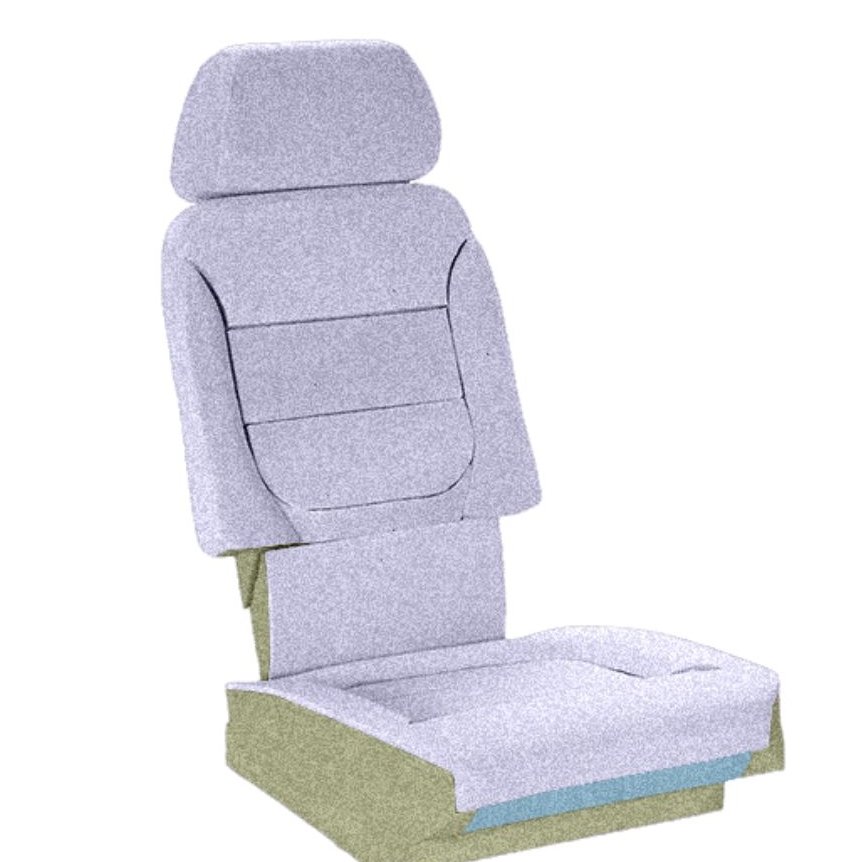
We produce two types of polyurethane foam: block foams and moulded foams. Block foam is produced in large slabs—approximately two and a half metres by two and a half metres—then precision-cut to specific thicknesses and dimensions. Moulded foam is formed in purpose-built moulds, so the piece that comes out is already a finished cushion shape. Block foam, once cut and assembled, is also used to make cushions.
Our foams serve four distinct application areas on a commercial aircraft: seat cushions, thermal and acoustic insulation, sandwich panel cores, and carpet underlay. We have also developed anti-slosh reticulated foams for aircraft fuel tank lining.
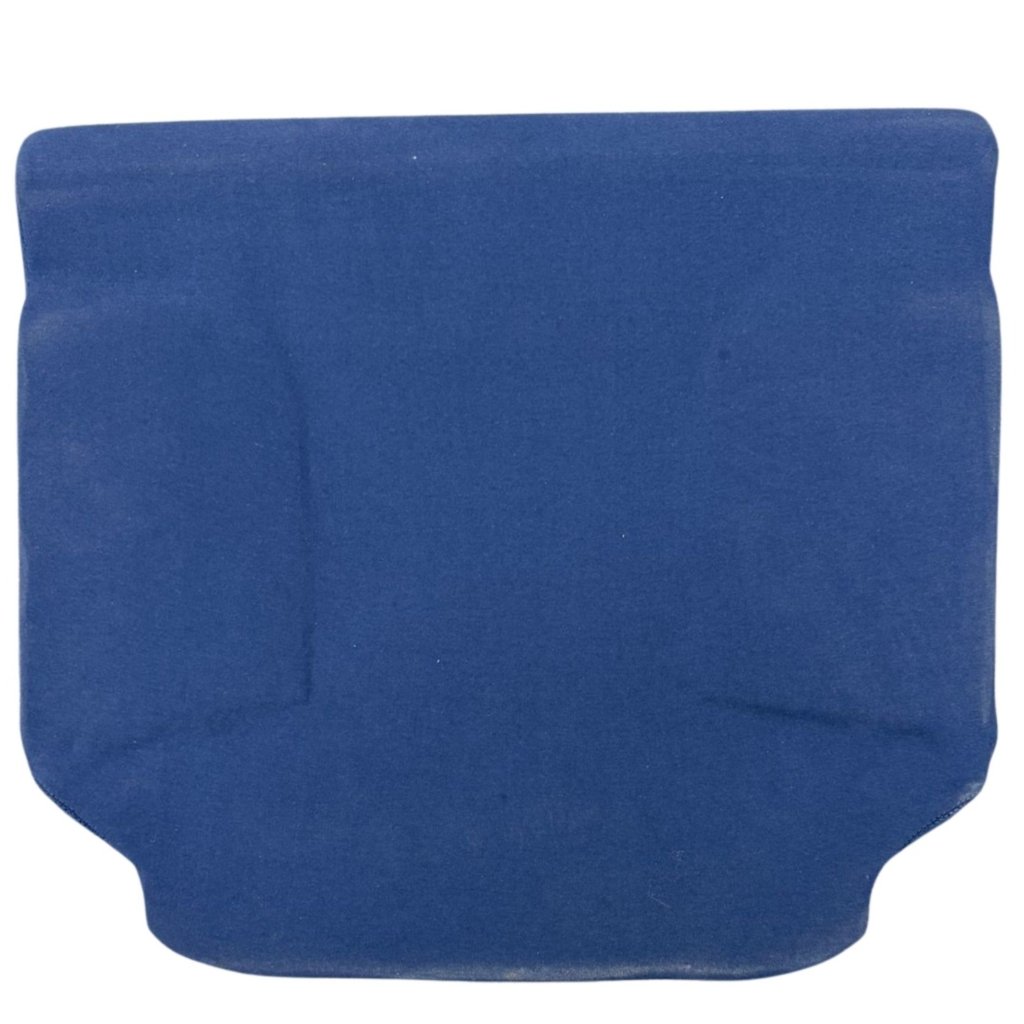
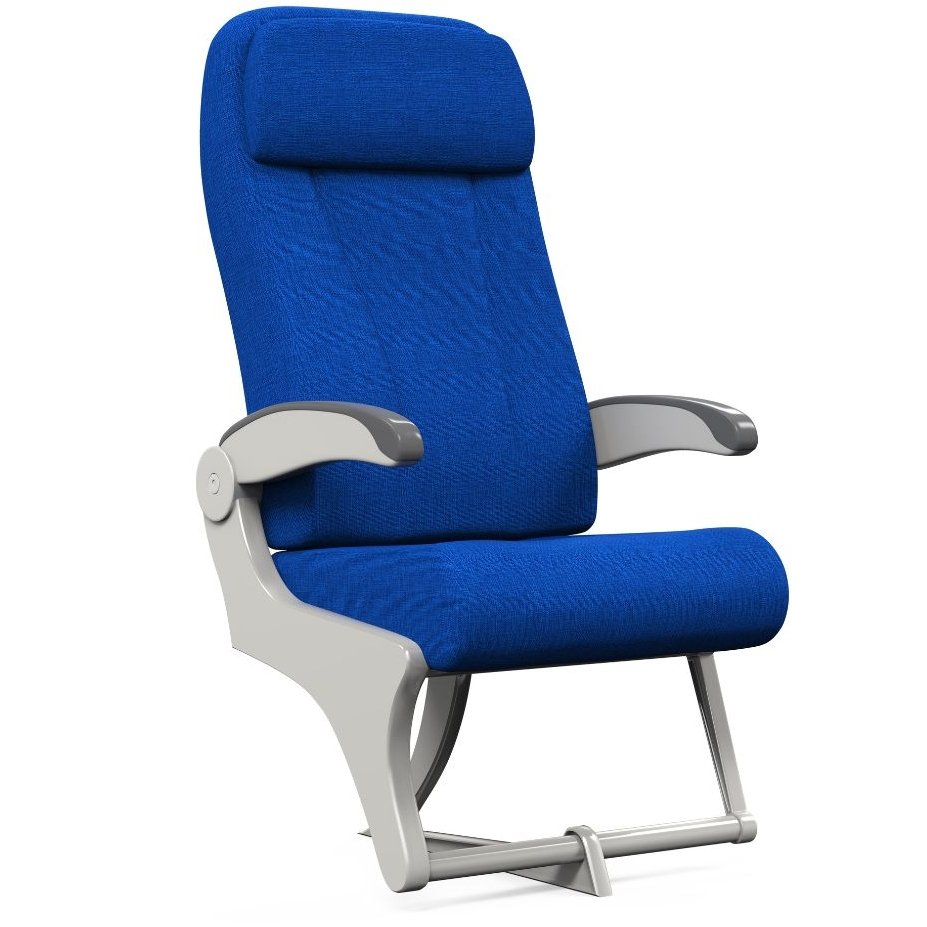
For seat cushions, we manufacture bottom and back cushions for pilot seats and passenger seats across all cabin classes—economy, business, and first.
We have moved beyond foam supply alone and now manufacture complete, finished cushions as well.
For thermal and acoustic insulation, our foams are used between sidewalls and in various structural configurations, as aircraft pass through significant temperature gradients at altitude and require effective insulation.
For sandwich panel cores, we produce rigid foams used as the core material between thermoformed plastic surfaces, including in meal tray tables and other interior panels.
Our foams are also used as carpet underlay beneath aircraft cabin flooring. We cover the full range of foam applications found on a commercial aircraft today.
What does your domestic market look like, and where does the export opportunity stand?
India does not yet have commercial aircraft seat manufacturers or civilian OEMs of its own, apart from defence public sector undertakings such as HAL. What the country does have is a growing MRO sector with active refurbishment activity, and that is where our domestic customer base sits.
We have captured a significant share of the domestic aviation foam market. Anyone involved in replacing seat covers or upholstery—whether working with fabric, leather, or synthetic leather—requires foam as a backing or lining material, and virtually all of them now source from us.
The primary driver has been economics: foam is volumetric by nature.
A full eight-tonne truck may carry only half a tonne to one tonne of actual foam.
International shipping is therefore disproportionately expensive—in many cases, the freight cost on imported foam was comparable to, or higher than, the cost of the foam itself. Local manufacturing eliminated that equation for Indian buyers.
Alongside domestic supply, we have begun exporting to the European market and are confident of establishing a meaningful presence there within the next one to two years. That confidence rests on our scale—being amongst the world’s top 5 foam producers—combined with over 50 years of in-house foam R&D at Sheela Foam.
This enables us to produce foams that meet and regularly exceed the standards of US and European competitors, while maintaining a cost structure we can genuinely pass on to the end user.
What certification framework applies to aircraft cabin foam?
Every material fitted onto an aircraft must meet airworthiness certification requirements—without exception. For foams specifically, the primary standard is FAR 25.853, the FAA regulation governing the fire behaviour of aircraft cabin materials. Foams must be self-extinguishing and fire-retardant.
Beyond that, all cabin materials must pass FST testing—Fire, Smoke, and Toxicity. A material must not only resist ignition; it must not generate smoke or release toxic gases under flame. In a pressurised, enclosed cabin, there is no means for smoke to escape, and any toxic emission could be life-threatening. These standards are mandated by the FAA, EASA, and India’s DGCA.
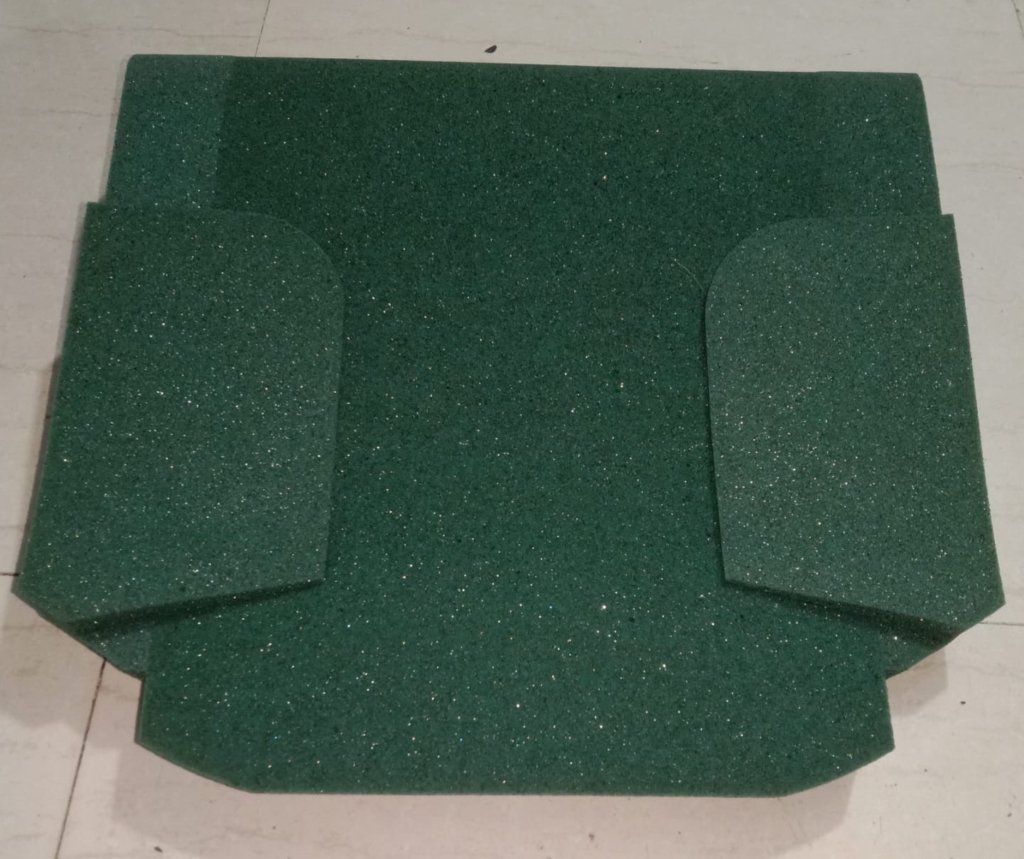
One of our more significant product developments directly addresses fire performance: graphite-infused foam.
India is among the few countries in the world that produce graphite domestically. Graphite is naturally self-extinguishing—when exposed to fire, it expands and cuts off the oxygen supply, starving the flame. That property is built into our foam formulation.
Because we source graphite locally and operate at a significant scale, our raw material costs are highly competitive—and combined with India’s infrastructure and labour cost advantages, that translates into a cost structure we can genuinely pass on to customers.
All our products undergo in-house testing during development, and then we send our samples for testing to laboratories in the US for independent validation. This was a deliberate choice. An in-house result, or even a report from an NABL-accredited Indian laboratory, would not carry the credibility that global OEMs require. Every test report we provide to customers is issued by globally recognised laboratories.
When does DGCA approval become relevant?
For foam as a raw material, the DGCA has no direct role. But the moment we produce a finished part—a seat cushion, a sandwich panel—DGCA becomes relevant for anything installed on aircraft on the Indian civil register.
AeroChamp currently holds a Design Organisation Approval from the DGCA and is in the process of obtaining our Production Organisation Approval. These approvals will allow us to design and manufacture cushions that are fully compliant with the Indian civil register.
Are the cushions customised for specific seat models?
Absolutely—every cushion is customised to the seat model in question, as per the specification of seat manufacturers.
We offer customers two options. The first is to supply foam in raw or block form, leaving the customer’s team to convert it into cushions to their exact requirement. The second is to supply fabricated or moulded, finished cushions directly.
We are currently in discussions with three large OEM seat manufacturers about supplying complete bottom and back cushions, and we expect to convert these conversations into supply agreements in the near term.
What advantage does Sheela Foam’s manufacturing scale give aerospace customers?
The scale means our aerospace customers are drawing from an infrastructure built for an entirely different order of magnitude. Our total foam output—across all business segments, not just aviation—exceeds 100,000 metric tonnes annually.
To put it in perspective: the entire global aerospace industry’s foam requirement, if we were to fulfil it alone, could be met within approximately one month of our production capacity.
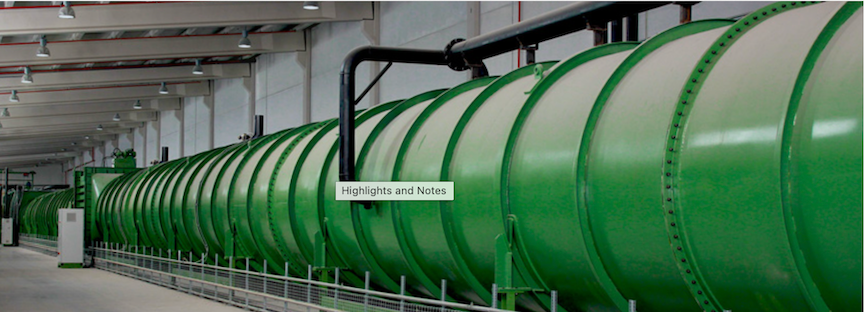
For customers, this translates primarily into lead times. Where a typical international cushion supplier takes around 90 days to fulfil an order, we can deliver in approximately 45 days. For airlines managing tight maintenance windows, that difference is commercially significant.
We are now actively engaging global OEMs alongside the Indian market. Vendor development and approval in aerospace takes time—that is the nature of the industry—but we are well into those conversations and expect to convert them into meaningful partnerships in the near term. In many respects, we are ready; formal approvals from OEMs are the next step.
How large is the opportunity in India, beyond new aircraft deliveries?
The new delivery numbers are striking on their own. India has a backlog of over 1,200 aircraft. At an average of 250 seats per aircraft—roughly 180 for narrow-body aircraft and 280 or more for wide-body aircraft—that is approximately 300,000 seat cushion sets required just for aircraft yet to be delivered to Indian carriers. That is a ballpark; the actual figure will vary with the final aircraft mix.
But new deliveries are only one part of the equation. Cushions are not permanent fixtures. Much like a mattress that compresses progressively in the spots bearing repeated weight, aircraft seat cushions deteriorate steadily under continuous passenger loading—typically becoming significantly compressed within two to three years. At that point, they are no longer airworthy, and the recommended replacement cycle is every four to five years.
Replacement cycles are often influenced by cost considerations, which can extend the time cushions remain in service.
Over time, this affects resilience and passenger comfort, particularly on longer sectors where seat performance becomes more noticeable. Cushions, in that sense, need to be treated as wear-and-replacement items rather than permanent cabin fixtures.
Some airlines have compounded this by initially specifying thinner cushions, partly for weight reduction.
That calculation does not hold up against long-haul duty cycles, or against the AOG implications of a cushion that fails an airworthiness check. The replacement market alone, quite apart from new deliveries, is substantial and growing.
What has Aerosafe developed to improve foam durability?
Foam compression over time is driven by two primary mechanisms: repeated physical loading and humidity-induced ageing. In an aircraft cabin, both are constant. Sustained passenger weight across every flight, pressure cycling as the cabin pressurises and depressurises, and particularly the rush of humidity into the cabin each time doors open on the ground—all of it progressively breaks down foam’s internal cell structure.
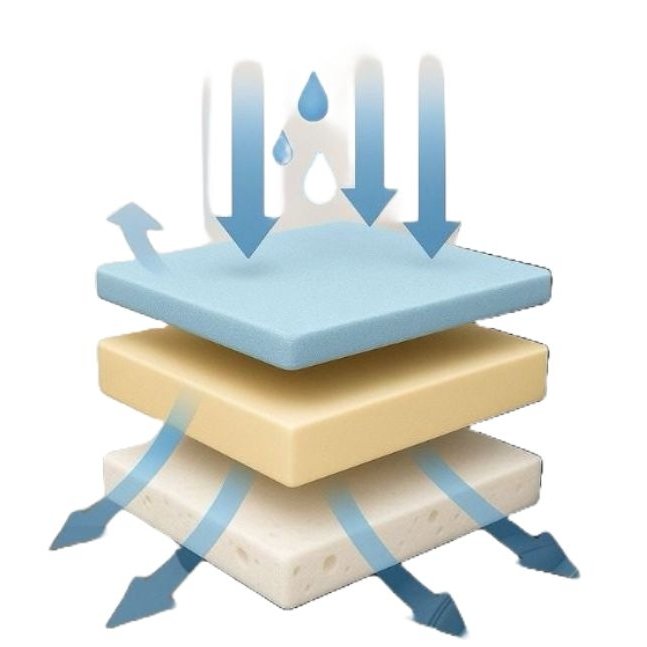
The development work has been focused on improving long-term performance under actual cabin conditions—particularly repeated loading cycles and exposure to humidity. The objective has been to extend cushion life without compromising compliance or comfort.
We have developed a proprietary formulation for Aerosafe foams that delivers significantly higher resilience in compression cycling, validated against standardised tests running into hundreds of thousands of cycles. I cannot share the specifics of the chemistry, but the test data is available to customers.
Two particular innovations are central to the formulation.
Self-skinning foam forms a denser outer layer on the foam surface during production, reducing moisture penetration into the core. This directly counters humidity-driven ageing, one of the less visible but more damaging degradation pathways in a cabin environment.
Neemfresche is a broad-spectrum antimicrobial and antifungal additive incorporated into the foam formulation,. which is a value proposition towards passenger hygiene built into Aerosafe seat cushions. Fungal and microbial growth within foam is a significant degradation pathway that is frequently overlooked. By eliminating it, Neemfresche alone extends foam life by an estimated 20-30%.
These developments are aimed at addressing the underlying causes of compression-related degradation, rather than relying on higher initial density. The result is a cushion that maintains its form and compliance for longer in service.
After two years of exhibiting at AIX, how have customer conversations changed for Aerosafe?
The change has been clear. In 2025, most conversations were introductory. Visitors were trying to understand who we were, what we produced, and whether our foams were comparable with those of established suppliers.
This year, the discussions were more specific. Many visitors came back after engaging with us during the year, receiving our materials, or carrying out their own evaluations. The questions moved to formulations, customisation capability, supply volumes, lead times, and finished cushion applications.
That is an important shift. The conversation has moved from basic comparison to practical use—how Aerosafe foam can be converted into a finished product for a customer’s own specification. It has also supported our current discussions with three large OEM seat manufacturers for complete bottom and back cushions.
There is a broader point as well. Indian participation at AIX remains limited, but it is beginning to grow. In 2025, we were quite possibly the only Indian company with an exhibition stand; this year, there were two.
Buyer perception is changing. Earlier, the focus was on whether Indian products met global standards. Now, discussions are centred on scale, delivery capability and integration into existing supply chains.
Support for participation in international exhibitions would help accelerate this. Exhibiting at AIX costs roughly three times more than a comparable Indian show, and that alone keeps many capable manufacturers away from the floor.
With the right support and the continued momentum of “Make in India”, more Indian aerospace companies can reach global platforms.
Also Read: Behind Noida Airport’s Tariff Order: Airlines, Regulators and a High-Stakes Aviation Gamble