









India’s Aviation Budget Test: Can the System Keep Up with Growth?

- India’s aviation growth has shifted from a scale challenge to a systems challenge, with capacity, financing, airspace, and domestic capability now shaping outcomes more than headline expansion.
- Budget expectations have narrowed to targeted interventions on fuel costs, regional route sustainability, airport and airspace constraints, aircraft financing, and domestic MRO and skills capacity.
- The next phase of aviation growth will depend less on allocation size and more on whether policy choices strengthen the foundations needed for long-term efficiency, resilience, and affordability.
India’s aviation sector is entering a phase where expansion is no longer the challenge—capacity and resilience are. Passenger demand continues to grow at a double-digit pace, airline fleets are expanding rapidly, and the airport network has extended far beyond the traditional metro focus. Aviation has firmly established itself as a critical economic connector—supporting tourism, regional development, manufacturing supply chains, and global trade.
At the same time, this phase of growth is exposing limits that are no longer cyclical. Congestion at major hubs has become structural, operating costs remain high by global standards, domestic maintenance capacity is struggling to keep pace with fleet expansion, and financing requirements are rising sharply as aircraft deliveries draw closer. The aviation debate has narrowed, focusing less on what the sector wants in principle and more on which constraints the government can realistically address through fiscal and policy signals.
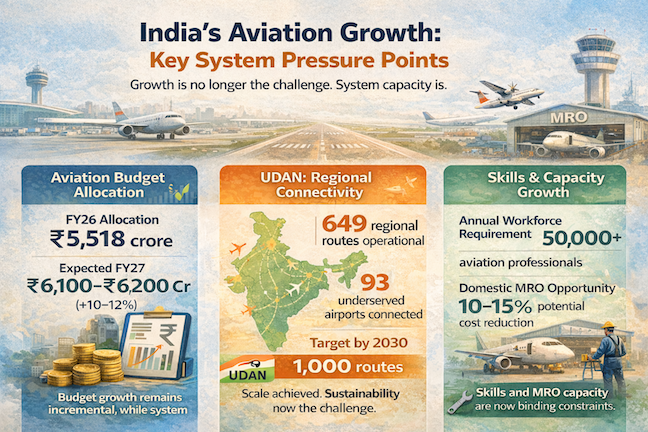
The civil aviation allocation for FY26 stands at ₹5,518 crore, continuing a steady upward trajectory over several years. Industry estimates ahead of Budget 2026–27 point to an increase of 10–12%, potentially taking the allocation to ₹6,100–₹6,200 crore.
In absolute terms, aviation remains a relatively small budget head compared to railways or highways. That has long been the case. What has changed is the expectation attached to each incremental increase. As traffic, fleets, and infrastructure scale, the Budget is increasingly assessed less on its size and more on whether it addresses the pressure points that now define efficiency, safety, and affordability. Against this backdrop, the sector’s expectations have narrowed to a specific set of priorities listed below.
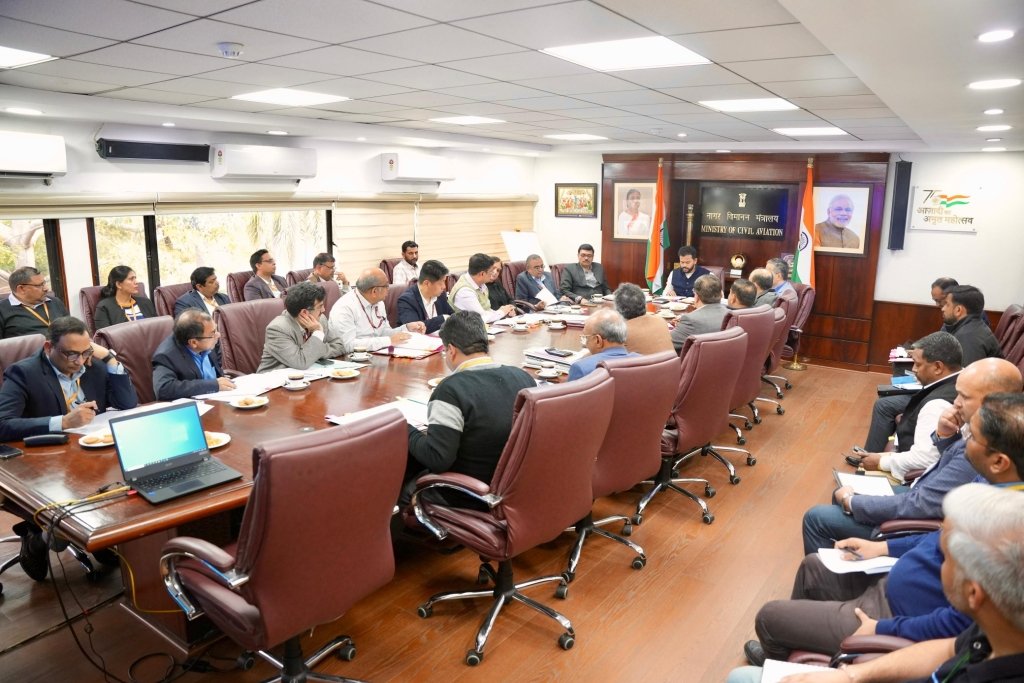
Photo: MoCA
Aviation Turbine Fuel: A Longstanding Debate
Fuel economics have shaped airline viability in India for decades, and scale has not diluted that reality. Aviation turbine fuel typically accounts for around 40–45% of airline operating costs in India, making it the single largest expense line. ATF’s exclusion from the GST framework has left airlines exposed to a layered tax structure—central levies combined with varying state VAT—while offering little scope for input tax credit.
The demand to bring ATF under GST is not new. It has surfaced repeatedly across multiple budget cycles and equally repeatedly stalled, largely due to concerns over state revenue loss. The discussion ahead of the Union Budget has become more pointed, shaped less by optimism about a resolution and more by the rising cost impact of higher utilisation and fleet expansion.
The conversation has shifted from whether ATF should be included under GST to whether the government is willing to signal movement. Industry focus has narrowed to:
- A phased or partial pathway towards GST inclusion,
- Incentives for states to moderate VAT rates, and
- Parallel rationalisation of airport charges to ensure any relief is not offset elsewhere.
The expectation is no longer for closure, but for direction.
Regional Connectivity: The Sustainability Test
The UDAN scheme has reshaped India’s regional aviation map since its launch in 2016, extending scheduled air services to cities that were previously unconnected. With several rounds now operational, the programme has moved beyond its launch phase and into a more mature stage.
The challenge has correspondingly shifted to sustaining routes once initial viability support tapers off. To date, UDAN has operationalised 649 regional routes and connected 93 previously unserved or underserved airports, including heliports and water aerodromes. Since inception, the scheme has carried around 1.56 crore passengers across approximately 3.23 lakh flights, demonstrating both its reach and the foundation it has created for wider regional connectivity.
Looking ahead, the government has indicated that the expanded UDAN framework aims to serve an additional 4 crore passengers over the coming decade. This ambition sharpens the focus on durability rather than scale alone, placing greater emphasis on whether regional routes can transition from supported operations to sustained demand.
Attention has therefore centred on the ambition of reaching 1,000 regional routes by 2030 and, more critically, on the conditions required to keep them viable over time. The constraints are well understood:
- Predictable funding support for underserved tier-2 and tier-3 markets,
- Differentiated support for geographically challenging regions, and
- Closer monitoring of route performance beyond initial launch milestones.
Without recalibration, regional connectivity risks becoming subsidy-dependent rather than structurally viable—an outcome policymakers are keen to avoid.
Airports and Airspace: The Hidden Constraints
India’s airport expansion over the past decade has been substantial, but passenger growth is increasingly exposing constraints that are less visible than terminals. Congestion at major hubs is now driven as much by runway availability, taxiway layouts, airspace design, and air traffic management capacity as by passenger facilities.
The focus has shifted from visible capex announcements to improving capacity at identified bottlenecks. Attention has consequently centred on:
- Allocation support for 10 or more greenfield airports,
- Modernisation of existing airports through PPP frameworks, and
- Investment in airspace redesign and ATC modernisation.
Industry voices increasingly underline that airport expansion without parallel airside and airspace investment merely shifts congestion rather than resolves it.
Aircraft Acquisition and Financing
Aircraft orders placed by Indian carriers over the past two years have altered the scale of the market. While these orders reflect confidence in demand growth, they also create unprecedented financing requirements as delivery schedules approach. What was once a long-term structural concern has now moved into the near-term operational frame.
Aircraft financing has emerged as a central consideration, with attention turning to how airlines will fund large-scale fleet induction without overstretching balance sheets or increasing reliance on overseas lessors in a tighter global credit environment.
Policy discussions ahead of the Budget have converged around a limited set of structural interventions:
- Granting infrastructure status to aircraft and related financing,
- Strengthening India’s aircraft leasing ecosystem at GIFT City, and
- Extending the existing 10-year tax holiday to 15 years, alongside income-tax exemptions and IGST relief for leasing and financing entities.
These measures are being viewed not as short-term relief, but as building blocks for a financing architecture capable of supporting sustained fleet growth. As of late 2025, 37 aircraft lessors were registered at GIFT City, with more than 300 aviation assets leased through this IFSC hub, reflecting the gradual build-up of a domestic leasing market that can anchor India’s fleet financing.
MRO and Skills: System Readiness
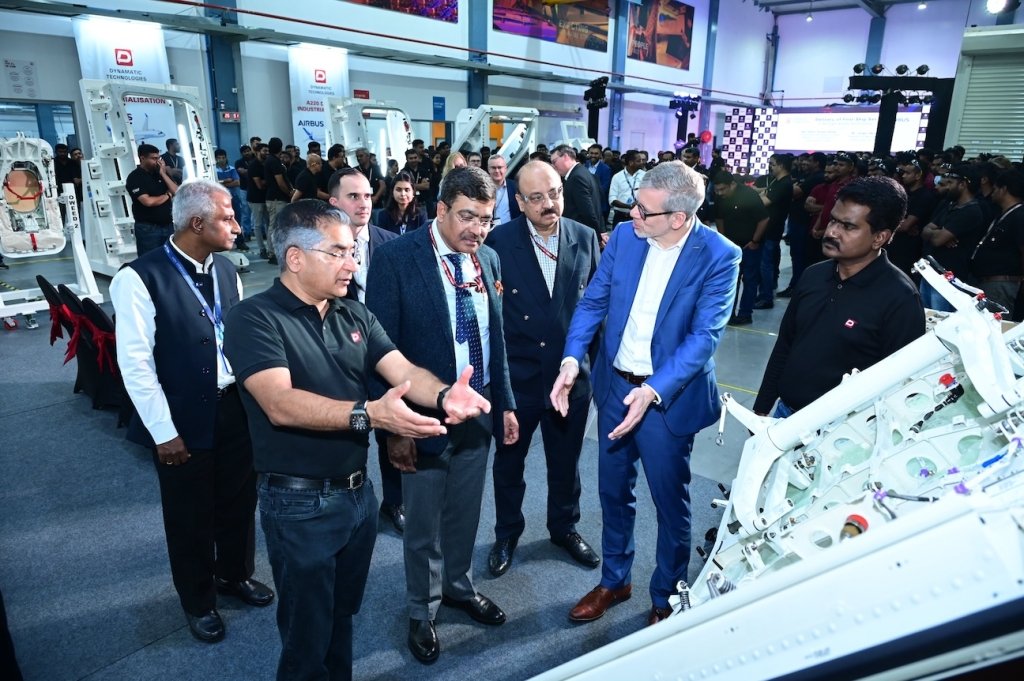
Despite recent tax rationalisation measures, a significant share of Indian airline maintenance continues to be carried out overseas. As fleets grow and utilisation intensifies, this dependence is increasingly seen as both a cost burden and a resilience risk, with implications for downtime, foreign exchange outflows, and operational flexibility.
MRO is now widely recognised as a core capability rather than a peripheral service. Stronger domestic MRO capacity, industry estimates suggest, could reduce maintenance costs by 10–15% annually by lowering reliance on foreign facilities and improving turnaround times.
Alongside infrastructure, manpower has emerged as an equally binding constraint. Training more than 50,000 aviation professionals annually is no longer treated as an aspiration, but as a practical requirement linked directly to fleet expansion and rising utilisation.
Cargo, Sustainability and System Resilience
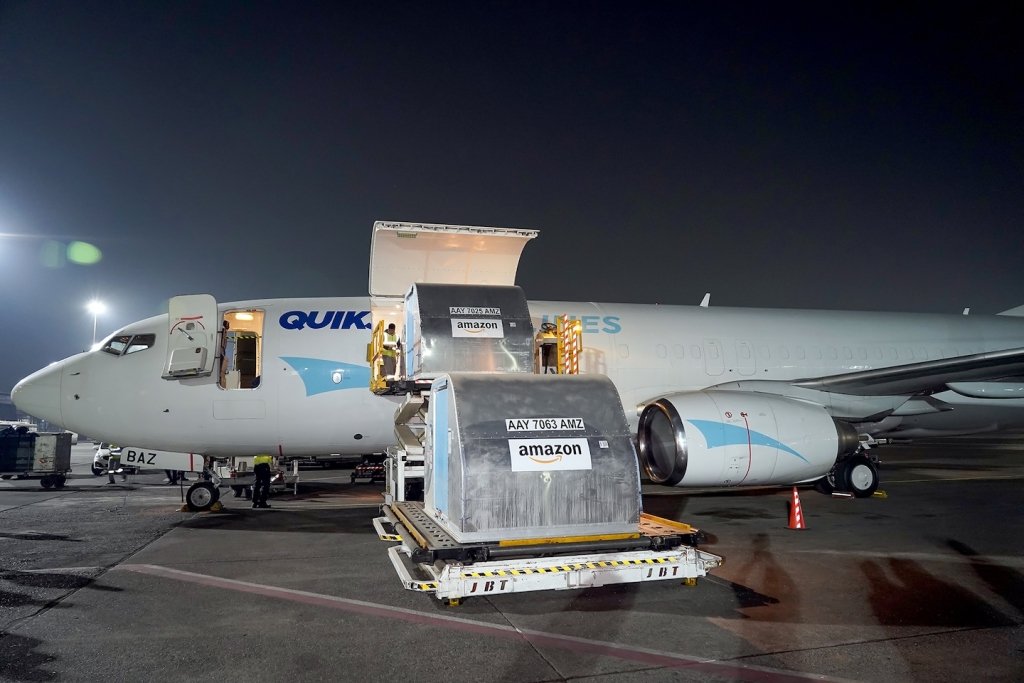
Air cargo has gained strategic relevance, particularly for time-sensitive and high-value goods. Within this, perishables such as fruits and flowers have drawn particular attention because they link aviation directly to agricultural incomes, regional supply chains, and export competitiveness. Policy focus has centred on improving the use of belly cargo on passenger aircraft and developing domestic air-cargo corridors integrated with cold-chain infrastructure.
At the same time, sustainability and digital resilience are increasingly intersecting with safety and efficiency. As aviation operations digitalise, vulnerabilities are expanding alongside gains in productivity. Policy attention is now focused on:
- Dedicated funding for biofuel R&D and electric ground-handling equipment,
- Accelerated depreciation for green airport infrastructure,
- Expansion of green airport initiatives aimed at 100% renewable energy usage at major hubs, and
- National cybersecurity standards and AI-driven airport management systems.
These priorities span multiple ministries, leaving the Union Budget as one of the few mechanisms through which they can be addressed in a coordinated way.
The Real Test
The aviation sector’s focus has narrowed to signals rather than promises. The real test will not be the size of the allocation, but whether policy choices meaningfully address fuel economics, financing access, airspace capacity, domestic capability, and overall system resilience.
Equally, what is left unaddressed may prove as telling as what is included. After a decade defined by expansion, aviation has entered a phase where growth must be actively managed. The opportunity now is not to chase additional capacity, but to strengthen the system that supports sustained growth.
Also Read: UDAN at Nine: India’s Regional Connectivity Milestones and Misses

Ajeet Yadav is an aviation enthusiast covering airline news, airports, aircraft, and industry developments through well-researched and reliable reporting.