











India Set To Lead Global MRO Boom As Aircraft Delivery Delays Stretch Airline Fleets

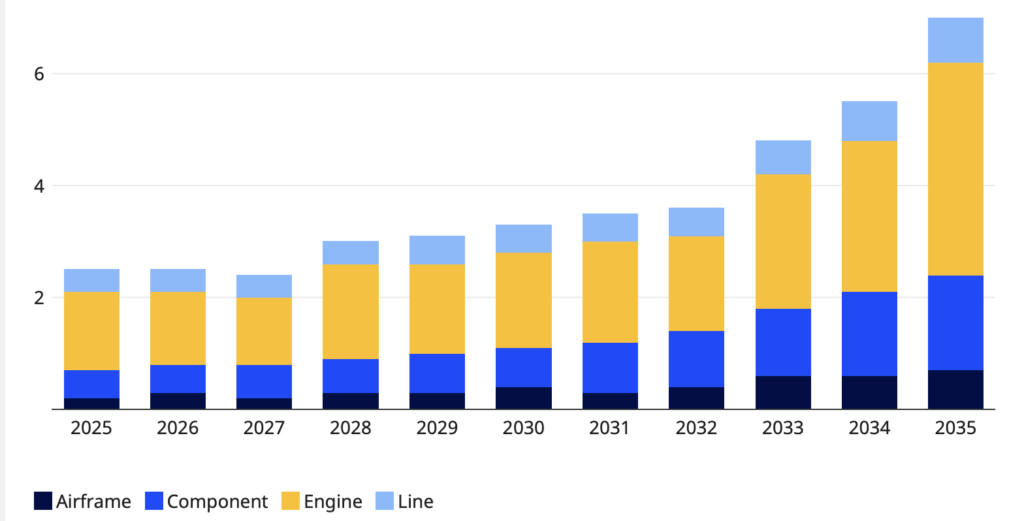
- India is forecast to become the world’s fastest-growing MRO market, with annual spending expected to more than double from $3.1 billion in 2026 to $6.9 billion by 2036.
- Aircraft delivery delays, ageing fleets, higher utilisation and engine maintenance pressures are driving stronger global demand for MRO services.
- India’s narrowbody-led fleet expansion will require major investment in MRO infrastructure, skilled technicians and long-term maintenance capacity.
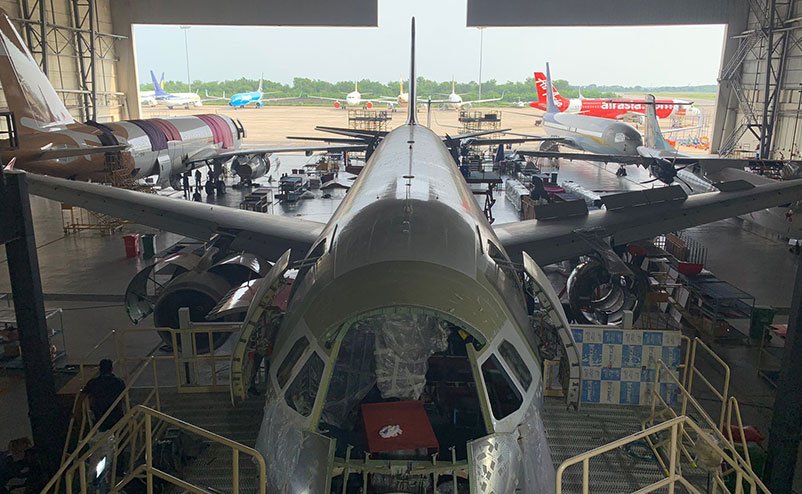
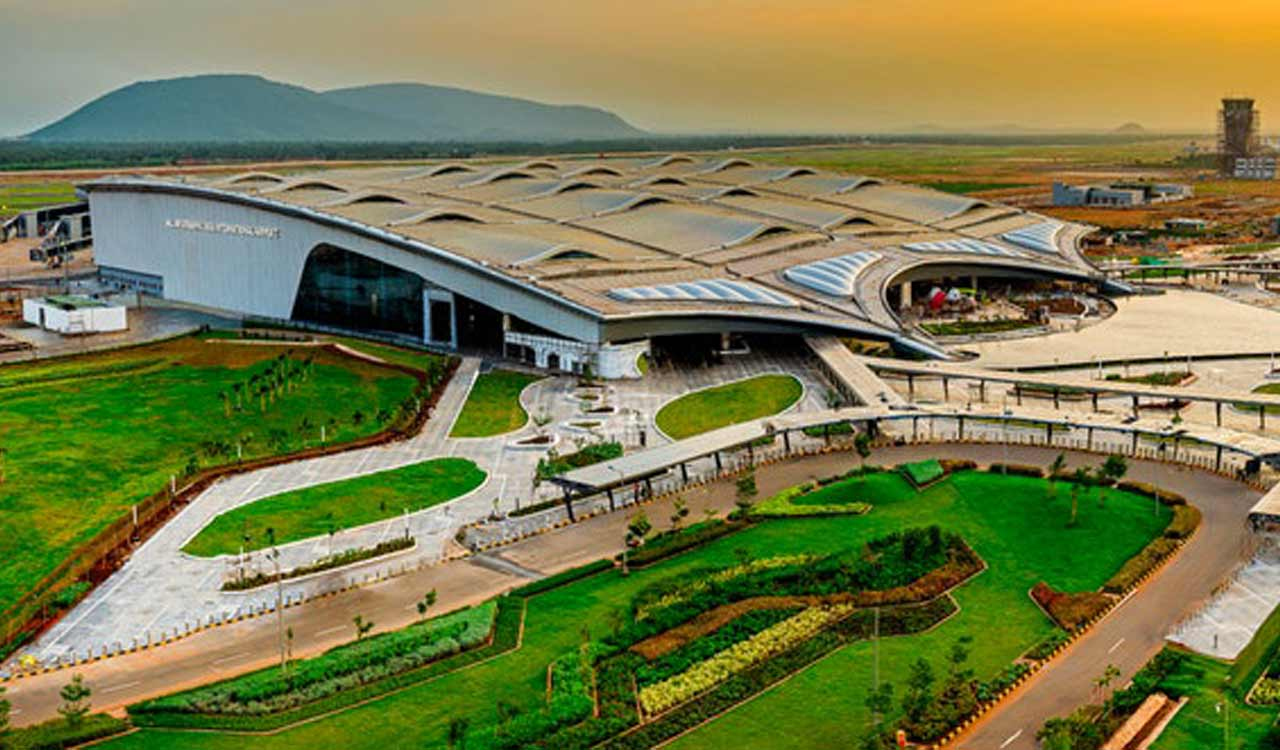
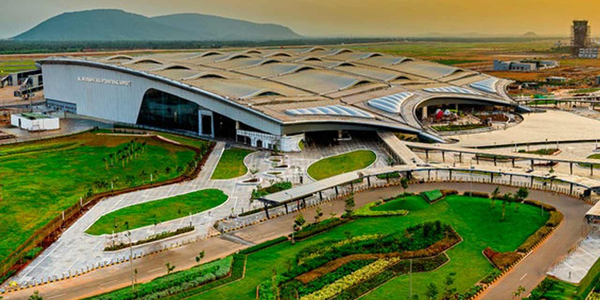
Photo: GMR Aero Technic
India is poised to become the world’s fastest-growing aviation maintenance market over the next decade as airlines grapple with aircraft delivery delays, ageing fleets and rising engine maintenance requirements, according to a new report by Oliver Wyman.
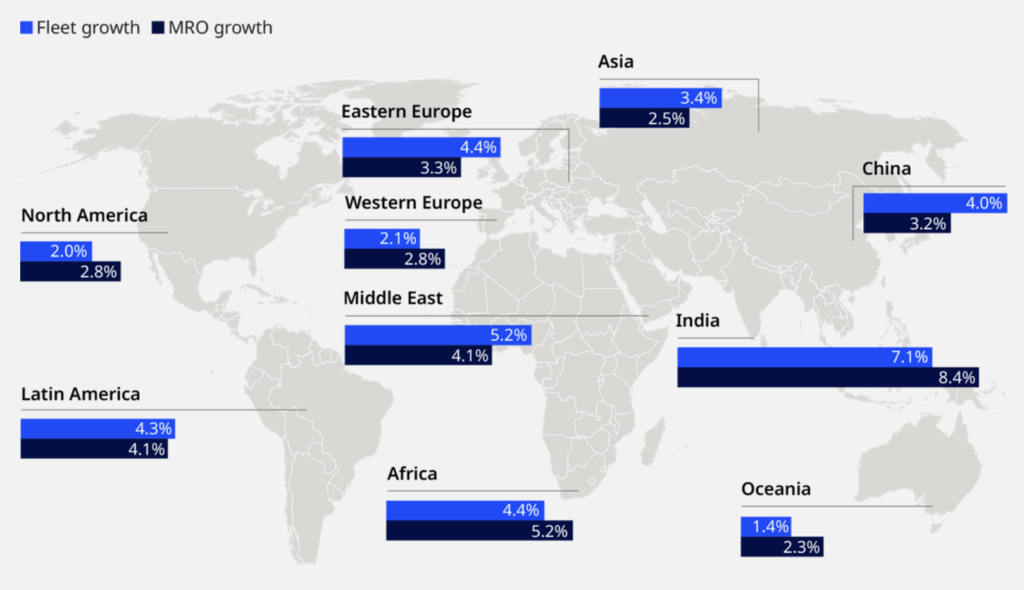
The consultancy’s Global Fleet and MRO Market Forecast 2026–2036 projects India’s maintenance, repair and overhaul (MRO) market will expand at a compound annual growth rate (CAGR) of 8.4% between 2026 and 2036—the highest globally. Annual MRO spending in India is forecast to more than double from $3.1 billion in 2026 to $6.9 billion by 2036.
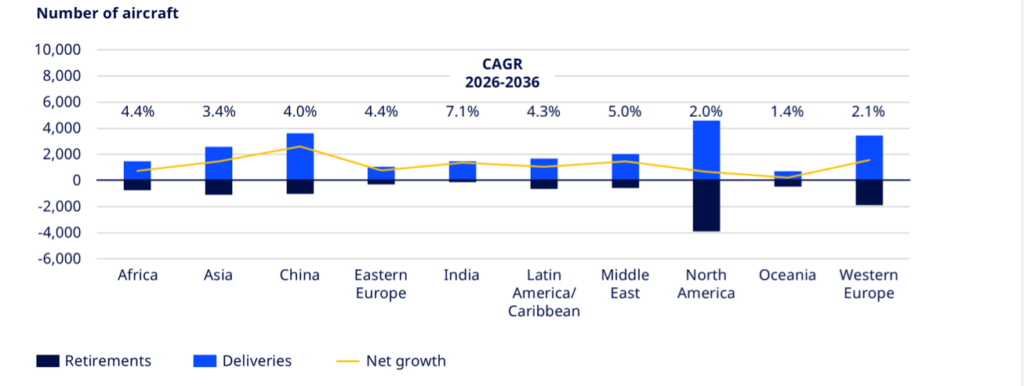
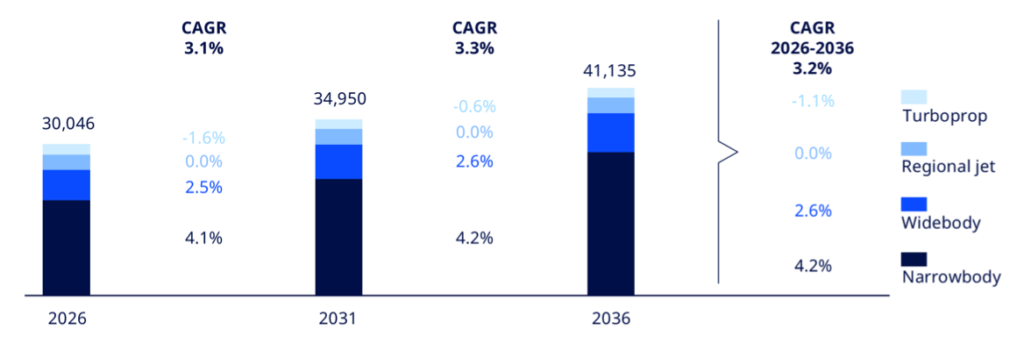
At the same time, India’s commercial aircraft fleet is expected to almost double from 812 aircraft in 2026 to 1,605 aircraft by 2036, representing the fastest fleet growth rate worldwide at 7.1% annually.
“The ageing global fleet, driven by production delays, combined with record-high utilisation, is increasing maintenance demands into a supercycle,” the report said.
The report said global aviation demand remains exceptionally strong, with more than 5.2 billion passengers travelling by air in 2025 and airline revenues expected to cross the $1 trillion mark for the first time. Revenue passenger kilometres (RPKs) are running 9% above pre-pandemic levels.
However, aircraft production continues to lag demand because of persistent supply-chain disruptions, engine shortages and workforce constraints across the aerospace industry. At the start of 2026, airlines globally were waiting for more than 17,000 aircraft orders to be fulfilled—a backlog expected to take over 12 years to clear at current production rates.
“Supply chain issues will limit annual aircraft production worldwide until at least 2030,” the report warned.
The report said both Airbus and Boeing continue to struggle to meet ambitious production targets because of shortages of engine components, raw materials and skilled labour. Airbus aims to produce 75 A320 aircraft a month by 2027, but was manufacturing only 54 monthly by the end of 2025. Boeing, meanwhile, received approval to increase 737 production to 42 aircraft a month, well below its earlier target of 57.
As deliveries slow, airlines are operating older aircraft for longer periods and increasing aircraft utilisation. The average age of the global fleet rose to nearly 13 years in 2025, about 18 months older than in 2024, while average flight hours per aircraft increased 2% year-on-year.
That trend is sharply boosting demand for aircraft maintenance.
Global MRO demand reached nearly $136 billion in 2025 and is forecast to rise to around $193 billion by 2036. Engine maintenance alone is expected to grow from $70.1 billion in 2026 to $102.6 billion by 2036, making it the single largest segment of the MRO market.
The report said maintenance demand is being intensified by inspections and durability-related issues affecting newer-generation engines, particularly Pratt & Whitney’s GTF platforms.
“Engine maintenance—the largest share of the MRO market—also faces ongoing pricing and capacity pressures, in part due to issues with the Pratt & Whitney GTF,” the report noted.
Oliver Wyman said delayed maintenance during the pandemic years and the aftereffects of the Boeing 737 MAX grounding had created a “bow wave” effect, contributing to “capacity bottlenecks, longer turnaround times, and fluctuating pricing dynamics”.
India’s growth story is expected to be led overwhelmingly by narrowbody aircraft, which form the backbone of domestic aviation operations. India’s narrowbody fleet is projected to rise from 673 aircraft in 2026 to 1,433 aircraft by 2036.
The report also underlined the need for large investments in maintenance infrastructure and skilled manpower as the country expands its aviation footprint.
“India’s market remains small but growing and will require extensive infrastructure investments in support,” the report said.
Globally, workforce shortages are emerging as a major concern for aviation maintenance providers. The report said 41% of certified mechanics in the United States are over 60, with around 45,000 expected to retire over the next decade.
The consultancy added that airlines and MRO providers are increasingly pursuing partnerships, vertical integration and technology adoption to secure maintenance capacity and reduce operational disruptions.
“We’ve seen strategics and airlines increasing interest in expanding their MRO footprint over the past few years,” the report said, citing rising demand for in-house repair capability and long-term maintenance partnerships.
Also Read: Behind Noida Airport’s Tariff Order: Airlines, Regulators and a High-Stakes Aviation Gamble

R Suryamurthy has been an economic analyst and journalist for more than three decades and has worked for The Telegraph, Tribune and Press Trust of India.