
















- Engine shops are using automation, AI-supported planning and integrated maintenance systems to manage capacity pressure, material flow and turnaround-time performance.
- Non-routine findings during teardown and inspection continue to affect manpower planning, parts availability, customer approvals and engine shop turnaround times.
- Clean operational data, standardised processes and shop-floor systems that support technicians remain central to how engine MRO facilities are approaching AI integration and automation.
While the calendar reads 2026, the headline challenges facing the aviation maintenance, repair, and overhaul (MRO) sector remain largely unchanged. Capacity constraints, supply chain disruption, part shortages, and workforce limitations continue to shape daily operations.
Those realities formed the focus of a discussion on “AI Powered Smart Engine Shops: Optimising Capacity, People and Parts,” where executives from Ramco Systems, Powerhouse Engines and Korean Air discussed how engine MRO facilities are approaching digitalisation while managing rising operational complexity.
While the bottlenecks themselves are familiar, engine shops are increasingly turning to automation, connected systems and AI-driven planning to improve material flow, maintenance coordination and turnaround times.
Shop Floor Challenges
For many engine shops, scaling operations has meant working around fragmented systems spread across spreadsheets, emails and physical documentation. Eric Engdahl, CEO of Powerhouse Engines, described that lack of integration as one of the biggest constraints facing engine maintenance businesses attempting to grow efficiently.
“The biggest challenge for our business was that too much of our operation was happening outside a single system,” Engdahl said. “It was happening over spreadsheets, over email, over physical documents. We need an end-to-end technology backbone for our business in order for everyone to be working from the same operational picture.”
That requirement led Powerhouse Engines to move toward a unified digital backbone for its engine operations, so that planning, records, materials and commercial decisions are no longer handled separately across spreadsheets, emails and standalone systems.

For Engdahl, the test of any such system is whether it helps the workforce rather than adding more work around the maintenance process.
“Technology is no good to me if it slows our workforce down,” he said. “We need our workforce to be given the tools necessary on the shop floor to interface with something that’s repeatable, scalable and supports decision-making.”
That concern is especially relevant for engine shops expanding from internal fleet support into third-party maintenance. Charlie Kim, Managing Vice President for the Engine Maintenance Centre at Korean Air, said the airline’s engine shop had traditionally supported its own fleet, but the move into third-party engine MRO required a different operating model.
Korean Air’s existing engine shop supports programmes including the PW4000 family, CFM56, GE90 and PW1100G GTF engines. Its annual capacity was limited to about 120 shop visits, with around 450 people working in the shop, largely because of space constraints. The airline’s expansion plan required new engine capabilities, including LEAP and Trent XWB, and a larger operating structure capable of handling a higher share of external customer work.
“We realised that the level of growth and complexity couldn’t be managed with existing legacy IT systems,” Kim said.
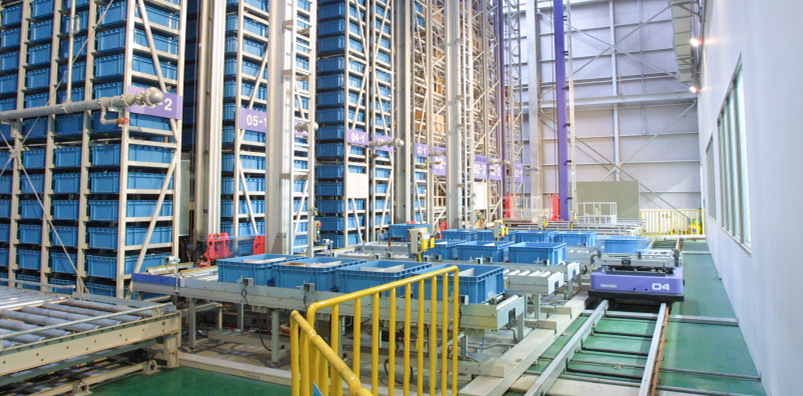
The changes extended beyond replacing back-office systems. Kim described a production environment being connected directly with automated warehouses, warehouse management systems, warehouse control systems and Autonomous Mobile Robot (AMR) controls. Once a workload is triggered, the required parts and tools can be picked and delivered automatically to technicians.

“When a workload is triggered, the necessary parts and tools are automatically picked and delivered by AMRs, saving time and allowing our technicians to focus on real maintenance work,” Kim said.
RFID and QR-code tracking are also being used for parts and tools, giving the shop better visibility of where items are located and how long each step takes.
IoT sensors and PLCs are being applied to key machines for predictive maintenance and safety monitoring, including gas levels, temperature and vibration.
Kim described the integrated systems as part of the operational backbone required to support higher engine output, better coordination across departments and tighter turnaround-time management.
Smart Automation and Data Hygiene
Deploying advanced technology inside an engine MRO facility requires looking past industry hype to focus entirely on localised, high-value use cases. On the modern shop floor, this intelligence materialises through a mix of automated logistics, real-time parts tracking, and predictive algorithms.
Much of the AI discussion focused on material readiness, turnaround-time management and non-routine maintenance planning.
Engdahl acknowledged that AI is already being used at the OEM and large-organisation level, including in diagnostics, trace analytics and inventory optimisation. For engine shops, however, the more immediate issue is whether data is clean enough and processes are structured enough for AI to be useful.
Engdahl said many engine shops are still dealing with more basic operational issues before advanced AI systems can become genuinely useful at shop-floor level. Clean operational data, he argued, remains one of the key requirements before newer AI or robotics-based systems can be integrated effectively.

“Whatever advanced technology solutions emerge over the next few years, whether in AI or robotics or anything else, we need clean data first,” Engdahl said.
He also cautioned against systems that increase administrative workload inside maintenance operations rather than simplifying them.
“There’s been a lot of systems that we’ve deployed as an industry over the years that have been very cumbersome and very hard to maintain,” he said. “It feels like you’re hiring developers and additional staff just to feed the system the information it needs to function.”
Instead, Engdahl said future systems would need to support technicians and inspectors more naturally at shop-floor level.
“The system should be working for us,” he said. “We shouldn’t be working for the system.”
Manoj Singh, Chief Customer Officer at Ramco, said one of the biggest operational challenges for engine MROs is the impact non-routine findings can have on turnaround times, material planning and manpower allocation.
“How do you predict the non-routines that you end up finding in your business process in advance so that you are able to better plan for your capacity, your parts, your material and people?” Singh said.
Singh said AI could help engine shops anticipate likely non-routine findings earlier based on engine type, operating conditions and historical patterns, allowing maintenance organisations to plan capacity, materials and maintenance workflows more efficiently.
Material readiness emerged as another operational area where AI-supported systems could improve planning and reduce delays. By bringing procurement, inventory and shop-level logistics into one operating environment, engine shops can identify material shortages earlier and reduce production delays.
Routine activities such as work-order creation, job-card generation, material issuing, and reporting can also be automated, allowing engineers and technicians to spend more time on actual maintenance work.
Singh argued that process structure and data quality remain fundamental before AI systems can be deployed effectively inside engine shops.
“AI is, of course, a technology, but it gets applied in a context, and the context here is process and data,” Singh said. “The streamlining of business processes and understanding where automation can help in that streamlined business process is a very important step that MROs have to accomplish before they start talking about AI.”
That process discipline also has to extend to the workforce. Kim noted that engine shops need people who understand teardown, assembly and piece-part level repair before they can identify useful AI applications.
Broad, unfocused AI projects are unlikely to help if they are not tied to the actual work inside the shop.
“AI projects often fail when they are too broad,” Kim said. “Start small, match your plan with your current organisation’s capability, and scale.”
For engine MROs, the route toward AI-powered smart shops still depends on fundamentals such as clean operational data, standardised processes, coordinated material movement and systems that support technicians on the shop floor.
As workloads increase and engine visits become more complex, the operational value of AI will depend on how effectively maintenance organisations can improve planning, material readiness and turnaround-time management inside the shop.
Also Read: GE Aerospace Expands Pune’s Role in Global Engine Component Production