










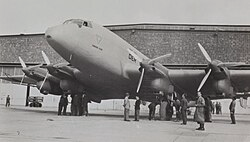
Deutsche Lufthansa Junkers Ju 90 Crash 8 November 1940
The Deutsche Lufthansa Junkers Ju 90 accident of 8 November 1940 was a tragic event in the history of German aviation. It occurred during the early years of the Second World War, when civil aviation in Europe was being heavily affected by military operations, changing routes, and wartime restrictions.
The aircraft involved was a Junkers Ju 90, a large four-engine German aircraft developed for long-distance passenger transportation. Before the war, the Ju 90 represented an important step in German commercial aviation. It was designed to carry passengers over long distances and was operated by Deutsche Lufthansa, Germany’s national airline of the period.
The accident occurred at a time when aircraft originally designed for civilian transportation were increasingly being used or adapted for wartime purposes. The event is therefore significant not only as an aviation accident but also as part of the transition from peaceful commercial aviation to wartime aviation.
Deutsche Lufthansa
Deutsche Lufthansa was Germany’s major airline during the 1930s and early 1940s.
The airline had developed an extensive network before the Second World War.
Its aircraft carried:
- Passengers
- Freight
- Government officials
- Business travelers
Lufthansa was known for using modern aircraft and developing long-distance airline operations.
During the 1930s, German aviation technology was developing rapidly.
The Junkers Ju 90
The aircraft involved in the accident was a Junkers Ju 90.
The Ju 90 was a large four-engine aircraft.
It was designed primarily for passenger and transport operations.
The aircraft was much larger than many earlier airliners.
It had a strong all-metal structure and four engines, giving it the power needed for long-distance operations.
The Ju 90 was one of the aircraft that showed how quickly commercial aircraft design had developed during the 1930s.
A Large Aircraft for Its Time
The Ju 90 was designed to provide greater passenger capacity and range.
Earlier airliners often carried relatively small numbers of passengers.
The Ju 90 represented a move toward larger aircraft.
Its size also made it useful for transportation purposes.
However, large aircraft required experienced crews and careful maintenance.
Operating such aircraft in wartime created additional challenges.
Commercial Aviation Before the War
During the 1930s, international commercial aviation was growing.
Airlines were creating routes between major European cities.
Aircraft were becoming faster and more comfortable.
Passengers could travel internationally in much less time than by train or ship.
Lufthansa participated actively in this development.
The airline became an important part of Germany’s international aviation system.
The Beginning of the Second World War
The Second World War began in September 1939.
Germany invaded Poland on 1 September 1939.
Britain and France then declared war on Germany.
European aviation changed almost immediately.
Airlines could no longer operate normally.
Military aircraft dominated the skies.
Air routes were restricted.
Airports became strategically important.
Many civilian aircraft were taken into military service.
Lufthansa During Wartime
Lufthansa continued to operate some services during the war, but its role changed.
Its aircraft and crews became connected with Germany’s wartime transportation system.
Civilian and military aviation increasingly overlapped.
Aircraft that had originally been designed for passengers could be used for transport.
The Ju 90 was particularly suitable for carrying people and cargo.
The Flight
On 8 November 1940, a Lufthansa Junkers Ju 90 was involved in a serious accident.
The aircraft was operating in wartime conditions.
The flight ended in a crash.
People aboard the aircraft lost their lives.
The accident was investigated, but wartime conditions made detailed information more difficult to obtain than in peacetime.
Aviation in Wartime
Flying during wartime was very different from normal airline operations.
Crews had to consider:
- Air raids
- Military aircraft
- Restricted airspace
- Navigation problems
- Poor weather
- Airport security
- Changing routes
A routine flight could become dangerous because of factors unrelated to the aircraft itself.
Navigation Problems
Navigation technology in 1940 was still developing.
Pilots used:
- Magnetic compasses
- Maps
- Dead reckoning
- Radio navigation
- Visual landmarks
There was no GPS.
There were no digital navigation displays.
There was no satellite tracking.
Long-distance navigation required careful calculations.
Radio Communication
Radio was an important part of aviation.
Pilots and radio operators could communicate with ground stations.
They could receive weather information.
They could report their position.
However, wartime radio traffic could be complicated.
Military communication often had priority.
Signals could be interrupted.
Radio equipment could also fail.
Weather Conditions
Weather was a major factor in aviation accidents during this period.
Aircraft could encounter:
- Fog
- Rain
- Snow
- Clouds
- Strong winds
- Icing
- Poor visibility
Weather forecasting had improved considerably by 1940, but it was still less accurate than modern forecasting.
Pilots sometimes had limited information about conditions along the entire route.
Instrument Flying
Instrument flying was becoming increasingly important.
Pilots needed to fly safely when they could not see the ground.
Important cockpit instruments included:
- Altimeter
- Airspeed indicator
- Compass
- Artificial horizon
- Vertical speed indicator
These instruments allowed pilots to maintain control in cloud and poor visibility.
However, instrument flying required extensive training.
The Role of the Crew
A large aircraft such as the Ju 90 required a coordinated crew.
The captain was responsible for the flight.
Other crew members could assist with:
- Navigation
- Radio communication
- Engineering
- Passenger management
Teamwork was extremely important.
During an emergency, the crew needed to make quick decisions.
Aircraft Maintenance
Maintenance was particularly important for four-engine aircraft.
Each engine had to be inspected.
Fuel systems needed regular checks.
Flight controls had to operate correctly.
The aircraft’s structure required careful inspection.
During wartime, maintenance could become more difficult because of shortages of spare parts and trained personnel.
The Human Cost
The most tragic part of the accident was the loss of life.
Passengers and crew aboard the Ju 90 were people with families, jobs, and personal lives.
They were traveling during a period when Europe was already experiencing enormous suffering because of the war.
The accident added another tragedy to an already dangerous period.
Accident Investigation in Wartime
Investigating an aircraft accident during wartime was difficult.
Investigators had to consider both normal aviation causes and military circumstances.
They examined:
- Wreckage
- Engines
- Controls
- Weather
- Pilot records
- Radio information
- Maintenance records
- Flight plans
However, some records could be classified or unavailable.
This could make it difficult for historians to reconstruct the accident fully.
No Flight Recorders
Modern aircraft carry sophisticated flight-data recorders.
These devices record aircraft performance.
Cockpit voice recorders capture crew conversations and radio communication.
In 1940, these systems did not exist.
Investigators therefore had much less information.
They had to reconstruct the final moments using physical evidence and eyewitness accounts.
The Importance of the Ju 90
The Ju 90 was an important aircraft in German aviation history.
It demonstrated the potential for large, long-range aircraft.
The design was later developed further in the Junkers Ju 290, which became a larger military transport and reconnaissance aircraft.
This showed how commercial aircraft technology could influence military aviation.
Civilian Aircraft and Military Roles
The Second World War blurred the difference between civilian and military aircraft.
Many commercial aircraft were adapted for military transportation.
Civilian airlines became involved in wartime logistics.
Airfields were used by military aircraft.
Air routes became part of strategic transportation networks.
This created additional risks for aircraft crews.
Airport Safety
Airports during wartime had different requirements.
Blackout rules could reduce visibility at night.
Airfields could be subject to military restrictions.
Runways and navigation lights might be controlled.
Aircraft crews had to follow special procedures.
These conditions made night flying more difficult.
Night Flying
By 1940, airlines were already capable of operating at night.
However, night flying remained challenging.
Pilots had fewer visual references.
Weather could be harder to detect.
Airport lighting could be limited during wartime.
Navigation therefore depended heavily on instruments and radio.
The Importance of Pilot Training
Pilot training was essential.
Crews needed to understand the aircraft’s performance.
They needed to know how to respond to engine problems.
They had to be comfortable flying by instruments.
They also needed to understand wartime restrictions.
The training standards of the period were improving but were still not comparable with today’s highly structured airline training.
Aviation Technology in 1940
The aviation industry was developing rapidly.
Aircraft had become faster and more reliable.
Four-engine designs were capable of long-distance flights.
Radio navigation was improving.
Radar was beginning to become important in military aviation.
But modern technologies were still absent.
There was no GPS.
There were no computerized flight management systems.
There were no advanced collision-avoidance systems.
The Effect of the War
The war accelerated aviation technology.
Aircraft engines became more powerful.
Navigation improved.
Radar developed rapidly.
Aircraft structures became stronger.
Pilot training became more sophisticated.
These developments eventually influenced post-war commercial aviation.
The Ju 90 and Its Legacy
Although the Ju 90 had been designed as a commercial aircraft, wartime requirements changed its role.
Only a relatively small number of Ju 90 aircraft were built.
The aircraft became part of Germany’s wartime transportation system.
Its design influenced later German transport aircraft.
International Aviation After the War
After 1945, commercial aviation entered a new era.
Large airports were developed.
Airliners became larger and faster.
Navigation systems improved.
Aircraft became safer.
Eventually, jet aircraft transformed international travel.
The experience gained during the war played a major role in this development.
Lessons From Early Aircraft Accidents
The Ju 90 accident is part of the broader history of aviation safety.
Historical accidents taught engineers and airlines about:
- Aircraft design
- Maintenance
- Weather
- Navigation
- Crew training
- Emergency procedures
Safety improvements often came after careful study of accidents.
Human Factors
Modern aviation understands that human factors are extremely important.
Pilots can become tired.
Workload can become high.
Communication can fail.
Stress can affect decision-making.
In wartime, these problems could be even more serious.
Crews had to operate in a highly stressful environment.
Why Historical Research Is Difficult
Information about wartime aviation accidents can sometimes be incomplete.
Records may have been destroyed.
Some documents may have remained classified.
Witnesses may have provided different accounts.
Military authorities may have controlled information.
Therefore, historians sometimes have difficulty establishing every detail.
The Importance of Historical Records
Aviation history depends on records.
Airline documents, government reports, newspaper articles, photographs, and personal accounts help historians understand past accidents.
These records allow researchers to study how aviation developed.
They also help preserve the memory of the people involved.
Remembering the Victims
The people who died in the Ju 90 accident should not be forgotten.
They were part of a generation living through one of the most difficult periods of the twentieth century.
Their lives were interrupted by an aviation disaster during wartime.
Remembering them gives the event its human meaning.
Comparison With Modern Aviation
Modern aviation is much safer.
Aircraft now have:
- Digital navigation
- GPS
- Weather radar
- Advanced autopilot systems
- Collision-avoidance systems
- Terrain-warning systems
- Flight-data recorders
- Cockpit voice recorders
These systems provide several layers of protection.
The technology available to the Ju 90 crew was far more limited.
The Importance of Regulation
Government regulation has also improved.
Modern airlines operate under strict international and national standards.
Aircraft must meet detailed certification requirements.
Pilots receive extensive training.
Maintenance organizations follow strict procedures.
Air traffic control provides structured separation.
These systems developed over many decades.
A Turning Point in Aviation
The accident occurred at a major turning point.
The peaceful aviation world of the 1930s had largely disappeared.
The aircraft industry was now focused on war.
Commercial aircraft designs were being adapted.
Military technology was advancing quickly.
The aviation world after the war would be very different.
Conclusion
The Deutsche Lufthansa Junkers Ju 90 accident of 8 November 1940 belongs to a difficult and important period in aviation history.
The Junkers Ju 90 represented the rapid development of large commercial aircraft during the 1930s. It was designed to carry passengers and cargo over long distances and demonstrated the growing capabilities of German aviation.
But by November 1940, Europe was at war.
The Second World War had transformed commercial aviation. Routes were restricted, airports were subject to military control, and civilian aircraft were increasingly used for transportation connected with the war.
The accident therefore occurred in an environment very different from normal peacetime airline operations.
The aircraft’s crew had to operate without many of the technologies that modern pilots use every day. There was no GPS, no digital flight management system, no satellite communication, and no modern flight recorder. Navigation depended on maps, compass readings, radio navigation, and careful calculations.
Weather was another important challenge. Although meteorological services had improved, pilots did not have access to the highly detailed forecasts and real-time weather radar available today.
Accident investigators also faced major difficulties. Wartime records could be incomplete or unavailable, and investigators did not have flight-data or cockpit voice recorders to help reconstruct the final moments.
The Ju 90 itself has an important place in aviation history. Its development showed the growing demand for larger and longer-range aircraft. Its technology also contributed to later German transport aircraft.
The Second World War accelerated aviation technology in many areas. Radar, navigation, radio communication, engines, and aircraft design improved rapidly. After the war, many of these developments were transferred to civilian aviation.
Today, commercial aircraft operate with multiple layers of safety. Pilots have accurate navigation, detailed weather information, sophisticated communication systems, and powerful warning technologies.
The 8 November 1940 Lufthansa Ju 90 accident therefore belongs to a period when aviation was rapidly changing but still faced serious limitations.
It is also a reminder of the human cost of wartime aviation. Behind the aircraft, the airline, and the historical records were passengers and crew members whose lives were lost during a dangerous period.
Studying such accidents helps us understand how aviation safety developed. Each accident provided information that could be used to improve aircraft, pilot training, maintenance, navigation, and operating procedures.
The story of the Ju 90 is consequently more than the story of one aircraft. It is part of the wider history of commercial aviation, wartime transportation, technological development, and the gradual creation of the much safer aviation system that exists today.

Ajeet Yadav is an aviation enthusiast covering airline news, airports, aircraft, and industry developments through well-researched and reliable reporting.