











- Budget 2026 raises UDAN’s allocation on paper, but compared with FY25 actual spending and a steady decline in Viability Gap Funding, the scheme’s real financial support is shrinking rather than expanding.
- UDAN has widened India’s aviation footprint, yet weak route durability, short subsidy tenures, fleet shortages, and fare–cost mismatches continue to push airlines out once support ends.
- Without longer VGF tenures, sharper route selection, and better aircraft availability, UDAN risks creating more airports than sustainable air services, keeping regional connectivity dependent on subsidies rather than demand.
The Union Budget 2026-27 has reaffirmed the Centre’s political commitment to regional aviation by allocating ₹550 crore to the Ude Desh ka Aam Nagrik (UDAN) scheme—a 27 per cent increase over the revised estimate of ₹434.5 crore in FY26.
For a sector hungry for visibility in the hinterland, the move sends a comforting signal. For airlines, airport operators, and state governments, however, the real issue is not the size of the allocation but whether the scheme’s design can finally deliver sustainable routes rather than subsidised symbolism.
The numbers point to a clear paradox: the Budget headline is positive, but the spending trajectory is not.
While ₹550 crore looks like a boost over last year’s revised estimate, the picture changes when compared with actual expenditure. The government spent ₹789.3 crore on UDAN in FY25. Against that baseline, the FY27 allocation is effectively a 30 per cent decline in real spending capacity.
Viability Gap Funding (VGF)—the core instrument that keeps UDAN routes alive—has been steadily tapering:
- FY24: ₹807 crore
- FY25: ₹628 crore
- FY26 (expected): ₹447 crore
Cumulative VGF since FY18: ₹4,500 crore
This matters because UDAN is not a capital programme; it is a subsidy programme. Fewer subsidy rupees mean fewer routes can be supported, shorter tenures, and a greater risk of airline pullouts once concessions end.
There is no denying that UDAN expanded India’s aviation map. As of January 20, 2026, the scheme has:
- Operationalised 93 airports (73 unserved, 20 underserved)
- Added 15 heliports and 2 water aerodromes
- Activated 657 routes
- Carried over 1.6 crore passengers
- Supported more than 3.27 lakh RCS flights
Prime Minister Narendra Modi has repeatedly credited UDAN for helping India grow from 70 airports in 2014 to over 160 today, and positioning the country as the world’s third-largest domestic aviation market.
Yet, expansion has not translated into durability. A 2023 CAG audit found that of the 774 routes awarded in early UDAN rounds, only 52% actually commenced operations. Also, while 112 routes completed the full three-year subsidy term, a handful of 54 routes (7%) survived beyond subsidies.
Today, 15 UDAN airports remain non-operational, including Pathankot, Pakyong, Kushinagar, Aligarh, Azamgarh, Chitrakoot, Shravasti, Moradabad, Bhavnagar, Ambikapur, Ludhiana, Datia, Kalaburagi, Shimla and Cooch Behar—a reminder that infrastructure does not automatically create demand.
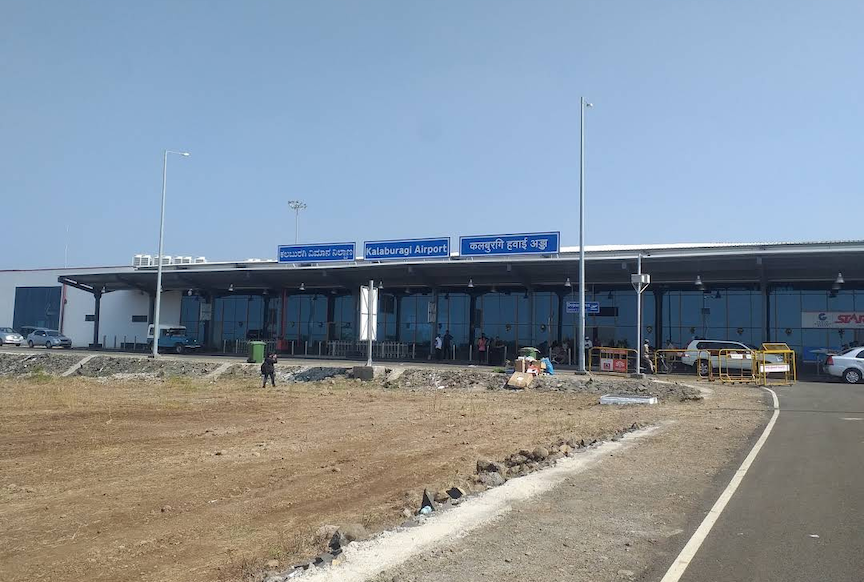
Karnataka offers the clearest case study of UDAN’s structural fragility. Of 42 sanctioned routes, only 11 are currently operational. In Kalaburagi, flights to Bengaluru ceased in October 2025, following the end of the VGF. While UDAN fares were capped at ₹2,500, prices jumped to ₹5,000 once subsidies expired—killing demand almost overnight.
The state has formally asked MoCA to extend VGF from three years to five, arguing that small markets need more time to mature. No decision has been communicated yet.
Industry leaders in Belagavi have also flagged two chronic problems. Foremost among them is the shortage of aircraft which in turn leads to limit route allocation. The other is unpredictability of schedules, which destroys passenger trust even on commercially logical routes like Pune–Belagavi
Three structural constraints continue to undermine UDAN:
- Thin and volatile demand – Most tier-II and tier-III routes generate only 30–50 daily passengers. Pilgrimage and tourism routes spike seasonally and collapse off-peak—a nightmare for year-round viability.
- Mismatch in cost and fare – A turboprop flight costs airlines ₹5,000-₹7,000 per passenger to operate, while UDAN caps fares at ₹2,500 per flight hour. Even with VGF, margins are wafer-thin.
- Fleet bottleneck – India lacks sufficient 19–40 seat turboprops tailored for short runways and thin routes. This has forced airlines to exit routes not because of demand alone, but because of fleet scarcity.
The government’s proposed modified UDAN aims to connect 120 new destinations, serve 4 crore passengers over 10 years even as helipads and small airports in hilly, aspirational and North-East districts are expanded.
At ₹550 crore in FY27, the target is financially stretched unless VGF is either increased later or the model is redesigned.
For UDAN to move from optics to economics, five reforms are essential:
- Extend VGF tenure to five years. Three years is too short for demand to stabilise in small markets.
- Shift subsidies from airlines to passengers. Direct travel vouchers for low-income users would allow routes to evolve organically rather than being propped up artificially.
- Route rationalisation. Pick 50, 100 routes which have a chance of viability without government support and therefore limit the extent of subsidies ‘leaking’ on to marginal routes.
- Coordinate air with road and rail planning. Sometimes, a road or rail improvement is more justified in terms of local accessibility than the continuation of a heavily subsidised air service.
- Expand turboprop capability. Domestic manufacturing, leasing pools, and financing mechanisms for small aircraft need acceleration to ease fleet bottlenecks.
If passenger UDAN is uneven, Krishi UDAN has largely underperformed.
Despite its intent to boost farm exports via air, the programme has struggled because of weak cold-chain facilities at regional airports, fragmented coordination between airlines, mandis and logistics firms, and unreliable cargo volumes from small farmers.
Meanwhile, India’s overall air cargo market has grown from 2.53 MMT in FY15 to 3.72 MMT in FY25, showing that the market is expanding—just not through Krishi UDAN. Industry voices argue that UDAN airports could become decentralised cargo hubs with proper infrastructure, but this has not yet materialised at scale.
With metro airports facing congestion, high charges, and infrastructure stress, regional aviation must absorb a greater share of future growth. That makes reforming UDAN not optional, but necessary.
The conclusion is straightforward: policy changes must follow funding. The ₹550 crore allocation will keep the programme alive, but it will not address its structural flaws.
Without longer VGF tenures, smarter targeting, better aircraft availability, and demand-led planning, UDAN risks repeating the same cycle: new airports today, idle terminals tomorrow.
However, if UDAN succeeds, it can:
- Strengthen last-mile connectivity
- Support tourism and local economies
- Create decentralised air cargo hubs
- Reduce pressure on metro airports
If it fails, India will continue to build airports faster than it builds sustainable air services.
Budget 2026 keeps UDAN in the air—but the engines are still sputtering. The next chapter of regional aviation will be defined less by allocations and more by whether New Delhi is willing to reform the model rather than simply fund it.
Also Read: UDAN at Nine: India’s Regional Connectivity Milestones and Misses
With more than four decades across print and audiovisual media, Tirthankar (TG) Ghosh is a veteran journalist specialising in aviation, air cargo and logistics. His reporting combines deep industry knowledge, original research and sharp analysis to produce authoritative, evidence-led journalism.