







- Dubai Airshow 2025 positions itself as the most forward-leaning edition yet, bringing eVTOL flying displays, night programming, AI-led aviation systems, advanced defence platforms and sustainability debates, offering a real-world preview of next-gen aerospace trends.
- The show acts as a strategic mirror for India, highlighting how the UAE is operationalising urban air mobility, accelerating SAF pathways, deepening space partnerships and integrating digital aviation ecosystems, areas where India faces policy and execution gaps.
- Major OEMs shift focus from order announcements to long-term platforms: Boeing’s 777-9 takes centre stage, Airbus emphasises A350 growth and future propulsion, and Embraer advances the E195-E2 and next-gen freighter, all directly relevant to India’s fleet, cargo and regional aviation strategy.
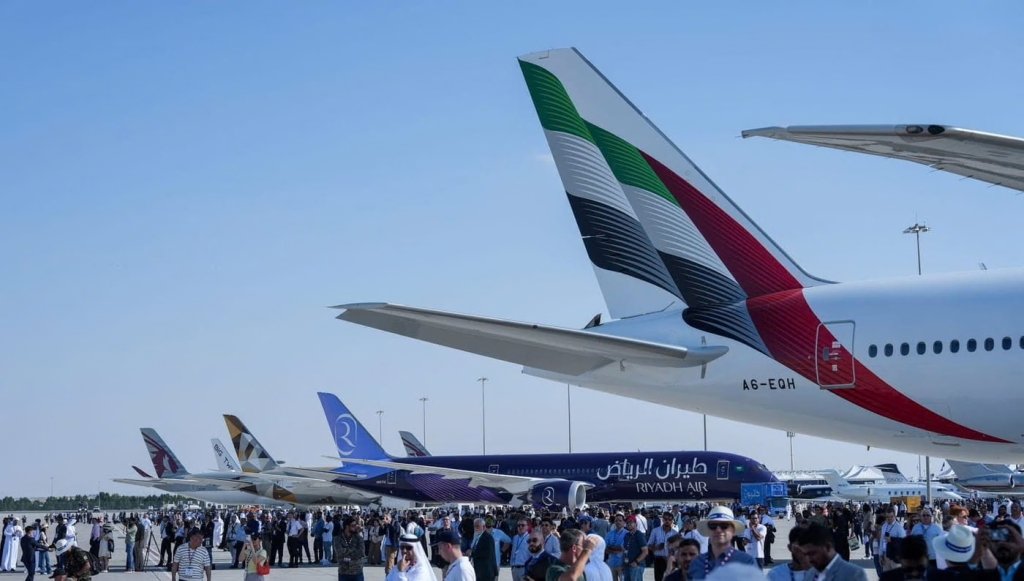
When the Dubai Airshow 2025 opens on November 17, the world’s aerospace community will once again converge at Al Maktoum International Airport, this time for what organisers promise will be the most future-focused edition in the event’s 19-year history. Much more than an order-book frenzy, the 2025 show positions itself as a testbed of advanced mobility, next-gen sustainability, frontier defence systems, and the region’s most ambitious cross-sector innovation programme.
For India, which is simultaneously expanding its civil aviation market, modernising defence, nurturing space capabilities, and struggling to accelerate its sustainability transition, the Dubai Airshow 2025 is less a spectacle and more a strategic mirror.
The UAE’s aviation economy contributes an extraordinary 18.2% to its GDP, about $92 billion, according to IATA, and its commercial fleet is projected to grow at 5.1% annually over the next decade. A nation that built an aerotropolis in the desert is now scripting its next aviation rewrite.
This is the context in which Dubai Airshow 2025 arrives under the theme “The Future is Here.” It will host 1,500 companies from 47 countries, welcome 148,000 visitors, showcase 200 aircraft, and run 12 conference tracks, seven of them completely new. But numbers alone do not define this edition. The UAE aims to underline its role as a global orchestrator of technology, operating models and multi-domain partnerships across civil, defence and space.
Major General Dr. Mubarak Saeed bin Ghafan Al Jabri of the airshow’s Military Committee puts it bluntly: “Empowering the next generation of talent is central to this vision.”
In a dramatic first, the airshow will feature night programming, with static displays, receptions and aerial demonstrations stretching until 9 PM, allowing OEMs to showcase lighting innovations, materials performance, avionics, and next-gen systems in low-light conditions.
Another new element is the runway networking event with Skydive Dubai: drone light shows, skydiving performances, DJs, and high-end hospitality, showcasing how Dubai blends aviation, entertainment and business engagement into one seamless experience.
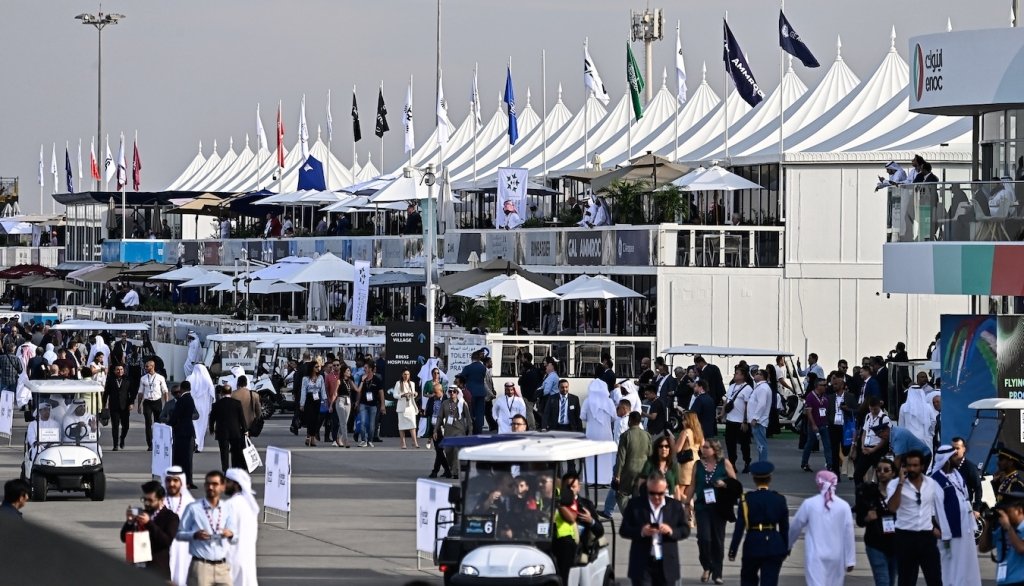
If Dubai Airshow 2023 was about recovery and backlog management, the 2025 edition is about boundary-pushing.
For the first time, eVTOL aircraft will feature in the flying display, led by Joby’s S4, a quiet but globally significant step in electric aviation adoption.
Archer and AutoFlight are expected to announce ecosystem partnerships as Dubai and Abu Dhabi race toward 2026 service launches.
For India, with its 30 congested metros, acute urban mobility challenges, and slow-moving eVTOL policy frameworks, Dubai’s operationalisation of eVTOL corridors will be the world’s first true blueprint.
The airshow’s executive programmes and VISTA start-up pavilion will highlight AI-driven flight operations, predictive maintenance, unmanned systems and sustainability optimisation platforms. A new AI-powered business matchmaking app reflects how deeply the UAE is embedding digital systems into aerospace decision-making.
One can expect intense debate over the next few days on SAF scalability, hydrogen propulsion, electric charging networks, and next-gen engine cycles. UAE carriers have made visible progress on SAF, and Dubai is now pushing for regional supply chains. India, still trapped by policy inertia, feedstock constraints and early-stage production, must read these signals carefully as mandatory blending norms inch closer.
While Dubai 2025 promises breakthroughs in mobility and space, the gravitational centre remains the Boeing-Airbus-Embraer triad, each arriving with strategic intent rather than order-driven showmanship.
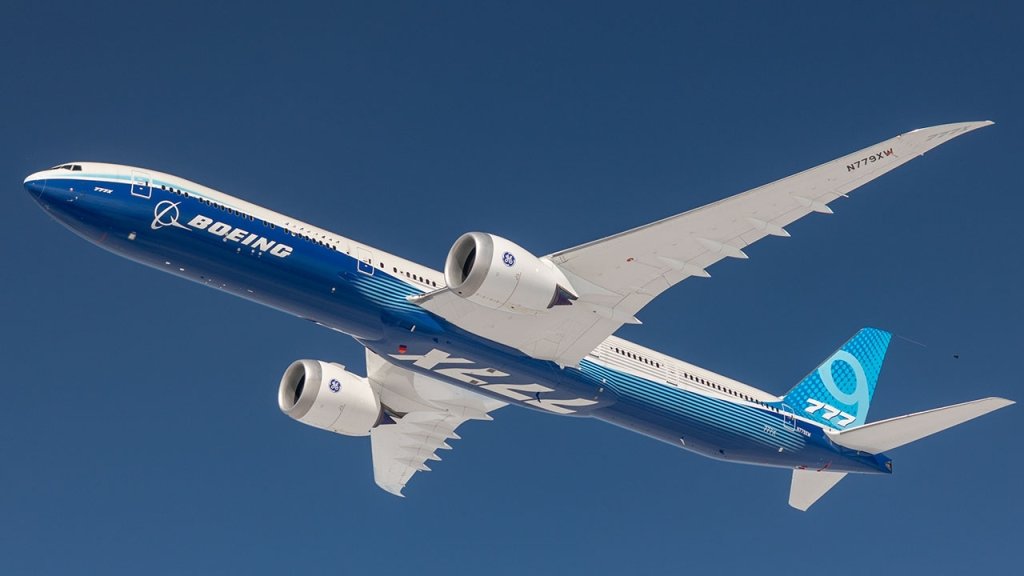
Boeing’s presence carries unusual intensity this year. The company, balancing commercial recovery, supply chain reform and strong defence demand, is using Dubai as a platform to demonstrate renewed confidence.
The centrepiece: the Boeing 777-9, making one of its most prominent public flying displays to date. With Emirates awaiting its first delivery in 2027, this is arguably the most consequential widebody demonstration of the year.
The showcase will highlight:
- The stretched carbon-fibre wing with folding wingtips;
- GE9X engine performance improvements;
- Noise and take-off roll gains; and,
- Refinements from the extended certification cycle.
For Indian carriers exploring Europe-US nonstops and long-haul densification, the 777-9’s Dubai performance is a real-world look at the aircraft shaping the Gulf’s long-haul dominance, and potentially India’s next-generation fleet strategy.
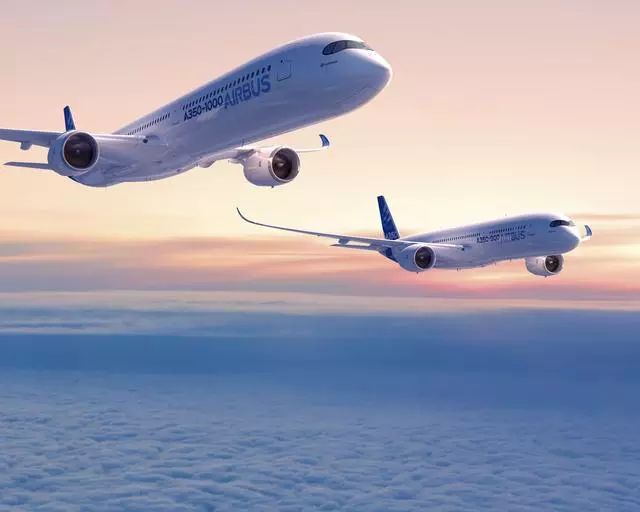
Airbus enters Dubai 2025 with momentum but also scrutiny: supply bottlenecks, A321XLR performance questions after Wizz Air’s order reset, and pressure to clarify timelines for future propulsion.
Instead of mega-orders, expect Airbus to foreground:
- A350 family and rising traction for the A350F;
- A320neo upgrades around cabin densification and route flexibility;
- Hydrogen and hybrid-electric readiness via Airbus UpNext and ZEROe; and,
- AI-enabled cockpit, MRO and operational platforms.
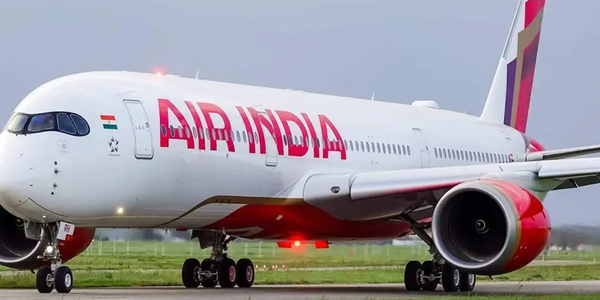
For India, the world’s second-largest A320neo hub and a key A350 customer, Airbus’s Dubai posture indicates its commitment to long-term industrial cooperation, training infrastructure, and future propulsion alignment.
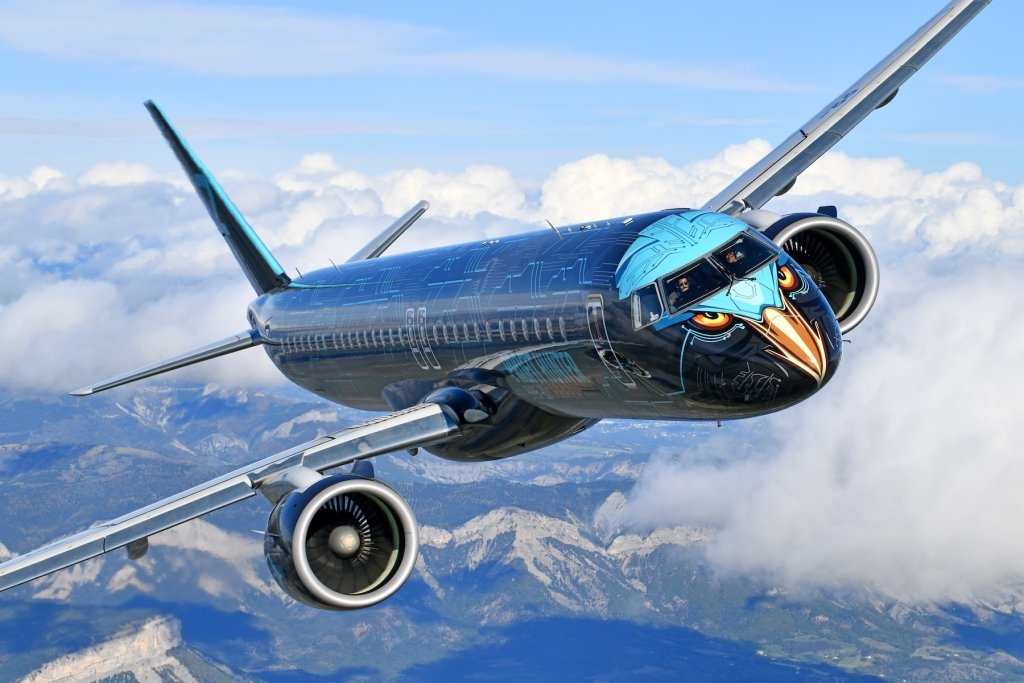
If any OEM is poised for a breakout year, it is Embraer. The Brazilian manufacturer is arriving with a strategically coherent slate across commercial, defence and cargo.
The E195-E2, is among Dubai’s most anticipated narrowbodies. Its fuel burn advantages, hot-and-high capabilities and right-sized economics appeal directly to India’s next-decade realities.
Indian carriers will closely evaluate:
- Performance for Dehradun, Bagdogra, Srinagar and Leh among other high altitude airports;
- Extended range for non-metro international routes; and,
- Readiness for 100% SAF operations.
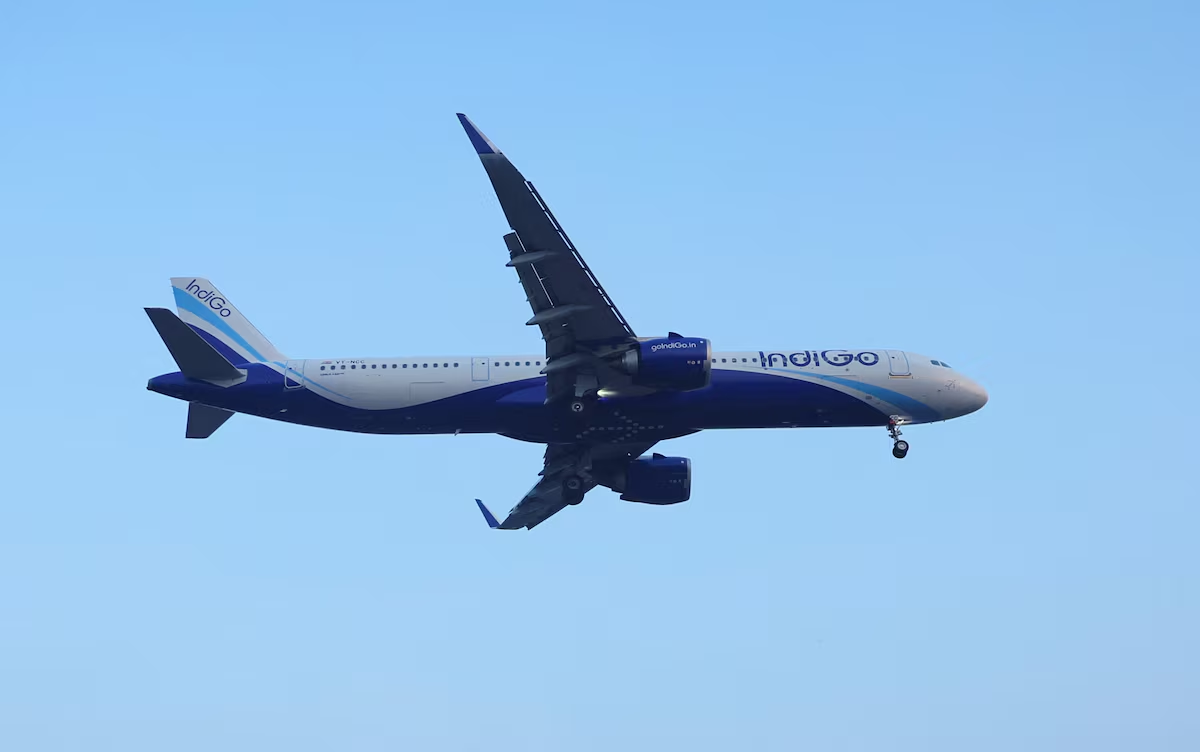
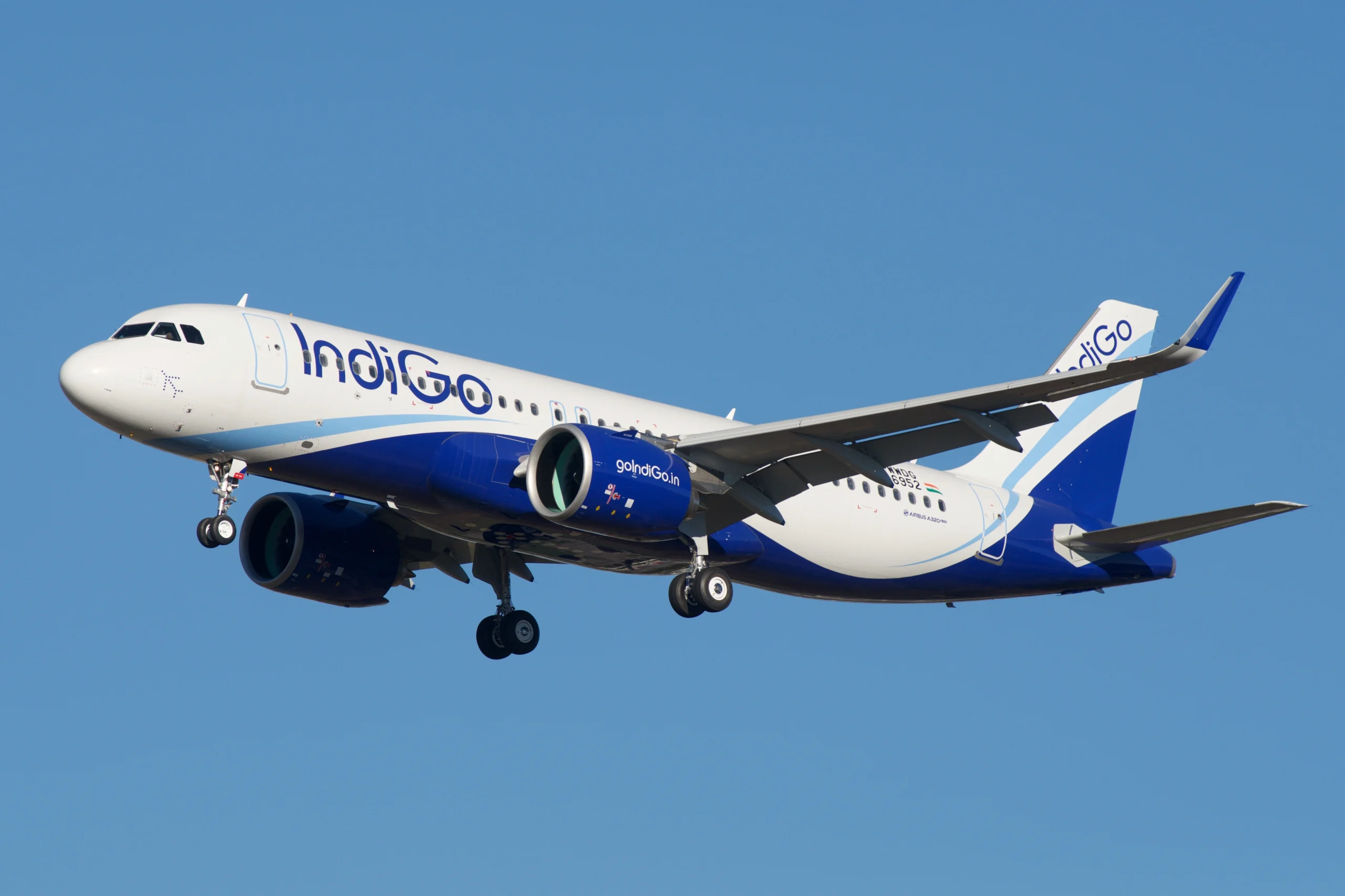
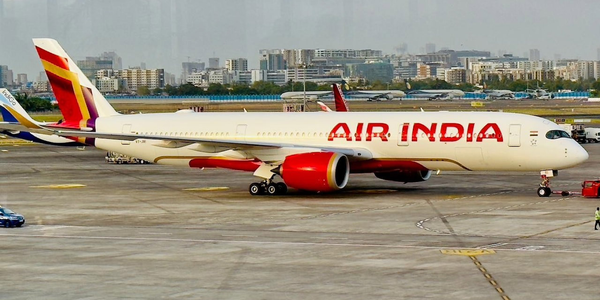
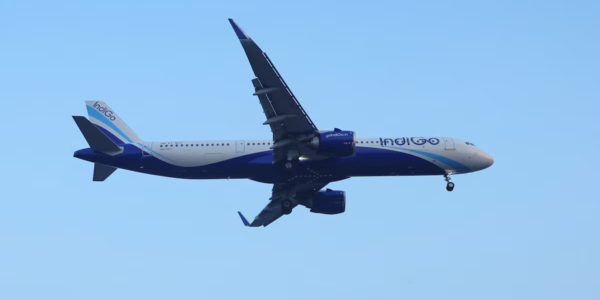
As IndiGo, Air India Express and new players reassess fleet diversification post-2027, the E195-E2 offers a compelling alternative to duopoly-sized narrowbodies.
Embraer’s proposed next-generation turbofan freighter, adapted from the E2 platform, is generating buzz even before formal configuration. Building on the success of first-gen E-Jet P2Fs, the E2 freighter promises:
- 25% lower operating costs than current narrowbody freighters;
- Ideal payload-range for India–Middle East express corridors; and,
- Right-sized capacity for domestic e-commerce and regional cargo.
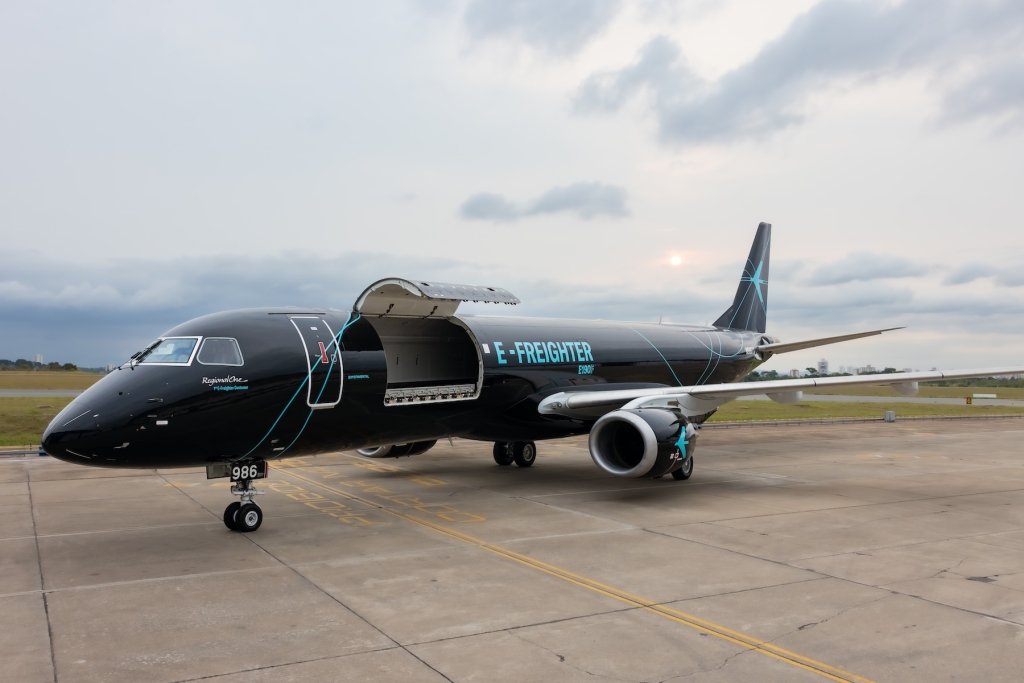
Photo: Embraer
Given India’s dependency on ageing 737 classics and 757s, Embraer’s offering could spark a modernisation shift in India’s dedicated freighter market, including for Quikjet and emerging express operators.
Embraer also brings a powerful defence slate, the C-390 Millennium, increasingly favoured worldwide, and counter-UAS upgrades to the A-29 Super Tucano. With India reassessing medium-lift requirements, these platforms will draw close attention.
No preview of the airshow is complete without the defence lineup, a major draw this year. Russia brings the Su-57, Su-30SMs, Yak-130M and Ka-52, while the US fields the F-35, F-16C, F-15, B-52, P-8 Poseidon, C-17, Chinook and Apache. For India, amid MRFA evaluations, UAV ecosystem building and AMCA progress, Dubai offers a real-time look at global airpower trends, especially loyal-wingman systems relevant to the CATS programme.
The largest-ever Space Pavilion will host Blue Origin, the UAE Space Agency, NASA, UKSA and private players. The UAE’s integrated public-private model contrasts with India’s cautious, but evolving, approach via ISRO and IN-SPACe.
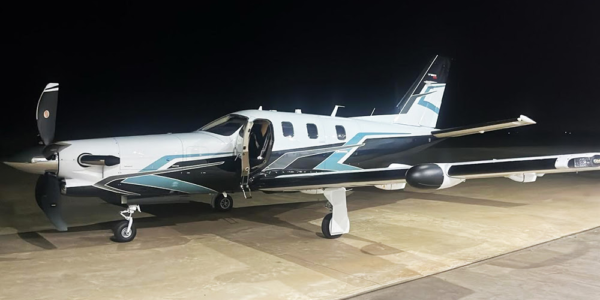
Business aviation too will shine: Gulfstream G700/G800, Falcon 6X/8X, Bombardier Global 7500, Pilatus and Cessna—mirroring a GA ecosystem India aspires to but lacks infrastructure, training depth and leasing support for.
As Timothy Hawes of Informa summarises: “The 2025 edition will be our most future-forward to date, uniting global industry players through initiatives that support innovation, education, and regional growth strategies.”
Dubai Airshow 2025 is not merely an expo; it is a chapter-setting exercise for the next decade of aerospace. For India, the takeaways could be strategic and transformative if the country chooses to read them right.
Also Read: India Takes Flight: Advancing Towards the Forefront of Global Aviation

Ajeet Yadav is an aviation enthusiast covering airline news, airports, aircraft, and industry developments through well-researched and reliable reporting.