




















NTSB Air Canada Crash Report Reveals Communication Failures in Deadly LaGuardia Accident

NTSB Air Canada Crash Report
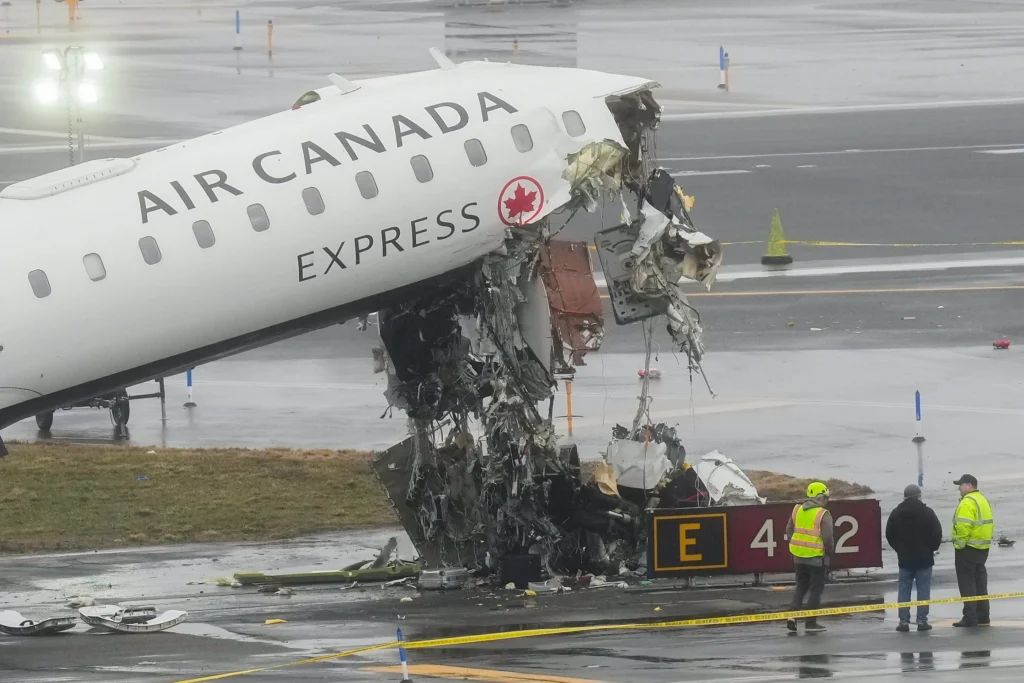
A preliminary investigation into the deadly runway crash at LaGuardia Airport in New York has revealed serious communication and safety failures.
The incident involved an Air Canada Express passenger plane and an airport fire truck, and it resulted in the death of both pilots along with injuries to more than 30 people.
According to US safety investigators, air traffic control repeatedly said “stop, stop, stop” over the radio before the crash. However, the firefighters inside the emergency truck did not understand that the warning was meant for their vehicle. Because of this confusion, the fire truck continued moving and entered the runway.
Within seconds, the fire truck crossed the runway just as the passenger plane was landing. The collision happened immediately after touchdown, leaving no time to avoid the impact.
The investigation also found that emergency vehicles at the airport did not have transponders, which are tracking devices used to help airport systems monitor vehicle movement in real time. Because of this, the airport’s safety system could not properly detect the fire truck or predict the risk of collision.
Officials said multiple factors contributed to the accident, including unclear radio communication, lack of proper tracking technology, and delayed recognition of danger. Experts believe clearer instructions and better safety systems could have helped prevent the crash.
The National Transportation Safety Board has released only a preliminary report, and the full investigation is still ongoing. Final findings and recommendations will be published later.
The crash has raised fresh concerns about runway safety and coordination at busy international airports such as LaGuardia Airport.
Also Read
France Airport Transit Visa for Indians Removed

Ajeet Yadav is an aviation enthusiast covering airline news, airports, aircraft, and industry developments through well-researched and reliable reporting.