













KLM Fokker F.III Waal haven Crash 24 July 1928
The KLM Fokker F.III Waalhaven Crash was a tragic aviation accident that happened on 24 July 1928 at Waalhaven Airport in Rotterdam, Netherlands. A KLM Fokker F.III was being used for a sightseeing flight over Rotterdam when it stalled shortly after takeoff and crashed into the waters of Waalhaven Harbour. There were six people on board: one pilot and five passengers. Five people survived, but one passenger died after becoming trapped inside the aircraft.
The accident was important in the early history of commercial aviation because it raised questions about pilot training, aircraft assignment, takeoff procedures, and passenger safety. It also led to recommendations that passengers should be told about emergency exits before a flight, something that is now a normal part of air travel.
The Fokker F.III Aircraft
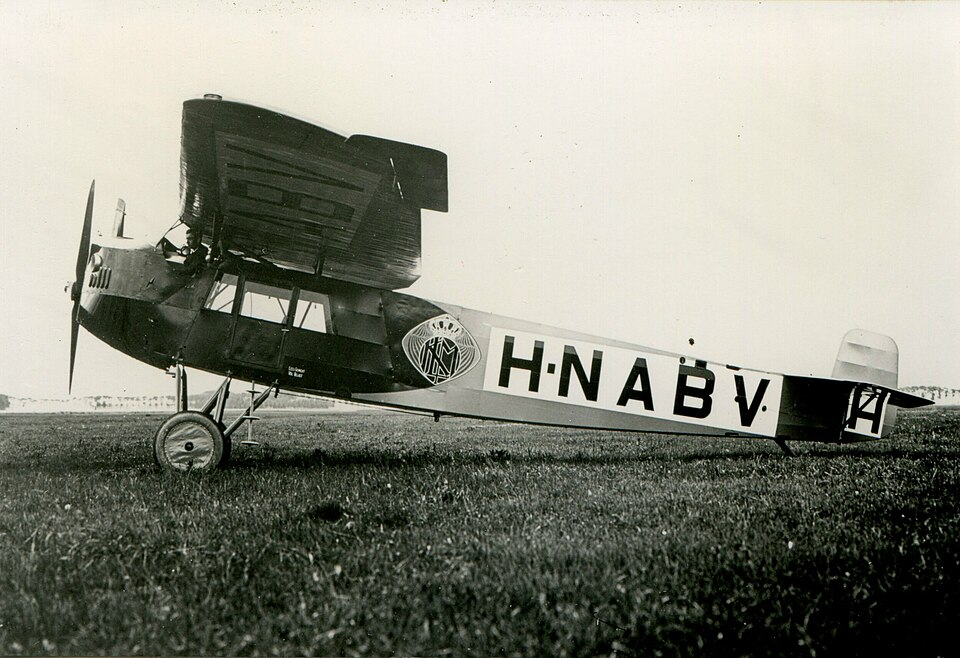
The aircraft involved was a Fokker F.III, a very early passenger aircraft designed and built in the Netherlands by Fokker. The aircraft carried the registration H-NABR and construction number 1533. It was operated by KLM Royal Dutch Airlines, one of Europe’s oldest airlines.
The Fokker F.III was an important aircraft in the early development of European passenger aviation. About 66 examples of the type were built. It was designed during a period when airlines were beginning to operate regular passenger services between European cities.
The aircraft was powered by an Armstrong Siddeley Puma engine producing about 240 horsepower. It had room for five passengers. One unusual feature was the position of the pilot, who sat next to the engine rather than inside a fully enclosed cockpit.
H-NABR had already been in service for several years. It was registered in 1922 and had an interesting history before the fatal accident.
Waalhaven Airport and the Aviation Festival
In July 1928, the Rotterdamsche Aero Club, together with KLM, organized a three-day aviation festival at Waalhaven Airport. The event included special flights that allowed members of the public to experience air travel and enjoy views of Rotterdam from the air.
At that time, sightseeing flights were exciting events. Flying was still relatively new, and many people had never traveled in an aircraft. A short flight over a city could be a memorable experience.
On 24 July, the KLM Fokker F.III H-NABR was prepared for one of these local sightseeing flights.
Five women were passengers on the aircraft. The pilot was J. J. Schott, an experienced KLM pilot who normally flew the newer Fokker F.VII and F.VIIa aircraft.
The aircraft was scheduled to take off from Waalhaven and return to the same airport after the sightseeing flight.
The Takeoff
The aircraft began its takeoff at approximately 2:48 p.m. local time. The flight initially appeared normal, but problems developed almost immediately after the aircraft left the ground.
According to historical accounts, the aircraft had climbed only a short distance when its tail was hanging unusually low. After traveling approximately 150 metres through the air, the aircraft was in an abnormal flight attitude. A sudden wind affected the aircraft and pushed it toward the right.
The aircraft was already flying too slowly. Instead of gaining sufficient height and speed, it remained dangerously close to the ground.
The pilot recognized that the aircraft was not responding normally to the controls. Because the aircraft was in a stalled or near-stalled condition, there was very little time to recover.
The Fokker F.III crossed the airport fence at a very low height.
Collision with the Ship Masts
Beyond the airport was the busy Waalhaven Harbour. Ships and boats were present in the water, and their tall masts created another danger for the low-flying aircraft.
The Fokker F.III was unable to climb over the masts.
The aircraft’s landing gear and right wing struck the masts of a ship called Kolenmijn. Three forward masts were hit. The first mast broke, the second lost its upper section, and the third damaged the aircraft’s right wing.
The collision caused serious damage to the airplane.
After hitting the ship’s masts, the aircraft traveled approximately 75 metres farther before falling into the water of Waalhaven Harbour.
The crash could have been even more devastating if the aircraft had struck the ground or a large structure at high speed. Instead, it entered relatively shallow water.
However, the position of the aircraft in the water created a new and extremely dangerous problem.
The Aircraft Sinks
The Fokker F.III did not immediately disappear beneath the water. It remained afloat for a short period, giving rescuers an opportunity to reach the aircraft.
People from nearby boats quickly moved toward the wreck. The pilot and several passengers were able to escape.
The rescue operation was difficult because the aircraft’s position was changing continuously. As water entered the fuselage, the airplane began to sink and tilt.
Four passengers and the pilot were eventually removed from the aircraft. However, one passenger remained trapped inside.
The accident therefore changed from an aircraft crash into a race against time to rescue the final passenger.
The Rescue Attempt
One of the most remarkable parts of the accident was the rescue effort.
Pieter Guilonard, KLM’s chief of technical services, entered the water and attempted to reach the trapped passenger. He kicked through the emergency exit and opened the fabric covering of the aircraft.
About twenty minutes after the crash, he managed to remove the unconscious passenger from the aircraft.
Attempts were made to revive her, but sadly they were unsuccessful. The passenger died.
The other five occupants survived, although they suffered injuries. Historical records identify several of the passengers and describe injuries including head injuries and a broken leg.
The aircraft was eventually recovered from the harbour. The river police took control of the wreckage before it was later handed back to KLM.
The Investigation
Following the accident, investigators examined the circumstances surrounding the crash.
The investigation found that the aircraft had stalled shortly after takeoff. A sudden wind gust contributed to the aircraft moving toward the north side of the airfield, while its low speed and abnormal attitude prevented a safe climb.
The investigation also identified an important issue involving the pilot.
J. J. Schott was an experienced pilot, but his experience was mainly with the Fokker F.VII and F.VIIa, which were newer aircraft. He had only received a short training session on the older Fokker F.III.
The Fokker F.III had different flying characteristics and required a pilot who was properly familiar with the aircraft. Investigators concluded that the pilot’s limited experience with the F.III was an important contributing factor.
The investigation also criticized the decision to assign him to the aircraft when properly trained F.III pilots were not available.
Takeoff Technique and Pilot Training
Another issue was the aircraft’s takeoff.
Historical accounts indicate that the takeoff run was too short, resulting in the aircraft becoming airborne before it had developed enough speed. The aircraft then entered a stalled condition.
This was especially dangerous because Waalhaven had a harbour immediately beyond the airport. Once the aircraft failed to climb properly, there was very little room to recover.
The accident demonstrated that pilots needed specific training for each aircraft type rather than simply relying on general flying experience.
This became one of the important lessons from the crash.
Passenger Safety and the Emergency Exit
The accident also revealed an important problem with passenger safety.
The passengers did not know where the emergency hatch was located. This was significant because investigators believed that the fatality could potentially have been avoided if the emergency exit had been used. The exit remained accessible for some time while the aircraft was in the water.
At the time, airlines did not provide passengers with the kind of detailed safety demonstrations that are standard today.
Modern passengers are normally shown where emergency exits are located and are given instructions about what to do in an emergency. The Waalhaven accident became an early example of why passengers should understand the location and operation of emergency exits before takeoff.
Investigators also recommended making emergency exits easier for passengers to see.
Impact on Aviation Safety
The crash led to recommendations for better procedures when assigning pilots to aircraft.
Investigators concluded that airlines should have clearer systems to ensure that pilots were properly trained and qualified for the particular aircraft they were operating.
This may seem obvious today, but aviation was still developing in the 1920s. Pilots often moved between different aircraft types, and training systems were not as standardized as they are now.
The accident showed that experience on one aircraft did not necessarily mean that a pilot was fully prepared to operate another aircraft.
The Importance of the Waalhaven Crash
The 24 July 1928 KLM Fokker F.III Waalhaven Crash was a relatively small accident in terms of the number of people involved, but its lessons were significant.
One person died and five survived. The aircraft itself was destroyed. More importantly, the accident highlighted several areas where aviation safety could be improved:
- Pilots needed proper training on the aircraft type they operated.
- Takeoff procedures needed to ensure sufficient speed before climbing.
- Airlines needed better systems for assigning pilots to aircraft.
- Passengers needed to know where emergency exits were located.
- Emergency exits needed to be clearly visible and accessible.
- Rescue procedures were important when aircraft operated near water.
These lessons became increasingly important as commercial aviation expanded.
Conclusion
The KLM Fokker F.III Waalhaven Crash of 24 July 1928 was a tragic accident during a sightseeing flight over Rotterdam. The aircraft, registered H-NABR, carried one pilot and five female passengers when it stalled shortly after takeoff from Waalhaven Airport. The aircraft remained too low, struck ship masts in the harbour, and crashed into the water.
Rescuers managed to save the pilot and four passengers, but one passenger became trapped and later died. The investigation found that the aircraft had stalled because of insufficient speed and that the pilot’s limited experience with the Fokker F.III was a contributing factor.
The accident also produced an important passenger-safety lesson. The passengers did not know about the emergency hatch, and investigators concluded that better information about emergency exits could have prevented the death.
Today, emergency exits, pilot type training, takeoff procedures, and passenger safety briefings are normal parts of commercial aviation. In 1928, however, many of these practices were still developing. The Waalhaven crash therefore became one of the many early aviation accidents that helped the industry learn from tragedy and gradually build the much safer system of air travel used today.

Ajeet Yadav is an aviation enthusiast covering airline news, airports, aircraft, and industry developments through well-researched and reliable reporting.