







- In business aviation, fuel burn accounts for about 90–95% of lifecycle emissions, with manufacturing, maintenance and end-of-life contributing a much smaller share.
- Engine efficiency has improved over time, but fuel consumption remains directly influenced by aircraft configuration, weight and onboard systems on each flight.
- SAF lowers lifecycle emissions when used; where it is not physically available, operators rely on Book and Claim certificates or carbon offsets to account for emissions reductions.
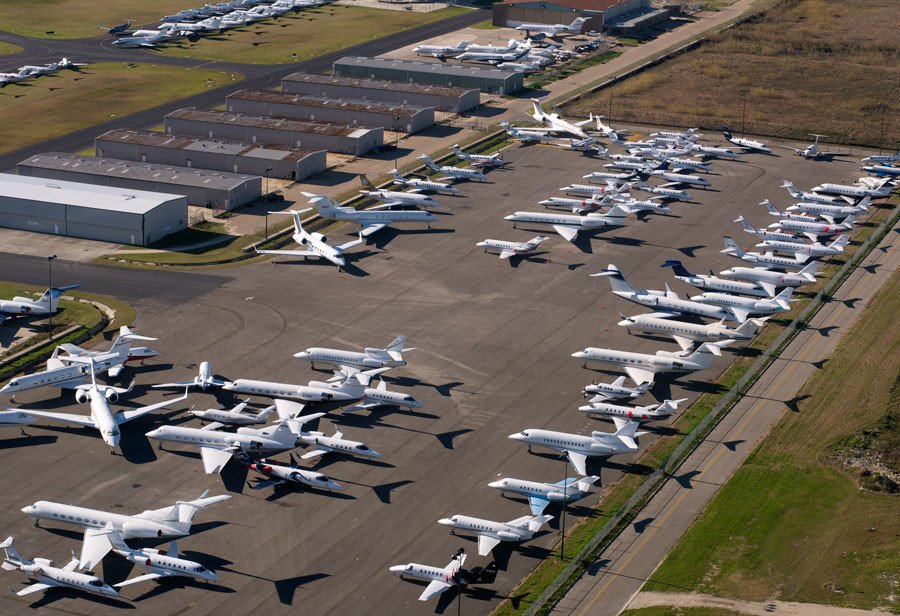
In business aviation, emissions are driven by engine technology, aircraft weight and operational use, not just the aircraft itself.
The industry has already reduced emissions through engine improvements and continues to focus on operational and fuel-based measures, while aircraft owners retain control over configuration and use.
Across the lifecycle of a business jet, fuel burn accounts for the largest share of emissions, typically around 90-95 per cent. Manufacturing and maintenance contribute a smaller portion, while end-of-life impact remains limited, at roughly 1 per cent. This distribution keeps the focus on how fuel is consumed during operations.
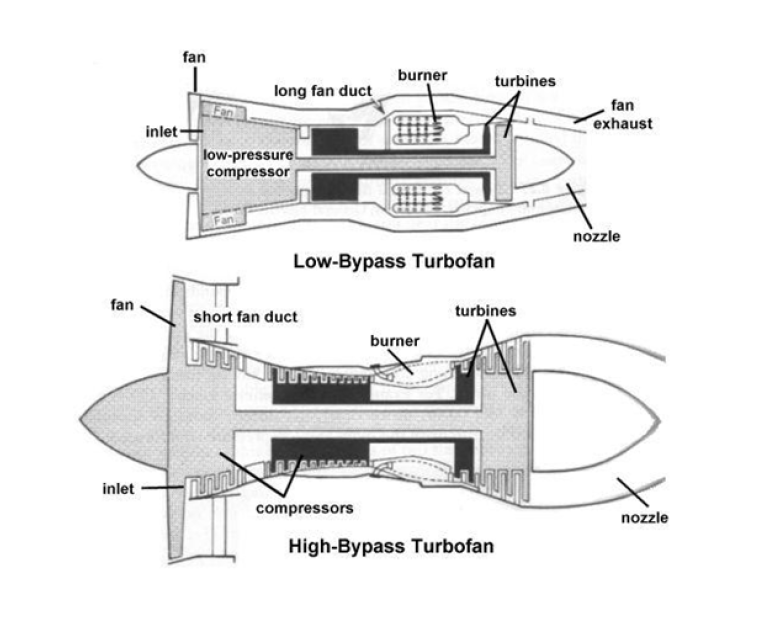
Over the past 50 years, engine development has delivered measurable gains. Fuel efficiency has improved by roughly 50-60 per cent, supported by changes in design and materials. The most significant shift has been in the bypass ratio. Engines from the 1970s operated with low-bypass configurations of around 1:1 or lower.
Modern engines use high-bypass ratios, typically 10:1 to 15:1 or higher. More air flows around the core instead of through it, improving thrust efficiency and reducing fuel burn. Improvements in materials, temperature limits, aerodynamics, fan blades, and compressors have contributed to this change, but the bypass ratio has had the largest effect.
Fuel and Efficiency
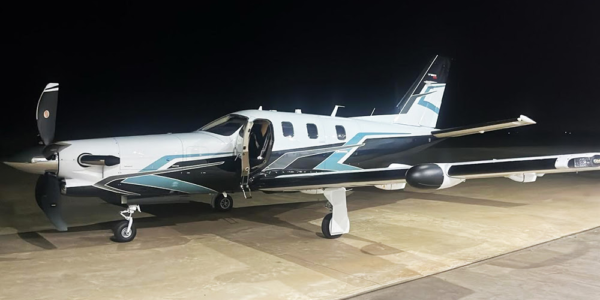
From a fuel consumption standpoint, turboprops remain the most efficient aircraft. They burn less fuel per hour than jets. Their limitations appear over longer distances, where multiple stops may be required. Each additional sector introduces extra take-offs, landings, crew duty considerations and servicing requirements.
Business jets, while consuming more fuel per hour, can complete those same journeys in a single sector. The ability to complete a journey in one sector without additional stops remains a defining advantage for business aviation in managing time, cost and overall operational exposure.
Aircraft choice sets the baseline, but configuration decisions follow immediately. Newer aircraft benefit from more efficient engine generations, and each iteration has improved fuel performance. In the pre-owned market, engine generation becomes a key factor before acquisition.
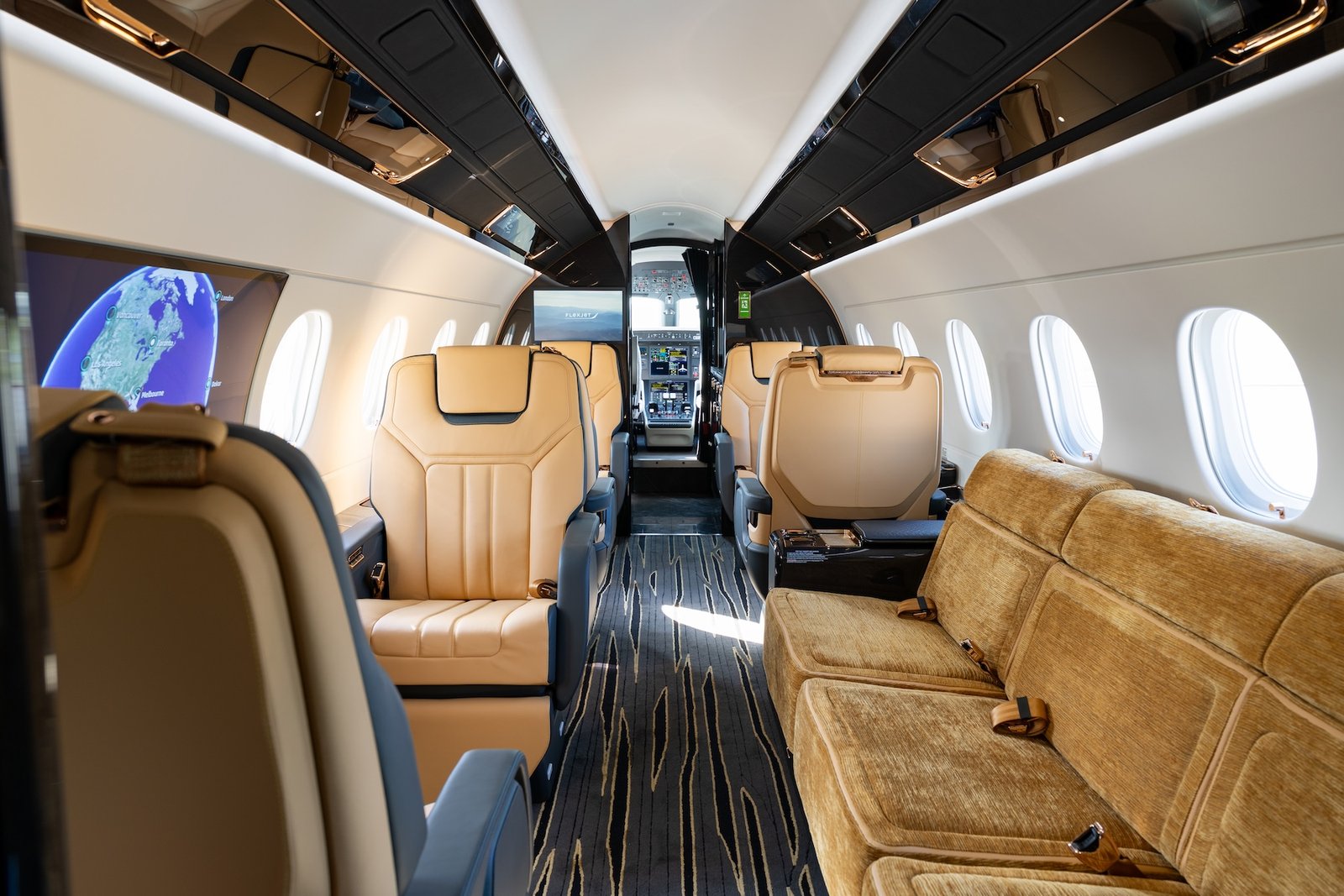
For aircraft owners, weight is a constant variable. Additional mass increases fuel burn, and even small reductions carry through every flight. Replacing older onboard systems can remove unnecessary weight. For example, changing the cabin management system on an older ultra-long-range aircraft can reduce wiring weight by around 200 pounds. That reduction remains in place for the life of the aircraft.
Interior decisions introduce similar trade-offs. Soundproofing systems often rely on added material or insulation packs to reduce noise and vibration. Some enhanced packages can add several hundred pounds while delivering little change in cabin sound levels.
The decision is whether that incremental benefit justifies carrying additional weight on every flight. Cabin layout presents the same consideration. Higher seat counts increase weight even when those seats are rarely used. Reducing seat numbers lowers weight, provided the change does not introduce heavier alternatives.
For new aircraft, these decisions are made at the specification stage. Refurbishment brings additional constraints, including certification requirements and Supplemental Type Certificates. Cost remains part of the discussion, as weight reduction and system upgrades require upfront investment that must be weighed against fuel savings and emissions over time.
Emissions are calculated using a standard factor. Fuel burn is multiplied by 3.16 pounds of CO₂ per pound of fuel. A flight burning 10,000 pounds of fuel produces approximately 14.3 tonnes of CO₂.
Aircraft category still matters when comparing fuel burn. Turboprops typically consume between 500 and 1,000 pounds of fuel per hour, producing 0.72 to 1.43 tonnes of CO₂. Light jets operate between 1,000 and 1,500 pounds per hour, generating 1.43 to 2.15 tonnes.
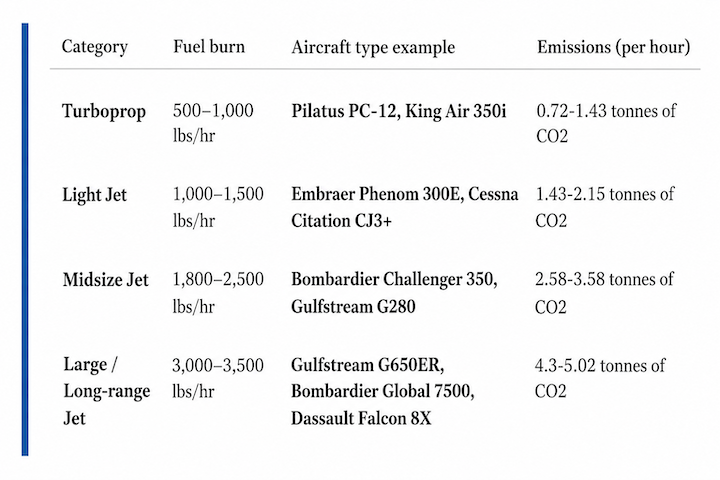
Midsize jets burn around 1,800 to 2,500 pounds per hour, producing 2.58 to 3.58 tonnes. Large and long-range jets consume approximately 3,000 to 3,500 pounds per hour, resulting in 4.3 to 5.02 tonnes of CO₂.
Managing Emissions in Practice
With most emissions tied to fuel burn, the next set of decisions moves into how fuel is sourced and accounted for.
Sustainable Aviation Fuel is currently the primary option available to reduce lifecycle emissions. It does not eliminate emissions at the point of combustion, but depending on feedstock and production method, it can reduce overall greenhouse gas emissions by 50 to 80 per cent compared with conventional jet fuel.
This is calculated using a lifecycle methodology that accounts for how the fuel is produced, including the use of recycled materials or feedstocks that absorb CO₂ during growth. Common feedstocks include used cooking oil, waste oils and agricultural inputs such as soybean oil.
SAF can be blended with Jet A fuel, typically up to 50 per cent, with some trials exploring higher levels. No changes are required to engines, fuel systems or airport infrastructure, which has kept attention on expanding availability.
Availability remains uneven. In many business aviation missions, SAF may not be accessible where the aircraft is based or at short notice. In these cases, operators use a Book and Claim system. Certificates are purchased to represent emissions reductions from SAF produced elsewhere.
Each certificate corresponds to a defined CO₂ reduction and is independently verified and tracked. Even if the aircraft burns conventional fuel, the operator can account for the reduction through these certificates. The system also supports SAF production by creating demand.
Carbon offsets provide another route. These involve funding projects that reduce or remove greenhouse gas emissions, including reforestation, renewable energy and methane capture initiatives. Offsets are used to compensate for emissions that cannot be avoided and are typically adopted on a voluntary basis. Pricing varies widely depending on the project and verification standard, ranging from about $10 to $1,000 per tonne of CO₂.
Each option carries a different cost profile. SAF is currently priced at a premium, often between two and five times the cost of Jet A on a per-gallon basis. With current blends typically at 2 to 5 per cent, the overall increase in fuel cost remains limited. For example, if Jet A costs $5 per gallon and SAF is priced at twice that level, a 5 per cent blend results in a total cost of approximately $5.25 per gallon. While this does not offset most emissions at current blend levels, it establishes a starting point that can expand over time.
Under the Book and Claim model, costs are tied to certificate pricing. A flight burning 10,000 pounds of fuel produces about 14.3 tonnes of CO₂. At $500 per tonne, offsetting this through certificates would cost $7,150. The aircraft continues to burn conventional fuel, but the emissions reduction is recorded through the certificate system.
Carbon offsets present a different cost reference. A six-hour flight between London and New York in a large business jet, producing around five tonnes of CO₂ per hour, results in approximately 30 tonnes of emissions. At $20 per tonne, offsetting this would cost about $600, which is relatively small compared with overall trip costs.
The question is not which business jet is the most environmentally friendly. It is how the aircraft is specified, what it carries, and how it is used across each flight.
* Nick Houseman is Chairman of the Technology and Innovation Committee at SAF Association India, Co-founder of Azzera, and Founder of Zenith NetZero.
Also Read: India’s SAF Challenge: Policy, Price and the Path Forward