








- Pre-purchase inspections are not standardised processes, they are negotiated exercises shaped by aircraft condition, records and buyer expectations.
- The gap between “airworthy” and “acceptable” often drives deal friction, with issues such as component wear, obsolescence and unclear delivery conditions influencing outcomes.
- Access to records, CAMO coordination, engine inspection limits and programme constraints can significantly affect timelines, cost exposure and how smoothly a transaction progresses.
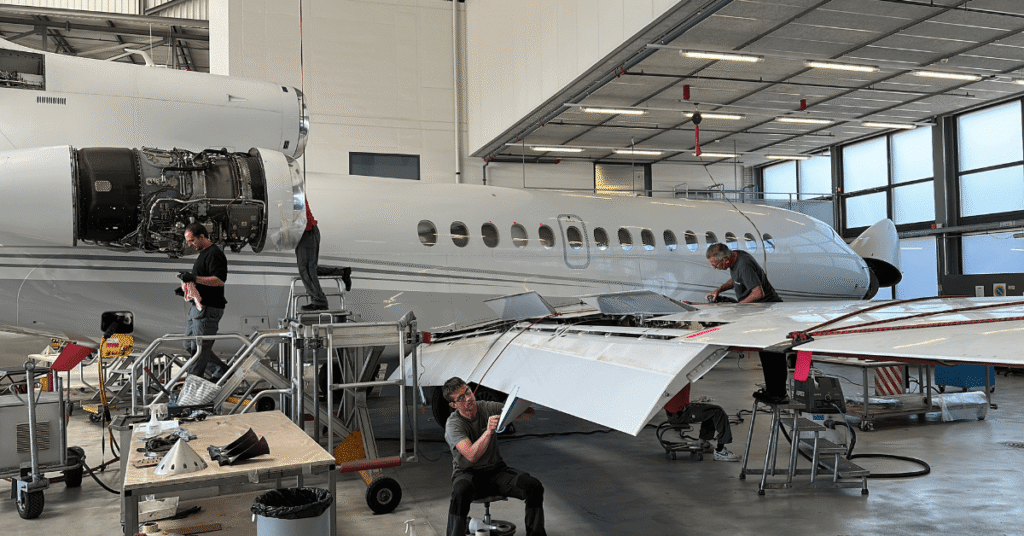
For most business jet transactions, the pre-purchase inspection, or PPI, is where the deal is effectively decided. It is the stage where an aircraft’s condition, records and maintenance status are examined before ownership changes hands.
For Indian operators, this process is still often carried out overseas, typically in Dubai or at European facilities, where technical capability, infrastructure and transaction experience are more established. As India’s business aviation market grows and more transactions originate locally, how PPIs are approached and where they are conducted is becoming increasingly relevant.
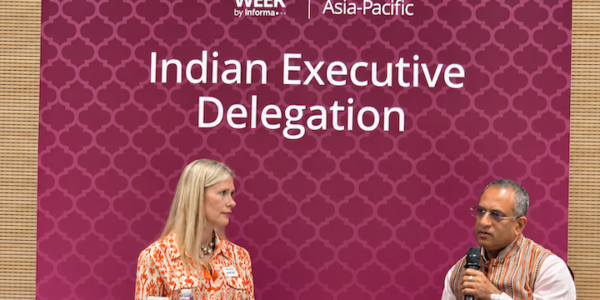
Conversations at the Corporate Jet Investor conference in Delhi reflected how the process is evolving in practice.
Workscope, Standards and the Limits of Definition
The industry uses broad inspection levels, commonly referred to as Levels 1, 2, or 3—but these serve more as a framework than a standard.
“There is a framework — Level 1, 2 or 3 — but every aircraft, every buyer and every history is different. You can’t truly standardise it,” said Iain Houseman, COO, ZenithJet.
Aircraft age, utilisation and operating environment influence what needs attention. Buyers often expand the scope, particularly where there are concerns around corrosion, prior damage or record completeness. Even the definition of a “Level 1” inspection can vary between OEMs and facilities.
In practice, the workscope, the document that defines what the facility will inspect and how findings are handled, becomes central to the transaction.
“The buyer and the seller are fundamentally opposed. They’re looking for their own objectives. My job at the MRO is to work out how we’re going to get to some kind of workscope,” said Paul Kinch, Managing Director MRO, Gama Aviation.
That process often exposes a gap between regulatory compliance and commercial expectation. An aircraft may meet airworthiness standards but still fall short of what a buyer is prepared to accept.
“We’re often in a position where something is airworthy, but it’s not acceptable to the buyer. I recently had a case where one brake had about 70% more wear than the other. It was technically airworthy, but the buyer was looking at maybe 25 landings before replacement,” Houseman highlighted.

Kinch pointed out that even relatively minor issues can become decisive. “A single cabin item, especially if it’s obsolete, can end up holding the whole deal,” he explained, referring to situations where parts availability, cost and lead time become part of the negotiation.
A recurring issue lies in how delivery conditions are defined in purchase agreements. In many transactions, the agreed wording is not fully aligned with what the inspection facility is asked to assess. As Kinch put it, “you get this complete mismatch between what the expectations are and what’s actually going on at the facility.” The result is that the facility is often left interpreting terms it did not define.
Access, Slots and Transaction Pressure
A PPI is shaped as much by access and coordination as by the aircraft itself.
Availability of inspection slots at maintenance facilities remains one of the practical constraints. While some inspections can be accommodated within two to three weeks, timelines vary depending on aircraft type and inspection depth, with more complex checks taking longer to schedule.
As Houseman pointed out, “timelines have become less predictable: some issues that once took months to resolve are now addressed more quickly, while others still take longer.” Access to the aircraft and its records is another critical factor. In managed aircraft, the Continuing Airworthiness Management Organisation (CAMO), may control maintenance records, work orders and documentation, effectively acting as a gatekeeper to the inspection process.
“We’ve had situations where you’re waiting days just to get access or to start work,” Kinch acknowledged , “And until you’re actually in there, you don’t always know what you’re dealing with.”
“When the aircraft is under management, that’s when things can become more difficult,” Houseman explained. “You’re relying on the CAMO for access to records and work orders, and sometimes they’re not as forthcoming as you’d expect. We’ve had situations where you’re waiting three, four, five days just to get a work order issued so you can even start the inspection,” he added.
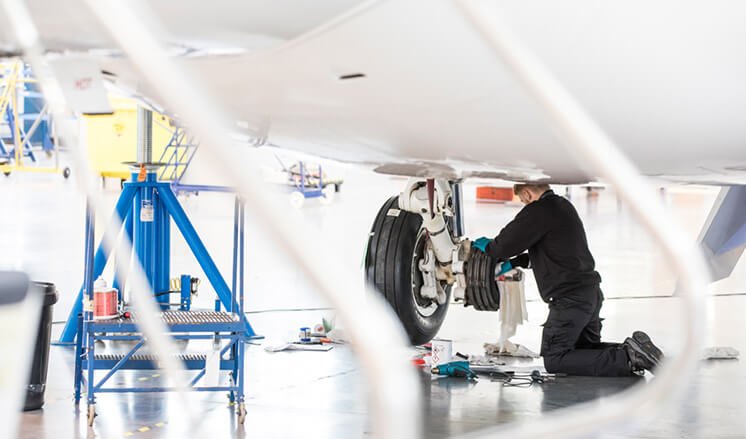
“You don’t always get the full picture until you’re actually in the room,” Houseman said, referring to cases where issues only become visible once inspections begin.
Kinch highlighted the commercial dimension behind this. “There are times when the existing operator isn’t in a hurry to let the aircraft go,” he said, pointing to situations where management contracts and ongoing revenue streams may influence how smoothly access is provided.
Financial exposure also becomes a factor if a deal stalls mid-inspection. Facilities may be left holding an aircraft with incomplete work and outstanding payments, while buyers and sellers work through unresolved issues. Moving the aircraft to another jurisdiction, sometimes for tax or regulatory reasons, adds further complexity, particularly when records and approvals are involved.
For Indian operators, these challenges are often compounded by geography. With limited domestic PPI capability today, aircraft are usually positioned overseas, adding time, cost and coordination requirements to the process.
Engines, Programmes and Inspection Limits
Engine inspections remain one of the most sensitive aspects of a PPI, particularly for aircraft enrolled in OEM maintenance programmes.
Buyers often request borescope inspections to assess the internal condition of the engine. However, such inspections are not always supported under programme terms. “A buyer may say they won’t proceed without a borescope, but the seller can’t guarantee what the programme will cover if you do it,” Kinch said.
The key issue is how PPIs are treated. They are typically considered “maintenance for convenience”—that is, work carried out outside the scheduled maintenance cycle. Because of that, invasive inspections performed during a PPI may not be covered by the programme, and in some cases may affect coverage.

Programme providers have increasingly pointed to engine performance data as an alternative to physical inspection. While this provides useful operational insight, it does not capture every risk. “The data won’t show corrosion,” Kinch said, highlighting a limitation that becomes especially relevant in aircraft with lower annual utilisation. “If you’re buying an aircraft with relatively low utilisation, it can come with its own risks if it hasn’t been used or stored properly,” he added.
This creates a clear mismatch between buyer expectations and programme constraints. Buyers want more detailed inspection to reduce uncertainty, while sellers and programme providers may be limited by contractual terms.
The same balance applies to new aircraft. While minor issues can still appear at delivery, extensive teardown inspections add limited value given the strength of OEM warranty frameworks. A targeted inspection is generally considered sufficient.
For India, the opportunity is real, but so is the difficulty. As established inspection hubs face capacity constraints, alternative locations may become more relevant. But the challenge is not only infrastructure.“It’s a reputational business. You can build facilities, but building trust takes years,” Kinch emphasised.
A pre-purchase inspection is often described as a technical step in completing a transaction. In practice, it determines how that transaction progresses — depending not only on what is found, but on how those findings are interpreted, negotiated and resolved.