







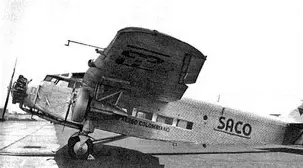
SACO SCADTA Ford Trimotor Runway Collision 24 July 1935
The SACO–SCADTA Ford Trimotor Runway Collision was a tragic aviation accident that took place on 24 July 1935 in Colombia. The accident involved two aircraft connected with the early commercial aviation industry in South America: SACO and SCADTA. The incident happened on or near an airport runway and resulted in a serious collision.
The accident is an important part of the history of Colombian aviation. During the 1930s, commercial aviation in South America was growing rapidly. Aircraft were connecting cities that were difficult to reach by road or railway. Airlines were carrying passengers, mail, and cargo across mountains, forests, rivers, and other challenging areas.
However, airports and air traffic procedures were still developing. Runways were much simpler than modern airport runways, and pilots did not have the advanced communication and traffic-control systems used today. A collision on the ground could therefore happen quickly and have devastating consequences.
Aviation in Colombia During the 1930s
The development of aviation in Colombia was closely connected with the country’s geography.
Colombia has mountains, valleys, forests, rivers, and difficult terrain.
In the early twentieth century, traveling between cities could be slow and difficult.
Road and railway networks were limited.
Aircraft offered a new way to connect distant communities.
Airlines began establishing routes between important cities.
They carried passengers, mail, and commercial goods.
This made aviation an important part of Colombia’s economic development.
Two companies played particularly important roles in this period: SCADTA and SACO.
SCADTA
SCADTA, short for Sociedad Colombo-Alemana de Transportes Aéreos, was one of the pioneering airlines of South America.
It was established in Colombia in 1919.
SCADTA became one of the earliest commercial airlines in the world.
The company developed routes across Colombia’s difficult geography.
Its aircraft were used to transport passengers and mail.
The airline gained considerable experience operating in mountainous areas.
SCADTA became an important part of Colombia’s aviation history.
Its operations helped demonstrate that commercial aviation could succeed in a country where traditional transportation was difficult.
SACO
SACO, or Servicio Aéreo Colombiano, was another Colombian airline.
It was established as part of the country’s growing commercial aviation industry.
SACO operated passenger and cargo services.
The company competed in a developing aviation market.
By the 1930s, several airlines were operating in Colombia.
Competition encouraged airlines to expand their routes and improve their aircraft.
But the rapid growth of aviation also created new safety challenges.
The Ford Trimotor
The aircraft involved in the accident was a Ford Trimotor.
The Ford Trimotor was one of the most famous American aircraft of the early commercial aviation period.
It was developed by the Ford Motor Company.
The aircraft had three engines and a corrugated metal fuselage.
Because of its three engines, it was commonly called the Tin Goose.
The Ford Trimotor became popular with airlines because it was relatively strong and reliable.
It was used for passenger transportation, mail services, cargo operations, and other aviation work.
The aircraft played an important role in the development of commercial air travel during the 1920s and 1930s.
Why the Ford Trimotor Was Important
The Ford Trimotor was designed for the conditions of early aviation.
Its metal construction was an important improvement.
Many earlier passenger aircraft had used wood and fabric.
The Trimotor’s metal structure provided greater durability.
Its three engines also offered useful redundancy.
If one engine failed, the aircraft could potentially continue flying with the remaining engines.
The aircraft was not fast by modern standards, but it was considered advanced during its time.
Many airlines around the world operated Ford Trimotors.
The Airport Environment
Airports in the 1930s were very different from modern airports.
Today, airports have clearly marked taxiways, runways, lighting systems, radar, radio communication, and sophisticated ground-control procedures.
In the 1930s, many airfields were relatively simple.
Some had grass or basic prepared surfaces.
Aircraft often moved directly between parking areas and runways.
Ground traffic procedures were less standardized.
Pilots depended heavily on visual observation.
Communication between aircraft and ground personnel was limited.
This created additional risks when more than one aircraft was moving on the ground.
The Events of 24 July 1935
On 24 July 1935, aircraft associated with SACO and SCADTA were operating at an airport in Colombia.
The Ford Trimotor was involved in a runway collision.
Two aircraft came into conflict on the ground.
The collision happened during airport operations.
The aircraft struck each other with considerable force.
The impact caused major damage.
The accident resulted in deaths and injuries.
Emergency personnel responded to the scene.
The crash immediately attracted attention because two commercial aircraft had collided at an airport.
How Runway Collisions Can Happen
A runway collision can occur when two aircraft occupy the same area of the airport at the same time.
Possible causes include:
- Poor communication
- Misunderstanding of instructions
- Limited visibility
- Inadequate traffic control
- Pilot error
- Aircraft moving without sufficient coordination
- Lack of clear runway procedures
Modern airports use many systems to prevent this.
Aircraft receive specific instructions from air traffic controllers.
Runways and taxiways have standardized markings.
Lighting systems provide visual guidance.
Radar and other technologies help controllers monitor aircraft.
In 1935, most of these systems were not available.
The Importance of Communication
Communication is one of the most important elements of aviation safety.
Pilots need to know where other aircraft are located.
Ground controllers need to know which aircraft are taking off, landing, or taxiing.
Pilots also need to understand instructions clearly.
Radio technology was developing during the 1930s.
However, radio communication was not as advanced or universal as it is today.
Some aircraft and airports still depended heavily on visual signals.
This made coordination more difficult.
Limited Air Traffic Control
Modern airports use sophisticated air traffic control systems.
Controllers coordinate every movement.
They can sequence aircraft for departure and arrival.
They can prevent two aircraft from entering the same runway.
In the 1930s, air traffic control was still developing.
Airport personnel had fewer tools for monitoring aircraft.
Pilots often had to look for other aircraft themselves.
As airport traffic increased, the need for better control procedures became obvious.
Runway accidents helped demonstrate why formal systems were necessary.
The Crash
The SACO–SCADTA collision resulted in serious damage to the aircraft involved.
Aircraft constructed from metal could still suffer major structural damage during a high-speed collision.
Engines, wings, landing gear, and fuselages could be damaged.
Fuel could also create a fire risk.
Emergency workers had to respond quickly.
The severity of the accident demonstrated the danger of aircraft movements on the ground.
Even though the aircraft were not necessarily at flying speed, their size and weight meant that a collision could be fatal.
Emergency Response
Airport emergency services were important in dealing with the accident.
Firefighters and other personnel responded after the collision.
They had to deal with damaged aircraft and injured people.
Medical assistance was provided to survivors.
The response also helped prevent the situation from becoming worse.
Modern airports have highly specialized rescue and firefighting teams.
These teams are trained specifically for aircraft accidents.
Their development was influenced partly by experience with earlier accidents.
The Investigation
After the accident, investigators examined what had happened.
They studied the positions of the aircraft.
They examined the damage.
They interviewed witnesses.
They considered the actions of pilots and airport personnel.
They also looked at the airport’s operating procedures.
Investigators wanted to determine why the two aircraft had occupied the same area of the runway.
Because there were no modern digital records, the investigation depended heavily on physical evidence and witness testimony.
The Human Factor
Human decisions are important in almost every aviation accident.
Pilots have to interpret instructions correctly.
They must maintain awareness of their surroundings.
They must know where other aircraft are located.
Ground personnel must communicate clearly.
A misunderstanding can quickly lead to an accident.
Modern aviation therefore places great importance on standard procedures and communication.
The lessons from early accidents helped establish these practices.
Passenger Safety
Passengers in the 1930s faced risks that modern travelers rarely encounter.
Aircraft cabins had fewer safety features.
Seats were not designed with the same crash-protection standards as modern airline seats.
Emergency exits were more basic.
Cabin crews had fewer safety tools.
Passengers also had less information about emergency procedures.
Despite these limitations, commercial aviation was becoming increasingly popular.
People were willing to accept some risk because aircraft offered enormous advantages in speed and accessibility.
Impact on Colombian Aviation
The accident was significant for Colombian aviation.
Both SACO and SCADTA were important parts of the country’s aviation development.
A collision involving commercial aircraft raised questions about airport procedures and operational safety.
As air traffic increased, Colombian aviation authorities and airlines needed better systems.
This included clearer runway procedures, improved communication, and better coordination between aircraft.
Growing Importance of Airport Procedures
The accident demonstrated that aviation safety was not only about what happened in the air.
Ground operations were equally important.
Aircraft could collide while:
- Taking off
- Landing
- Taxiing
- Parking
- Moving between runways and terminals
This led aviation authorities around the world to pay greater attention to ground safety.
Runway markings and traffic-control procedures gradually became standardized.
Development of South American Aviation
During the 1930s, South American aviation continued to grow.
Airlines were connecting major cities.
Mail services were expanding.
Aircraft technology was improving.
International aviation routes were also developing.
Colombia’s difficult geography made air travel particularly valuable.
Aircraft could cross mountain ranges and reach communities that were difficult to connect by road.
The growth of aviation helped support economic development.
But it also created the need for stronger safety regulations.
The Ford Trimotor’s Legacy
The Ford Trimotor remains one of the best-known aircraft from the early era of commercial aviation.
Although its design eventually became outdated, it played an important role in aviation history.
It demonstrated the advantages of metal construction and multi-engine passenger aircraft.
The Trimotor was used by many airlines and organizations.
Its presence in Colombia demonstrates how international aircraft technology influenced the development of South American aviation.
Lessons from the Accident
The SACO–SCADTA runway collision highlighted several important safety lessons.
1. Clear Communication
Pilots and airport personnel need to communicate clearly.
2. Runway Control
Only authorized aircraft should occupy an active runway.
3. Pilot Awareness
Pilots must maintain awareness of nearby aircraft.
4. Standard Procedures
Airports need clear and consistent operating rules.
5. Emergency Preparedness
Airports need rescue and firefighting services.
These principles remain fundamental to aviation today.
Modern Comparison
Modern airports are much safer because of technological and procedural improvements.
Aircraft are tracked by radar and other systems.
Controllers communicate with pilots using radio.
Runways have lights and markings.
Ground vehicles follow strict procedures.
Aircraft use transponders and other equipment to identify themselves.
Advanced warning systems can alert controllers and pilots when aircraft are approaching dangerous positions.
None of this technology existed in the same form in 1935.
The SACO–SCADTA accident belongs to the period when aviation authorities were learning why such systems were necessary.
Historical Importance
The 24 July 1935 SACO–SCADTA Ford Trimotor runway collision is important because it demonstrates the challenges of managing growing airport traffic.
Aircraft were becoming more common.
Airlines were carrying more passengers.
Airports were becoming busier.
Yet the systems needed to safely manage this traffic were still developing.
A ground collision could therefore have serious consequences.
The accident became part of the experience from which aviation safety procedures developed.
The Growth of Colombian Airlines
Colombian aviation continued to expand after the accident.
SACO and SCADTA remained important names in the country’s aviation history.
Eventually, the Colombian airline industry changed significantly through mergers and reorganizations.
SCADTA later became part of the history of Avianca, which became one of the most important airlines in Latin America.
The early companies laid the foundations for the country’s modern airline industry.
Remembering the Victims
Behind every aviation accident are individual people.
Passengers were traveling for work, family, or other personal reasons.
Crew members were performing their professional duties.
They expected to complete their journey normally.
Instead, the runway collision changed their lives and the lives of their families.
Remembering aviation accidents is important because it keeps the human side of aviation history visible.
Conclusion
The SACO–SCADTA Ford Trimotor Runway Collision of 24 July 1935 was a tragic event in the early history of Colombian commercial aviation.
The accident occurred during a period when aviation was growing rapidly across South America. Airlines such as SACO and SCADTA were helping connect Colombian cities and communities that were difficult to reach by traditional transportation.
The Ford Trimotor represented the advanced aircraft technology of the period. Its three-engine design and metal construction made it an important aircraft in the development of commercial aviation.
However, aircraft technology was developing faster than many airport safety systems.
Modern airports have sophisticated air traffic control, radar, runway markings, lighting, radio communication, ground-control procedures, and warning systems. In 1935, these systems were much less developed.
The runway collision demonstrated the importance of controlling aircraft movement on the ground. Clear communication between pilots and airport personnel was essential, and the accident showed how quickly a misunderstanding or lack of coordination could lead to tragedy.
The crash also highlighted the importance of emergency services. Aircraft accidents could cause fire, structural damage, and serious injuries, making rapid rescue and firefighting response essential.
The long-term history of aviation shows that safety improved through experience. Airlines and governments learned from accidents and gradually introduced better procedures. Airport layouts improved, communication systems became more reliable, and air traffic control became a central part of aviation.
The 24 July 1935 SACO–SCADTA accident is therefore more than a historical runway collision. It represents an important stage in the development of aviation safety in Colombia and South America.
During the 1930s, flying was opening a new world of transportation. Aircraft could overcome mountains and difficult terrain and connect distant communities in ways that roads and railways could not. But the industry was still learning how to manage this new technology safely.
The tragedy of the SACO–SCADTA collision reminds us that aviation safety depends not only on good aircraft but also on good communication, careful procedures, trained personnel, and effective airport management. These principles remain at the heart of safe aviation today.

Ajeet Yadav is an aviation enthusiast covering airline news, airports, aircraft, and industry developments through well-researched and reliable reporting.