









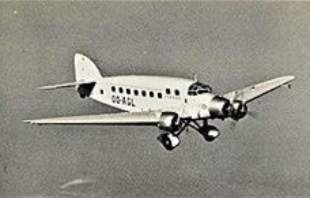
SABENA Savoia-Marchetti S.73 Tatsfield Crash 10 December 1935
The SABENA Savoia-Marchetti S.73 Tatsfield Crash was a tragic aviation accident that happened on 10 December 1935 near Tatsfield, Surrey, England. A Savoia-Marchetti S.73 operated by the Belgian airline SABENA crashed while flying from Brussels, Belgium, to Croydon Airport, which was then London’s main airport. All 11 people on board, including four crew members and seven passengers, were killed.
The accident happened during the early development of international commercial aviation. Aircraft were becoming faster and more advanced, but pilots still had to work with limited navigation equipment and weather information. The Tatsfield crash became an important example of the dangers of flying toward an airport in poor visibility and unfamiliar conditions.
SABENA and European Air Travel
SABENA was the national airline of Belgium and an important European carrier during the 1930s. The airline operated international routes connecting Belgium with other European countries.
During this period, air travel was becoming increasingly popular. Passengers could travel between European cities much faster by aircraft than by train or ship.
However, flying was still affected by many risks.
Pilots had to navigate using maps, radio equipment, visual landmarks, and their own experience. Airports did not have the advanced radar, satellite navigation, and computerized systems used today.
The flight from Brussels to Croydon was an international scheduled service. Croydon was one of the most important airports serving London at the time.
The Savoia-Marchetti S.73
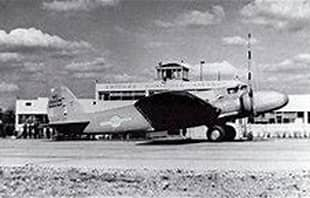
The aircraft involved was a Savoia-Marchetti S.73, registration OO-AGN. The aircraft had entered service with SABENA earlier in 1935, on 6 May, making it a relatively new aircraft when the accident occurred.
The S.73 was an Italian-designed three-engine passenger aircraft.
It was designed for commercial airline operations and was considered a modern aircraft for its period.
The aircraft had three engines, which provided significant power and allowed it to operate on European routes.
The S.73 was used by several airlines during the 1930s.
Its three-engine arrangement was useful for long-distance operations because it provided additional engine power compared with many single- or twin-engine aircraft.
The Flight from Brussels to Croydon
On the afternoon of 10 December 1935, the SABENA aircraft departed from Haren Airport in Brussels for Croydon Airport in England.
There were seven passengers and four crew members aboard.
The crew included the pilot, a radio operator, an engineer, and a steward. The pilot, Jean Schoonbroodt, was an experienced SABENA pilot who had been with the airline since 1927.
The flight was expected to be a routine international journey.
However, weather conditions around southern England were poor.
As the aircraft approached the London area, visibility became an important problem.
Poor Visibility Near Croydon
The aircraft reached the area near its destination around sunset.
The weather included a low cloud ceiling and poor visibility. One aviation accident record describes the cloud ceiling as being down to about 100 metres.This created a serious problem for the crew.
Croydon Airport was located in an area surrounded by hills and higher ground.
A pilot approaching the airport needed to know the aircraft’s exact position and maintain a safe altitude.
In clear weather, landmarks could help.
In poor visibility, however, the landscape could disappear into clouds or darkness.
Navigation in the 1930s
Navigation technology in 1935 was much less advanced than today.
Modern aircraft use GPS, digital maps, radar, satellite communication, and sophisticated navigation computers.
The SABENA crew did not have these tools.
Radio navigation was available, but it was not as advanced as modern systems.
Pilots could request navigation bearings from an airport.
These bearings could help them determine their position.
According to the later investigation, the pilot did not request such bearings and attempted to navigate toward Croydon using his own judgment. This decision became an important part of the investigation.
Confusion About the Location
As the aircraft descended toward the London area, the crew apparently became uncertain about its exact position.
The investigation suggested that the aircraft descended out of the clouds too early.
The crew then encountered high ground.
The pilot may have seen lights and believed they were associated with Croydon Airport.
However, the lights were apparently connected with Biggin Hill Aerodrome, another airfield in the area.
This created a dangerous situation.
The aircraft was flying at a relatively low altitude while approaching hilly terrain.
The pilot had very little room to correct the situation.
The Final Moments
The aircraft was flying at approximately 500 feet when it approached the hillside near Tatsfield.
The aircraft struck the tops of trees and then stalled.
It crashed into a wooded area on the hillside.
The aircraft was destroyed and caught fire.
All eleven people aboard were killed.
The crash occurred only about 13 kilometres southeast of Croydon Airport, showing how close the aircraft was to its intended destination when the accident happened. The Crash Site at Tatsfield
The aircraft crashed near Tatsfield, in Surrey.
The location was hilly and partly wooded.
The aircraft came down near a house called Mosscroft on Kemsley Road.
The accident happened between approximately 16:30 and 17:00 GMT, according to historical accounts.
Local residents and witnesses heard the aircraft.
Some witnesses reported that the engines did not appear to be running smoothly.
Police and ambulances from surrounding communities, including Biggin Hill, Oxted, and Tatsfield, went to the crash site.
Rescue and Recovery
The rescue operation was difficult because of the terrain and the condition of the aircraft.
The wreckage was scattered and badly damaged.
The recovery of the victims continued into the early hours of 11 December.
A temporary mortuary was established at St Lawrence’s Church in Caterham.
The victims were identified using passports and other documents they had been carrying.
The difficult recovery process showed the limitations of emergency services in the 1930s compared with modern airport rescue systems.
The Victims
All seven passengers and four crew members died.
The victims included people of different nationalities.
Among them was Sir John Carden, a British engineer and tank designer. He was also connected with the aircraft manufacturing industry and was a director of Vickers-Armstrongs.
Another passenger was Eugène Samyn, a Belgian textile manufacturer who was traveling to London on business.
The loss of such passengers attracted considerable attention in Britain and Belgium.
A Remarkable Story About Another Passenger
Another interesting detail concerns Dutch middleweight boxing champion Florend Willems.
Willems had originally been scheduled to travel on the aircraft.
However, he changed his plans and decided to travel by boat instead.
He had been scheduled to fight boxer Jack Hyams in London on 11 December.
Because he did not take the SABENA flight, he survived the disaster. This detail illustrates how a simple change in travel plans can have a dramatic effect on a person’s life.
Investigation of the Accident
The accident was investigated by British aviation authorities.
Investigators examined the aircraft wreckage and considered the weather, navigation, pilot actions, and aircraft performance.
Witnesses provided information about the aircraft’s engines.
Investigators also considered whether mechanical problems had caused the accident.
However, no evidence of a previous major mechanical or structural failure was found.This was important because it suggested that the crash was not primarily caused by the aircraft breaking apart or suffering a major mechanical failure.
The Stall
One of the most important findings was that the aircraft had stalled.
A stall occurs when an aircraft’s wings lose enough lift to continue normal flight.
A stall can happen when the aircraft’s speed becomes too low or when the aircraft is placed at an excessive angle to the airflow.
The S.73 was at low altitude when it stalled.
That made recovery extremely difficult.
The aircraft had very little height available to regain speed and control.
The Attempt to Avoid High Ground
The investigation concluded that the pilot was probably trying to avoid the surrounding high ground.
The pilot may have realized that the aircraft was too close to the hills.
He apparently made a sharp climbing turn.
During the turn, the aircraft lost flying speed.
It then stalled and descended uncontrollably.
This sequence demonstrates the danger of making a steep maneuver at low altitude and low speed.
Today, pilots receive extensive training in terrain avoidance and stall recovery.
Weather as a Contributing Factor
Although pilot error was identified as the main cause, weather was an important contributing factor.
The poor visibility made navigation much more difficult.
The low cloud ceiling also prevented the crew from maintaining a clear view of the surrounding terrain.
Other aircraft operating in the area that evening reportedly encountered icing on their wings, although carburetor icing was not considered the cause of this particular crash.
The weather therefore created a difficult environment for the flight.
No Distress Call
Another important detail is that the aircraft did not make a distress call before the crash.
The crew apparently had very little time to react once the dangerous situation developed.
This was another problem with early commercial aviation.
Modern aircraft have many ways to communicate emergencies.
Pilots can quickly contact air traffic control and transmit their position.
In 1935, communication systems were more limited.
The Inquest
A formal inquest into the deaths began at Caterham on 16 January 1936.
Evidence was presented about the aircraft, the crew, the weather, and the circumstances of the crash.
The pilot was described as experienced, having worked for SABENA since 1927.
The inquest eventually returned verdicts of accidental death for the victims.
Public Reaction
The crash received considerable attention in Britain and Belgium.
SABENA was an important airline, and the S.73 was a relatively modern aircraft.
The accident therefore raised questions about the safety of international air travel.
It also attracted attention because it occurred close to London.
The crash demonstrated that even experienced pilots and modern aircraft could face serious danger when visibility was poor.
Wreckage and the Problem of Souvenirs
An unfortunate incident occurred after the crash.
Some sightseers went to the wreckage and removed pieces as souvenirs.
This behavior was strongly criticized by Major Cooper, the Air Ministry inspector responsible for the investigation.
Removing wreckage can be extremely harmful to an accident investigation.
Every part of an aircraft can contain evidence.
A broken component may help investigators understand what happened.
Moving or removing pieces can make reconstruction more difficult.
Lessons from the Tatsfield Crash
The accident provided several important lessons.
Better Navigation
Pilots needed reliable information about their exact position, especially when approaching airports in poor weather.
Use of Radio Bearings
Navigation assistance from the destination airport could be extremely valuable.
Safe Minimum Altitudes
Aircraft should not descend below safe altitudes until the crew is certain about its position.
Terrain Awareness
Hills and other obstacles must be considered carefully during approaches.
Weather Planning
Poor visibility should lead to additional caution and, when necessary, a change in the flight plan.
These principles remain important in modern aviation.
Development of Modern Approach Procedures
Modern airports have carefully designed instrument approaches.
Pilots follow published routes and altitude restrictions.
Navigation systems guide the aircraft toward the runway.
Controllers provide instructions.
Aircraft may also have terrain-warning systems.
These procedures greatly reduce the possibility of an aircraft descending too low while still far from the airport.
The Tatsfield accident occurred before many of these systems had been developed.
Importance of the Accident in Aviation History
The SABENA crash is an important example of the challenges faced by early international airlines.
The aircraft was relatively new.
The pilot was experienced.
The airline was established.
Yet a combination of poor visibility, uncertainty about position, low altitude, and an attempted evasive maneuver led to disaster.
This shows that aviation safety depends on many factors working together.
A modern aircraft can be technologically advanced, but safe operations also require accurate navigation, good weather information, proper procedures, and sound decision-making.
Conclusion
The SABENA Savoia-Marchetti S.73 Tatsfield Crash of 10 December 1935 was one of the tragic accidents of early European commercial aviation.
The aircraft, Savoia-Marchetti S.73 OO-AGN, was operating a scheduled flight from Brussels to Croydon with seven passengers and four crew members. All eleven people aboard were killed when the aircraft crashed near Tatsfield in Surrey.
The accident happened in poor visibility during the approach to Croydon. The investigation concluded that the pilot had probably become uncertain about the aircraft’s position and descended too early. Instead of requesting a navigation bearing from the airport, he apparently attempted to navigate independently. The aircraft then encountered high ground and made a sharp climbing turn. It lost speed, stalled, and crashed. No evidence showed that a major mechanical or structural failure had caused the accident. Weather was considered a contributing factor, while pilot error was identified as the main cause.
The tragedy demonstrated the dangers of early instrument and approach flying. Pilots had limited navigation equipment and much less weather information than modern crews.
Today, aircraft approaching London or other major airports use sophisticated navigation systems, controlled procedures, terrain-warning equipment, and detailed weather information. These systems exist partly because aviation has learned from accidents such as Tatsfield.
The eleven people who died on 10 December 1935 were victims of a rapidly developing technology. Their story remains part of the history of commercial aviation and reminds us how important accurate navigation, safe altitude, good communication, and careful decision-making are to every flight.

Ajeet Yadav is an aviation enthusiast covering airline news, airports, aircraft, and industry developments through well-researched and reliable reporting.