


















Havron Accident Norwegian Air Lines, 16 June 1936
The Havørn accident was a tragic aviation disaster that took place on 16 June 1936 in Norway. The aircraft was operated by Det Norske Luftfartsselskap (DNL), also known as Norwegian Air Lines. The aircraft, named Havørn, crashed into a mountain in western Norway during a scheduled passenger flight. All people aboard the aircraft were killed.
The accident became one of the most significant disasters in the early history of Norwegian civil aviation. It also showed the serious challenges faced by pilots who operated aircraft in Norway’s mountainous landscape. At that time, aviation technology was still developing, and pilots had limited navigation equipment compared with modern aircraft.
The Havørn accident remains an important event in Norwegian aviation history because it demonstrated the dangers of mountain flying and the importance of accurate navigation, weather information, and safe flight procedures.
Norwegian Aviation in the 1930s
Commercial aviation was still relatively new in Norway during the 1930s.
Norway’s geography made aviation especially valuable. The country has long coastlines, mountains, fjords, islands, and remote communities.
Travel by road or railway could be slow.
Aircraft offered a faster way to connect different parts of the country.
The development of regular air services therefore became an important goal.
Det Norske Luftfartsselskap, commonly known as DNL, was established in the 1930s and became Norway’s main airline.
The company operated scheduled passenger and mail services.
The Havørn Aircraft
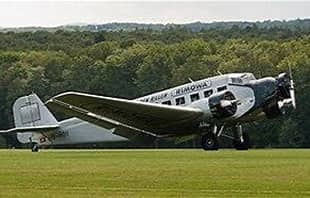
The aircraft involved in the accident was a Junkers Ju 52/3m.
It was a three-engine aircraft designed in Germany.
The aircraft was widely used by airlines around the world during the 1930s.
The Ju 52 was known for its strong metal construction and three-engine design.
It could carry passengers and cargo and was considered a dependable aircraft for its time.
The aircraft operated by DNL was named Havørn, a Norwegian word associated with the sea eagle.
The name was appropriate for an aircraft operated in a country surrounded by mountains and sea.
The Flight on 16 June 1936
On 16 June 1936, Havørn was operating a scheduled flight in western Norway.
The flight was traveling from Bergen toward Tromsø, with planned stops along the route.
The aircraft carried passengers and crew.
The crew consisted of experienced aviation personnel.
The flight began normally.
However, the weather in western Norway was difficult.
The route included mountainous areas, and clouds and poor visibility created serious navigation challenges.
The aircraft eventually crashed into a mountain.
All people aboard were killed.
Norway’s Mountainous Landscape
To understand the accident, it is important to understand the geography of western Norway.
The region contains steep mountains and deep valleys.
Many mountains rise directly from fjords.
Clouds can form quickly around mountain peaks.
Weather can change rapidly.
A pilot flying in this environment must carefully maintain altitude and know the aircraft’s exact position.
A small navigation error can place an aircraft dangerously close to terrain.
In 1936, pilots did not have modern terrain-warning systems.
They had to depend on maps, compass readings, radio navigation where available, and visual observations.
Weather Conditions
Weather played an important role in the Havørn accident.
The aircraft encountered poor visibility while flying through the mountainous region.
Clouds and mist could hide the mountains.
The crew had limited opportunities to see the terrain ahead.
Modern aircraft can use weather radar, satellite weather information, and sophisticated navigation systems.
The pilots of Havørn did not have these advantages.
When flying through clouds, the crew had to rely on their instruments and navigation methods.
Navigation Difficulties
Navigation was one of the biggest challenges for early airline pilots.
Pilots needed to know their location at all times.
They could use maps and visual landmarks.
Radio navigation systems were also developing.
However, these systems were not available everywhere.
Mountainous regions were particularly difficult.
A pilot could believe that the aircraft was in one valley while actually being in another.
If the aircraft was flying inside clouds, visual confirmation was impossible.
This could lead to a dangerous situation.
The Final Part of the Flight
As Havørn continued through western Norway, the aircraft entered an area of difficult terrain and poor visibility.
The crew attempted to navigate through the mountainous region.
At some point, the aircraft came dangerously close to the mountains.
The aircraft eventually struck Lihesten, a mountain in the municipality of Hyllestad in Sogn og Fjordane.
The impact occurred at high altitude on the mountain.
The aircraft was destroyed.
Everyone aboard died.
The Crash Site
The crash site was in a difficult mountainous location.
This created major problems for rescue teams.
The wreckage was located high on the mountain.
Access was difficult.
Rescuers had to travel through steep terrain to reach the site.
There were no helicopters available for rescue operations.
Modern helicopter rescue services can reach remote crash sites relatively quickly.
In 1936, rescuers had to climb or travel over difficult terrain.
Rescue Efforts
Once authorities learned about the crash, search teams were organized.
Local people played an important role in locating and reaching the wreckage.
The difficult terrain made the operation dangerous.
Rescuers had to carry equipment through mountainous areas.
The recovery of the victims took time.
The accident demonstrated the importance of specialized mountain rescue services.
Norway later developed highly capable rescue organizations that could respond to aviation and other emergencies.
The Investigation
After the crash, investigators examined the circumstances.
They looked at the aircraft, the weather, the flight route, and the actions of the crew.
The investigation attempted to determine why Havørn had flown into the mountain.
The aircraft itself was examined for possible mechanical problems.
Investigators wanted to know whether an engine failure, structural problem, navigation error, or weather condition had contributed to the accident.
Was the Aircraft Mechanically Faulty?
One important part of an aviation investigation is determining whether the aircraft had a mechanical failure.
The Ju 52 was generally considered a strong aircraft.
The investigation did not establish that a major mechanical failure had caused the accident.
Instead, the circumstances pointed toward problems involving navigation and the difficult weather conditions.
This was significant because it suggested that the aircraft was not simply destroyed by a technical failure.
Pilot Experience
The crew had aviation experience.
However, experience alone could not remove the risks of mountain flying.
A pilot may be highly skilled but still face serious danger when visibility suddenly becomes poor.
The combination of clouds, mountains, navigation uncertainty, and limited technology created a difficult situation.
Modern aviation recognizes that even experienced pilots can make mistakes under high workload.
This is why modern procedures provide pilots with multiple layers of protection.
The Danger of Controlled Flight Into Terrain
The Havørn accident is an example of what modern aviation calls controlled flight into terrain, or CFIT.
CFIT occurs when an aircraft that is functioning normally is unintentionally flown into terrain.
The pilots may not realize how close they are to a mountain.
This type of accident was particularly dangerous before modern terrain-warning technology.
Today, aircraft can warn pilots when they are approaching terrain.
In 1936, such warnings were impossible.
The pilot had to maintain safe terrain clearance using available navigation information.
Lack of Modern Navigation Systems
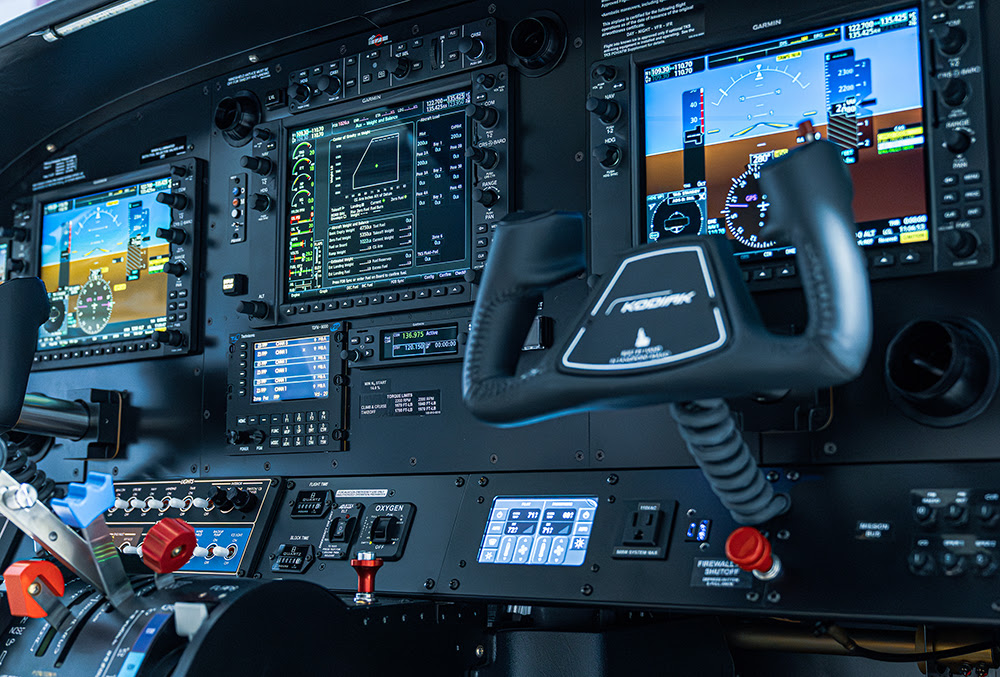
Modern aircraft have several navigation tools.
They can use:
- GPS
- Inertial navigation
- Digital maps
- Radio navigation
- Terrain databases
- Ground-based navigation aids
Havørn had only a small part of this technological support.
The crew therefore had to rely on traditional methods.
This made mountain routes particularly demanding.
Importance of Flight Planning
Flight planning was extremely important.
Pilots needed to study the route carefully before departure.
They needed to understand the terrain.
They needed to know safe altitudes.
They also needed to consider the weather.
If the weather was poor, they needed to decide whether to continue or change the route.
Modern flight planning uses computers and extensive weather data.
In the 1930s, much of this work was performed manually.
Passenger Aviation in Norway
The Havørn accident happened when Norwegian passenger aviation was still developing.
Air travel was becoming an important way to connect communities.
Passengers trusted airlines to transport them safely.
The loss of a commercial aircraft therefore had a major impact on public confidence.
People wanted to know whether flying was safe.
Airlines and government authorities were required to respond by improving operating standards.
Public Reaction
The accident received significant attention in Norway.
A commercial passenger aircraft had crashed into a mountain, killing everyone aboard.
The tragedy affected the families of the victims as well as the growing Norwegian aviation community.
Newspapers reported the accident and the difficult rescue operation.
The crash became one of the best-known early aviation disasters in Norway.
The Impact on DNL
DNL was still a young airline.
The loss of Havørn was a major tragedy for the company.
The accident highlighted the difficulties of operating scheduled flights through Norway’s mountainous landscape.
The airline and aviation authorities had to consider improvements in navigation and operating procedures.
The experience contributed to the broader development of Norwegian aviation safety.
Improvements in Norwegian Aviation
Norwegian aviation continued to develop after the accident.
Better navigation aids were introduced.
Airports and landing facilities improved.
Radio communication became more reliable.
Weather information became more detailed.
Pilot training became more systematic.
These changes helped reduce the risks associated with flying in Norway’s difficult geography.
Development of Mountain Flying Procedures
Mountain flying requires special techniques.
Pilots need to maintain sufficient altitude.
They need to understand local wind conditions.
They must be careful when entering valleys.
They should avoid descending when the aircraft’s exact position is uncertain.
They also need clear procedures for dealing with clouds and poor visibility.
Modern Norwegian aviation uses detailed procedures to manage these risks.
The lessons learned from early accidents contributed to this development.
The Role of Weather Forecasting
Weather forecasting improved greatly during the twentieth century.
In the 1930s, pilots had access to weather observations, but information was limited.
Today, meteorologists can use satellites and radar to track weather systems.
Pilots receive detailed forecasts before departure.
They can also receive updated information during a flight.
This makes it easier to avoid dangerous weather.
Search and Rescue Development
The Havørn crash also demonstrated the importance of rescue services.
The crash site was difficult to reach.
Rescuers had to travel through steep terrain.
Today, Norway has sophisticated search-and-rescue capabilities.
Helicopters can reach remote mountains.
Emergency teams have specialized equipment.
Aircraft can transmit emergency location signals.
These improvements have made rescue operations much faster.
The Human Cost
The tragedy affected many families.
Passengers had boarded the aircraft expecting a normal journey.
They had no reason to believe the flight would become dangerous.
The crew members were carrying out their professional duties.
The sudden loss of eleven people was deeply painful for their families and communities.
Aviation accidents should always be remembered as human tragedies rather than simply technical events.
Aviation Technology in 1936
It is important to understand the technological limits of the period.
The aircraft was modern for its time.
The Junkers Ju 52 was a respected aircraft.
But even the best aircraft could not provide the technology available today.
There was no GPS.
There was no terrain-warning system.
There was no satellite weather information.
There were no computerized flight-management systems.
There were no helicopters for emergency rescue.
These limitations increased the risks of flying through mountainous terrain.
Lessons from the Havørn Accident
The accident provided several important lessons.
Maintain Safe Altitude
Aircraft should remain high enough above terrain when flying through mountains.
Know the Exact Position
Navigation errors can be fatal in mountainous areas.
Respect Weather Conditions
Poor visibility can make mountain flying extremely dangerous.
Use Available Navigation Aids
Pilots should make full use of available radio and other navigation systems.
Have Alternative Plans
If conditions become unsafe, pilots need options such as changing route or turning back.
Improve Rescue Services
Remote areas require specialized emergency response capabilities.
The Legacy of Havørn
The Havørn accident became an important part of Norwegian aviation history.
It showed the risks involved in creating commercial air routes across a mountainous country.
The accident also contributed to discussions about navigation, weather, pilot training, and aviation safety.
Over time, Norwegian aviation developed stronger systems.
Airports became better equipped.
Navigation aids improved.
Aircraft became more advanced.
Pilot training became more rigorous.
The country eventually developed one of the most sophisticated aviation networks in Europe.
Modern Comparison
A modern aircraft flying through western Norway has access to technology that the crew of Havørn could not have imagined.
A pilot can see the aircraft’s exact position.
The aircraft can display terrain.
Warnings can alert the crew to dangerous proximity to mountains.
Weather radar can identify areas of heavy precipitation.
Air traffic controllers can provide navigation assistance.
Satellite systems provide continuous positioning.
These technologies dramatically reduce the risks faced by early pilots.
Remembering the Accident
The Havørn accident remains an important reminder of the challenges faced by the pioneers of commercial aviation.
The passengers and crew aboard the aircraft were part of a new era of transportation.
They were traveling on a route that represented progress for Norway.
Unfortunately, the technology and procedures of the time were not sufficient to prevent the tragedy.
Their deaths became part of the history from which future aviation safety improvements developed.
Conclusion
The Havørn accident of 16 June 1936 was one of the most tragic events in the early history of Norwegian commercial aviation.
The aircraft, operated by Det Norske Luftfartsselskap (DNL), was flying through western Norway when it crashed into Lihesten during difficult weather and visibility conditions. All people aboard were killed.
The accident demonstrated the enormous challenge of flying through Norway’s mountainous landscape during the early years of commercial aviation.
The aircraft itself was a modern Junkers Ju 52/3m, a strong three-engine aircraft used by airlines across Europe. However, even a capable aircraft could not eliminate the dangers created by poor visibility, mountainous terrain, and limited navigation technology.
The pilots of 1936 did not have GPS, terrain-warning systems, satellite weather information, or modern air traffic control. They had to depend on maps, instruments, radio navigation, weather reports, and their own judgment.
The Havørn tragedy highlighted the importance of accurate navigation and safe altitude. It also demonstrated the need for better weather information and specialized mountain rescue services.
Over the decades that followed, aviation technology improved dramatically. Navigation systems became more accurate, aircraft became safer, weather forecasting improved, and emergency services became more capable.
Norwegian aviation continued to grow, and air travel became an essential part of connecting the country’s many communities.
The story of Havørn is therefore not only a story of an aviation accident. It is also a story about the challenges faced by early pilots and the lessons that helped shape safer aviation.
The 16 June 1936 Havørn accident remains an important part of Norway’s aviation history. It reminds us that modern aviation safety has been built through technological progress, careful investigation, improved training, and lessons learned from tragedies of the past.

Ajeet Yadav is an aviation enthusiast covering airline news, airports, aircraft, and industry developments through well-researched and reliable reporting.