















Northwest Airlines Flight 5 Crash 30 October 1941
The Northwest Airlines Flight 5 crash was a tragic aviation accident that occurred on 30 October 1941 near Moorhead, Minnesota, United States. The aircraft was a Douglas DC-3A, operated by Northwest Airlines on a scheduled passenger flight from Chicago to Seattle. The aircraft was flying at night when it encountered serious icing conditions and lost its ability to maintain safe flight.
There were 15 people aboard, including 12 passengers and three crew members. Fourteen people died in the crash, while the captain, Clarence F. Bates, survived with injuries. He was the only survivor.
The accident became an important event in aviation history because it helped investigators and aircraft engineers understand the dangers of ice accumulation on aircraft wings. It also contributed to further study of how aircraft behave when ice builds up on their surfaces.
Northwest Airlines
Northwest Airlines was one of the important American airlines operating during the early development of commercial aviation.
The company operated scheduled passenger and mail services across the United States. Its network connected cities in the Midwest and western United States.
By 1941, commercial aviation had developed considerably. Aircraft were more reliable than earlier designs, pilots were receiving better training, and radio navigation was becoming more common.
However, flying was still very different from modern airline travel.
Pilots had no GPS, no modern weather radar, and no computerized flight-management systems. They depended on instruments, radio navigation, weather forecasts, and their own experience.
The Aircraft
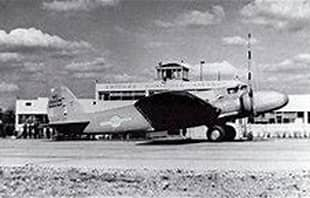
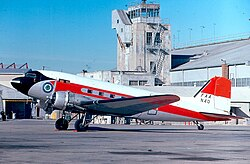
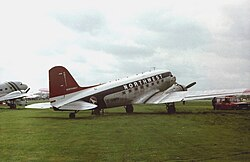
Northwest Airlines Flight 5 was operated by a Douglas DC-3A-269, registration NC21712.
The Douglas DC-3 was one of the most important aircraft in aviation history.
It was a twin-engine, all-metal aircraft designed for passenger and cargo transportation. It was faster and more comfortable than many earlier airliners.
The DC-3 helped make commercial passenger aviation economically practical.
Many airlines around the world used the aircraft.
Although the DC-3 had an excellent reputation, it could still be affected by severe weather and icing.
The Flight Route
Flight 5 began at Chicago Municipal Airport.
Its final destination was Seattle, Washington.
The scheduled route included several stops:
- Chicago
- Minneapolis
- Fargo
- Billings
- Butte
- Spokane
- Seattle
The crew assigned to the flight included Captain Clarence F. Bates and First Officer Onsgard. The flight was planned to continue from Minneapolis toward Fargo and then westward toward Seattle.
The aircraft departed Minneapolis around midnight.
At that point, the crew had access to weather information that included forecasts for the route and the Fargo area.
Weather Conditions
Weather became one of the most important factors in the accident.
A cold front was moving through the area.
The weather forecast indicated changing conditions along the route.
As Flight 5 continued toward Fargo, the aircraft encountered conditions favorable for the formation of ice.
The aircraft was flying at night, which made the situation more difficult.
Ice could form rapidly on an aircraft when it passed through clouds containing supercooled water droplets.
What Is Aircraft Icing?
Aircraft icing occurs when water droplets in clouds freeze onto an aircraft’s surfaces.
Ice can form on:
- Wings
- Propellers
- Engine air intakes
- Tail surfaces
- Windshields
- Other exposed parts
Even a relatively small amount of ice can change the shape of a wing.
The wing is designed with a carefully calculated aerodynamic shape.
When ice builds up on the leading edge, that shape changes.
This can reduce lift and increase drag.
Why Ice Is Dangerous
A wing produces lift by moving through the air.
If ice changes the wing’s shape, the wing may produce less lift.
At the same time, drag increases.
This means the aircraft may need more power to maintain its altitude.
If the icing becomes severe enough, the aircraft can stall at a higher speed than normal.
This was an important lesson from the Flight 5 accident.
Approach Toward Fargo
Flight 5 continued toward Fargo.
The crew expected to land there.
However, weather conditions around the airport were poor.
The aircraft encountered more severe icing conditions as it descended.
The Civil Aeronautics Board later found that Captain Bates’ decision to continue descending after encountering more severe icing was not consistent with good operating practices.
At the time, knowledge of aircraft icing was less advanced than it is today.
Pilots and engineers understood that icing was dangerous, but the exact effects of heavy ice on aircraft performance were still being studied.
The Descent
The aircraft began descending toward the Fargo area.
The weather was poor, with fog and mist.
The crew had to decide how to continue the flight.
Fargo had restrictions on night landings when weather conditions were below certain limits.
The crew therefore needed to evaluate whether the airport could safely be used.
During the descent, the aircraft encountered increasingly serious icing.
Increasing Ice on the Wings
Ice continued to accumulate on the aircraft.
As more ice formed, the aircraft’s aerodynamic performance changed.
The wings produced less lift.
The drag increased.
The aircraft needed more power to maintain its flight path.
The problem became particularly serious when the aircraft slowed during the descent.
An aircraft affected by icing can stall at a higher airspeed than expected.
This means a speed that would normally be safe could become dangerously close to the stall speed.
The Stall
The investigation concluded that the aircraft’s inboard wing sections stalled.
The aircraft did not respond to the application of full engine power in the way the pilots would reasonably have expected based on the aviation knowledge of the time.
The heavy ice had increased the aircraft’s stall speed and drag.
When the aircraft entered a stall, it rapidly lost altitude.
The pilots had very little height available to recover.
The Crash
At approximately 2:04 a.m., Flight 5 crashed near Moorhead, Minnesota, approximately a short distance from Fargo. The Civil Aeronautics Board report places the crash about 1 1⁄4 miles north of Moorhead.
The aircraft was destroyed.
The crash resulted in the deaths of 12 passengers and two crew members.
Captain Bates survived.
He was thrown clear of the wreckage and suffered injuries.
He became the only survivor of the accident.
Rescue Efforts
The accident occurred during the early morning hours.
The crash site was in an open area near Moorhead.
Emergency workers and local authorities responded after the accident was reported.
Because Captain Bates survived, investigators were able to obtain valuable information about the final part of the flight.
His testimony became extremely important to the investigation.
Captain Clarence Bates
Captain Bates was an experienced airline pilot.
His survival was remarkable because the aircraft was destroyed and almost everyone aboard was killed.
He was able to describe the aircraft’s behavior before the crash.
His account helped investigators understand what had happened inside the aircraft.
He described unusual behavior as the aircraft encountered severe icing.
His testimony became an important part of the investigation.
The Civil Aeronautics Board Investigation
The Civil Aeronautics Board (CAB) investigated the accident.
The investigation began quickly.
The CAB investigator arrived at the wreckage on the afternoon of 30 October.
The wreckage was guarded so that evidence would not be disturbed.
A public hearing was later held in Moorhead on 3 and 4 November 1941.
Investigators examined the aircraft, engines, instruments, weather conditions, and crew actions.
Examination of the Wreckage
Investigators examined the condition of the engines and propellers.
They looked for evidence of mechanical failure.
They also examined the flight controls and the aircraft’s structure.
The purpose was to determine whether the aircraft had suffered a mechanical problem before the crash.
The investigation ultimately focused strongly on icing and aircraft performance.
The Role of Ice
The CAB concluded that ice had accumulated on the aircraft’s wings and other surfaces.
This increased the aircraft’s stall speed and drag.
The ice also increased the amount of power needed to maintain flight.
The report identified ice accumulation as an important contributing factor.
The Probable Cause
The CAB’s final finding was particularly significant.
The Board determined that the probable cause was the aircraft’s failure to respond to full engine power as expected after the inboard portions of the wings had stalled.
The Board also identified the accumulation of ice on the wings and other aircraft surfaces as a contributing factor.
The captain’s decision to continue descending after encountering more severe icing was also criticized. (Wikisource)
Why the Accident Was Important
The accident was important because it demonstrated that icing could create serious aerodynamic problems even on a modern aircraft.
At the time, aircraft de-icing technology was still developing.
The accident encouraged further research into:
- Ice formation
- Wing aerodynamics
- Stall behavior
- Propeller icing
- Engine icing
- De-icing equipment
- Pilot procedures
Research Into Aircraft Icing
After the accident, aviation organizations continued studying icing.
The accident occurred at a time when scientists and engineers were already investigating ways to protect aircraft from ice.
The experience from Flight 5 added valuable information.
Research examined how ice affected aircraft performance and how pilots should respond.
The National Advisory Committee for Aeronautics also conducted research into aircraft de-icing during this period.
De-Icing Technology
Modern aircraft use different systems to prevent or remove ice.
These may include:
- Heated surfaces
- Pneumatic de-icing boots
- Engine anti-ice systems
- Heated propeller systems
- Ice detection systems
These technologies allow aircraft to operate more safely in icing conditions.
Such systems were much less advanced in 1941.
Pilot Training
The accident also demonstrated the importance of pilot training.
Pilots must understand that an aircraft affected by icing may behave differently from a clean aircraft.
Modern pilots are trained to recognize icing conditions and take appropriate action.
They may:
- Change altitude
- Increase airspeed within safe limits
- Activate anti-ice systems
- Avoid severe icing
- Divert to another airport
- Leave the icing area
These procedures help reduce risk.
The Importance of Weather Forecasting
Weather forecasting has improved greatly since 1941.
Pilots today receive detailed information about icing conditions.
Weather radar and satellite data can help identify dangerous weather.
Aircraft can also receive updated weather information during flight.
In 1941, pilots had much less information.
Forecasts were useful but could not provide the detailed, real-time picture available today.
Night Flying
Night flying added another difficulty.
The crew could not easily see the surrounding weather.
There was no daylight reference for judging the aircraft’s movement.
When the aircraft entered clouds or fog, the pilots had to depend on instruments.
This made the aircraft’s aerodynamic behavior particularly important.
Instrument Flying
Instrument flying was already an important skill in 1941.
Pilots used instruments such as:
- Airspeed indicator
- Altimeter
- Artificial horizon
- Compass
- Vertical speed indicator
However, the instruments could not directly tell the pilots how much ice had accumulated or exactly how much the stall speed had increased.
The crew had to interpret the aircraft’s behavior.
Human Factors
Human decision-making played a role in the accident.
The captain was faced with difficult weather and an important decision.
The aircraft was approaching Fargo, but icing was becoming more severe.
Continuing the descent increased exposure to the icing conditions.
The investigation concluded that continuing the descent after encountering the more severe icing was not consistent with good operating practice.
The Difficulty of Icing Decisions
Icing can be especially dangerous because it may develop gradually.
A pilot may initially encounter light icing.
Conditions can then become more severe.
The aircraft may continue to fly normally for some time.
But as ice accumulates, performance can deteriorate rapidly.
This makes early action extremely important.
Lack of Modern Warning Systems
Flight 5 did not have modern systems that could warn pilots about dangerous aircraft performance.
There were no computerized stall warnings.
There were no modern ice-detection systems.
There were no electronic terrain warnings.
There was no flight-data recorder.
The crew had to rely on basic instruments and aircraft behavior.
No Flight Recorder
The absence of a flight recorder made the investigation more difficult.
Modern accident investigators can examine detailed data from the final minutes of a flight.
In 1941, investigators had to use:
- Wreckage
- Weather information
- Witness accounts
- Pilot testimony
- Aircraft performance tests
- Airline records
Captain Bates’ survival was therefore extremely valuable.
Simulated Flight Testing
The accident led Northwest Airlines to conduct additional simulated flight tests.
These tests helped the company understand the unusual behavior of the DC-3 when affected by icing.
The testing showed characteristics that could have contributed to the accident.
The results were expected to help prevent similar accidents in the future. (GovInfo)
Broader Impact on Aviation Safety
The lessons from Flight 5 extended beyond Northwest Airlines.
The accident demonstrated the need for better understanding of icing.
Aircraft manufacturers and airlines could use the information to improve operating procedures.
Engineers could develop better de-icing systems.
Pilots could receive better guidance.
This is one of the most important ways aviation accidents contribute to safety.
The Human Cost
Behind the technical investigation were 14 deaths.
Twelve passengers were killed.
Two members of the crew also died.
They were people with families, friends, jobs, and personal lives.
They had boarded a normal scheduled flight.
No one expected the journey to become a tragedy.
Remembering the human cost is an important part of understanding the accident.
Captain Bates’ Later Life
Captain Clarence F. Bates survived the Flight 5 crash.
However, his story did not end there.
Approximately one year later, Bates was killed in another aviation accident while test flying a Consolidated B-24 near St. Paul, Minnesota.
His unusual aviation history makes him a memorable figure in the history of Northwest Airlines.
Aviation in 1941
The accident happened during a major turning point in world history.
The Second World War had already begun in Europe.
The United States had not yet entered the war, but American aviation was rapidly expanding.
Aircraft technology was developing quickly.
The experience gained during the war would later produce major improvements in aviation.
The Importance of the DC-3
The DC-3 remained one of the most successful aircraft ever produced.
The accident did not mean that the aircraft was fundamentally unsafe.
Instead, it demonstrated that even a successful aircraft could have serious performance problems under unusual environmental conditions.
The lessons about icing were therefore valuable for the wider aviation industry.
Modern Aviation and Icing
Modern commercial aircraft are designed with icing protection.
Pilots receive detailed weather information before and during flight.
Air traffic controllers and weather services provide additional information.
Aircraft have systems that help prevent ice from forming on critical surfaces.
Flight crews are trained to avoid severe icing whenever possible.
These improvements have greatly reduced the dangers that confronted Flight 5.
What Modern Pilots Can Learn
The accident remains relevant because icing is still a serious aviation hazard.
Modern pilots must understand that:
- Ice changes wing shape.
- Ice increases drag.
- Ice reduces lift.
- Ice increases stall speed.
- Severe icing can cause rapid loss of control.
The safest response is usually to avoid or leave severe icing rather than continue through it.
The Importance of Accident Reports
The official accident report is valuable because it explains not only what happened but also why.
The CAB investigation looked at the complete situation.
It considered the aircraft, weather, pilot decisions, and aerodynamic effects.
This approach remains a central part of modern accident investigation.
Legacy of Flight 5
The Northwest Airlines Flight 5 accident became one of the important early cases involving severe aircraft icing.
It helped increase attention toward the aerodynamic effects of ice.
It also encouraged additional testing and research.
The accident demonstrated that aircraft behavior in icing conditions could be different from what pilots expected.
Conclusion
The Northwest Airlines Flight 5 crash of 30 October 1941 was one of the significant early commercial aviation accidents involving severe icing.
The flight was operating from Chicago to Seattle, with scheduled stops including Minneapolis and Fargo. The aircraft was a Douglas DC-3A-269, registration NC21712.
During the flight toward Fargo, the aircraft encountered increasingly severe icing conditions.
Ice accumulated on the wings and other surfaces.
This changed the aircraft’s aerodynamic characteristics. The ice increased drag and raised the aircraft’s stall speed.
As the aircraft descended, the situation became more dangerous.
At about 2:04 a.m., the aircraft crashed near Moorhead, Minnesota. Fourteen of the 15 people aboard died. Captain Clarence F. Bates survived and became the only survivor.
The Civil Aeronautics Board investigated the accident and concluded that the probable cause involved the aircraft’s failure to respond to full power as expected after the inboard wing sections stalled. Ice accumulation was identified as an important contributing factor. The Board also criticized the continuation of the descent after the crew encountered more severe icing.
The accident became important because it revealed how dangerous icing could be for an aircraft that was otherwise considered reliable.
The investigation and later testing helped aviation experts understand the problem better. Northwest Airlines conducted simulated flight tests to study the aircraft’s behavior, while further research into aircraft icing and de-icing continued.
Today, aircraft are equipped with sophisticated anti-icing and de-icing systems. Pilots receive much better weather information, and modern aircraft have advanced instruments and warning systems.
The safety knowledge available today was built over many decades.
The story of Flight 5 is therefore not only about a tragic crash. It is also about the development of aviation science and safety.
The 14 people who died should be remembered as the human cost of an accident that helped the aviation industry learn more about one of the most dangerous natural hazards faced by aircraft.
The accident reminds us that safe flying depends not only on a strong aircraft and skilled pilots but also on understanding the environment in which an aircraft operates.
The lessons from Northwest Airlines Flight 5 continue to have value today, particularly whenever aircraft operate in cold, cloudy, or icy conditions.

Ajeet Yadav is an aviation enthusiast covering airline news, airports, aircraft, and industry developments through well-researched and reliable reporting.