













China National Aviation Corporation Flight 121 Crash January 5, 1947
The China National Aviation Corporation (CNAC) Flight 121 accident was a tragic event in the early history of post-war commercial aviation in China. It occurred on January 5, 1947, only a short time after the deadly aviation accidents that had taken place around Shanghai on Christmas Day in 1946.
The accident happened during a difficult period for Chinese aviation. Airlines were rebuilding their operations after World War II, passenger services were expanding, and many airports and navigation systems were still developing. Pilots had to operate aircraft in conditions that were very different from those faced by airline crews today.
CNAC was one of the most important airlines operating in China at the time. The company connected major cities and transported passengers, mail, and cargo. Its flights were important because China’s large size made air travel one of the fastest ways to travel between distant locations.
The Flight 121 accident became another reminder of the risks faced by passengers and crews during the early post-war years of commercial aviation.
China National Aviation Corporation
The China National Aviation Corporation, commonly called CNAC, was an important part of China’s aviation history.
The airline had been established before World War II and developed routes connecting major cities in China.
During the war, CNAC played an important role in transportation. Its aircraft and crews operated under difficult conditions, carrying passengers, supplies, and important materials.
After Japan surrendered in 1945, CNAC began rebuilding its commercial network.
The end of the war brought new opportunities for civilian aviation. People wanted to travel, businesses needed faster transportation, and government organizations needed connections between different parts of the country.
However, the aviation industry faced serious difficulties.
Aircraft needed maintenance, airports required improvements, and navigation equipment was still limited.
Post-War Aviation in China
The accident took place during a period of major change.
World War II had ended only about seventeen months earlier. Years of fighting had damaged transportation infrastructure throughout China.
Many roads and railway lines were in poor condition.
Air travel offered a solution.
Airlines could connect cities much faster than ground transportation.
As a result, CNAC and other airlines increased their services.
But the aviation system was not always ready for the rapid growth.
Airports could have limited navigation equipment.
Weather information was sometimes incomplete.
Communication systems were less reliable than modern systems.
Aircraft maintenance was also more complicated because spare parts and trained technicians were not always easy to obtain.
Aircraft Technology
CNAC operated aircraft that had been developed and widely used during the war.
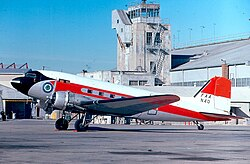
The Douglas DC-3 and its military version, the C-47, were especially important.
These aircraft were known for their strength and reliability.
They had two engines and could carry passengers, cargo, and mail.
After the war, many military transport aircraft were converted for civilian operations.
The conversion allowed airlines to expand their fleets quickly.
However, pilots still had to operate these aircraft with relatively basic navigation and communication systems.
There was no satellite navigation.
There were no modern computerized flight-management systems.
There were also no modern terrain-warning systems.
This meant that pilots had to rely heavily on their instruments, radio navigation, charts, weather reports, and experience.
Flight 121
CNAC Flight 121 was operating on January 5, 1947.
The flight was part of the airline’s domestic transportation network.
Passengers boarded the aircraft expecting to reach their destination safely.
At the time, air travel was still considered a modern and relatively special form of transportation.
A flight could save passengers many hours or even days compared with traveling by road or railway.
The aircraft departed normally, but the flight later developed into a disaster.
Weather Conditions
Weather was a major concern for pilots in the 1940s.
Winter weather could produce low clouds, fog, rain, and poor visibility.
Pilots had fewer tools for understanding weather conditions than modern crews.
Today, pilots can use satellite images, weather radar, digital forecasts, and real-time updates.
In 1947, weather observations came mainly from ground stations and radio reports.
Weather could change quickly between the time a report was issued and the time an aircraft reached its destination.
Poor visibility was particularly dangerous because pilots often depended on visual landmarks during the final stages of a flight.
Navigation Challenges
Navigation was another important problem.
Pilots in the 1940s used a mixture of radio navigation, compass headings, charts, and dead reckoning.
Dead reckoning involved estimating the aircraft’s position using speed, direction, time, and wind.
If the wind was stronger or weaker than expected, the aircraft could drift away from its planned route.
A small error during a long flight could become significant.
Near an airport, even a relatively small navigation error could cause the aircraft to approach the wrong location.
Modern GPS and computerized navigation systems have greatly reduced these problems.
The Accident
Flight 121 ultimately crashed during its operation on January 5.
The accident resulted in fatalities and became part of the difficult safety history of CNAC during the post-war period.
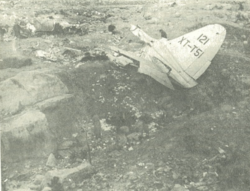
The aircraft was severely damaged in the crash.
Emergency personnel and local people responded to the accident.
The rescue operation was more difficult than it would be today because emergency services did not have modern helicopters, satellite communications, or automatic aircraft tracking.
Finding the exact location of a crashed aircraft could take considerable time.
Rescue Operations
After the aircraft failed to arrive as expected, authorities and the airline began looking for it.
Search operations in the 1940s depended heavily on reports from local residents, aircraft searches, radio communication, and information from other pilots.
Once the crash site was located, rescue personnel went to the area.
People living nearby often helped because they could reach remote accident sites before official teams.
Medical care was also more difficult in remote areas.
Injured survivors, when present, needed to be transported to medical facilities as quickly as possible.
The Investigation
After the crash, investigators examined the available evidence.
The investigation would have considered several possibilities, including:
- Weather
- Navigation
- Aircraft condition
- Engine performance
- Pilot actions
- Flight planning
- Communication
- Airport facilities
Historical aviation investigations were more difficult than modern investigations.
Today’s aircraft carry flight-data recorders and cockpit voice recorders.
These devices allow investigators to reconstruct the final minutes of a flight.
Aircraft operating in 1947 generally did not have such equipment.
Investigators therefore had to depend on physical wreckage, maintenance records, weather reports, radio messages, and witness statements.
Human Factors
Pilots operating commercial aircraft in the 1940s faced a heavy workload.
They had to control the aircraft manually while also monitoring engines and instruments.
They also had to calculate navigation information.
During difficult weather, the workload increased.
The crew needed to maintain communication with ground stations and make decisions about altitude, route, and landing.
Modern aircraft automation reduces some of this workload.
However, in the 1940s, much more depended directly on the pilots.
This made training and experience extremely important.
The Importance of Pilot Training
The rapid expansion of commercial aviation meant airlines needed more trained pilots.
Many pilots had gained experience during World War II.
Military flying provided valuable skills, but commercial aviation required additional training.
Passenger aircraft operated on scheduled routes with different procedures from military transport missions.
Pilots had to learn airline navigation, passenger operations, weather planning, fuel management, and airport procedures.
The development of standardized airline training became increasingly important during the post-war period.
Airport Facilities
Airports in China were also developing.
Some major airports had radio navigation equipment and trained ground personnel.
Other airfields had more basic facilities.
A modern airport provides pilots with detailed approach charts, runway information, weather observations, navigation aids, and air traffic control.
Many of these services were less developed in 1947.
This meant pilots sometimes had to rely on their own navigation calculations and visual references.
When weather became poor, the limitations of the airport infrastructure could become a serious safety issue.
Maintenance Challenges
Aircraft maintenance was another important concern.
Post-war airlines operated aircraft that had often seen military service.
The DC-3 and C-47 were strong aircraft, but they still required regular inspections and maintenance.
Engines, propellers, landing gear, electrical equipment, instruments, and airframes all needed careful attention.
Airlines also needed replacement parts.
In the immediate post-war period, supplies were not always easy to obtain.
The aviation industry gradually developed stronger maintenance programs and inspection requirements.
Growth of Commercial Aviation
Despite these challenges, the demand for air travel continued to grow.
Airlines such as CNAC were important to China’s economic development.
Air travel allowed businesses to operate across distant cities.
Government officials could travel more quickly.
Mail could be transported in a fraction of the time required by surface transportation.
Passengers could visit family members in distant parts of the country.
The expansion of air transportation therefore had significant economic and social benefits.
But increased air traffic also meant that safety standards had to improve.
Lessons From Flight 121
The accident demonstrated several important aviation safety principles.
Accurate Navigation
Pilots need reliable information about their position.
Good Weather Information
Weather conditions must be monitored throughout a flight.
Reliable Communication
Aircraft crews and ground stations need clear and dependable communication.
Strong Maintenance
Aircraft must be inspected and maintained regularly.
Proper Pilot Training
Crews need training for emergencies and difficult weather conditions.
Safe Airport Procedures
Airports need appropriate navigation and landing facilities.
These lessons became increasingly important as commercial aviation expanded.
Development of Aviation Safety
The late 1940s saw major improvements in aviation safety.
Air traffic control became more organized.
Radio navigation systems improved.
Radar began to play a larger role.
Weather forecasting became more accurate.
Airports installed better lighting and navigation equipment.
Pilot training became more standardized.
Aircraft maintenance procedures became more systematic.
These changes helped reduce the number of accidents caused by navigation and communication problems.
Modern Comparison
A flight like CNAC 121 would be operated very differently today.
Modern aircraft use GPS and other satellite-based navigation systems.
Pilots receive detailed weather information before and during flights.
Air traffic controllers can track aircraft using radar and other surveillance systems.
Aircraft can receive warnings about dangerous terrain and weather.
Modern airports have sophisticated instrument approaches that allow aircraft to land in much lower visibility than was possible at many airports in the 1940s.
Aircraft also carry flight recorders that provide investigators with valuable information after an accident.
These systems make it much easier to identify and manage risks.
The Human Cost
The most important part of any aviation accident is the loss experienced by families.
Passengers aboard Flight 121 were traveling because they had places to go and people to see.
They trusted the airline and crew to take them safely to their destination.
The crew members were also professionals who were carrying out their duties.
When an aircraft crashes, the effects extend far beyond the crash site.
Families lose loved ones, colleagues lose friends, and communities are affected.
The aviation industry also learns from the tragedy.
Historical Importance
Flight 121 belongs to an important period in Chinese aviation history.
China was rebuilding after years of war.
Airlines were trying to create reliable commercial networks.
Aircraft technology was improving quickly.
At the same time, aviation authorities were learning how to regulate a rapidly expanding industry.
The accident highlighted the difficulties of operating passenger flights in this environment.
It also formed part of the broader history of aviation accidents that eventually led to stronger safety procedures.
Remembering CNAC Flight 121
Historical records of aviation accidents from the 1940s are not always as complete as modern records.
Many details have been lost or recorded differently by different sources.
Nevertheless, accidents such as Flight 121 remain important.
They remind us that commercial aviation did not become safe overnight.
It took decades of experience, investigation, technological development, and changes in operating procedures.
The people who lost their lives in these early accidents became part of that history.
Conclusion
The China National Aviation Corporation Flight 121 accident of January 5, 1947, occurred during one of the most challenging periods in the development of Chinese commercial aviation.
CNAC was rebuilding its passenger network after World War II. The airline provided an important transportation service in a country where long distances and damaged ground transportation made air travel especially valuable.
However, the aviation system of the time was much less developed than today’s system. Pilots had limited navigation equipment, weather information was less detailed, airports had fewer facilities, and aircraft did not carry modern flight recorders or computerized systems.
The Flight 121 accident became another reminder of the risks associated with early post-war commercial aviation. Its history also demonstrates why aviation safety requires a complete system involving aircraft maintenance, pilot training, navigation, weather forecasting, communication, airport facilities, and emergency response.
Over the following decades, these areas improved greatly. Radar, better radio navigation, standardized pilot training, improved weather forecasting, modern airport procedures, satellite navigation, and advanced aircraft systems transformed air travel.
The story of CNAC Flight 121 therefore remains a part of the larger history of aviation safety. It reminds us that today’s highly developed aviation system was built through many years of experience and through lessons learned from accidents of the past.

Ajeet Yadav is an aviation enthusiast covering airline news, airports, aircraft, and industry developments through well-researched and reliable reporting.