








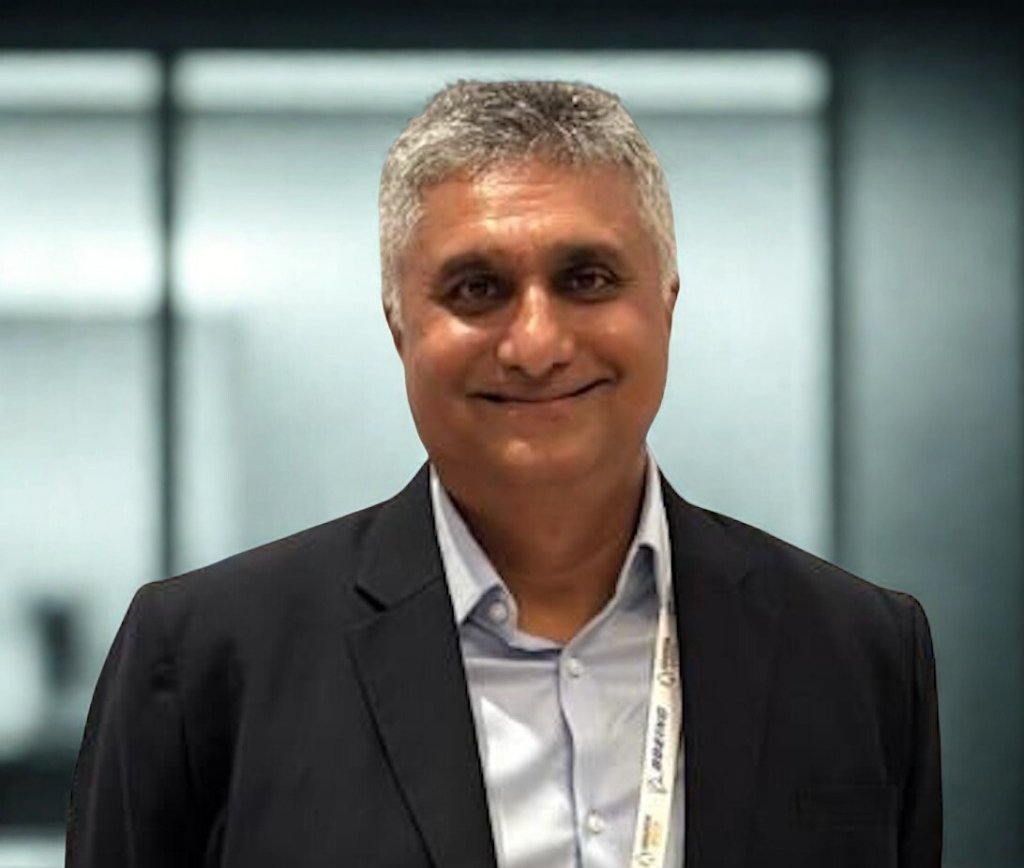
Policy shapes industries over decades, rarely in ways that are immediately visible. The MRO sector is a good example—years of import duty structures, GST complications, and outdated regulation quietly pushed maintenance work out of the country, and most people in aviation accepted that as a given. It took until 2025 for that framework to be formally replaced. New legislation has cleared the ground, but what gets built on it is still an open question. A decision to allow full foreign ownership in MRO, taken at precisely the moment when domestic operators were beginning to find their footing, has raised questions the industry cannot afford to leave unanswered. Bharat Malkani, Chairman and Managing Director of Max Aerospace, addresses this directly in this Guest Column—laying out the risks of the current approach and proposing a joint venture framework that puts Indian ownership and capability at the centre of the sector’s next phase.
Seventy-eight years after Independence, India’s aviation maintenance industry is finally, cautiously, finding its feet. The Aircraft Act of 1934 and Aircraft Rules of 1937—written by colonial administrators for colonial purposes—had long hung like an albatross around the neck of the Indian MRO industry. That weight has now been lifted.
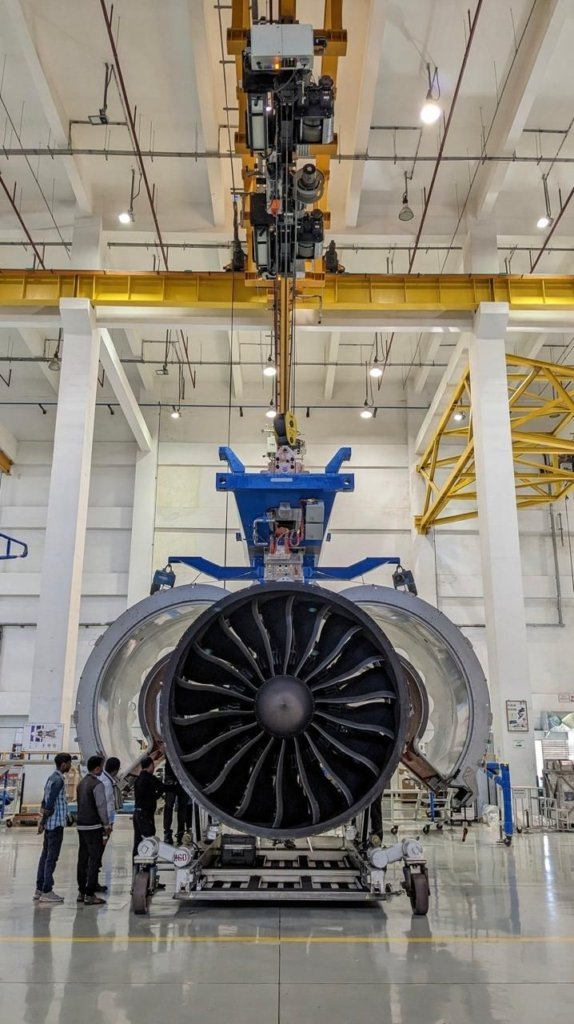
The Bharatiya Vayuyan Adhiniyam, 2024 came into force on January 1, 2025, and with it, the first genuine legislative foundation for a sovereign Indian aviation industry.
The timing could not be more consequential. India’s fleet is expanding at a pace few predicted, MRO demand is climbing steeply, and domestic operators are, for the first time in decades, operating on a level playing field—at least on paper.
And yet, right at this moment of possibility, the government has opened 100% FDI in the MRO sector via the automatic route.
The argument made in its favour is familiar: foreign capital will flow in, technology will transfer, and the sector will mature faster. That argument deserves to be challenged—directly, and on its merits.
Allowing foreign majority-owned companies into India’s MRO sector will not accelerate indigenous capability. It will substitute it.
The marginalisation of domestic operators is not a side effect to be managed—it is the predictable, structural outcome of placing globally capitalised foreign giants in direct competition with India’s small and medium MRO enterprises, before those enterprises have had any meaningful recovery period from decades of hostile fiscal policy.
What follows are the specific vulnerabilities that this approach creates, and a policy alternative that takes India’s long-term interests seriously.
India’s domestic MRO operators have never competed on equal terms. Skewed import duties, GST anomalies, and a regulatory framework designed for a different era pushed maintenance work overseas for decades. The industry that survived did so on resilience, not on policy support. Asking it now to absorb the full force of 100% foreign-owned competition, without a structured protection period, is not liberalisation. It is exposure.
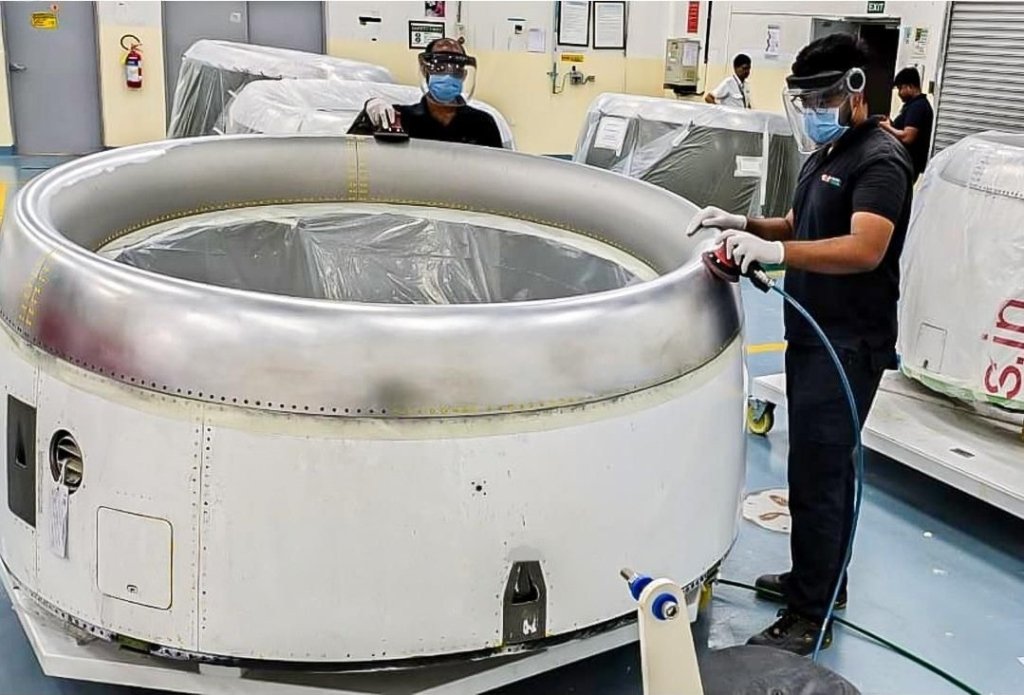
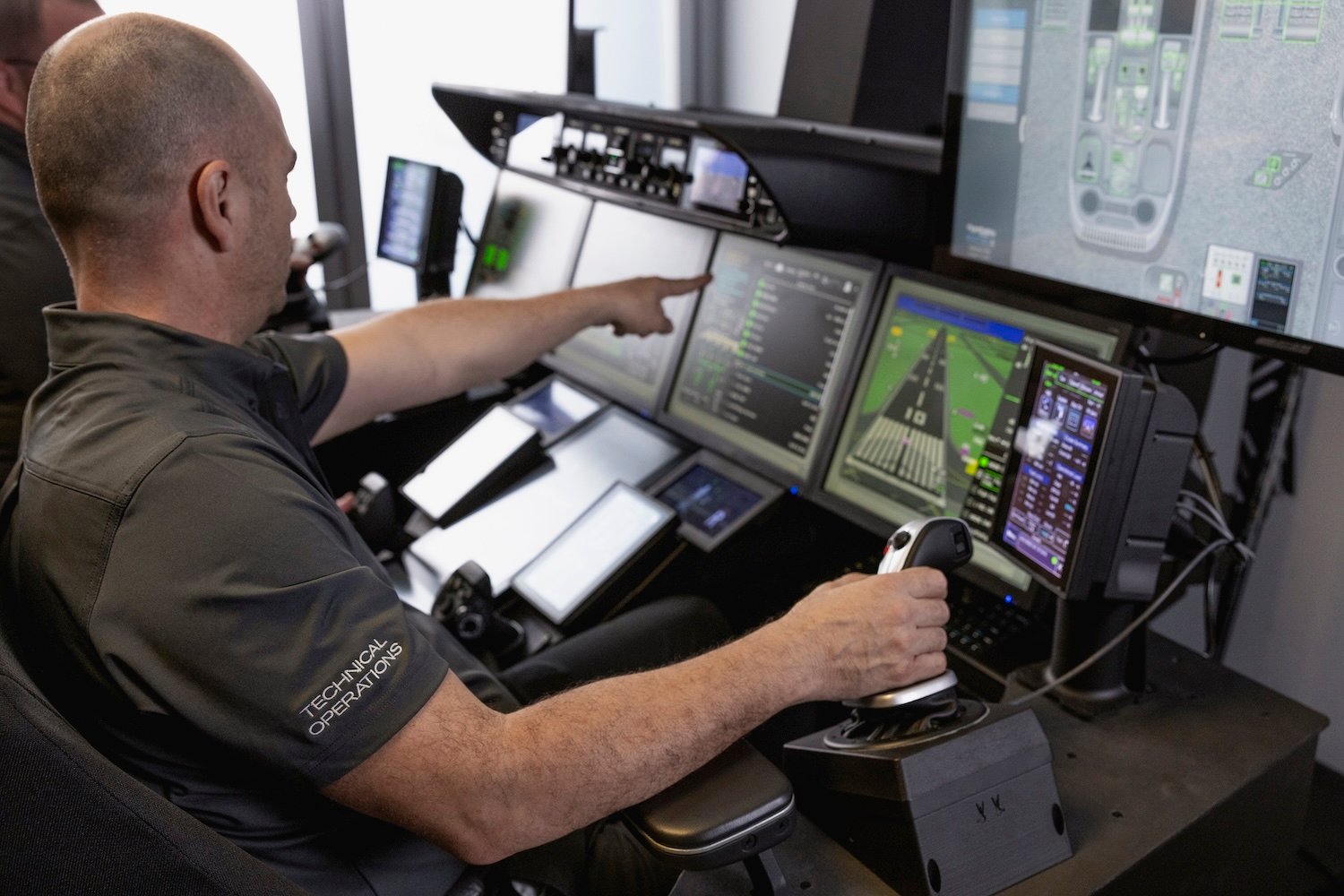
Photo GMR Aero Technic
Five structural vulnerabilities make the case against foreign majority ownership in MRO—each one, on its own, a serious concern; together, a compelling argument for policy course correction.
- Marginalisation of Local Players: Small and medium-sized domestic MROs lack the massive capital and advanced infrastructure of global giants. Allowing 100% FDI will lead to foreign monopolies that squeeze out local competitors, making it impossible for indigenous firms to break into established value chains.
Aircraft maintenance is not a commodity service. It is a critical infrastructure function, as strategically sensitive as fuel supply or air traffic control. Countries that have allowed foreign entities to control defence-adjacent maintenance capabilities have found, in moments of crisis, that commercial contracts are not the same as national commitments. India has no reason to assume it would be an exception.
- Strategic and National Security Risks: Heavy reliance on foreign-controlled facilities for critical aircraft maintenance can pose risks during national emergencies. There are concerns that foreign companies might shut down local operations or prioritise their home government’s interests over India’s strategic needs in times of conflict.
Technology transfer is the most frequently cited justification for FDI liberalisation across sectors, and it is also the most consistently overstated. Foreign OEMs do not transfer what makes them valuable. They transfer what they must, and retain what keeps them indispensable. Engine overhaul, avionics work, and component repair—the segments that account for nearly 50% of the MRO market—reliably remain with the foreign parent. What arrives in India is the labour-intensive lower end. That is not technology transfer. That is outsourcing dressed in the language of partnership.
- Limited High-Value Technology Transfer: Foreign OEMs often gatekeep their Intellectual Property (IP) and critical data. FDI may result in “low-end” labour being performed in India while the complex, high-value engine and avionics work—which accounts for nearly 50% of the market—remains controlled by foreign parent companies.
A majority foreign-owned MRO generates revenue from Indian aviation activity and sends the profits home. Every rupee repatriated is a rupee not reinvested into Indian engineering capacity, Indian training infrastructure, or Indian supply chains. Compounded over a decade, this is not a minor fiscal leak—it is the systematic transfer of value out of an industry that India needs to build from within.
- Economic Dependency and Profit Repatriation: Rather than building a self-reliant “Atmanirbhar” ecosystem, foreign majority-owned FDI companies create a cycle of long-term dependency on foreign technology.
The most durable damage that unchecked foreign majority ownership inflicts is on the engineering culture of a country. When ready-made foreign solutions are available at scale, the business case for homegrown R&D quietly disappears. Technicians get trained on specific foreign platforms. Curricula follow commercial contracts. And a generation of engineers grows up without ever being asked to solve a problem from first principles, because the solution already exists—owned, licensed, and controlled abroad.
- Stifling of Indigenous R&D: Access to “ready-made” foreign solutions through FDI will adversely impact local investment in home-grown research and development. This will lead to a skills gap where the local workforce is trained only for specific foreign platforms rather than developing versatile, independent engineering capabilities.
The alternative is not a closed door. It is a structured one. Foreign OEM expertise is genuinely valuable, and partnership with global manufacturers can accelerate India’s move from line maintenance into high-value engine and component overhaul. The question is not whether to engage foreign partners—it is who holds majority ownership, who sits on the board, and who makes the decisions that shape the trajectory of the industry. The proposed policy framework below is built on that distinction.
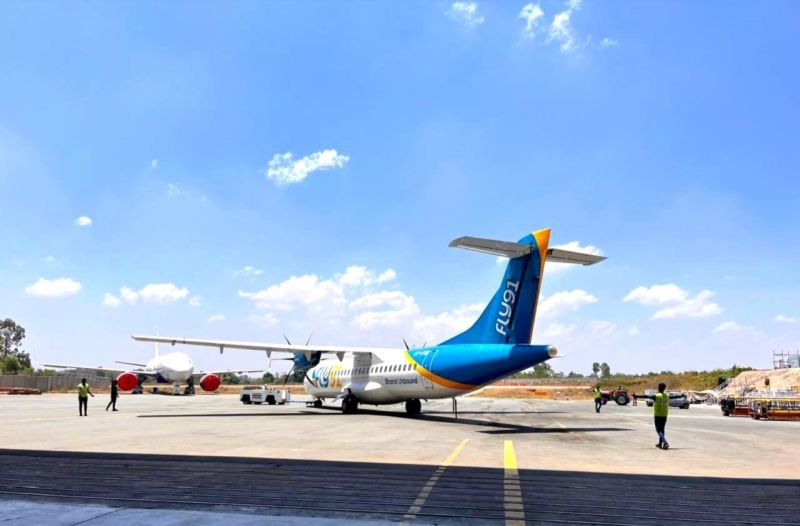
Policy Proposal: The MRO Indigenous Growth Initiative (2026)
The primary objective of this proposal is to transition the Indian MRO industry from labour-intensive “line maintenance” to high-value “engine and component overhaul” through structured partnerships.
1. Eligibility Criteria
- Structure: A Registered Joint Venture between a Foreign OEM and an Indian MRO firm, or any Indian majority-owned MRO.
- Ownership: The Indian partner must hold a minimum 51% equity stake and maintain majority representation on the Board of Directors.
2. Fiscal & Tax Benefits
Joint ventures meeting the 51% Indian ownership threshold are entitled to the following fiscal benefits:
- Zero Corporate Income Tax for 10 years. The knowledge and capability that India gains in return is an infinitesimally small price by comparison.
- Zero Basic Customs Duty (BCD): Full exemption on basic customs duty for components, parts—including engines—and raw materials imported for MRO activities.
- PLI Scheme Consideration: Eligibility for Production Linked Incentive schemes, which the government is considering extending to the MRO sector based on domestic demand.
- Zero-Rated Export Status: All MRO services performed by the JV for foreign aircraft, or sub-contracted by foreign OEMs, are treated as deemed exports with zero-rated GST.
3. Operational Incentives
- MRO Hub Access: Preferred allotment of land in dedicated MRO hubs—Hyderabad, Bengaluru, and Nagpur—with long-term leases at concessional rates.
- Simplified Customs Clearance: “Green Channel” clearance for the JV to reduce aircraft turnaround time (TAT), a critical metric for global competitiveness.
- Extended Re-import Timelines: Goods imported for repairs may remain in India for up to one year; re-import of components for warranty repairs is permitted for up to five years.
India’s MRO sector currently meets a fraction of its own domestic maintenance requirements through indigenous capacity. The opportunity ahead—driven by fleet expansion, rising aircraft utilisation, and a policy environment finally reformed after decades—is real and significant. But opportunity without ownership is just participation.

India has spent too long participating in industries that others built, on terms that others set.
The MRO sector offers a rare chance to do this differently—to build majority-owned, technology-capable, R&D-driven enterprises that serve Indian aviation on Indian terms.
That outcome does not happen by accident. It requires policy that is deliberate, protective where it needs to be, and unambiguous about who this industry is being built for.
The Atmanirbhar vision has meaning only if the structures built in its name are actually, substantively, Indian.
Also Read: GIFT-IFSC’s Aircraft Leasing Promise: Real Progress, Real Gaps