













Nagpur’s Second Takeoff: How India’s Geographic Centre Is Reclaiming Its Cargo Legacy

- Nagpur’s emergence as an air cargo hub draws on a legacy stretching back to 1949, when India’s Inland Night Air Mail service made it the country’s overnight logistics crossroads—a geographic advantage that India’s fast-growing, metro-strained freight sector is now forcing planners to take seriously again.
- For the first time, capital is matching geography, with a ₹7,000-crore airport overhaul by GMR, multimodal infrastructure through MIHAN, and aerospace investments by Dassault-Reliance collectively delivering the ecosystem depth that every previous revival attempt lacked.
- With uncongested airspace, scalable land and a central position serving manufacturing belts across four states, Nagpur is building toward a role that planners envisioned decades ago—not as an extension of India’s busy metro airports, but as a major cargo hub in its own right.
At the geographic heart of India, Nagpur has always held a logistical advantage that most cities can only engineer. Once the nerve centre of the country’s pioneering overnight airmail network, it is again drawing attention as infrastructure, investment and policy converge to revive its long-dormant cargo ambitions, even as Mumbai hogs the limelight with the recent announcement of a massive investment by FedEx. Nagpur, with capacity upgrades, multimodal links, and renewed industry interest aligning, is positioning itself not as a backup hub but as a strategic inland engine for India’s next phase of air-freight growth.
In aviation, geography is destiny—and few cities illustrate that more clearly than Nagpur. Almost exactly at India’s geographic centre, equidistant from Delhi, Mumbai, Kolkata and Chennai, it has long been seen as the natural fulcrum of a national cargo network. Decades ago, that promise was not theoretical. It was operational reality.
In 1949, India launched one of the world’s earliest hub-and-spoke air logistics systems: the Inland Night Air Mail service.
Aircraft departed the four metros after dusk, converged on Nagpur, exchanged mailbags and returned before dawn, enabling next-day nationwide delivery.
Long before “express logistics” became industry jargon, Nagpur was already its beating heart. That legacy resurfaced in the early 2000s when Indian Airlines’ cargo division, led by Anita Khurana, proposed reviving the city as a national freight interchange. The plan—nightly freighters arriving, swapping pallets and departing before morning—had industry backing but faltered amid fleet shortages, funding constraints and a policy focus on passenger growth.
An imbalance in Nagpur’s cargo performance was seen by 2024. International throughput at Dr. Babasaheb Ambedkar International Airport plunged nearly 60% year-on-year, from 205 metric tonnes to just 81 tonnes—barely 0.012% of cargo handled by India’s joint-venture international airports. Connectivity remained the core constraint, with only two international routes, Doha and Sharjah, neither operating daily.
Yet the same year revealed a paradox. Air-traffic-control data showed aircraft movements rising to a record 585,505 in 2024, up from 540,339 the year before; in the first quarter of 2025 alone, controllers handled more than 153,000 movements, and no aircraft was reportedly denied landing due to congestion—a rarity in India’s crowded skies.
India’s cargo sector, meanwhile, is expanding rapidly. In FY2025 the country handled about 3.7 million tonnes of air freight, roughly 10% more than the previous year, driven by e-commerce, pharmaceuticals, electronics manufacturing and time-critical supply chains. As metros strain under this growth, planners are scouting secondary hubs to absorb demand and speed inland distribution—a role Nagpur’s geography suits naturally.
Industry voices are increasingly vocal. At this month’s Advantage Vidarbha conclave, logistics leaders highlighted how the region’s highways, location and investor interest are placing it firmly on India’s logistics map. Blue Dart managing director Balfour Manuel described logistics as a core economic pillar rather than a transport afterthought, arguing that speed and connectivity now determine competitiveness—and that Nagpur’s position gives it an intrinsic edge.
Investors appear convinced. XSIO Logistics Parks director Ashish Agrawal says his firm is committing about ₹2,000 crore across five Nagpur logistics parks linked to expressways and rail lines.
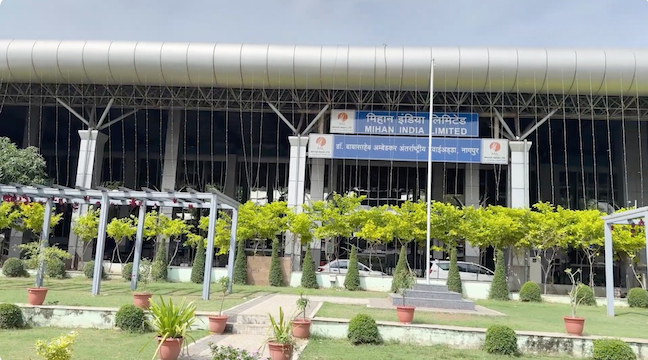
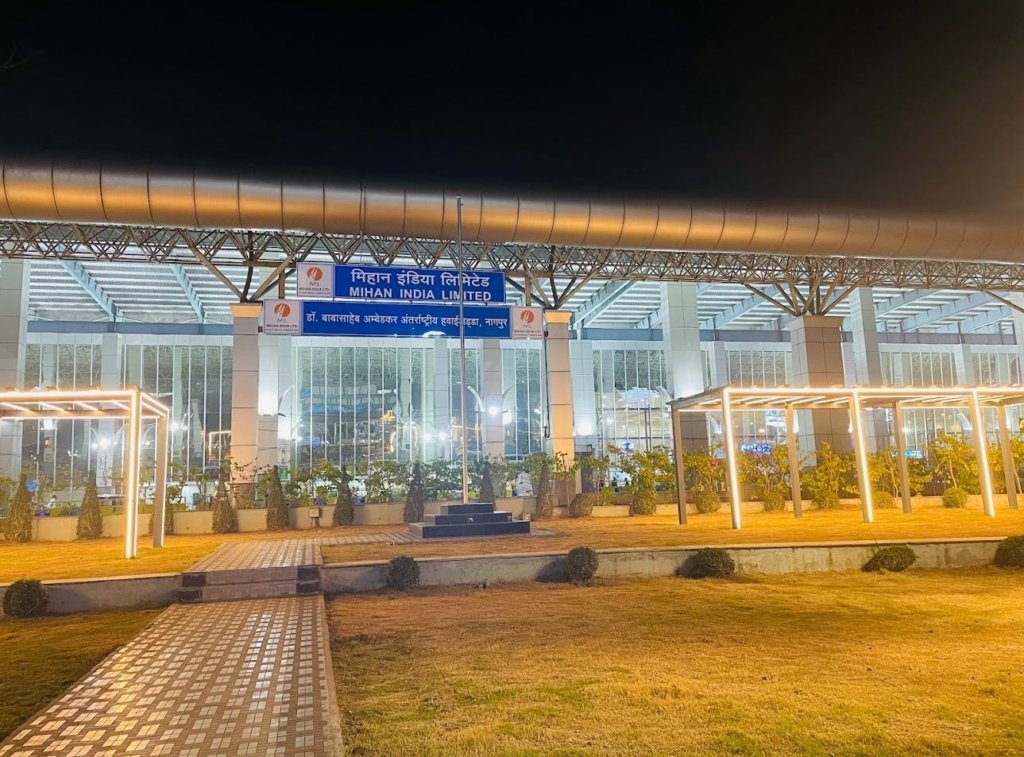
Infrastructure is finally aligning with geography. The Multi-modal International Cargo Hub and Airport at Nagpur (MIHAN) integrates air, road and rail logistics across a vast industrial zone.
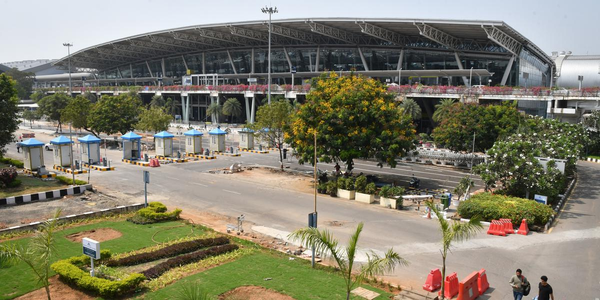
A larger transformation is underway. After taking over operations in December 2025, GMR Airports launched a ₹7,000-crore upgrade of the airport aimed at repositioning it as a major aviation and logistics gateway. The project will raise cargo capacity to 20,000 tonnes, add a modern terminal, upgrade airside systems and build a new control tower. The concession agreement between GMR Nagpur International Airport Ltd. and MIHAN India Limited formally marks the start of redevelopment, executives say, which will turn the airport into a regional economic engine.
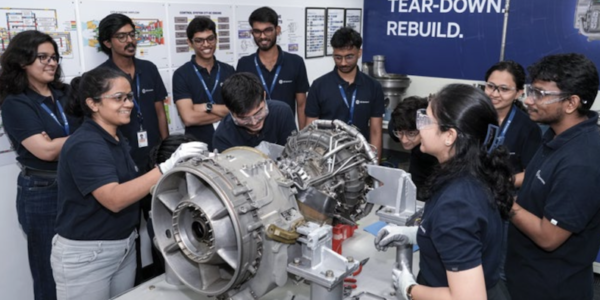
Parallel investments are strengthening the ecosystem. Dassault Aviation and Reliance are setting up a Falcon 2000 business-jet final assembly line, targeting first delivery in 2028, and have floated the possibility of a Rafale production line—signals of confidence in the region’s aerospace trajectory.
Maintenance, repair and overhaul activity is expanding as well, aided by tax exemptions on aviation raw materials announced in the Union Budget 2026. Privately run Indian airports, including Nagpur, recorded cargo growth of about 19% between April and December 2025, while smaller airports such as Jaipur logged more than 50% growth in international freight, underscoring a gradual decentralisation of cargo flows.
Central India, however, will not capture the entire market. The ₹2,500-crore FedEx hub planned at Navi Mumbai International Airport shows coastal regions retain strong advantages: port access, dense markets and established airline networks. India’s logistics future is likely to be multi-nodal, with coastal gateways complemented by inland distribution centres.

That is precisely where Nagpur’s logic stands out. Unlike land-constrained metros, it offers space, scalability and proximity to emerging manufacturing belts across Maharashtra, Madhya Pradesh, Telangana and Chhattisgarh.
Add efficient air-traffic management, multimodal connectivity and privately led infrastructure upgrades, and the city begins to resemble the blueprint planners imagined decades ago.
History rarely repeats itself in aviation, but it often circles back. Nagpur was once India’s nocturnal crossroads of mail and parcels, where aircraft converged under darkness to knit a vast country together by morning.
The infrastructure rising across its landscape suggests that vision was never abandoned—merely postponed. If India’s cargo future depends on speed, resilience and geographic balance, the nation’s centre point may yet reclaim its place at the centre of its skies.
Also Read: Operating At Scale In India’s Aviation Sector

With more than four decades across print and audiovisual media, Tirthankar (TG) Ghosh is a veteran journalist specialising in aviation, air cargo and logistics. His reporting combines deep industry knowledge, original research and sharp analysis to produce authoritative, evidence-led journalism.