














Business Aviation in India: A Case for Structural Alignment

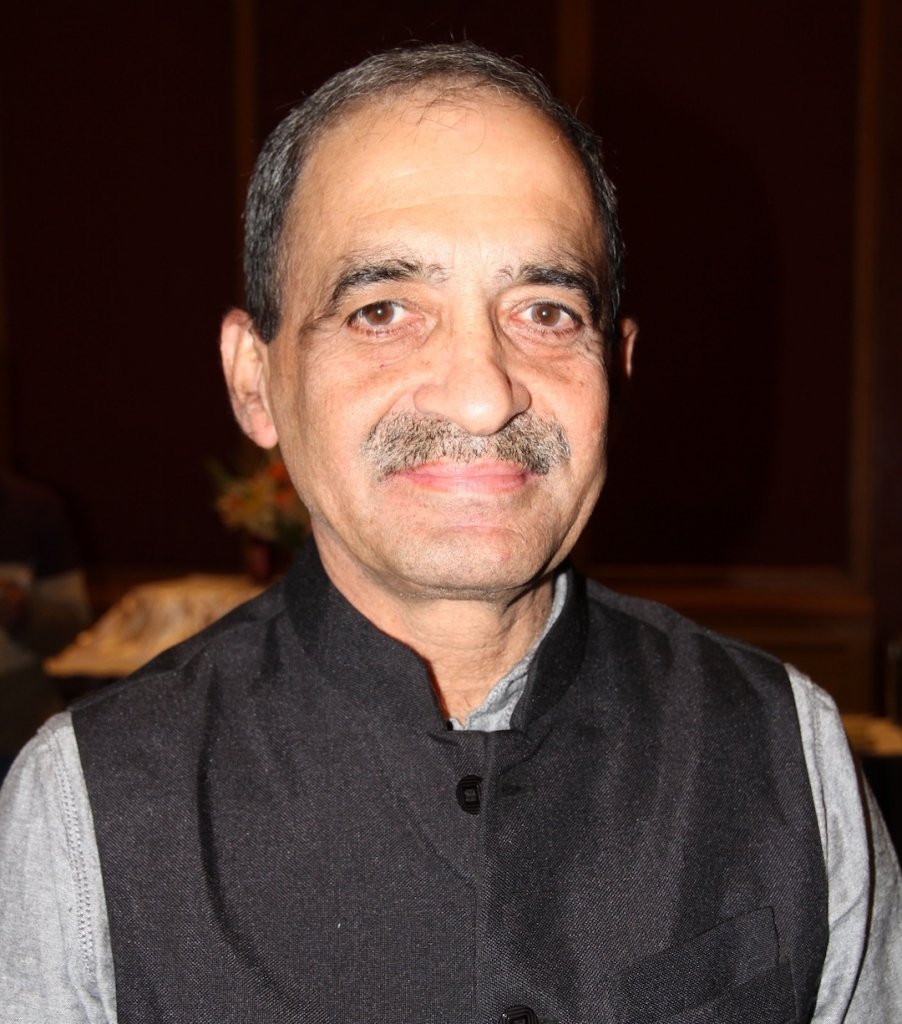
India’s aviation ecosystem is expanding, but structural consistency across the industry remains a work in progress. Less attention has been given to how well the system accommodates operations that function differently from scheduled airlines, yet remain integral to economic activity. Business aviation occupies that space, where clarity in infrastructure planning, tax treatment, safety implementation and cost structures determines whether it can operate predictably and efficiently. In this conversation, Gp Capt Rajesh K. Bali, Managing Director of the Business Aircraft Operators Association (BAOA), discusses why the segment must move beyond ad-hoc accommodation to structured integration within India’s aviation framework.
How do you define the strategic role of business aviation in India’s development framework?
Business aviation is not a luxury layer of aviation—it is a strategic mobility tool that enables economic resilience, emergency response, and regional inclusion.
India’s aviation narrative is entering a decisive decade. While commercial airlines and airport infrastructure continue to expand at scale, business aviation remains a critical yet under-recognised enabler of national productivity. From connecting emerging economic corridors to supporting time-critical medical and disaster response missions, business aviation complements scheduled air transport in ways no other mode can.
As the representative body of business and general aviation operators, BAOA’s focus is not merely sectoral growth, but structured, safe, and policy-aligned expansion. Our engagement with government, regulators, and industry is anchored in one central belief: by 2035, business aviation must be embedded into India’s development framework—not operate at its margins.
What must be done to ensure General Aviation infrastructure is built into new airports from the planning stage itself?
India’s rapid development of airports in tier-2 and tier-3 cities offers a once-in-a-generation opportunity to integrate business aviation meaningfully into regional connectivity plans. BAOA has consistently advocated that General Aviation infrastructure—including GA terminals, hangar space, night-operation capability, and predictable slot access—must be incorporated at the planning and concession stage, rather than retrofitted later.
This approach ensures that new airports immediately serve industrial clusters, healthcare networks, and MSMEs that depend on point-to-point connectivity. Business aviation thrives where airline frequency is limited, and its inclusion from inception strengthens the economic viability of regional airports themselves.
If India wants airports to catalyse regional growth, business aviation must be part of the design—not an afterthought.
How should taxation and import policies evolve to recognise charter services as productive transport?
One of the most persistent constraints on Indian business aviation is taxation that treats charter services as discretionary consumption rather than productive transport. BAOA’s policy engagement with the Ministry of Civil Aviation and fiscal authorities focuses on repositioning business aviation as a productive economic input.
Rationalisation of GST on charter services and clarity on aircraft and spare imports are essential if India is to retain capital domestically and attract global operators. India needs a taxation framework that reflects the sector’s role in healthcare access, industrial productivity, and regional development—aligned with international best practices rather than legacy classifications.
How can safety standards be harmonised across operators of different scale in a way that is practical and proportionate?
Safety is non-negotiable, but implementation must be proportionate and supportive. India’s charter ecosystem includes operators of vastly different scale and maturity. BAOA promotes harmonisation through internationally recognised frameworks such as Safety Management Systems (SMS) and IS-BAO, while working with DGCA to ensure practical, phased adoption for smaller operators.
Our emphasis is on capability building, not compliance burden. Through industry mentoring, auditor familiarisation, and structured guidance, BAOA seeks to ensure that safety standards rise uniformly across the sector without excluding emerging operators from participation.
Sustainable growth is impossible without a safety culture that is uniform in intent, but flexible in execution.
What reforms are needed to address escalating airport charges, particularly at metro airports?
Escalating landing, parking, and terminal charges—particularly at metro airports—have become a major operational concern. BAOA’s advocacy focuses on three principles: transparency, proportionality, and regulatory clarity.
Business aviation typically has a lower infrastructure footprint than commercial airlines, yet often bears disproportionately high costs due to blended aeronautical and non-aeronautical fee structures. BAOA continues to engage AERA, airport operators, and policymakers to ensure that pricing reflects actual service usage and remains predictable over concession cycles.
Fair pricing is not a concession—it is essential for maintaining connectivity for medical flights, government missions, and regional industry access.
How should business aviation be formally integrated into medical evacuation and disaster response frameworks?
Business aviation’s role during medical emergencies and natural disasters is both proven and indispensable. From organ transport to evacuation from remote regions, business aircraft often provide the fastest—and sometimes the only—viable air access.
BAOA is working to formalise the sector’s role within national and state disaster response frameworks, advocating priority clearances, simplified night-operation permissions during crises, and standing coordination protocols with civil authorities. By 2035, business aviation should be formally recognised as an essential national response asset.
When minutes matter, business aviation delivers—quietly, reliably, and without headlines.
What are the key human capital constraints facing business aviation today?
Human capital is emerging as one of the most critical constraints across Indian aviation. Business aviation faces additional challenges due to limited awareness, type-rating costs, and regulatory rigidity.
BAOA is engaging with DGCA, training academies, and international partners to expand training pipelines tailored to business aviation—including recognition of global experience, structured cadet pathways, and cross-utilisation frameworks that preserve safety while improving operational efficiency.
Going forward, India must view business aviation as a high-skill career destination, not a peripheral segment.
What changes are required to improve financing access for smaller and mid-sized operators?
Access to financing remains uneven, particularly for smaller and mid-sized operators. BAOA engages with banks, leasing companies, and policymakers to improve understanding of business aviation asset economics and operational risk profiles.
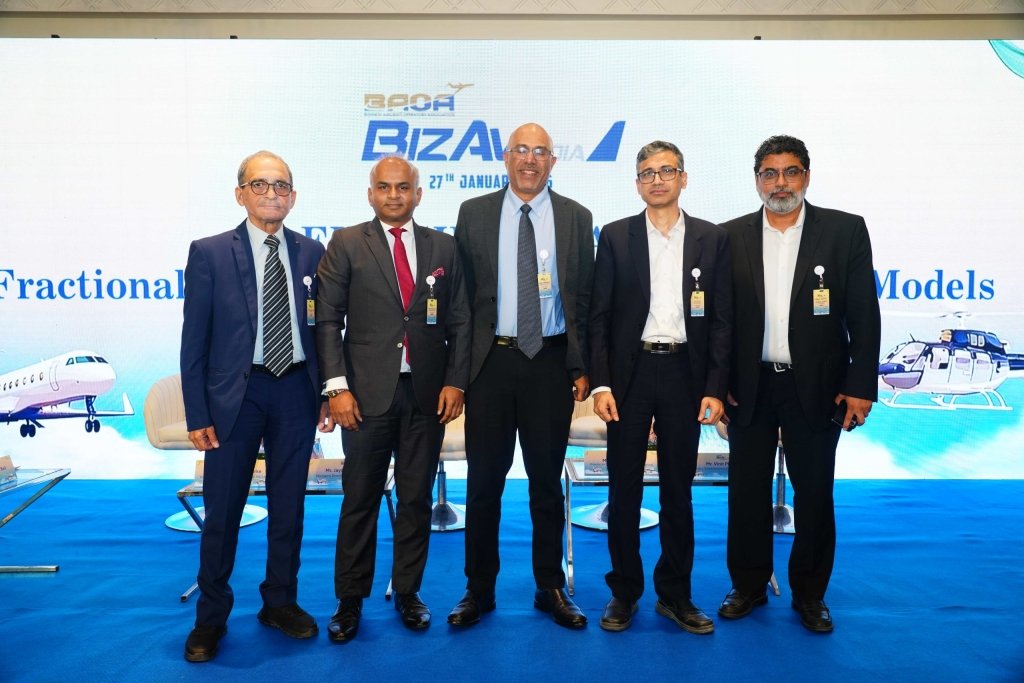
The future lies in diversified financing models—including operating leases, fractional ownership, and pooled asset structures—supported by regulatory clarity and predictable tax treatment. A mature financing ecosystem is fundamental to expanding fleet size without compromising compliance or safety.
How can digitalisation and transparency expand business aviation’s market base?
Digital platforms, transparent pricing, and real-time compliance tools are essential to expanding business aviation’s customer base beyond traditional users. BAOA actively encourages members to adopt technology that improves discoverability, trust, and operational efficiency.
Transparency does not commoditise business aviation; it legitimises it. Digital integration will be central to scaling demand from SMEs, healthcare institutions, and regional enterprises.
What role can business aviation play in India’s growing luxury and experiential tourism sector?
India’s premium tourism sector is expanding rapidly, driven by experiential travel, wellness tourism, and destination events. Business aviation is a natural enabler, connecting remote luxury destinations that are otherwise inaccessible.
BAOA collaborates with tourism authorities and hospitality networks to integrate aviation into high-end travel ecosystems while encouraging environmental responsibility and community engagement.
Why do you believe the future of business aviation lies beyond metropolitan centres?
The future of business aviation lies beyond metropolitan centres. Industrial corridors, renewable energy hubs, defence manufacturing clusters, and specialised healthcare facilities increasingly demand direct connectivity.
BAOA’s vision aligns business aviation growth with India’s broader economic geography—ensuring regulatory access, infrastructure, and operating flexibility across the country.
Business aviation follows opportunity—not city limits.
What should Indian business aviation look like in structural and policy terms?
Indian business aviation should be:
- Policy-aligned and fiscally rational
- Safety-led and globally harmonised
- Digitally enabled and financially accessible
- Embedded in healthcare, industry, tourism, and disaster response
BAOA’s role will remain that of a constructive bridge—between government intent and industry reality—ensuring that business aviation evolves as a respected, resilient pillar of India’s aviation ecosystem and national growth story.
Also Read: India’s Business Aviation Crossroads: From Luxury to Essential