
















United Air Lines Boeing 247 Utah Canyon Crash 23 February 1934
The United Air Lines Boeing 247 Utah Canyon Crash was a tragic aviation accident that happened on 23 February 1934 in Parley’s Canyon, Utah, United States. A Boeing 247 operated on a scheduled flight from Salt Lake City to Cheyenne, Wyoming, crashed into the mountains in poor winter weather. All eight people aboard were killed.
The accident happened during an important period in the development of commercial aviation. The Boeing 247 was one of the most modern passenger aircraft of its time, but pilots still faced serious dangers from snow, fog, mountains, and limited navigation equipment. The crash showed how difficult it could be to operate an airline safely in severe weather during the early 1930s.
United Air Lines and Early Aviation
United Air Lines was becoming an important American airline during the early 1930s. Commercial aviation was expanding rapidly, and airlines were establishing regular routes between major American cities.
Air travel was much faster than traveling by train, but aircraft technology was still developing.
Pilots had to make many decisions without the assistance of modern navigation systems. There was no GPS, no satellite communication, no modern weather radar, and no digital terrain-warning system.
Mountain flying was particularly difficult.
The route between Salt Lake City and Cheyenne crossed or approached mountainous areas. Pilots needed to understand the terrain and weather conditions before and during the flight.
The Boeing 247
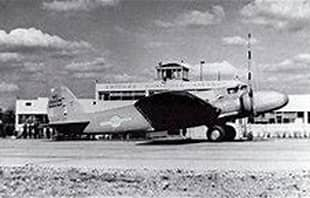
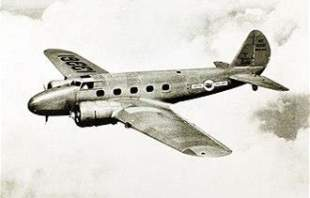
The aircraft involved in the accident was a Boeing 247, registration NC13357. The aircraft was operated by Boeing Air Transport, which was part of the United Air Lines system. It had been one of the modern aircraft used for scheduled passenger operations.
The Boeing 247 was an important aircraft in aviation history.
It was an all-metal, twin-engine airliner with a streamlined design. It had retractable landing gear and was faster than many earlier passenger aircraft.
The aircraft represented a major improvement in commercial aviation.
However, even a modern aircraft could not completely protect its passengers from dangerous weather and mountainous terrain.
The Flight on 23 February 1934
On Friday, 23 February 1934, the Boeing 247 departed from Salt Lake City, Utah, at approximately 2:00 p.m.
Its destination was Cheyenne, Wyoming.
There were eight people aboard. Contemporary records identify five passengers and three crew members.
The flight began during difficult winter weather.
Snow and sleet were affecting the region, and snow had accumulated on the ground. Conditions were even worse at higher elevations.
The mountains around Salt Lake City were covered by winter weather, making the flight especially challenging.
The Weather Conditions
Weather was one of the most important factors in the disaster.
Reports described heavy snow and poor visibility in the region.
The Wasatch Mountains near Salt Lake City could be extremely dangerous for aircraft when clouds, fog, and snow prevented pilots from seeing the terrain.
Modern aircraft can use instruments and computerized systems to help crews maintain a safe course through poor visibility.
In 1934, pilots had much less assistance.
They depended on instruments, radio communication, maps, navigation calculations, and their own judgment.
A small navigation error in mountainous country could have fatal consequences.
The Last Radio Message
The flight appeared to be normal shortly after departure.
Approximately 20 minutes after leaving Salt Lake City, pilot Lloyd Anderson communicated by radio that everything was okay.
This was the last known radio communication from the aircraft.
The message is an important part of the story because it indicates that there was no known emergency at that moment.
The aircraft then continued toward Cheyenne.
After the last communication, there were no further messages.
The aircraft did not arrive at its destination.
The Aircraft Disappears
When the Boeing 247 failed to reach Cheyenne, airline officials became concerned.
A search operation was organized.
Aircraft were sent over possible routes, while ground teams searched areas where the airliner might have crashed.
However, the weather made the search extremely difficult.
Heavy snow, fog, and mountainous terrain prevented search aircraft from operating effectively.
The area around the Wasatch Mountains was especially challenging.
The aircraft could have been hidden by snow or trees, making it difficult to see from above.
A Difficult Search
The search continued as rescuers tried to determine where the aircraft had gone.
United Air Lines organized aircraft and ground teams.
Other pilots also participated in the search.
Searchers had to deal with what airline officials described as extremely bad flying weather.
The aircraft had disappeared somewhere in a large mountainous region.
Without modern emergency transmitters, rescuers had no signal to guide them to the crash site.
There was also no satellite tracking system.
Search teams had to rely on their knowledge of the route and visual observation.
Discovery in Parley’s Canyon
The missing aircraft was eventually found in Parley’s Canyon, approximately 35 miles east of Salt Lake City.
Two United Air Lines pilots, Don Broughton and Ed Greer, spotted the wreckage during an aerial search.
The aircraft had crashed into the mountainside and was almost buried in deep snow.
The nose was positioned between large pine trees, which made the wreckage difficult to see.
There were no survivors.
The discovery ended the search but created a new question: Why had the aircraft crashed?
The Position of the Wreckage
The aircraft had struck the mountain at high speed.
The wreckage was found in a steep and difficult area.
The nose had been driven deeply into the ground, while parts of the aircraft extended upward.
The impact was extremely violent.
Investigators and rescue workers had to travel through deep snow and difficult terrain to reach the aircraft.
The bodies had to be carried through the mountainous area before being transported to Salt Lake City.
The condition of the wreckage made the investigation difficult.
Investigation of the Crash
Two separate investigations were conducted.
One investigation was carried out by officials from the United States Department of Commerce, which was responsible for aviation regulation at the time.
Another investigation was conducted by United Air Lines.
Investigators examined the aircraft and the crash site.
However, the aircraft had been badly destroyed.
This made it difficult to determine exactly what had happened during the final part of the flight.
Investigators could not immediately identify a single mechanical failure or other specific cause.
Poor weather was considered an important contributing factor.
Possible Navigation Problems
One possible explanation was that the aircraft had become too close to the mountains while flying through clouds and poor visibility.
The aircraft may have been flying through conditions in which the crew could not clearly see the surrounding terrain.
This type of accident is now commonly described as controlled flight into terrain, meaning that an aircraft under the control of its crew unintentionally strikes terrain.
Such accidents were especially dangerous before the development of modern terrain-awareness technology.
A pilot could believe that the aircraft was safely following its intended route while actually being dangerously close to a mountain.
The Role of Pilot Experience
The pilot, Lloyd Anderson, was an experienced aviator.
This is important because the accident was not simply the result of an inexperienced pilot.
Experienced pilots could also face extreme difficulties when flying in severe mountain weather.
Weather could change quickly.
Clouds could hide mountain peaks.
Snow and fog could make landmarks impossible to see.
Radio navigation was also less developed than today.
Even a skilled pilot could face a situation where the available information was insufficient to safely determine the aircraft’s position.
The Importance of the Boeing 247
The crash was particularly significant because the Boeing 247 was considered an advanced aircraft.
It had been designed to make commercial air travel faster and more efficient.
Its all-metal structure and aerodynamic design represented a major improvement over many earlier aircraft.
The accident demonstrated that better aircraft design alone could not eliminate every aviation risk.
The environment in which the aircraft operated was equally important.
Mountains and severe weather remained dangerous regardless of how advanced the aircraft was.
Aviation Safety in the 1930s
Commercial aviation in the 1930s was still developing.
Pilots were learning how to operate regular airline services across large distances.
Airports and navigation facilities were improving, but they were not yet as advanced as modern systems.
Weather forecasting was also much less accurate.
There was no weather radar capable of giving pilots a detailed picture of storms and precipitation.
There were no satellite images providing continuous information about weather systems.
These limitations made winter mountain flying especially challenging.
Lessons from the Crash
The Utah Canyon accident demonstrated several important lessons.
First, mountain routes require careful navigation.
Second, weather conditions must be considered before and during flight.
Third, pilots need reliable navigation information when visibility is poor.
Fourth, airlines need effective procedures for dealing with severe weather.
Finally, search-and-rescue systems need to be able to locate missing aircraft quickly.
Many of these lessons contributed to later improvements in aviation.
Navigation systems became more accurate.
Weather forecasting improved.
Radio beacons became more widely available.
Aircraft instruments became more reliable.
Emergency communication and search systems also became increasingly sophisticated.
The Human Cost
The most important part of the accident was the loss of eight lives.
The passengers had boarded the Boeing 247 expecting to make a routine journey from Salt Lake City toward Cheyenne.
The three crew members were performing a normal airline service.
Instead, the flight ended in a remote mountain canyon.
For the families of those aboard, the accident was a devastating loss.
The difficult search also meant that relatives had to wait while rescue teams searched the mountains.
Once the wreckage was discovered, the families finally received confirmation of the fate of their loved ones.
Historical Importance
The crash became an important event in the history of American commercial aviation.
It showed that even modern passenger aircraft remained vulnerable to bad weather.
It also demonstrated the dangers of operating aircraft near mountains when visibility was poor.
The accident occurred only a few months after another United Air Lines Boeing 247 had been destroyed by a bomb in October 1933.
Together, such accidents showed that commercial aviation faced many different types of risks.
Some involved aircraft design.
Others involved weather, navigation, or deliberate human actions.
Later Development of Aviation
During the years after the accident, aviation technology developed rapidly.
Aircraft became more reliable.
Navigation systems became more accurate.
Radio communication improved.
Weather forecasting became increasingly useful.
Airline pilots received more systematic training.
Air traffic control systems also developed.
These changes gradually reduced the risks associated with airline travel.
The Utah Canyon crash is therefore part of a much larger story—the story of how aviation learned from its early tragedies and developed better safety practices.
Conclusion
The United Air Lines Boeing 247 Utah Canyon Crash of 23 February 1934 was a tragic accident that claimed the lives of all eight people aboard.
The Boeing 247, registration NC13357, departed Salt Lake City for Cheyenne at approximately 2:00 p.m. on a winter afternoon. The aircraft was flying during severe snow and poor visibility. About 20 minutes after departure, pilot Lloyd Anderson radioed that everything was okay. No further message was received.
After the aircraft failed to arrive, a major search was organized. Search planes and ground teams worked through difficult winter conditions. The wreckage was eventually discovered in Parley’s Canyon, where the aircraft had crashed into the mountains. All eight people aboard were dead.
Investigators could not establish a single definite cause. The wreckage was badly damaged, but poor weather and difficult mountain conditions were considered important factors.
The accident demonstrated the serious dangers faced by early airline pilots. Even an advanced aircraft such as the Boeing 247 could not completely overcome heavy snow, fog, mountains, and limited navigation technology.
Today, the 23 February 1934 Utah Canyon crash is remembered as an important event in the development of aviation safety. It helped illustrate why accurate navigation, reliable weather information, pilot training, and effective search-and-rescue systems are essential for safe air travel.

Ajeet Yadav is an aviation enthusiast covering airline news, airports, aircraft, and industry developments through well-researched and reliable reporting.