






Tokana Australian National Airways Crash on January 31, 1945
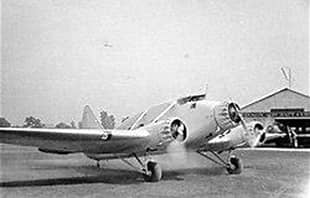
The Tokana, a Stinson Model A aircraft operated by Australian National Airways (ANA), was involved in a tragic aviation accident on January 31, 1945, in Victoria, Australia. The aircraft was flying from Melbourne toward Broken Hill when part of its left wing suddenly separated during flight. The aircraft broke apart and crashed near Mia Mia and Redesdale, killing all 10 people on board.
The accident became especially important in aviation history because investigators discovered that a metal fatigue crack had caused the failure of a major wing structure. The accident helped draw international attention to the dangers of metal fatigue in aircraft and contributed to major changes in aircraft inspection and structural safety.
The Tokana Aircraft
The aircraft involved was a Stinson Model A, registered VH-UYY and named Tokana. It had originally been built as a three-engine aircraft, but it was later modified and fitted with two Pratt & Whitney Wasp engines. The aircraft had been completed in 1936 and had already accumulated many hours of service before the accident.
VH-UYY had originally been operated by Airlines of Australia. In 1943, ownership was transferred to Australian National Airways. It began operating as the Tokana with its new two-engine configuration in October 1943.
By January 1945, the aircraft had accumulated approximately 13,763 flying hours, including about 2,797 hours with its newer engines.
The Scheduled Flight
On the morning of January 31, 1945, the Tokana was scheduled to fly from Essendon Airport in Melbourne to Broken Hill in New South Wales.
The planned route included stops at Kerang and Mildura before continuing to Broken Hill. The first part of the journey was from Melbourne to Kerang, a distance of about 127 nautical miles (235 kilometres).
There were 10 people aboard:
- 2 crew members
- 8 passengers
The pilots were Alan Murn and Orville Openshaw.The aircraft departed Essendon at approximately 7:55 a.m. local time.
At first, the flight appeared to be normal.
Weather Conditions
The weather on the morning of the accident was not ideal.
There was a strong and gusty south-westerly wind, while the sky was mostly covered by cloud. The cloud base was approximately 2,000 feet above sea level.
About 20 minutes after takeoff, the aircraft was flying near the Redesdale area. Witnesses on the ground saw the Tokana at an altitude of approximately 1,000 feet above the ground, below the cloud base.
Strong winds and turbulence can place additional loads on an aircraft’s wings and other structural components.
However, the weather alone was not considered the main cause of the accident.
The Sudden Breakup
The accident happened very quickly.
Several people on the ground reported hearing a sharp cracking sound. Almost immediately afterward, the sound of the aircraft’s engines stopped.
When witnesses looked toward the aircraft, they saw it entering a steep spiral or uncontrolled descent.
Part of the aircraft’s left wing had separated from the rest of the aircraft.
The loss of such a large part of a wing made it impossible for the pilots to control the aircraft.
The Tokana descended rapidly toward the ground.
The aircraft crashed near Mia Mia in central Victoria, in the area around Redesdale and Tooborac. All 10 people aboard were killed.
The Difficult Recovery
The crash site was in a rural area, and local people were among the first to discover what had happened.
The aircraft had broken apart during the descent, leaving wreckage spread across the area.
There was no possibility of survival after the catastrophic structural failure and ground impact.
The accident immediately raised an important question: Why had part of the wing broken away while the aircraft was flying?
The aircraft had not simply suffered an engine failure.
Instead, a major structural component had failed.
Investigators therefore began a detailed examination of the wreckage.
The Investigation
The accident was investigated by Australian aviation authorities and technical experts.
Investigators carefully examined the broken wing and its structural components.
They eventually found evidence of a fatigue crack in an important part of the left wing structure. The crack had developed in the lower main front spar boom attachment fitting. The crack extended around approximately 45 percent of the fitting’s perimeter.
The crack weakened the structure until it could no longer withstand the forces acting on the wing.
Eventually, the fitting failed.
Once the structural connection failed, the outer portion of the left wing separated from the aircraft.
The aircraft then became uncontrollable and crashed.
What Is Metal Fatigue?
The Tokana accident is particularly important because it helped aviation engineers understand the danger of metal fatigue.
Metal fatigue occurs when a metal component is repeatedly subjected to stress.
An aircraft wing experiences thousands of cycles of loading during its life.
Every flight places forces on the wings during takeoff, climbing, cruising, turbulence, turning, and landing.
Normally, an aircraft structure is designed to handle these forces.
However, tiny cracks can sometimes develop in metal components after many repeated stress cycles.
At first, such a crack may be extremely small and difficult to detect.
With repeated loading, the crack can gradually grow.
Eventually, the remaining metal may not be strong enough to support the aircraft’s structure.
The component can then fail suddenly.
This can happen even when the aircraft appears to be in good condition.
Why the Tokana Accident Was Important
The Tokana accident became historically important because it was considered one of the earliest fatal aircraft accidents directly associated with metal fatigue. The Aviation Historical Society of Australia notes that the expert panel investigating the accident regarded it as the first fatal aircraft accident anywhere in the world directly attributable to metal fatigue.
The discovery had major implications.
Before this accident, aircraft designers and operators understood that metal could weaken, but the full danger of repeated stress and hidden cracks was not yet understood as well as it is today.
The Tokana showed that a relatively small hidden crack could eventually cause the failure of a major aircraft structure.
The Role of the Aircraft’s Age
The Tokana had been flying for many years.
By the time of the accident, it had completed thousands of hours of operation. Its long service life meant that its structural components had experienced many cycles of stress.
The aircraft’s modification from its original three-engine configuration to a two-engine arrangement was also part of its history, although the investigation identified the fatigue crack as the key structural problem.
The accident showed that aircraft cannot be judged safe simply because they continue to operate normally.
Structural components also have a limited life and must be carefully inspected.
Changes in Aircraft Inspection
One of the most important consequences of the Tokana accident was the increased attention given to structural inspection.
Following the accident, authorities required much closer examination of aircraft structures for cracks and other weaknesses. Sources describing the accident note that aircraft were subsequently subject to improved inspection methods, including X-ray examination for hidden cracks and structural defects.
This represented an important step in aviation safety.
Engineers began paying much more attention to the number of hours and stress cycles an aircraft structure had experienced.
Later developments included:
- More detailed structural inspections
- Crack-detection methods
- Aircraft fatigue testing
- Structural life limits
- Improved materials
- Better design of joints and fittings
- Regular replacement of components with known fatigue risks
These practices became an important part of modern aircraft maintenance.
A Lesson for Modern Aviation
Today, metal fatigue is a well-understood engineering problem.
Aircraft manufacturers perform extensive fatigue testing during the design process.
Aircraft structures are inspected regularly.
Maintenance programs specify when particular components must be inspected, repaired, or replaced.
Modern aircraft are also designed with detailed knowledge of how materials behave under repeated stress.
These systems help prevent the kind of structural failure that destroyed the Tokana.
The accident therefore became an important lesson for the entire aviation industry.
The Human Cost
Behind the technical investigation were the lives of 10 people.
Eight passengers had boarded the Tokana expecting to travel safely from Melbourne toward Broken Hill.
The two pilots were responsible for operating the aircraft and had no reasonable opportunity to recover after the wing separated.
The structural failure happened suddenly, leaving almost no time for an emergency response.
The deaths affected families, friends, colleagues, and the wider Australian aviation community.
The accident was especially painful because there was no obvious warning that a catastrophic structural failure was about to occur.
Legacy of the Tokana
The Tokana crash is remembered not only as a tragic Australian aviation accident but also as an important event in the history of aircraft engineering.
The accident helped demonstrate that hidden structural damage can be just as dangerous as visible mechanical problems.
A pilot may have fully functioning engines, instruments, and controls, but if an important structural component fails, the aircraft can become uncontrollable within seconds.
The lessons from the accident helped strengthen Australia’s approach to aircraft inspection and contributed to the broader understanding of fatigue in aircraft structures.
Conclusion
The Tokana accident of January 31, 1945, was one of the most significant aviation disasters in Australia’s early airline history.
The Australian National Airways Stinson Model A, registered VH-UYY, departed Melbourne for a scheduled flight toward Broken Hill with eight passengers and two crew members. About 20 minutes into the flight, while near Redesdale, part of the left wing separated from the aircraft. The aircraft broke apart and crashed, killing everyone aboard.
Investigators discovered that the wing failure was caused by a fatigue crack in a major structural fitting. The accident helped reveal the serious danger of metal fatigue in aircraft and encouraged much stronger inspection and testing practices.
Today, aircraft structures are designed, tested, inspected, and maintained with metal fatigue in mind. Aircraft have strict maintenance schedules and structural life requirements.
The loss of the Tokana was a terrible tragedy, but the lessons learned from the accident helped improve aviation safety. Its story remains an important reminder that small, hidden structural problems can have enormous consequences and that careful inspection is essential for safe flight.

Ajeet Yadav is an aviation enthusiast covering airline news, airports, aircraft, and industry developments through well-researched and reliable reporting.