







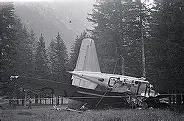
San Giacomo Douglas DC-2 Crash 20 July 1935
The San Giacomo Douglas DC-2 Crash was a tragic aviation accident that took place on 20 July 1935 in Italy. The accident involved a Douglas DC-2, one of the most advanced passenger aircraft of its time. The crash occurred during an important period in the development of commercial aviation, when airlines were beginning to operate larger and faster aircraft on regular international routes.
The Douglas DC-2 had become famous for its speed, modern metal construction, and improved passenger comfort. It was being used by airlines around the world. However, even advanced aircraft of the 1930s were still affected by difficult weather, limited navigation technology, mechanical problems, and the demanding conditions faced by early airline crews.
The San Giacomo crash became one of the aviation tragedies of the 1930s and is remembered as part of the history of early commercial air travel.
Aviation in 1935
The year 1935 was an important period for aviation.
Commercial airlines were expanding their networks across Europe and other parts of the world.
Aircraft were becoming faster and more reliable.
All-metal construction was replacing many older wooden aircraft designs.
Twin-engine aircraft were becoming increasingly popular for passenger services.
Radio communication was also becoming more common.
Despite these improvements, flying remained much more difficult than it is today.
Pilots did not have GPS.
There were no modern weather radar systems.
Aircraft did not have sophisticated computerized navigation systems.
There were no flight-data recorders or cockpit voice recorders.
Pilots had to make important decisions using limited information.
The Douglas DC-2
The aircraft involved in the accident was a Douglas DC-2.
The DC-2 was designed and built by the Douglas Aircraft Company in the United States.
It was a twin-engine, all-metal passenger aircraft.
The aircraft represented a major improvement over many earlier airliners.
Its enclosed passenger cabin offered better protection from the weather.
The aircraft was also considerably faster than many earlier passenger airplanes.
Its two engines provided substantial power.
The DC-2 became popular with airlines in Europe, North America, and other regions.
Its design helped establish the basic shape of the modern commercial airliner.
Why the DC-2 Was Important
The DC-2 was more than just another aircraft.
It represented a new generation of commercial aviation.
Older aircraft were often slower and had limited passenger capacity.
The DC-2 demonstrated that airlines could operate relatively fast and comfortable passenger services.
The aircraft could travel longer distances and maintain higher speeds.
Its success encouraged manufacturers to develop even better aircraft.
The later Douglas DC-3 became one of the most successful passenger aircraft in history.
The DC-2 was an important step toward that development.
The Flight on 20 July 1935
On 20 July 1935, a Douglas DC-2 was operating a flight in Italy.
The aircraft was traveling through the region of San Giacomo.
The flight was part of the growing network of commercial aviation services of the period.
The crew was responsible for navigating the aircraft and maintaining its safe operation.
Passengers were aboard the aircraft and expected to reach their destination normally.
However, the flight ended in disaster.
The aircraft crashed in the San Giacomo area.
The accident caused fatalities and led to an investigation.
The San Giacomo Area
The location of the accident was significant.
The San Giacomo area included difficult terrain, with mountains and hills in the wider region.
Flying through mountainous territory was particularly challenging for pilots in the 1930s.
Modern aircraft can use precise navigation systems and terrain-warning equipment.
Pilots can receive accurate information about mountains and obstacles.
Aircraft can also use sophisticated radar and digital navigation.
None of these systems were available to the crew of the DC-2.
Pilots had to rely on maps, visual references, compass headings, and available radio information.
Mountain Flying
Mountain flying has always required special care.
Aircraft must maintain sufficient altitude above terrain.
Weather can change rapidly around mountains.
Clouds can hide peaks and ridges.
Wind can be unpredictable.
Strong air currents can cause turbulence.
A pilot flying in poor visibility may not realize how close the aircraft is to a mountain until it is too late.
This danger was even greater during the early years of aviation.
The San Giacomo accident illustrates the risks of operating aircraft in difficult terrain.
Navigation Challenges
Navigation was one of the most important difficulties faced by pilots in the 1930s.
Pilots often used maps and visual landmarks.
They could identify towns, roads, rivers, railway lines, and mountain ranges.
Radio navigation was developing but was not available everywhere.
If visibility became poor, the pilot could lose sight of the ground.
This could make it difficult to determine the aircraft’s exact position.
A small navigation error could place an aircraft dangerously close to terrain.
Weather Conditions
Weather was another major concern.
Mountain regions can experience sudden changes in weather.
Clear skies can quickly become cloudy.
Fog can form around mountain slopes.
Rain can reduce visibility.
Strong winds can create turbulence.
The weather information available to pilots in 1935 was much less detailed than modern forecasts.
There was no satellite imagery showing the movement of clouds.
There was no weather radar providing a real-time picture of storms.
Pilots therefore had to depend heavily on observations and their own judgment.
The Final Stage of the Flight
As the DC-2 approached the San Giacomo area, the crew faced difficult conditions.
The aircraft was operating in a region where terrain presented a serious hazard.
If the aircraft’s position was uncertain, the crew had to determine the safest route.
A combination of navigation difficulties, terrain, and weather could quickly create an emergency.
The aircraft eventually crashed.
The impact caused severe damage to the DC-2.
The accident resulted in loss of life.
Emergency Response
Once the aircraft disappeared or failed to arrive as expected, authorities began searching for it.
Finding a crashed aircraft in mountainous terrain was difficult.
There were no satellite tracking systems.
Search teams had to depend on reports from local residents, aircraft observations, and information about the aircraft’s expected route.
When the crash site was identified, rescuers traveled to the location.
Mountain terrain could make access difficult.
The condition of the wreckage also made rescue operations challenging.
The Investigation
After the crash, investigators examined the wreckage.
They wanted to determine the cause of the accident.
Several possibilities were considered.
These included:
- Navigation error
- Poor weather
- Terrain
- Mechanical problems
- Engine failure
- Pilot error
- Structural failure
Investigators examined the engines and propellers.
They also inspected the flight controls.
The position of the wreckage was important because it could show the aircraft’s direction and attitude when it struck the ground.
No Flight Recorder
One major difficulty was the absence of flight recorders.
Modern aircraft carry flight-data recorders that capture information such as:
- Altitude
- Speed
- Heading
- Engine performance
- Aircraft movements
Cockpit voice recorders also preserve important conversations.
In 1935, these systems did not exist.
Investigators therefore had to reconstruct the flight using physical evidence and witness statements.
This made accident investigations much more difficult.
The Role of the Pilot
Pilots during this period had enormous responsibility.
They had to control the aircraft manually.
They had to navigate.
They had to monitor the engines.
They had to interpret weather information.
They had to make decisions about altitude and route.
In mountainous areas, the pilot had to maintain safe clearance from terrain.
A mistake in altitude or navigation could have fatal consequences.
Pilot training was improving, but the profession was still developing.
Human Factors
Human factors could also contribute to aviation accidents.
Long flights could cause fatigue.
Stress could reduce concentration.
Poor weather could increase workload.
Difficult navigation could require constant attention.
When several problems occurred at the same time, a pilot could become overwhelmed.
Modern aviation addresses these issues through crew resource management, standardized procedures, rest requirements, and advanced automation.
These systems were not available in the same form in 1935.
Passenger Safety
Passengers in the 1930s were taking part in a relatively new form of transportation.
Air travel was faster than trains for many routes.
It was also exciting.
However, passenger aircraft did not have the extensive safety equipment found on modern airliners.
Cabins were smaller.
Emergency procedures were less developed.
Passengers had limited protection during crashes.
Airlines were gradually learning how to improve passenger safety.
Public Reaction
Aircraft accidents attracted considerable public attention during the 1930s.
Flying was still viewed as a modern but risky technology.
Newspapers often reported crashes in detail.
The public wanted to know what had happened.
Families wanted answers about their relatives.
Airlines also wanted to understand accidents so that similar events could be prevented.
The San Giacomo crash therefore had significance beyond the immediate victims.
The Importance of Accident Investigation
Every serious accident offered an opportunity to improve aviation.
If investigators discovered a technical weakness, aircraft manufacturers could change their designs.
If maintenance was a problem, airlines could improve inspection procedures.
If navigation was involved, authorities could improve radio navigation systems.
If weather was a major factor, better forecasting could be developed.
If pilot training was insufficient, training standards could be strengthened.
This process helped aviation become safer over time.
Development of Italian Aviation
Italy was also developing its aviation industry during the 1930s.
The country had a strong aviation tradition.
Italian aircraft manufacturers produced both military and civilian aircraft.
Airports and air routes were expanding.
Commercial aviation connected Italian cities with other European destinations.
However, mountainous geography presented challenges.
Pilots operating in Italy had to deal with the Alps and other mountain regions.
The San Giacomo accident demonstrated the dangers associated with such terrain.
International Air Travel
The accident occurred during a period when Europe was becoming increasingly connected by air.
Aircraft could travel between countries in a matter of hours.
Airlines were creating regular international services.
Passengers could travel for business or leisure much faster than before.
Mail was also transported by aircraft.
The expansion of international aviation increased the need for standardized navigation, weather reporting, air traffic control, and safety regulations.
Improvements After the 1930s
Aviation safety improved rapidly during the following decades.
Aircraft became stronger.
Engines became more dependable.
Navigation became more accurate.
Radio communication improved.
Weather forecasting became more advanced.
Airports developed better rescue services.
Pilot training became more systematic.
Air traffic control became increasingly important.
Eventually, radar, computers, satellites, GPS, and advanced warning systems transformed aviation.
The risks faced by pilots in mountainous areas were reduced significantly.
Legacy of the Douglas DC-2
The Douglas DC-2 left an important legacy.
It demonstrated that modern all-metal passenger aircraft could operate regular commercial services.
Its success helped establish the design principles that later aircraft would use.
Although accidents occurred, the aircraft itself represented a major technological improvement.
The DC-2’s development contributed to the future success of Douglas commercial aircraft.
Remembering the San Giacomo Accident
The San Giacomo Douglas DC-2 crash remains part of the history of aviation in the 1930s.
The accident is a reminder of the dangers faced by early airline crews.
Pilots had to operate sophisticated aircraft without many modern navigation and safety systems.
They often flew through difficult terrain and weather.
Passengers trusted them to complete their journeys safely.
When an accident occurred, the consequences were often severe.
Lessons for Modern Aviation
The story of the San Giacomo accident demonstrates several lessons that remain important.
Navigation matters. Pilots must always know their position.
Terrain awareness matters. Aircraft must maintain safe clearance from mountains and other obstacles.
Weather matters. Poor visibility can make flying extremely dangerous.
Training matters. Pilots need the skills required to manage difficult conditions.
Technology matters. Better navigation and warning systems can prevent accidents.
Modern aviation combines all of these elements to reduce risk.
Conclusion
The San Giacomo Douglas DC-2 Crash of 20 July 1935 was a tragic event during an important period in the development of commercial aviation.
The Douglas DC-2 was one of the most advanced passenger aircraft of its time. Its all-metal structure, twin engines, speed, and passenger comfort represented a major step forward from earlier aircraft.
Yet the accident demonstrated that improved aircraft design alone could not eliminate the dangers of flying.
Pilots in the 1930s had to work without GPS, modern weather radar, terrain-warning systems, satellite communications, or flight-data recorders. When flying through difficult terrain such as the mountainous regions around San Giacomo, they faced especially serious challenges.
Weather, navigation, terrain, aircraft performance, and human judgment could all affect the safety of a flight.
The crash also demonstrated the importance of accident investigation. Investigators had to examine the wreckage and gather witness information to understand what had happened. Their work formed part of the larger process through which aviation safety gradually improved.
Over the following decades, aircraft became stronger and more reliable. Navigation systems became more accurate. Weather forecasting improved. Pilot training became more professional. Air traffic control and emergency services became more effective.
The tragedy of 20 July 1935 therefore belongs to a much larger story. Early commercial aviation was built through remarkable achievements, but also through difficult lessons learned from accidents.
The people aboard the San Giacomo Douglas DC-2 lost their lives during a period when air travel was still developing. Their story reminds us how challenging aviation was in the 1930s and how much progress has been made since then.
Today, aircraft routinely cross mountains and international borders using sophisticated navigation and safety technology. The contrast with aviation in 1935 shows the extraordinary progress made during the past century. The San Giacomo crash remains a small but significant part of that long history.

Ajeet Yadav is an aviation enthusiast covering airline news, airports, aircraft, and industry developments through well-researched and reliable reporting.