









KLM Fokker F VIIb Rice Field Crash
The KLM Fokker F.VIIb Rice Field Crash was a serious aviation accident that occurred on 6 December 1931 during the early years of international commercial aviation. The accident involved a Fokker F.VIIb operated by the Dutch airline KLM Royal Dutch Airlines. The aircraft crashed into a rice field during a scheduled flight in the Netherlands East Indies, now Indonesia.
The accident happened at a time when KLM was building one of the world’s most important long-distance airline networks. Flights between Europe and Asia were difficult and required careful planning, multiple stops, and experienced crews. Aircraft were also much less advanced than modern airliners.
The crash became part of the early history of KLM’s intercontinental operations and demonstrated the risks faced by pilots and passengers during this pioneering period of air travel.
KLM and Early International Aviation
KLM Royal Dutch Airlines was founded in 1919 and became one of the world’s oldest continuously operating airlines.
During the 1920s and early 1930s, KLM worked to establish regular air services between the Netherlands and its overseas territories in Southeast Asia.
The route between Amsterdam and Batavia, the former Dutch name for present-day Jakarta, was one of the most ambitious airline routes of the period.
The journey covered thousands of kilometres.
Aircraft had to make numerous stops for fuel, maintenance, passengers, and mail.
The service represented an important development in international transportation because it connected Europe with Southeast Asia by air.
However, the route was challenging.
Pilots had to deal with changing weather, unfamiliar terrain, tropical conditions, and limited navigation facilities.
The Fokker F.VIIb
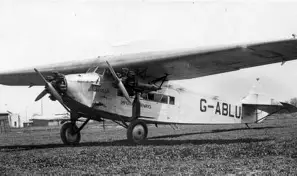
The aircraft involved in the accident was a Fokker F.VIIb, one of the most successful aircraft designs of the 1920s.
The Fokker F.VII series was developed in the Netherlands and became widely used by airlines around the world.
The aircraft was designed to carry passengers, mail, and freight.
Its reliable design made it particularly useful for long-distance airline routes.
KLM used Fokker aircraft extensively during its early years.
The F.VIIb could operate from relatively simple airfields and was well suited to the conditions of early commercial aviation.
However, even this successful aircraft was not equipped with the navigation technology found on modern aircraft.
Pilots had to depend on maps, compasses, visual landmarks, radio communication, and their experience.
The Importance of the Route
The KLM route to Southeast Asia was strategically important.
The Netherlands had major colonial interests in the Netherlands East Indies.
Regular air services provided faster communication between Europe and the colony.
Mail could be transported more quickly than by ship.
Passengers could also travel between Europe and Southeast Asia in a fraction of the time required by traditional sea routes.
The development of the route demonstrated how aviation was changing international transportation.
But every flight also presented technical and operational challenges.
The 6 December 1931 accident occurred during this period of rapid expansion.
The Flight
On 6 December 1931, the KLM Fokker was operating on a scheduled service.
The aircraft was traveling in the region of the Netherlands East Indies, where large areas were covered by farmland and rice fields.
Rice fields were common around many settlements and airfields.
From the air, they could provide large open areas, but they could also become dangerous if an aircraft lost altitude or experienced an emergency.
The crew was attempting to complete the flight safely when circumstances changed.
The Rice Field
The accident became known as the Rice Field Crash because the aircraft came down in a rice field.
The crash demonstrated one of the unusual challenges faced by pilots flying in Southeast Asia.
The landscape was very different from the European environments in which many pilots had trained.
Tropical weather could change quickly.
Rain, clouds, mist, and strong winds could reduce visibility.
The terrain could also make emergency landings difficult.
Although a rice field might look relatively flat from the air, it could contain water, soft soil, irrigation channels, raised embankments, and other obstacles.
Landing an aircraft safely in such conditions was extremely difficult.
The Accident
During the flight, the Fokker F.VIIb descended toward the ground and eventually crashed into a rice field.
The aircraft suffered substantial damage.
The impact was serious enough to cause fatalities and injuries among the occupants.
The accident was investigated by aviation authorities and KLM officials.
As with many aviation accidents of the early 1930s, investigators had limited evidence compared with modern accident investigations.
There were no flight recorders.
There were no satellite tracking systems.
Investigators therefore had to rely on eyewitness accounts, wreckage examination, weather information, and the condition of the aircraft.
Difficulties of Early Accident Investigation
Modern aviation investigators can obtain enormous amounts of information after an accident.
They can examine flight-data recorders, cockpit voice recorders, radar information, GPS records, maintenance databases, and aircraft computer systems.
Investigators in 1931 had none of these tools.
They had to reconstruct the flight from basic evidence.
This made it difficult to determine exactly what happened in some early accidents.
A crash in a remote or rural area created an additional problem.
Investigators first had to reach the crash site.
They then had to protect the wreckage and examine it carefully.
Weather could also destroy or alter important evidence.
Possible Causes
Early reports and historical accounts of aviation accidents sometimes provide different descriptions of the exact circumstances.
The accident involved the aircraft coming down in a rice field, but determining why it lost safe flight was more difficult.
Possible factors in accidents of this period included:
- Poor visibility
- Weather conditions
- Navigation problems
- Pilot judgment
- Mechanical problems
- Engine performance
- Difficult landing conditions
It is important not to assume that one factor alone caused the crash unless supported by reliable historical evidence.
The broader significance of the accident was that it occurred during a period when pilots had limited tools for dealing with unexpected problems.
The Risks of Early Air Travel
Flying in the early 1930s was very different from flying today.
Passengers sat in relatively basic cabins.
Aircraft were not pressurized.
Navigation systems were primitive.
Airports were often little more than prepared areas of land.
Weather information was less detailed.
Emergency services were also limited.
Despite these disadvantages, passengers were increasingly willing to use aircraft because flying offered an enormous saving in travel time.
The KLM international route was an example of this new era.
People could now travel between Europe and Southeast Asia by air as part of a regular scheduled service.
KLM’s Growing Reputation
KLM developed a reputation for operating long-distance services and maintaining high standards of reliability for its time.
Its early European and Asian routes required careful planning.
Aircraft needed regular maintenance at multiple locations.
Crews had to understand different climates and operating environments.
The airline also developed procedures for transporting passengers and mail across long distances.
Accidents such as the Rice Field Crash were serious setbacks, but KLM continued to expand its operations.
The airline’s experience during this period helped shape its later approach to long-distance aviation.
Aviation in the Netherlands East Indies
The Netherlands East Indies was an important region for aviation development.
Large distances separated cities and settlements.
Aircraft could connect locations much faster than ships or land transportation.
Airfields were developed in important locations to support regular routes.
KLM and other aviation organizations contributed to the growth of aviation infrastructure in the region.
However, operating aircraft in tropical environments presented unique challenges.
High temperatures could affect engine and aircraft performance.
Heavy rain and thunderstorms could reduce visibility.
Wet ground could make takeoffs and landings difficult.
Pilots had to learn how to operate safely under these conditions.
Importance of Pilot Experience
Pilot experience was extremely important in early commercial aviation.
There were fewer automated systems to assist crews.
Pilots had to make many decisions themselves.
They needed to understand weather, navigation, aircraft performance, and local terrain.
A pilot flying thousands of kilometres across unfamiliar territory had to continuously monitor the aircraft and determine its position.
The Rice Field Crash showed how difficult this responsibility could be.
Today, pilots have extensive support from air traffic control, computerized navigation, weather radar, GPS, and other systems.
Early airline pilots had to perform many of these tasks with basic equipment.
Improvements After Early Accidents
Accidents during the early years of commercial aviation helped airlines and governments identify areas for improvement.
Aircraft inspection standards gradually became more detailed.
Navigation equipment improved.
Radio communication became increasingly important.
Weather forecasting became more accurate.
Airports developed better runways and facilities.
Pilot training also became more systematic.
These developments were not caused by one accident alone, but each accident added to the industry’s understanding of risk.
The experience gained by airlines such as KLM during the 1920s and 1930s helped shape the future of international aviation.
The Fokker F.VII’s Historical Importance
Despite the accident, the Fokker F.VII remained an important aircraft in aviation history.
It was one of the aircraft that helped establish the idea that passenger aviation could operate on regular schedules.
The design was used by airlines in Europe, North America, South America, and other regions.
Its success demonstrated the growing demand for commercial air travel.
The aircraft also played a role in the transition from experimental aviation to organized airline operations.
Legacy of the Rice Field Crash
The 6 December 1931 crash is remembered as part of the early history of KLM’s international operations.
It occurred at a time when flying between Europe and Asia was still a pioneering achievement.
The passengers were traveling on a route that represented the future of international transportation.
Yet the accident showed that this future came with significant risks.
The crash also forms part of the wider story of aviation safety.
During the following decades, aircraft design, navigation, communications, weather forecasting, pilot training, and emergency procedures improved enormously.
The lessons from early accidents contributed to this gradual transformation.
Conclusion
The KLM Fokker F.VIIb Rice Field Crash of 6 December 1931 was a tragic event during the pioneering period of international commercial aviation.
The Fokker F.VIIb was part of KLM’s expanding operations and represented the development of regular air services connecting Europe with Southeast Asia.
The aircraft crashed in a rice field in the Netherlands East Indies, highlighting the challenges faced by pilots operating over unfamiliar terrain and in difficult environmental conditions.
At the time, aviation lacked many of the safety technologies that are considered normal today. Pilots had limited navigation equipment, weather information was less accurate, and there were no flight recorders or modern emergency-location systems.
Although the accident was a tragedy, it occurred during an important period of aviation development. KLM continued to build its international network, while aircraft manufacturers and aviation authorities continued improving aircraft design, pilot training, navigation, and maintenance.
The 6 December 1931 Rice Field Crash therefore belongs to the early story of commercial aviation—a period when long-distance air travel was becoming possible but remained a demanding and sometimes dangerous undertaking. The experiences of airlines, crews, and passengers during these pioneering years helped create the safer international aviation system that exists today.

Ajeet Yadav is an aviation enthusiast covering airline news, airports, aircraft, and industry developments through well-researched and reliable reporting.