







Kyeema Australian National Airways Crash
The Kyeema disaster was one of the most important aviation accidents in the early history of Australian commercial flying. It happened on 25 October 1938, when an Australian National Airways (ANA) Douglas DC-2 named Kyeema crashed into Mount Dandenong in Victoria, Australia. All 18 people on board were killed. The aircraft was carrying 14 passengers and four crew members on a scheduled flight from Adelaide to Melbourne. The accident shocked Australia because ANA was one of the country’s leading airlines, and the Douglas DC-2 was considered a modern and reliable passenger aircraft. The crash also exposed serious weaknesses in Australia’s aviation navigation and air-traffic-control systems. The investigation that followed helped bring major changes to aviation safety in the country.
Australian National Airways
Australian National Airways, commonly known as ANA, was established in the 1930s and became one of Australia’s major airlines. The company operated regular passenger and mail services between important Australian cities.
During this period, air travel was becoming increasingly popular. Flying was much faster than traveling by train or road, especially between distant cities such as Adelaide and Melbourne.
However, commercial aviation was still developing. Pilots had fewer navigation aids than modern pilots, weather information was limited, and aircraft were often flown using visual references and basic radio systems.
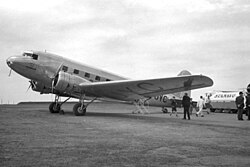
ANA’s aircraft included the Douglas DC-2, an advanced twin-engine airliner of its time.
The Douglas DC-2 Kyeema
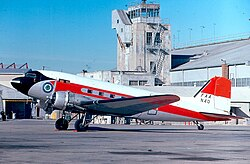
The aircraft involved in the disaster was a Douglas DC-2-210, registered VH-UYC and named Kyeema. It was a modern aircraft designed for commercial passenger transportation.
The DC-2 had two engines and an enclosed passenger cabin. Compared with many earlier aircraft, it offered better speed, comfort, and reliability.
The Kyeema was being used on ANA’s scheduled service between Adelaide and Melbourne.
There were 18 people aboard:
- 14 passengers
- Captain A. C. D. Webb
- Junior Captain Alan J. Steen
- Air hostess Elva Jones
- Cadet pilot Philip Pring, who also worked as the radio operator Among the passengers was Charles Hawker, a South Australian federal politician. Other passengers included members of the National Insurance Commission and several businessmen.
The Flight From Adelaide
On the morning of 25 October 1938, Kyeema departed from Adelaide Airport at approximately 11:22 a.m.
The destination was Essendon Airport in Melbourne.
The flight began normally.
The passengers were traveling on what should have been a routine domestic airline journey.
The aircraft crossed South Australia and continued toward Victoria.
As it approached the Melbourne area, however, the weather became increasingly difficult.
Bad Weather Near Melbourne
The aircraft encountered a large area of cloud.
Visibility became poor, particularly around the mountainous region east of Melbourne.
The Dandenong Ranges were covered by cloud and mist.
For pilots flying in the 1930s, such conditions were particularly dangerous.
Modern aircraft have sophisticated navigation equipment, terrain-warning systems, weather radar, and satellite navigation. The Kyeema had none of these technologies.
The pilots had to rely on their instruments, radio information, maps, and their understanding of the surrounding landscape.
A Navigation Error
One of the most important factors in the disaster was an error in determining the aircraft’s position.
According to historical accounts, the crew mistakenly identified Sunbury as Daylesford after seeing the ground through a gap in the cloud. This caused them to believe that they were farther from Melbourne than they actually were. This was a critical mistake.
The aircraft was actually much closer to Melbourne and the Dandenong Ranges than the crew believed.
Because the pilots thought they were in a different location, they continued their flight based on an incorrect position.
The Approach to Melbourne
As Kyeema approached Melbourne, the crew expected to find the airport area.
Instead, the aircraft was moving toward the Dandenong Ranges.
The weather made visual navigation extremely difficult.
The pilots could not clearly see the mountains.
The aircraft was also descending.
The situation became increasingly dangerous.
The crew was effectively trying to navigate through an area where the available visual information was unreliable.
Mount Dandenong
Mount Dandenong, also known as Mount Corhanwarrabul, is part of the Dandenong Ranges east of Melbourne.
The mountain rises significantly above the surrounding land.
On the day of the accident, clouds and fog covered the area.
The Kyeema eventually flew into the mountain.
The aircraft struck the western slopes only a short distance below the summit. Historical accounts place the impact at roughly 100 feet below the top.
The Crash
The impact was extremely violent.
The aircraft struck trees and terrain at high speed.
The DC-2 was destroyed.
A post-crash fire followed.
All 18 people aboard were killed. The crash site was located in difficult mountainous terrain, which made access challenging.
News of the disaster quickly spread throughout Australia.
The Victims
The passengers came from different backgrounds.
Among them was Charles Hawker, a federal politician from South Australia.
Other passengers included businessmen and members of professional organizations.
There were also women among the passengers, including people traveling for work and personal reasons.
The four crew members were responsible for operating the aircraft and caring for those aboard.
The tragedy therefore affected families, businesses, government institutions, and the wider Australian community.
The Discovery of the Crash
People near Mount Dandenong heard the aircraft and the sound of the crash.
Witnesses reported hearing the aircraft’s engines and then the impact.
Rescuers and local residents made their way toward the crash site.
The aircraft had been destroyed by the impact and fire.
The difficult terrain made the rescue and recovery operation challenging.
There were no survivors.
Public Shock
The Kyeema crash created a major shock in Australia.
Air travel was becoming an important part of modern transportation, and people expected commercial aircraft to be operated safely.
The fact that a modern airline aircraft had crashed into a mountain close to Melbourne raised serious questions.
People wanted to know why the pilots had not been able to determine their position.
They also wanted to know whether better radio navigation equipment could have prevented the disaster.
The Investigation
A formal investigation was launched to determine the cause of the accident.
The investigation examined the aircraft, flight procedures, weather, navigation, radio communications, and the actions of the crew.
The investigators found several contributing factors.
One major problem was the aircraft’s uncertain position.
Another was the difficulty of navigating through clouds.
The investigation also examined whether the airline’s procedures had been properly followed.
Problems With Navigation
The investigation identified weaknesses in the way the aircraft’s navigation information was being used.
The aircraft’s navigational log was either not properly maintained or was not properly used during the later part of the flight, according to historical accounts of the investigation. (Bureau of Aircraft Accidents Archives)
This meant that the crew had less reliable information about their actual position.
In clear weather, pilots could often confirm their position using landmarks.
In cloud and fog, however, these landmarks disappeared.
This made accurate instrument navigation much more important.
Radio Navigation
Radio navigation was available in Australia, but the system was not sufficiently developed to provide the level of assistance that modern pilots receive.
There were radio stations and navigation facilities, but the country did not yet have a comprehensive network of accurate radio beacons.
The Kyeema disaster highlighted this weakness.
The investigation recommended the development of a better radio navigation system, including a 33 MHz radio range system.
A Missed Radio Bearing
Another important issue concerned radio communication.
There is evidence that the aircraft’s radio operator attempted to obtain a bearing from the ground station at Essendon.
The station reportedly acknowledged the request and instructed the aircraft to leave its transmitter operating.
However, the transmission stopped.
No further communication was received.
It is believed that the aircraft may have crashed at approximately this point. This was an important clue for investigators.
It showed that the crew may have realized they were uncertain about their position shortly before the accident.
Weather and Cloud
Weather was one of the most important factors.
The aircraft encountered thick cloud in the Dandenong area.
The pilots were unable to see the terrain clearly.
The combination of poor visibility and incorrect navigation created a dangerous situation.
The aircraft continued toward the mountain without the crew realizing how close they were to the terrain.
Controlled Flight Into Terrain
In modern aviation terminology, the Kyeema accident is generally described as a controlled flight into terrain.
This means that the aircraft was still under the control of the pilots but was flown into the ground or a mountain because the crew did not know its position or could not see the terrain.
This type of accident has occurred many times in aviation history.
It is one reason modern aircraft use terrain-warning systems.
These systems can warn pilots when the aircraft is approaching terrain.
Such technology did not exist in 1938.
The Role of Pilot Judgment
The investigation also examined the decisions made by the pilots.
The crew was experienced, but they were working under difficult conditions.
They had incorrect information about their position.
They were flying through cloud.
They did not have modern navigation systems.
The accident therefore cannot be understood simply as one person’s mistake.
It was the result of several weaknesses coming together.
The Importance of Procedures
Airlines need clear procedures for difficult weather.
If an airport is surrounded by mountains, pilots need reliable information before descending through cloud.
The Kyeema investigation found that the company’s procedure for descending through an overcast toward Melbourne had not been properly followed. This was an important lesson.
Aviation safety depends not only on aircraft and pilots but also on procedures.
Government Response
The crash led to significant political and public pressure for improvements.
A formal public inquiry was established.
The accident became a major discussion point about Australia’s aviation safety system.
The government responded with changes to the way civil aviation was managed.
The tragedy helped accelerate the development of a stronger national aviation authority.
Changes to Air Traffic Control
One of the most important outcomes was the introduction of systems requiring flight-checking officers to monitor aircraft and provide information about:
- Aircraft position
- Weather
- Alternative airports
- Navigation
- Other safety concerns
These changes were designed to ensure that pilots did not have to depend entirely on their own navigation calculations.
Ground-based assistance became a much more important part of aviation safety.
Development of Radio Beacons
The Kyeema accident also encouraged Australia to develop better radio navigation facilities.
Radio beacons could help pilots determine their position and maintain their intended course.
This was especially important when aircraft were flying through cloud.
The development of these systems represented a major improvement in Australian aviation.
Creation of a Department of Civil Aviation
The accident also contributed to changes in government aviation administration.
The Civil Aviation Branch was eventually abolished, and the establishment of a Department of Civil Aviation received formal approval in December 1938. (ahsa.org.au)
This represented a major change in Australia’s approach to aviation regulation and safety.
Impact on Australian Aviation
The Kyeema disaster became a turning point.
It demonstrated that commercial aviation needed more than good aircraft and skilled pilots.
It also required:
- Reliable navigation systems
- Better weather information
- Strong air traffic control
- Standardized procedures
- Government oversight
- Effective communication
These principles remain central to aviation safety today.
The Human Side of the Disaster
It is important not to remember the Kyeema only as a technical accident.
Eighteen people lost their lives.
They had families and friends who were waiting for them.
For the relatives of the victims, the accident was a devastating personal tragedy.
The crash also affected Australian political and business communities because several prominent people were aboard.
Remembering Charles Hawker
One of the best-known victims was Charles Hawker, a South Australian federal politician.
His death received considerable public attention.
The Australian Parliament was deeply affected by the news.
His death demonstrated how the disaster reached beyond the aviation industry.
It affected Australia’s political life as well.
Memorials
The Kyeema crash has continued to be remembered at Mount Dandenong.
A memorial cairn was unveiled in 1978, marking the 40th anniversary of the accident.
Another memorial was later added to record the names of those who died.
A nearby road and walking trail also carry the Kyeema name.
These memorials help preserve the memory of the people who died.
A Lasting Aviation Lesson
The Kyeema disaster showed that a pilot can make a serious navigation error even while flying a modern aircraft.
It also showed that aviation safety should not depend on one person making perfect decisions.
Good safety systems should provide several layers of protection.
If a pilot makes a mistake, another system should ideally detect the problem.
Modern aviation is built around this principle.
Modern Navigation
Today, pilots have many tools to determine their position.
They can use:
- GPS
- Inertial navigation
- Radio navigation
- Digital maps
- Air traffic control
- Weather radar
- Terrain-warning systems
These systems make it much harder for an aircraft to unknowingly fly into terrain.
The Kyeema crew had access to only a small part of this technology.
Modern Weather Information
Weather forecasting has also changed dramatically.
Modern pilots can receive detailed weather information before and during a flight.
Weather radar and satellite images show the location of storms and cloud systems.
This allows pilots to avoid dangerous weather.
In 1938, weather information was far less detailed.
The Importance of Air Traffic Control
The Kyeema disaster helped demonstrate the value of ground-based assistance.
Modern air traffic controllers monitor aircraft positions and can warn pilots when they appear to be off course.
If an aircraft is heading toward dangerous terrain, controllers may be able to provide warnings.
This creates another layer of protection.
Legacy of the Kyeema
The Kyeema disaster remains one of Australia’s most significant early aviation accidents.
It was not simply a tragic crash.
It became a catalyst for changes in aviation regulation and safety.
The systems that developed afterward helped create the foundations of Australia’s modern aviation network.
Conclusion
The Kyeema – Australian National Airways disaster of 25 October 1938 was a tragic event that changed Australian aviation.
The Douglas DC-2 Kyeema (VH-UYC) was flying from Adelaide to Melbourne with 14 passengers and four crew members when it encountered poor weather near Melbourne. The pilots became uncertain about their position while flying through clouds and mistakenly believed they were in a different location. The aircraft continued toward the Dandenong Ranges and crashed into the western slopes of Mount Dandenong, killing everyone aboard.
The investigation identified several contributing factors, including navigation problems, poor visibility, weaknesses in radio navigation, and failures to follow established procedures.The accident created enormous public pressure for improvements. It helped lead to stronger government involvement in aviation safety, better flight monitoring, improved radio navigation, and the development of more organized air traffic control systems.The tragedy also demonstrated an important principle that remains central to aviation today: safe flying depends on systems, not only on the skill of individual pilots.
Modern aircraft have GPS, advanced weather systems, terrain warnings, radio navigation, air traffic control, and many other safety features. These technologies make the type of navigation error that caused the Kyeema disaster far less likely.
But the people who died on 25 October 1938 should not be forgotten. The 18 passengers and crew of Kyeema were victims of a developing aviation system that had not yet reached the safety standards of the modern age.
Their deaths helped expose weaknesses that needed to be corrected.
For this reason, the Kyeema disaster holds an important place in Australian aviation history. It was a tragedy, but the lessons learned from it helped create a safer aviation system for future generations.

Ajeet Yadav is an aviation enthusiast covering airline news, airports, aircraft, and industry developments through well-researched and reliable reporting.