







Imperial Airways Vickers Vulcan Test Flight Crash 13 July 1928
The Imperial Airways Vickers Vulcan Test Flight Crash was an early aviation accident that happened on 13 July 1928 in England. The aircraft involved was a Vickers Vulcan, a British passenger aircraft designed for commercial air travel. The airplane was being used on a test flight when it crashed, resulting in the deaths of several people on board.
The accident took place during a period when commercial aviation was developing quickly. Airlines were introducing new aircraft, pilots were gaining experience with passenger operations, and aircraft manufacturers were testing new designs. Although flying was becoming more reliable, aviation safety was still in its early stages. Accidents during test flights were not uncommon because pilots and engineers were still learning about the limits of new aircraft.
The Vickers Vulcan was one of the aircraft developed during this important period. Its accident on 13 July 1928 became part of the history of British commercial aviation.
The Vickers Vulcan Aircraft
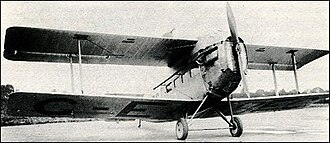
The Vickers Vulcan was a British twin-engine passenger aircraft developed by Vickers Limited, one of Britain’s leading aircraft manufacturers. The company had already built many successful aircraft for military and civilian purposes.
The Vulcan was designed during the 1920s when airlines needed larger and more practical aircraft for regular passenger services. It was a high-wing aircraft with a conventional design and was powered by two piston engines.
The aircraft was intended to carry passengers over relatively short and medium distances. At the time, this was an important development because airlines were trying to make air travel a practical form of transportation rather than simply an adventure for a small number of people.
The aircraft involved in the accident was being operated in connection with Imperial Airways, Britain’s major long-distance airline of the period. Imperial Airways had been created in 1924 through the merger of several British aviation companies. It operated routes within Britain and internationally.
Aviation in 1928
To understand the importance of the accident, it is useful to look at aviation in the late 1920s.
Air travel was still a young industry. Airports were much smaller than modern airports, navigation equipment was limited, and aircraft did not have many of the safety systems found today.
Pilots often had to depend on their own visual judgment and basic instruments. Weather could make flying difficult, and mechanical problems could become serious very quickly.
Aircraft manufacturers were also experimenting with new designs. Test flights were necessary before an aircraft could be approved for regular service. During these flights, pilots examined how an aircraft behaved during takeoff, climbing, turning, landing, and other situations.
The Vickers Vulcan was part of this new generation of commercial aircraft.
The Test Flight
On 13 July 1928, the Vickers Vulcan was involved in a test flight in England.
A test flight is different from an ordinary passenger flight. During a test flight, pilots may deliberately examine the aircraft under different conditions. They may test its handling, engine performance, climb, stability, and other characteristics.
These flights were important because aircraft manufacturers and airlines needed to know whether a new aircraft was safe and suitable for commercial operations.
The Vulcan was being tested when the accident occurred. During the flight, something went wrong and the aircraft eventually crashed.
Historical records of early aviation accidents can sometimes differ in their descriptions of the exact sequence of events. However, the accident is generally recorded as a fatal crash involving a Vickers Vulcan during a test flight connected with Imperial Airways.
The Crash
The aircraft crashed during the test flight on 13 July 1928.
The accident demonstrated one of the major dangers of aviation at the time: when a serious problem developed in the air, pilots had very few options for recovery.
Modern aircraft have advanced warning systems, redundant controls, sophisticated navigation equipment, and highly developed emergency procedures. None of these systems existed in their modern form in 1928.
A test pilot therefore had to depend heavily on experience, judgment, and the basic controls available in the aircraft.
When the Vulcan crashed, the aircraft was badly damaged. The accident resulted in fatalities and became a serious event for the developing British aviation industry.
Imperial Airways and the Accident
Imperial Airways was one of the most important British airlines of the 1920s and 1930s. It played a major role in connecting Britain with Europe, the Middle East, Africa, and other destinations.
The airline was strongly associated with the development of Britain’s commercial air network. Its aircraft carried passengers, mail, and other cargo.
The loss of an aircraft connected with the airline was therefore significant. Every accident raised questions about aircraft design, pilot training, maintenance, and operational procedures.
At this time, aviation authorities and manufacturers were developing better methods for investigating accidents. Information collected from accidents could be used to improve future aircraft.
Why Test Flights Were Important
Test flights played a very important role in the development of aviation.
Before a new aircraft could be used regularly, engineers needed to understand how it behaved in the air. Ground testing could provide useful information, but actual flight testing was essential.
Pilots tested many aspects of an aircraft, including:
- Engine performance
- Climbing ability
- Stability
- Control response
- Turning characteristics
- Takeoff performance
- Landing performance
- Fuel consumption
- Structural behavior
The goal was to identify weaknesses before the aircraft entered widespread service.
Unfortunately, test flying itself could be dangerous. A new aircraft might behave differently from what engineers expected. A component could fail, an engine could develop a problem, or the aircraft could respond unexpectedly to a particular maneuver.
The Vickers Vulcan crash illustrates these risks.
Investigation of the Accident
After the crash, investigators examined the wreckage and tried to determine what had happened.
Aircraft accident investigations in the 1920s were much less advanced than modern investigations. Today, investigators can use flight-data recorders, cockpit voice recorders, satellite information, radar data, detailed computer simulations, and advanced laboratory testing.
In 1928, investigators had to depend mainly on physical evidence, eyewitness accounts, aircraft maintenance records, and the experience of aviation experts.
The wreckage could provide important clues. Investigators looked at the engines, controls, wings, fuselage, and other parts to determine whether a mechanical or structural failure had occurred.
They also considered the pilot’s actions and the conditions of the flight.
The findings from such investigations were valuable because they could help manufacturers identify problems and make improvements to aircraft design.
The Importance of Aircraft Safety
The accident happened during an important stage in the development of commercial aviation.
Aircraft of the 1920s were much more advanced than the airplanes used during the earliest years of powered flight, but they were still relatively primitive compared with modern passenger aircraft.
There were no modern jet engines, advanced weather radar systems, automatic warning systems, or computerized flight controls. Aircraft were generally constructed from materials such as wood, fabric, and metal, depending on the design.
Engine reliability was also an important concern. A twin-engine aircraft offered greater possibilities for continued flight after an engine problem, but aircraft performance with one engine was not always sufficient under every circumstance.
Accidents such as the Vickers Vulcan crash encouraged the aviation industry to continue improving aircraft construction, engine reliability, pilot training, and operational procedures.
The Wider Development of Imperial Airways
Imperial Airways continued to expand after the accident. During the late 1920s and 1930s, it became an important part of Britain’s international aviation network.
The airline operated various aircraft types and developed routes linking Britain with continental Europe and destinations farther away.
Its operations helped establish regular international air travel. Although flights were much slower than modern services, they represented an important technological achievement.
Passengers could travel between countries by air in a fraction of the time that would have been required by sea and land transportation.
The development of these services depended on continuous improvements in aircraft technology and safety.
Lessons from the Crash
The Vickers Vulcan accident was a reminder that aviation development involved both achievement and risk.
Every new aircraft had to be tested before entering regular operation. Test pilots accepted significant risks because their work helped determine whether new designs were suitable for commercial use.
The information obtained from test flights, including unsuccessful ones, helped engineers understand aircraft behavior.
The accident also showed why systematic testing was necessary. An aircraft could appear successful on the ground but encounter unexpected problems once it was airborne.
Over time, aviation authorities introduced stronger regulations, better testing standards, improved maintenance procedures, and more structured pilot training.
These developments gradually made commercial aviation safer.
Conclusion
The Imperial Airways Vickers Vulcan Test Flight Crash of 13 July 1928 was a tragic event in the early history of British commercial aviation. The Vickers Vulcan represented the continuing effort to build better aircraft for the growing airline industry, but its fatal test flight showed the risks involved in developing new aviation technology.
The late 1920s were a period of rapid change. Airlines such as Imperial Airways were expanding their networks, while aircraft manufacturers were creating larger and more capable passenger aircraft. Test flights were essential to this progress, but they could also expose pilots and engineers to serious dangers.
Although the accident resulted in loss of life, incidents like this contributed to the growing body of aviation knowledge. Investigations helped manufacturers, airlines, pilots, and authorities understand the importance of aircraft design, testing, maintenance, and training.
The Vickers Vulcan crash is therefore remembered not only as a tragedy but also as part of the difficult journey through which commercial aviation developed. The safety standards taken for granted by modern air travelers were built over many decades, through engineering advances, careful investigation, improved regulations, and lessons learned from accidents such as the one involving the Vickers Vulcan on 13 July 1928.

Ajeet Yadav is an aviation enthusiast covering airline news, airports, aircraft, and industry developments through well-researched and reliable reporting.