










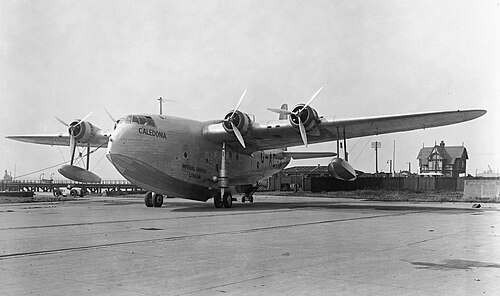
Imperial Airways Flying Boat Ditching 21 January 1939
The Imperial Airways flying boat ditching of 21 January 1939 was an important event in the history of early British commercial aviation. Imperial Airways was one of the leading airlines of the British Empire, and flying boats were an important part of its long-distance network. These large aircraft connected Britain with Europe, Africa, Asia, and other parts of the world.
The event took place during a period when flying boats were widely used for passenger and mail services. Although these aircraft were designed to land on water, an emergency landing or ditching could still be extremely dangerous. The incident demonstrated both the risks of long-distance flying and the importance of good crew training, aircraft design, navigation, and emergency procedures.
Imperial Airways
Imperial Airways was Britain’s major long-distance airline during the 1920s and 1930s. It was created to operate air services connecting Britain with destinations throughout the British Empire and Europe.
The airline operated routes across large distances.
Its aircraft carried:
- Passengers
- Freight
- Government documents
- Important communications
At a time when international travel was slow, Imperial Airways offered a much faster alternative to traditional sea transportation.
The Age of Flying Boats
During the 1930s, flying boats were an important part of international aviation.
A flying boat was an aircraft designed to take off and land directly on water.
This was a major advantage during the early development of commercial aviation.
Large airports with long runways were not available in many parts of the world.
However, rivers, lakes, bays, and coastal waters could provide suitable landing areas.
Imperial Airways therefore used flying boats extensively on its long-distance routes.
Why Water Landing Was Important
Flying boats were designed with strong hulls that allowed them to operate from water.
Their hulls worked in a similar way to the hull of a boat.
The aircraft could taxi across the water before taking off.
When landing, the hull touched the water and slowed the aircraft.
This allowed airlines to operate routes in areas without modern airports.
But a normal water landing and an emergency ditching were very different.
A planned landing could be made in calm water with good visibility.
A ditching might happen unexpectedly, sometimes in poor weather or rough seas.
What Is a Ditching?
In aviation, a ditching is an emergency landing on water.
It normally occurs when an aircraft cannot continue safely in the air.
Possible reasons can include:
- Engine failure
- Mechanical problems
- Fuel problems
- Severe weather
- Navigation difficulties
- Structural problems
A successful ditching requires careful decisions from the crew.
The pilot must choose the safest possible area of water and approach the surface at the correct speed and angle.
The 21 January 1939 Incident
On 21 January 1939, an Imperial Airways flying boat was involved in a ditching incident.
The event occurred during the final months before the beginning of the Second World War.
At this time, Imperial Airways was still operating an extensive network of international routes.
The aircraft encountered circumstances that required the crew to make an emergency landing on water.
The crew had to bring the aircraft down safely.
The Crew’s Responsibility
The crew of a flying boat had many responsibilities.
The captain was responsible for controlling the aircraft and making major decisions.
Other crew members assisted with navigation, radio communication, engineering, and passenger care.
During an emergency, teamwork was extremely important.
The crew had to communicate quickly.
Passengers needed to be informed.
The aircraft had to be prepared for landing.
The crew also had to consider what would happen after the aircraft reached the water.
The Importance of Aircraft Preparation
Flying boats were built differently from land aircraft.
Their hulls had to withstand contact with water.
The aircraft also needed strong floats or other systems to remain stable.
However, an emergency ditching could still damage the aircraft.
The crew had to reduce speed and select the best possible landing direction.
A poor approach could cause the aircraft to break apart or overturn.
Weather and Sea Conditions
Water conditions were one of the biggest factors in a ditching.
Calm water makes an emergency landing easier.
Rough water can be extremely dangerous.
Large waves can strike the aircraft’s hull.
The aircraft may bounce, turn suddenly, or suffer structural damage.
Wind can also affect the approach.
The crew must consider wind direction and wave direction before touching down.
Navigation in the 1930s
Navigation was much more difficult in 1939 than it is today.
Pilots did not have GPS.
They used:
- Magnetic compasses
- Maps
- Dead reckoning
- Radio navigation
- Visual landmarks
- Celestial navigation in some circumstances
Flying over large areas of water made navigation particularly challenging.
There might be no visible landmarks for hundreds of miles.
Radio communication therefore played an important role.
Radio Communication
Flying boats operated with radio equipment that allowed crews to communicate with ground stations and other aircraft.
Radio operators were often important members of the crew.
They could send messages about the aircraft’s position and condition.
If an emergency occurred, radio communication could help authorities organize assistance.
However, radio systems of the 1930s were much less advanced than modern satellite communications.
Emergency Communication
During a ditching, the crew’s ability to communicate was extremely important.
A message could provide:
- Aircraft position
- Nature of the emergency
- Number of people aboard
- Expected landing location
- Assistance required
Search-and-rescue organizations could then attempt to locate the aircraft.
The success of such operations depended heavily on accurate information.
Passenger Safety
Flying boats carried passengers in enclosed cabins.
Passengers were not normally trained for emergencies.
The crew therefore had to provide instructions.
During a ditching, passengers might need to:
- Remain seated
- Follow crew instructions
- Use life jackets
- Move away from damaged areas
- Prepare for evacuation
Emergency procedures were not as standardized as they are today.
Life-Saving Equipment
Flying boats generally carried emergency equipment because their operations involved long periods over water.
This could include:
- Life jackets
- Life rafts
- Emergency supplies
- Signaling equipment
- Radio equipment
The availability and design of this equipment varied during the period.
The incident demonstrated why survival equipment was an essential part of passenger aviation.
Search and Rescue
A major challenge after any aircraft ditching was finding the aircraft.
The ocean and large bodies of water are enormous.
A rescue team needs an accurate location.
In 1939, there were no satellite emergency beacons like those used today.
Search aircraft and ships had to rely on radio messages and estimated positions.
Weather could also make rescue operations difficult.
The Role of Ships
Ships were often an important part of rescue operations involving flying boats.
Because flying boats operated from water, they sometimes followed routes near shipping lanes.
If an aircraft had to ditch near a ship, the ship could provide immediate assistance.
Crew members could launch boats and rescue passengers from the water.
This relationship between aviation and maritime transportation was important during the flying-boat era.
Imperial Airways Safety Procedures
Imperial Airways had extensive experience operating flying boats.
The airline trained crews to deal with emergencies.
Pilots had to understand water conditions.
Engineers maintained the aircraft.
Radio operators handled communication.
The airline also developed procedures for operating over long distances.
Despite these precautions, no aviation system could eliminate all risks.
Early Commercial Aviation
The accident occurred during a time of rapid aviation development.
Airlines were learning how to operate large aircraft safely.
Many routes were still relatively new.
Weather forecasting was developing.
Navigation systems were improving.
Aircraft engines were becoming more reliable.
But aviation remained more dangerous than modern airline travel.
Every major incident provided lessons for future operations.
The Importance of Pilot Training
Pilot training was extremely important for flying-boat operations.
Pilots needed to understand both aircraft handling and water conditions.
They had to know how the aircraft behaved during takeoff and landing.
An emergency ditching required calm decision-making.
The pilot needed to avoid excessive speed.
The aircraft also had to meet the water at an appropriate angle.
Good training could make the difference between a successful ditching and a serious accident.
Engineering Challenges
Flying boats faced unique engineering problems.
The aircraft’s hull was constantly exposed to water.
Salt water could cause corrosion.
The hull had to be inspected carefully.
Engines were mounted above the water, but they were still exposed to a harsh marine environment.
Maintenance crews had to pay close attention to structural and mechanical components.
Aircraft Technology in 1939
Aircraft technology in 1939 was far more advanced than it had been a decade earlier.
All-metal aircraft were becoming common.
Engines were more powerful.
Navigation instruments were improving.
Radio systems were becoming standard.
However, many technologies that are considered normal today were unavailable.
There were no:
- GPS systems
- Satellite communication
- Digital navigation displays
- Modern weather radar
- Ground-proximity warning systems
- Satellite emergency beacons
This made long-distance flying much more challenging.
The Importance of Weather Forecasting
Weather forecasting was another major issue.
Pilots needed information about:
- Wind
- Visibility
- Storms
- Cloud
- Waves
- Pressure systems
Forecasts were based on information from weather stations and ships.
Satellite weather observation did not exist.
Therefore, weather conditions could sometimes be worse than expected.
Flying Boats and the British Empire
Imperial Airways used flying boats to connect Britain with distant regions.
Routes extended toward:
- Africa
- India
- The Middle East
- Southeast Asia
- Australia
These routes were extremely important for communication.
Airmail could travel much faster than traditional surface mail.
Government officials and businessmen could also travel more quickly.
The Human Side
Every aviation emergency involved real people.
Passengers trusted the crew to transport them safely.
Crew members had families and responsibilities of their own.
An emergency could suddenly change an ordinary journey into a fight for survival.
The 21 January 1939 ditching therefore became part of the personal history of everyone involved.
Importance of Emergency Procedures
One major lesson from incidents involving flying boats was the importance of emergency preparation.
Airlines needed to prepare crews for situations that might never happen.
Training included:
- Emergency landings
- Passenger evacuation
- Radio communication
- Survival equipment
- Water operations
These procedures later influenced the development of modern airline emergency standards.
The End of the Flying-Boat Era
The era of large commercial flying boats was already approaching its end.
Land airports were improving.
Runways were becoming longer.
Aircraft such as the Douglas DC-3 demonstrated the advantages of land-based airliners.
Landplanes were generally faster and more efficient.
The Second World War accelerated this transition.
Military aircraft development produced new technologies and better airports.
After the war, large flying boats became less important for commercial passenger travel.
World War II
The incident occurred only months before the Second World War began.
In September 1939, Britain entered the war against Germany.
Imperial Airways’ operations were heavily affected.
Many aircraft were taken over for wartime purposes.
International routes were changed or suspended.
Flying became much more closely connected with military transportation.
The commercial flying-boat era was therefore approaching a major historical turning point.
Aviation Safety Lessons
The 21 January 1939 incident illustrates several important aviation safety principles.
First, aircraft must be designed for the environment in which they operate.
Second, crews must receive emergency training.
Third, passengers need suitable survival equipment.
Fourth, communication is essential during emergencies.
Finally, rescue services must be able to locate and assist aircraft in distress.
These principles remain important today.
Modern Ditching Procedures
Modern aircraft are still capable of ditching when necessary, although such events are extremely rare.
Modern crews have much better equipment.
They can use:
- GPS
- Radar
- Satellite communication
- Emergency locator transmitters
- Weather information
- Digital navigation
- Improved life rafts
- Modern life jackets
Airline crews also receive detailed emergency training.
Lessons for Modern Aviation
The history of Imperial Airways shows how aviation safety developed gradually.
Every generation of aircraft introduced new challenges.
Flying boats required pilots to understand water.
Long-distance routes required reliable navigation.
International aviation required communication between countries.
Modern aviation has built on these earlier experiences.
Historical Importance
The 21 January 1939 Imperial Airways ditching is important because it belongs to the final years of the golden age of flying boats.
These aircraft were once symbols of modern technology.
They connected distant parts of the world before long-range landplanes became dominant.
An emergency ditching demonstrated both the strengths and limitations of this technology.
The Legacy of Imperial Airways
Imperial Airways eventually became part of the history that led to the creation of British Overseas Airways Corporation (BOAC).
BOAC later became an important part of Britain’s international airline system.
The experience gained by Imperial Airways crews and engineers influenced the development of British commercial aviation.
Why Historical Aviation Incidents Matter
Studying historical aviation incidents helps us understand how safety standards developed.
Modern passengers may take navigation systems, emergency equipment, and air traffic control for granted.
But these systems were developed over many decades.
Early airline accidents and emergencies provided valuable lessons.
Conclusion
The Imperial Airways flying boat ditching of 21 January 1939 occurred during an important period in the history of commercial aviation.
Imperial Airways was one of Britain’s most important airlines, connecting Britain with destinations across Europe, Africa, Asia, and other parts of the world. Flying boats were essential to these operations because they could land on water and did not require the large runways that modern airports use.
The incident demonstrated the challenges faced by flying-boat crews. An emergency landing on water required careful control of the aircraft, knowledge of wind and waves, accurate navigation, and good teamwork.
In the 1930s, crews did not have GPS, satellite communication, modern weather radar, or advanced emergency locator systems. They had to rely on radio, maps, compasses, weather reports, and their own experience.
The event also highlighted the importance of emergency equipment. Life jackets, life rafts, radio communication, and rescue procedures were essential because flying boats often operated far from land.
The aviation industry was changing rapidly. Aircraft were becoming faster and more reliable, while airports and navigation systems were improving. By the end of the 1930s, land-based aircraft were beginning to replace flying boats on many routes.
The Second World War would accelerate this change even further. Military aviation would produce major advances in aircraft design, navigation, communications, and radar.
Today, aviation is supported by technologies that were unimaginable to pilots in 1939. Modern aircraft can determine their exact position, communicate through satellites, receive detailed weather information, and transmit emergency signals.
The 21 January 1939 Imperial Airways ditching is therefore part of a larger story about the development of aviation safety. It shows how pilots, engineers, airlines, and governments gradually learned how to make air travel safer.
The golden age of flying boats may have ended, but the lessons from their operations remain part of aviation history. Their crews helped establish the foundations of long-distance commercial aviation, and the emergencies they faced contributed to the continuing development of safer air travel.

Ajeet Yadav is an aviation enthusiast covering airline news, airports, aircraft, and industry developments through well-researched and reliable reporting.