















Daimler Airway de Havilland DH.34 Ivinghoe Crash: A Fatal Emergency Landing Attempt

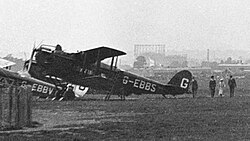
Daimler Airway de Havilland DH.34 Ivinghoe Crash
The Daimler Airway de Havilland DH.34 Ivinghoe Crash was one of the most significant commercial aviation accidents of the early 1920s. The tragedy occurred during a scheduled passenger flight from Croydon Airport in England to Le Bourget Airport in Paris, France, when a de Havilland DH.34 suffered an engine failure and crashed near Ivinghoe, Buckinghamshire while attempting an emergency landing. All five people on board were killed, making it one of the earliest fatal accidents involving a British commercial airliner.
The accident took place during a period when commercial aviation was still developing. Aircraft were becoming increasingly reliable, but engines, navigation systems, and emergency procedures remained limited by the technology of the era. The Ivinghoe crash demonstrated the risks associated with single-engine passenger aircraft and reinforced the importance of improving aircraft design and operational safety.
Background
During the early 1920s, commercial airlines were beginning to establish regular international passenger services across Europe. One of the leading British operators was Daimler Airway, which offered scheduled flights between London and Paris using modern aircraft for the period.
Among its fleet was the de Havilland DH.34, a single-engine biplane developed by the British aircraft manufacturer de Havilland. Originally designed after the First World War, the DH.34 became one of Britain’s earliest successful passenger aircraft. It could carry several passengers in an enclosed cabin while being flown by a pilot in an open cockpit.
Although considered advanced at the time, the aircraft relied on a single piston engine. If that engine failed during flight, pilots had very limited options other than attempting a forced landing in open countryside.
The Flight
The accident aircraft departed Croydon Airport on a routine international service bound for Le Bourget Airport near Paris. On board were two crew members and three passengers, bringing the total number of occupants to five.
Weather conditions during departure were considered suitable for flight, and the journey initially progressed without incident as the aircraft headed south across England toward the English Channel.
However, while flying over Buckinghamshire, the aircraft experienced a serious mechanical problem that quickly turned the routine flight into an emergency.
Engine Failure
During the flight, the engine suddenly failed, leaving the aircraft without power. Since the de Havilland DH.34 was powered by only one engine, the failure meant the aircraft immediately became a glider.
Recognizing the seriousness of the situation, the pilot searched for a suitable field in which to carry out a forced landing. Emergency landings were a common skill expected of pilots during the early years of aviation because engine reliability was far lower than it is today.
The pilot selected open farmland near the village of Ivinghoe as the intended landing site.
The Crash
As the aircraft descended toward the selected field, the pilot attempted to position the aircraft for a safe landing. During the final stages of the approach, however, the aircraft stalled.
A stall occurs when an aircraft’s wings no longer generate sufficient lift to support controlled flight. At low altitude, pilots have little or no opportunity to recover.
The de Havilland DH.34 entered a steep descent before striking the ground near Ivinghoe, Buckinghamshire. The impact destroyed the aircraft.
All five occupants—including both crew members and all three passengers—were killed. There were no survivors.
Investigation
Investigations into aviation accidents during the early 1920s were relatively simple compared with modern standards. There were no cockpit voice recorders, flight data recorders, radar information, or digital flight tracking systems.
Investigators examined the wreckage, interviewed witnesses, and reviewed maintenance records.
The official inquiry concluded that the engine failure forced the pilot to attempt an emergency landing. During the approach, the aircraft lost airspeed and stalled, making recovery impossible because of the low altitude.
There was no evidence of negligence or intentional wrongdoing. Instead, the accident highlighted the limitations of early aircraft technology and the narrow safety margins available to pilots operating single-engine passenger aircraft.
Why the Accident Was Important
The Ivinghoe crash became one of the earliest examples of how engine reliability directly affected passenger safety.
At the time, commercial aircraft depended heavily on a single engine. If mechanical failure occurred, pilots had only a few minutes to locate a suitable landing area and complete a successful forced landing.
The accident demonstrated that even experienced pilots could face impossible situations when power was lost at low altitude or in unsuitable terrain.
Impact on Aviation Safety
Although aviation technology developed gradually, accidents such as the Ivinghoe crash encouraged manufacturers and airlines to improve several aspects of flight safety.
Important developments included:
- More reliable aircraft engines.
- Better engine maintenance procedures.
- Improved pilot training for emergency landings.
- Stronger aircraft structures.
- Enhanced inspection programs.
- Development of multi-engine passenger aircraft capable of continuing flight after one engine failure.
Over time, these improvements significantly reduced the likelihood of accidents caused by engine failure.
The de Havilland DH.34
The de Havilland DH.34 occupies an important place in British aviation history. It helped establish some of the earliest scheduled airline routes between the United Kingdom and continental Europe.
The aircraft featured an enclosed passenger cabin, which was considered a major improvement in comfort compared with many earlier designs. However, its single-engine configuration reflected the technological limitations of the period.
Despite several accidents, the DH.34 contributed valuable operational experience that helped shape future generations of passenger aircraft.
Legacy
Today, the Daimler Airway de Havilland DH.34 Ivinghoe Crash is remembered as an important event in the evolution of commercial aviation safety. Although tragic, the accident emphasized the need for improved engine reliability and reinforced the importance of emergency training for airline pilots.
Modern commercial aircraft benefit from multiple engines, advanced warning systems, sophisticated flight controls, and strict maintenance requirements—developments that have dramatically improved aviation safety over the past century.
Conclusion
The Daimler Airway de Havilland DH.34 Ivinghoe Crash remains one of the defining accidents of early British commercial aviation. After suffering an engine failure during a scheduled flight from London to Paris, the aircraft stalled while attempting an emergency landing near Ivinghoe, killing all five people on board.
The tragedy highlighted the operational risks faced by early airlines and underscored the importance of reliable aircraft engines, effective pilot training, and continuous improvements in aviation safety. The lessons learned from accidents like the Ivinghoe crash contributed to the development of safer aircraft and more robust operational standards that continue to protect passengers today.

Ajeet Yadav is an aviation enthusiast covering airline news, airports, aircraft, and industry developments through well-researched and reliable reporting.