











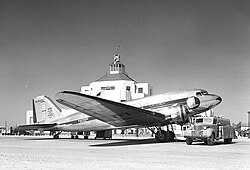
Eastern Air Lines Flight 45 Crash July 12, 1945
Eastern Air Lines Flight 45 was involved in a tragic aviation accident on July 12, 1945, during an important period in the history of American commercial aviation. The flight was operated by Eastern Air Lines, one of the major airlines in the United States at that time. The accident involved a passenger aircraft and occurred during the final months of World War II.
The 1940s were a time of rapid development in aviation. Airlines were expanding their routes, aircraft were becoming more reliable, and air travel was becoming more common. However, pilots still faced many dangers that are much easier to manage today. Navigation equipment was limited, weather information was less accurate, and air traffic control was still developing.
The accident involving Eastern Air Lines Flight 45 became one of the aviation tragedies of the period.
Eastern Air Lines
Eastern Air Lines was one of the most important American airlines during the early years of commercial aviation.
The airline operated passenger, mail, and cargo services across the United States. Its routes connected many important cities, particularly in the eastern and southern parts of the country.
During World War II, airlines also played an important role in transporting military personnel and other wartime travelers.
Eastern Air Lines operated a variety of aircraft during this period. The company had experienced pilots and established operating procedures, but aviation was still a developing industry.
The Flight
On July 12, 1945, Eastern Air Lines Flight 45 was operating a scheduled passenger service.
The aircraft was traveling through the southeastern United States when the accident occurred.
There were passengers and crew members aboard the aircraft.
At the beginning of the flight, there was no indication that a serious accident was about to occur.
The crew was operating the aircraft according to normal procedures.
However, during the flight, the aircraft became involved in a dangerous situation.
The accident eventually resulted in the aircraft crashing and the loss of life.
Aviation in 1945
To understand the accident, it is important to look at the aviation environment of 1945.
Aircraft were much slower than today’s passenger planes.
Most commercial aircraft were powered by piston engines. Pilots relied on mechanical instruments and radio navigation equipment.
There was no GPS.
There were no satellite communication systems.
There were no modern ground-proximity warning systems.
Weather radar was also not available in the form used by today’s aviation industry.
Pilots therefore had to depend heavily on their own experience and the information available from ground stations.
Weather and Navigation
Weather was one of the biggest challenges for pilots during this period.
Thunderstorms, rain, clouds, fog, and strong winds could make flying dangerous.
Weather information was available, but forecasting was not nearly as detailed as it is today.
When a pilot could not see the ground, navigation became more difficult.
Radio navigation systems helped pilots determine their position, but these systems required careful interpretation.
A small error in navigation could cause an aircraft to move away from its intended route.
When flying near airports or other aircraft, even a small mistake could have serious consequences.
The Accident
During the operation of Flight 45, the aircraft became involved in a collision with another aircraft.
The accident took place in the Washington, D.C. area, where commercial and military aviation activity was increasing.
The aircraft involved in the collision were operating in the same general area.
The collision happened suddenly.
The aircraft suffered serious damage and crashed.
People on the ground and emergency personnel responded quickly to the accident.
The disaster demonstrated the difficulties involved in managing increasing numbers of aircraft in the skies during the 1940s.
Air Traffic Control
Air traffic control was still developing in 1945.
The number of aircraft using the American airspace system was increasing rapidly.
Commercial airlines were expanding their schedules, while military aircraft were also flying in large numbers because of World War II.
Controllers had to organize aircraft using radio communications and established procedures.
Modern controllers have radar displays and highly accurate aircraft-position information.
In the 1940s, controllers had far less information.
Pilots and controllers therefore depended on radio reports, estimated positions, flight plans, and timing.
This system could work, but it left more room for human error.
The Importance of Communication
Communication between pilots and controllers was essential.
Pilots had to report their positions and follow instructions.
Controllers had to keep aircraft separated from each other.
If a communication was misunderstood, delayed, or incomplete, the safety of the flight could be affected.
The Flight 45 accident highlighted the importance of improving communication and aircraft separation procedures.
Over the following decades, air traffic control systems became much more sophisticated.
The Investigation
After the accident, investigators examined what had happened.
The investigation looked at the aircraft, the flight paths, weather conditions, radio communications, and the actions of the pilots and controllers.
Investigators wanted to understand why the aircraft had ended up in a dangerous position.
They also examined whether the aircraft had experienced any mechanical problems.
Accident investigations were extremely important during this period because aviation authorities were still learning how to manage increasingly busy airspace.
Every accident provided information that could be used to improve procedures.
Human Factors
Aviation accidents are rarely caused by one factor alone.
Human factors can include communication errors, misunderstanding, workload, fatigue, incorrect assumptions, or difficulties in interpreting information.
Pilots and controllers in the 1940s worked with much less information than modern aviation professionals.
They had to make decisions quickly.
The Flight 45 accident demonstrated why clear communication and carefully defined responsibilities are essential in aviation.
Today, aviation training places considerable emphasis on human factors and crew resource management.
Growth of Commercial Aviation
The accident occurred just before the end of World War II.
The war had greatly accelerated the development of aviation.
Aircraft manufacturing had expanded enormously.
Thousands of pilots had received training.
Airports and navigation facilities had been improved.
Radio communication had become more advanced.
After the war, many of these developments were transferred into civilian aviation.
Commercial airlines were preparing for a major expansion in passenger travel.
More people would fly for business, tourism, and personal reasons.
As air traffic increased, better systems were needed to prevent aircraft from coming too close to each other.
Development of Air Traffic Control
One of the major lessons from accidents during this era was the need for stronger air traffic control.
Controllers needed better ways to know where aircraft were located.
Radar eventually became one of the most important solutions.
Radar allowed controllers to see aircraft positions rather than depending entirely on pilots’ radio reports.
As radar systems improved, they became an important part of modern air traffic control.
Today, controllers can monitor many aircraft simultaneously and maintain safe separation between them.
The Human Cost
Behind the technical details of Flight 45 were real people.
Passengers were traveling because they had places to go, families to visit, jobs to perform, or other responsibilities.
The crew members were trained professionals who were responsible for safely operating the aircraft.
For the families of those involved, the accident was a terrible shock.
The loss of life affected not only the passengers and crew but also their relatives, friends, and colleagues.
Aviation accidents are often discussed through technical facts, but the human cost is always the most important part of the story.
Lessons for Modern Aviation
The accident helped demonstrate several important principles.
First, aircraft must be kept safely separated.
Second, pilots and controllers need clear communication.
Third, air traffic procedures must account for the increasing number of aircraft.
Fourth, technology should support human decision-making.
Modern aviation combines all these principles.
Aircraft use advanced navigation equipment.
Controllers use radar and computerized systems.
Pilots receive detailed traffic information.
Airports have sophisticated communication and navigation systems.
These improvements have made commercial flying much safer.
How Aviation Has Changed
The difference between aviation in 1945 and aviation today is enormous.
A modern passenger aircraft can determine its position using satellite navigation.
Air traffic controllers can monitor aircraft with radar and other surveillance systems.
Pilots can receive warnings about nearby aircraft.
Weather radar can show dangerous storms.
Aircraft computers continuously monitor many systems.
If a problem develops, crews have detailed procedures for responding.
None of these systems were as advanced in 1945.
The aviation industry had to develop them gradually through experience.
Legacy
Eastern Air Lines Flight 45 is part of the history of an aviation industry that was changing rapidly.
The accident occurred during the transition from wartime aviation to the modern commercial aviation era.
Airlines were preparing to carry millions of passengers after the war, and the need for better safety systems was becoming increasingly clear.
Accidents during this period helped authorities identify weaknesses in air traffic control, navigation, communication, and operating procedures.
The lessons eventually contributed to the much more advanced aviation system used today.
Conclusion
The Eastern Air Lines Flight 45 accident of July 12, 1945, was a tragic event in the history of American aviation.
It occurred during a period when the number of aircraft operating in American airspace was increasing rapidly. World War II had accelerated aviation development, but the systems used to control civilian and military aircraft were still relatively basic.
The accident demonstrated the importance of safe aircraft separation, accurate navigation, effective communication, and strong air traffic control procedures.
In 1945, pilots and controllers had to work with limited technology. There was no GPS, modern radar network, satellite communication, or computerized traffic-management system.
Over the decades, aviation authorities learned from accidents and introduced better procedures and technology. Radar, improved navigation, advanced communications, and modern air traffic control eventually transformed the safety of commercial flying.
The story of Flight 45 is therefore an important reminder of how aviation safety has evolved. The tragedies of the past helped identify weaknesses and encouraged improvements that protect millions of passengers today.

Ajeet Yadav is an aviation enthusiast covering airline news, airports, aircraft, and industry developments through well-researched and reliable reporting.