







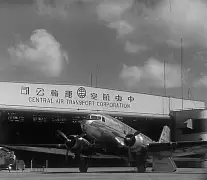
Central Air Transport Corporation Flight 48 Crash December 25, 1946
The Central Air Transport Corporation (CATC) Flight 48 accident was a tragic aviation disaster that occurred on December 25, 1946, in China. The accident happened during the early years of post-war commercial aviation, when airlines were trying to rebuild their operations after World War II.
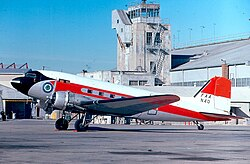
The flight was operated by the Central Air Transport Corporation, a Chinese airline that had played an important role in developing air transportation in China. The accident involved a Douglas C-47 Skytrain, a military transport aircraft that had been adapted for civilian passenger service.
The aircraft crashed near Shanghai, and a large number of people lost their lives. The disaster became one of the serious accidents in China’s aviation history during the difficult period immediately following World War II.
Central Air Transport Corporation
The Central Air Transport Corporation was established in China before World War II and became an important part of the country’s developing aviation network.
The airline operated passenger and cargo services between important Chinese cities.
During and after the war, aviation in China faced many challenges. Airports had been damaged, aircraft were difficult to maintain, and aviation infrastructure was still developing.
Despite these problems, airlines continued to operate because air transportation was essential for connecting cities that were separated by long distances and difficult roads.
CATC used several types of aircraft, including Douglas DC-3 and C-47 aircraft.
These aircraft were widely respected because they were strong, reliable, and capable of carrying passengers and cargo over long distances.
The Douglas C-47
The aircraft involved in Flight 48 was a Douglas C-47, the military version of the famous DC-3.
The C-47 had been developed for military transportation during World War II.
It was used extensively by Allied forces to carry soldiers, equipment, and supplies.
After the war ended, thousands of surplus military aircraft became available.
Many were converted into civilian aircraft.
This helped airlines expand quickly after 1945.
The C-47 was particularly useful in countries such as China because it could operate from relatively basic airfields and carry a useful number of passengers.
However, many post-war aircraft had already experienced heavy wartime service.
Maintenance and spare-parts availability could therefore be important challenges.
The Flight
On December 25, 1946, CATC Flight 48 was operating a scheduled passenger flight in China.
Christmas Day was an ordinary working day for many aviation employees at the time.
The aircraft was carrying passengers who were traveling between Chinese cities.
Air travel was still relatively expensive and was used by people with business, government, military, or other important reasons to travel.
The flight began normally.
There was no indication to the passengers that they were about to become involved in a major accident.
The aircraft continued toward its destination.
However, conditions later became difficult.
Aviation Conditions in Post-War China
China’s aviation industry faced many problems after the end of World War II.
The country had experienced years of conflict.
Airfields, communication systems, roads, and other infrastructure had been affected by the war.
The aviation industry also had to deal with shortages of fuel, spare parts, trained mechanics, and other resources.
Airlines were trying to restart regular commercial services while operating in an environment that was still unstable.
This made aviation operations more difficult than those in countries with well-developed civilian infrastructure.
Weather and Visibility
Weather was an important consideration for aircraft operating in China during the winter.
December can bring low clouds, fog, rain, and poor visibility in many parts of eastern China.
For pilots flying in the 1940s, poor visibility was a major challenge.
Modern aircraft have GPS, weather radar, satellite weather information, digital navigation systems, and sophisticated instrument approaches.
Pilots in 1946 had far fewer resources.
They depended on radio navigation, compass readings, charts, weather reports, and visual landmarks.
If visibility became poor, pilots could have difficulty identifying an airport or surrounding terrain.
The Accident
During Flight 48, the aircraft encountered difficulties while operating near its destination.
The aircraft eventually crashed, resulting in a large loss of life.
The accident occurred during a period when aviation safety systems were still developing.
The exact circumstances surrounding historical accidents can sometimes be difficult to reconstruct because official records from the period are incomplete.
Unlike modern aircraft, the C-47 did not have a flight-data recorder or cockpit voice recorder.
Investigators therefore had to rely on physical wreckage, witness accounts, weather reports, flight plans, and radio communications.
Search and Rescue
When the aircraft did not arrive as expected, authorities began searching for it.
Search operations in China during the 1940s were much more difficult than they are today.
There were no satellite tracking systems.
Search aircraft had limited navigation equipment.
Ground rescue teams often had to travel through difficult terrain or rely on local information to find the crash site.
Once the aircraft was located, emergency workers and local residents went to the scene.
The crash had caused severe damage to the aircraft.
The rescue operation became a difficult and emotional task.
Investigation
After the accident, investigators examined the wreckage and tried to determine the cause.
The investigation considered several possible factors.
These included:
- Weather conditions
- Aircraft maintenance
- Pilot actions
- Navigation
- Airport conditions
- Communication systems
- Mechanical failure
Investigators needed to determine whether the accident was caused by a problem with the aircraft or by difficulties during the flight.
Because the C-47 was a reliable and widely used aircraft, investigators did not automatically assume that the aircraft design was responsible.
Instead, they examined the entire chain of events.
Navigation in the 1940s
Navigation was one of the most difficult parts of long-distance aviation during this period.
Pilots used paper charts and instruments to calculate their position.
Radio navigation stations provided useful signals, but coverage was not available everywhere.
A pilot could also use a technique called dead reckoning.
This involved estimating the aircraft’s position based on its heading, speed, time, and expected wind.
If any of these factors were incorrect, the aircraft’s estimated position could become inaccurate.
Strong winds were especially problematic.
An aircraft could be pushed away from its planned route without the crew immediately realizing how far it had drifted.
The Importance of Airfields
Airports and airfields in post-war China varied greatly in quality.
Some major cities had established aviation facilities, while other locations had relatively basic airfields.
Runways, lighting, navigation equipment, radio communication, and weather services were not always comparable with modern airports.
This created additional challenges for pilots.
An aircraft approaching an airport at night or in poor weather needed reliable information about the runway and its location.
If the information was incomplete, the approach could become dangerous.
Human Factors
Human factors were also important in aviation accidents.
Pilots had to make decisions under pressure.
They had to interpret weather information, monitor instruments, communicate with ground stations, and operate the aircraft at the same time.
Long flights could also create fatigue.
In the 1940s, understanding of human factors in aviation was less advanced than it is today.
Modern aviation training teaches pilots about workload, fatigue, communication, decision-making, and teamwork.
These lessons developed gradually through experience.
The Human Cost
The most tragic part of the Flight 48 accident was the loss of life.
The passengers had boarded the aircraft expecting to reach their destination safely.
They were traveling during a period when China was recovering from years of war.
Some passengers may have been traveling for business or government work, while others had personal reasons for their journey.
The crew members were trained aviation professionals.
Their families and friends were devastated by the accident.
For the airline, the loss of an aircraft and its crew was also a serious event.
Commercial Aviation After World War II
The accident occurred during a major transition in world aviation.
World War II had produced enormous advances in aircraft technology.
Military transport aircraft such as the C-47 had demonstrated the value of reliable air transportation.
After the war, many of these aircraft were transferred to civilian airlines.
This allowed commercial aviation to grow quickly.
China was also attempting to rebuild its civilian aviation system.
Airlines such as CATC played an important role in connecting major cities.
However, the transition from wartime aviation to a modern civilian system was not easy.
Aviation Safety Improvements
Accidents such as Flight 48 helped demonstrate the need for stronger aviation safety systems.
Over time, aviation authorities introduced better maintenance standards.
Pilot training became more organized.
Airports developed improved navigation facilities.
Weather reporting became more reliable.
Air traffic control also became more sophisticated.
Modern aircraft are monitored using multiple systems, and pilots have much more accurate information about their position.
These developments greatly reduced many of the risks faced by pilots in the 1940s.
The Legacy of CATC Flight 48
The Central Air Transport Corporation Flight 48 accident is remembered as part of the difficult history of Chinese aviation during the post-war period.
It occurred at a time when the country was trying to rebuild its transportation network after years of conflict.
The accident demonstrates how challenging commercial aviation could be in the 1940s.
Airlines had capable aircraft and trained crews, but the surrounding aviation infrastructure was still developing.
The C-47 itself became one of the most important aircraft in aviation history.
Thousands of examples served military and civilian operators around the world.
Its widespread use helped establish the foundations of modern air transport.
Lessons From the Accident
Several general aviation lessons can be taken from accidents of this period.
Accurate navigation is essential. Pilots need reliable information about their location.
Weather information must be available and understood. Poor visibility can quickly turn an ordinary flight into a dangerous situation.
Aircraft maintenance is extremely important. Post-war aircraft often had significant operating histories.
Airports need good navigation facilities. Pilots require reliable guidance, particularly during difficult approaches.
Pilot training must cover difficult situations. Crews need to know when to continue, divert, or abandon an approach.
These principles remain important in aviation today.
How Aviation Has Changed
The difference between aviation in 1946 and aviation today is enormous.
A modern passenger aircraft can use satellite navigation to determine its exact position.
Pilots can receive weather information in real time.
Aircraft have sophisticated warning systems.
Air traffic controllers can monitor aircraft using radar and other surveillance technologies.
Airports have advanced instrument landing systems.
Modern accident investigators also have flight recorders that preserve information about what happened during a flight.
None of these systems were available in the same form in 1946.
Conclusion
The Central Air Transport Corporation Flight 48 accident of December 25, 1946, was a tragic event in the history of post-war Chinese aviation.
The accident occurred during a difficult period when China’s aviation industry was rebuilding after World War II. Airlines were trying to provide important transportation services despite challenges involving infrastructure, navigation, weather, aircraft maintenance, and communication.
The use of aircraft such as the Douglas C-47 allowed airlines to expand their networks quickly after the war. However, operating these aircraft in an aviation system that was still developing involved significant risks.
The loss of Flight 48 was a tragedy for the passengers, crew members, their families, and the Central Air Transport Corporation.
Historical aviation accidents such as this one also help us understand how modern aviation safety developed. Better navigation, improved weather information, stronger maintenance standards, advanced air traffic control, and better pilot training were all introduced over time.
The story of Flight 48 therefore belongs to both the history of aviation disasters and the broader history of the development of commercial air travel in China.

Ajeet Yadav is an aviation enthusiast covering airline news, airports, aircraft, and industry developments through well-researched and reliable reporting.