














Beiping C-46 Crash October 16, 1945
The Beiping C-46 crash was a tragic military aviation accident that happened on October 16, 1945, near Beiping, the name then used for what is now Beijing, China. A Curtiss C-46 Commando operated by the United States Army Air Forces (USAAF) crashed while approaching an airfield near Beiping. The aircraft was carrying 59 people, including 55 passengers and four crew members. Sadly, all 59 people were killed.
The accident happened shortly after the end of World War II. Although the war had ended, American military aviation was still operating large numbers of transport flights in China. These flights were important for moving personnel, supplies, and other passengers between different parts of the country.
The Beiping accident became particularly notable because the aircraft struck a very tall radio antenna while flying in poor visibility. The antenna was reportedly not shown on the navigation charts available to the crew.
The Curtiss C-46 Commando
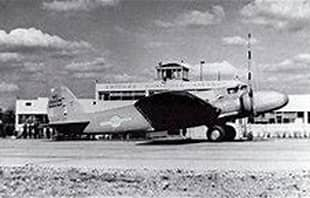
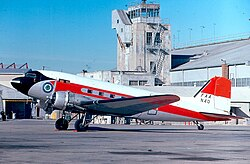
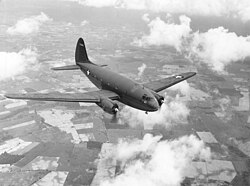
The aircraft involved was a Curtiss C-46F-1-CU Commando, carrying the USAAF serial number 44-78591. It had been manufactured in 1945 and was a twin-engine transport aircraft.
The C-46 Commando was designed for transporting passengers, troops, and cargo. It became especially important during World War II, including operations in the difficult China-Burma-India Theater.
The aircraft was larger than many earlier transport aircraft and could carry a significant number of passengers or cargo. It was powered by two large piston engines and was designed for long-distance military transportation.
By October 1945, the war had ended, but the C-46 remained useful for military transport operations.
The Flight From Hankou
The aircraft was operating a military transport flight from Hankou, now known as Wuhan, toward Beiping.
According to available accident records, the destination was Nanyuan Airport, located south of Beiping. Other historical records identify the intended landing area as Lantienchang (Landianchang) Airfield, which had been constructed during the war.
There were 59 people aboard:
- 55 passengers
- 4 crew members
- 59 fatalities
- No survivors
The passengers included Chinese soldiers being transported by the American military. The four crew members were American military personnel.
The flight was part of the large-scale transportation work being carried out in China after the war.
Post-War China
The accident occurred only a few weeks after Japan’s surrender in August 1945.
China was entering a complicated post-war period. Japanese forces had surrendered, but political and military tensions remained high.
American military transport aircraft were still flying across China.
Transport flights were needed to move military personnel and equipment and to support the transition following the end of the war.
The aviation infrastructure in many areas was not as developed as it is today.
Some airfields had limited navigation equipment, and pilots could face significant difficulties when approaching unfamiliar airports.
These conditions were especially dangerous when visibility was poor.
Weather Conditions
Weather played an important role in the accident.
As the C-46 approached Beiping, the crew encountered low clouds and poor visibility.
The cloud ceiling was reported to be approximately 300 feet.
For a pilot approaching an airport, a low cloud ceiling can make it difficult to see the ground and surrounding landmarks.
The situation becomes even more dangerous when there are tall structures near the flight path.
Today, pilots can receive detailed information about obstacles around an airport. Airports also have carefully published approach procedures and electronic navigation systems.
In 1945, pilots had far fewer sources of information.
Navigation Difficulties
One of the biggest problems facing the crew was navigation.
Nanyuan and other airfields in the area did not have the kind of modern navigation equipment found at today’s major airports.
Available records indicate that the crew used a commercial broadcasting station as a navigation aid because dedicated radio navigation facilities were not available at the destination.
This created additional challenges.
A commercial radio signal could help the crew establish a general direction, but it did not provide the same precise information as modern instrument-navigation systems.
The crew also depended on aeronautical charts.
Unfortunately, the tall radio antenna that became involved in the accident was reportedly not marked on the navigation charts available to the crew.
This became one of the most important factors in understanding the disaster.
The Radio Antenna
The C-46 was approaching the destination when it encountered a very tall radio antenna.
The antenna was estimated to be approximately 300 meters high, or about 1,000 feet above the airfield elevation.
Because of the low clouds and poor visibility, the crew apparently could not see the antenna in time.
The aircraft struck the structure while still in flight.
The impact caused catastrophic damage to the aircraft.
The C-46 continued for a short distance before crashing into a field.
The accident happened so quickly that the crew had almost no opportunity to recover the aircraft.
The Crash
At approximately 11:30 a.m. local time, the C-46 was approaching the Beiping area when it struck the radio antenna. The crash site was approximately 25 kilometers northwest of the destination airfield.
After hitting the antenna, the aircraft crashed into a field.
The impact was extremely severe.
All 59 people aboard were killed.
The accident was one of the deadliest aviation accidents involving the Curtiss C-46 Commando.
It was also one of the major aviation disasters in China during the immediate post-war period.
Search and Recovery
After the aircraft failed to reach the airport, authorities began investigating its whereabouts.
Once the wreckage was located, military personnel and local authorities went to the crash site.
The accident had occurred away from the airport, in an open area.
Because there were no survivors, the recovery operation focused on identifying the victims and examining the wreckage.
Investigators also needed to understand why the aircraft had been flying at an altitude that brought it into contact with the antenna.
The Investigation
Investigators examined the aircraft wreckage and reconstructed the final part of the flight.
Several important factors became clear.
First, the weather was poor.
Second, the aircraft was approaching an airport with limited navigation facilities.
Third, the tall radio antenna was not apparently shown on the charts available to the crew.
These factors created a dangerous combination.
The crew could not easily determine their exact position, visibility was poor, and an extremely tall obstacle was located in their path.
The accident was therefore associated with controlled flight into terrain or an obstacle, rather than a major mechanical failure of the aircraft.
What Is Controlled Flight Into Terrain?
The accident is an early example of what modern aviation calls Controlled Flight Into Terrain (CFIT).
CFIT occurs when an aircraft that is functioning normally and remains under the control of the pilots unintentionally strikes terrain, a mountain, building, tower, or another obstacle.
The aircraft does not necessarily have to experience an engine failure or loss of control.
The problem is that the crew does not realize how close the aircraft is to the obstacle until it is too late.
This type of accident was much more common before modern navigation and terrain-warning systems were introduced.
The Importance of Accurate Charts
The Beiping accident also demonstrated why accurate aviation charts are essential.
Pilots need to know about mountains, towers, antennas, buildings, and other obstacles near their routes.
A structure that is hundreds of meters tall can be extremely dangerous if pilots do not know it is there.
In modern aviation, obstacle information is carefully collected and published.
Approach charts show important terrain and obstacles.
Airports also maintain detailed information about structures around their operating areas.
In 1945, these systems were much less developed.
The absence of the antenna from the crew’s available navigation information was therefore a serious safety problem.
The Role of Weather
The low cloud ceiling made the situation even more dangerous.
If the weather had been clear, the crew might have seen the antenna from a considerable distance.
But with clouds at approximately 300 feet and limited visibility, the antenna could remain hidden until the aircraft was dangerously close.
This illustrates why poor weather and unmarked obstacles can be a deadly combination.
Pilots need enough visibility to recognize obstacles and enough navigation information to know exactly where they are.
The C-46 in Military Aviation
The Curtiss C-46 Commando played a major role during World War II.
It was used to transport troops and supplies over long distances.
The aircraft was especially valuable in areas where roads and railways were difficult to use.
In the China-Burma-India Theater, transport aircraft had to operate over challenging terrain and in difficult weather.
The C-46 became an important part of these operations.
Even after the war ended, many C-46 aircraft continued serving military and civilian operators around the world.
The Beiping crash demonstrated that a strong and capable transport aircraft could still be lost because of navigation and environmental hazards.
The Human Cost
The most tragic part of the accident was the loss of 59 lives.
There were 55 passengers and four crew members aboard the aircraft.
The passengers were being transported as part of post-war military operations.
The four crew members were responsible for safely operating the aircraft.
All of them died in the crash.
Their families and colleagues were left to deal with the sudden loss.
The accident also affected the military community in China at a time when many people were already dealing with the consequences of a long and devastating war.
Lessons From the Accident
The Beiping C-46 accident provided several important lessons for aviation.
1. Accurate navigation is essential
Pilots must know their exact position, especially when approaching an airport.
2. Obstacles must be clearly identified
Tall towers, antennas, mountains, and other structures must appear on aviation charts.
3. Weather can dramatically increase risk
Low clouds and poor visibility can hide obstacles from pilots.
4. Airports need proper navigation facilities
Pilots should have reliable navigation aids when operating in difficult weather.
5. Safe altitude is important
Aircraft must maintain sufficient altitude until they are safely positioned for landing.
These principles remain important in modern aviation.
Modern Aviation Safety
A flight operating near Beijing today would have access to technology that was unavailable in 1945.
Modern aircraft use satellite navigation, advanced radio navigation, digital charts, weather information, radar, and terrain-awareness systems.
Pilots can receive warnings about dangerous terrain and obstacles.
Airports maintain detailed approach procedures and obstacle information.
Air traffic controllers also have far more information about aircraft positions.
These systems greatly reduce the risk of the kind of accident that destroyed the Beiping C-46.
Legacy of the Beiping C-46 Crash
The accident remains an important part of the history of the Curtiss C-46 and post-war military aviation in China.
It demonstrates how aviation safety depends on more than aircraft design.
Even a modern and reliable aircraft can be endangered by poor visibility, incomplete navigation information, and unexpected obstacles.
The disaster also illustrates the difficulties faced by pilots operating in areas where aviation infrastructure was still developing after World War II.
Conclusion
The Beiping C-46 crash of October 16, 1945, was a tragic military aviation accident near Beiping, now Beijing, China. A Curtiss C-46F-1-CU Commando, operated by the United States Army Air Forces, was flying from Hankou toward the Beiping area when it encountered poor visibility during its approach.
The aircraft struck a radio antenna approximately 300 meters high. The antenna was reportedly not marked on the navigation charts available to the crew. The aircraft crashed into a field about 25 kilometers northwest of the destination airfield. All 59 people aboard—55 passengers and four crew members—were killed.
The accident shows the dangers of flying in poor visibility without accurate navigation information. It also demonstrates why modern aviation places so much importance on obstacle marking, accurate charts, reliable navigation aids, and terrain awareness.
The Beiping C-46 disaster belongs to a difficult period immediately after World War II, but its lessons remain relevant today. Knowing exactly where an aircraft is and what obstacles are around it is one of the most basic and important requirements for safe flight.
The Beiping C-46 crash was a tragic military aviation accident that happened on October 16, 1945, near Beiping, the name then used for what is now Beijing, China. A Curtiss C-46 Commando operated by the United States Army Air Forces (USAAF) crashed while approaching an airfield near Beiping. The aircraft was carrying 59 people, including 55 passengers and four crew members. Sadly, all 59 people were killed.
The accident happened shortly after the end of World War II. Although the war had ended, American military aviation was still operating large numbers of transport flights in China. These flights were important for moving personnel, supplies, and other passengers between different parts of the country.
The Beiping accident became particularly notable because the aircraft struck a very tall radio antenna while flying in poor visibility. The antenna was reportedly not shown on the navigation charts available to the crew.
The Curtiss C-46 Commando
The aircraft involved was a Curtiss C-46F-1-CU Commando, carrying the USAAF serial number 44-78591. It had been manufactured in 1945 and was a twin-engine transport aircraft.
The C-46 Commando was designed for transporting passengers, troops, and cargo. It became especially important during World War II, including operations in the difficult China-Burma-India Theater.
The aircraft was larger than many earlier transport aircraft and could carry a significant number of passengers or cargo. It was powered by two large piston engines and was designed for long-distance military transportation.
By October 1945, the war had ended, but the C-46 remained useful for military transport operations.
The Flight From Hankou
The aircraft was operating a military transport flight from Hankou, now known as Wuhan, toward Beiping.
According to available accident records, the destination was Nanyuan Airport, located south of Beiping. Other historical records identify the intended landing area as Lantienchang (Landianchang) Airfield, which had been constructed during the war.
There were 59 people aboard:
- 55 passengers
- 4 crew members
- 59 fatalities
- No survivors
The passengers included Chinese soldiers being transported by the American military. The four crew members were American military personnel.
The flight was part of the large-scale transportation work being carried out in China after the war.
Post-War China
The accident occurred only a few weeks after Japan’s surrender in August 1945.
China was entering a complicated post-war period. Japanese forces had surrendered, but political and military tensions remained high.
American military transport aircraft were still flying across China.
Transport flights were needed to move military personnel and equipment and to support the transition following the end of the war.
The aviation infrastructure in many areas was not as developed as it is today.
Some airfields had limited navigation equipment, and pilots could face significant difficulties when approaching unfamiliar airports.
These conditions were especially dangerous when visibility was poor.
Weather Conditions
Weather played an important role in the accident.
As the C-46 approached Beiping, the crew encountered low clouds and poor visibility.
The cloud ceiling was reported to be approximately 300 feet.
For a pilot approaching an airport, a low cloud ceiling can make it difficult to see the ground and surrounding landmarks.
The situation becomes even more dangerous when there are tall structures near the flight path.
Today, pilots can receive detailed information about obstacles around an airport. Airports also have carefully published approach procedures and electronic navigation systems.
In 1945, pilots had far fewer sources of information.
Navigation Difficulties
One of the biggest problems facing the crew was navigation.
Nanyuan and other airfields in the area did not have the kind of modern navigation equipment found at today’s major airports.
Available records indicate that the crew used a commercial broadcasting station as a navigation aid because dedicated radio navigation facilities were not available at the destination.
This created additional challenges.
A commercial radio signal could help the crew establish a general direction, but it did not provide the same precise information as modern instrument-navigation systems.
The crew also depended on aeronautical charts.
Unfortunately, the tall radio antenna that became involved in the accident was reportedly not marked on the navigation charts available to the crew.
This became one of the most important factors in understanding the disaster.
The Radio Antenna
The C-46 was approaching the destination when it encountered a very tall radio antenna.
The antenna was estimated to be approximately 300 meters high, or about 1,000 feet above the airfield elevation.
Because of the low clouds and poor visibility, the crew apparently could not see the antenna in time.
The aircraft struck the structure while still in flight.
The impact caused catastrophic damage to the aircraft.
The C-46 continued for a short distance before crashing into a field.
The accident happened so quickly that the crew had almost no opportunity to recover the aircraft.
The Crash
At approximately 11:30 a.m. local time, the C-46 was approaching the Beiping area when it struck the radio antenna. The crash site was approximately 25 kilometers northwest of the destination airfield.
After hitting the antenna, the aircraft crashed into a field.
The impact was extremely severe.
All 59 people aboard were killed.
The accident was one of the deadliest aviation accidents involving the Curtiss C-46 Commando.
It was also one of the major aviation disasters in China during the immediate post-war period.
Search and Recovery
After the aircraft failed to reach the airport, authorities began investigating its whereabouts.
Once the wreckage was located, military personnel and local authorities went to the crash site.
The accident had occurred away from the airport, in an open area.
Because there were no survivors, the recovery operation focused on identifying the victims and examining the wreckage.
Investigators also needed to understand why the aircraft had been flying at an altitude that brought it into contact with the antenna.
The Investigation
Investigators examined the aircraft wreckage and reconstructed the final part of the flight.
Several important factors became clear.
First, the weather was poor.
Second, the aircraft was approaching an airport with limited navigation facilities.
Third, the tall radio antenna was not apparently shown on the charts available to the crew.
These factors created a dangerous combination.
The crew could not easily determine their exact position, visibility was poor, and an extremely tall obstacle was located in their path.
The accident was therefore associated with controlled flight into terrain or an obstacle, rather than a major mechanical failure of the aircraft.
What Is Controlled Flight Into Terrain?
The accident is an early example of what modern aviation calls Controlled Flight Into Terrain (CFIT).
CFIT occurs when an aircraft that is functioning normally and remains under the control of the pilots unintentionally strikes terrain, a mountain, building, tower, or another obstacle.
The aircraft does not necessarily have to experience an engine failure or loss of control.
The problem is that the crew does not realize how close the aircraft is to the obstacle until it is too late.
This type of accident was much more common before modern navigation and terrain-warning systems were introduced.
The Importance of Accurate Charts
The Beiping accident also demonstrated why accurate aviation charts are essential.
Pilots need to know about mountains, towers, antennas, buildings, and other obstacles near their routes.
A structure that is hundreds of meters tall can be extremely dangerous if pilots do not know it is there.
In modern aviation, obstacle information is carefully collected and published.
Approach charts show important terrain and obstacles.
Airports also maintain detailed information about structures around their operating areas.
In 1945, these systems were much less developed.
The absence of the antenna from the crew’s available navigation information was therefore a serious safety problem.
The Role of Weather
The low cloud ceiling made the situation even more dangerous.
If the weather had been clear, the crew might have seen the antenna from a considerable distance.
But with clouds at approximately 300 feet and limited visibility, the antenna could remain hidden until the aircraft was dangerously close.
This illustrates why poor weather and unmarked obstacles can be a deadly combination.
Pilots need enough visibility to recognize obstacles and enough navigation information to know exactly where they are.
The C-46 in Military Aviation
The Curtiss C-46 Commando played a major role during World War II.
It was used to transport troops and supplies over long distances.
The aircraft was especially valuable in areas where roads and railways were difficult to use.
In the China-Burma-India Theater, transport aircraft had to operate over challenging terrain and in difficult weather.
The C-46 became an important part of these operations.
Even after the war ended, many C-46 aircraft continued serving military and civilian operators around the world.
The Beiping crash demonstrated that a strong and capable transport aircraft could still be lost because of navigation and environmental hazards.
The Human Cost
The most tragic part of the accident was the loss of 59 lives.
There were 55 passengers and four crew members aboard the aircraft.
The passengers were being transported as part of post-war military operations.
The four crew members were responsible for safely operating the aircraft.
All of them died in the crash.
Their families and colleagues were left to deal with the sudden loss.
The accident also affected the military community in China at a time when many people were already dealing with the consequences of a long and devastating war.
Lessons From the Accident
The Beiping C-46 accident provided several important lessons for aviation.
1. Accurate navigation is essential
Pilots must know their exact position, especially when approaching an airport.
2. Obstacles must be clearly identified
Tall towers, antennas, mountains, and other structures must appear on aviation charts.
3. Weather can dramatically increase risk
Low clouds and poor visibility can hide obstacles from pilots.
4. Airports need proper navigation facilities
Pilots should have reliable navigation aids when operating in difficult weather.
5. Safe altitude is important
Aircraft must maintain sufficient altitude until they are safely positioned for landing.
These principles remain important in modern aviation.
Modern Aviation Safety
A flight operating near Beijing today would have access to technology that was unavailable in 1945.
Modern aircraft use satellite navigation, advanced radio navigation, digital charts, weather information, radar, and terrain-awareness systems.
Pilots can receive warnings about dangerous terrain and obstacles.
Airports maintain detailed approach procedures and obstacle information.
Air traffic controllers also have far more information about aircraft positions.
These systems greatly reduce the risk of the kind of accident that destroyed the Beiping C-46.
Legacy of the Beiping C-46 Crash
The accident remains an important part of the history of the Curtiss C-46 and post-war military aviation in China.
It demonstrates how aviation safety depends on more than aircraft design.
Even a modern and reliable aircraft can be endangered by poor visibility, incomplete navigation information, and unexpected obstacles.
The disaster also illustrates the difficulties faced by pilots operating in areas where aviation infrastructure was still developing after World War II.
Conclusion
The Beiping C-46 crash of October 16, 1945, was a tragic military aviation accident near Beiping, now Beijing, China. A Curtiss C-46F-1-CU Commando, operated by the United States Army Air Forces, was flying from Hankou toward the Beiping area when it encountered poor visibility during its approach.
The aircraft struck a radio antenna approximately 300 meters high. The antenna was reportedly not marked on the navigation charts available to the crew. The aircraft crashed into a field about 25 kilometers northwest of the destination airfield. All 59 people aboard—55 passengers and four crew members—were killed.
The accident shows the dangers of flying in poor visibility without accurate navigation information. It also demonstrates why modern aviation places so much importance on obstacle marking, accurate charts, reliable navigation aids, and terrain awareness.
The Beiping C-46 disaster belongs to a difficult period immediately after World War II, but its lessons remain relevant today. Knowing exactly where an aircraft is and what obstacles are around it is one of the most basic and important requirements for safe flight.

Ajeet Yadav is an aviation enthusiast covering airline news, airports, aircraft, and industry developments through well-researched and reliable reporting.