















Baoding Air Force Handley Page Crash: China’s First Fatal Aviation Accident
The Baoding Air Force Handley Page Crash holds a unique place in the history of Chinese aviation as the country’s first recorded fatal aviation accident involving a passenger-carrying aircraft. The tragedy occurred during the early years of aviation, when flying was still a developing technology and safety standards were in their infancy. Although air travel was rare and aircraft were primarily used for military and government purposes, the accident highlighted the significant risks associated with early aviation operations and influenced the gradual evolution of aviation safety in China.
Background
In the early 1920s, aviation was rapidly gaining attention around the world. Nations were investing in aircraft for military, postal, and transportation purposes, while engineers continued improving aircraft design and reliability. China was also beginning to develop its aviation capabilities through military aviation schools and air force units.
Baoding, located in Hebei Province, was home to one of China’s earliest military aviation training centers. The Baoding Air Force played a key role in introducing modern aircraft into the country and training pilots during a period of political and military transformation. Aircraft acquired from Europe became an important part of this modernization effort.
Among these aircraft was the Handley Page, a British-designed aircraft originally developed during World War I. Handley Page aircraft were known for their large size and ability to carry multiple passengers or military personnel. Although considered advanced for their era, these aircraft operated with relatively basic navigation systems and limited safety features compared to modern aviation standards.
The Accident
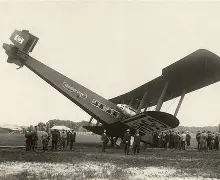
The aircraft was preparing to land at Baoding Airport after completing its flight. As it approached the runway, something went wrong during the landing sequence. The aircraft crashed while attempting to land, resulting in a catastrophic accident.
All 14 people on board lost their lives. There were no survivors.
At the time, aviation accident investigations were not conducted with the same level of technical analysis seen today. As a result, the exact cause of the crash has never been conclusively established. Historical records simply identify the event as a crash during landing.
Because aviation technology was still in its infancy, many factors could contribute to accidents, including mechanical failures, limited pilot training, poor weather conditions, primitive airport infrastructure, or operational errors. Without detailed investigative reports, historians can only speculate about the precise sequence of events.
Aircraft Involved
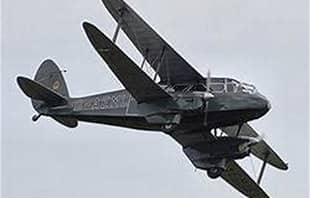
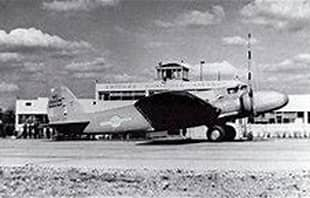
The aircraft involved was a Handley Page, manufactured by the British aircraft company Handley Page.
Originally designed for military use during World War I, Handley Page aircraft were among the largest aircraft of their generation. Their spacious design allowed them to transport personnel and cargo over relatively long distances.
Despite their innovative engineering, aircraft from this period lacked many technologies that modern pilots rely upon today, including:
- Radar
- Advanced weather forecasting
- Instrument landing systems
- Flight data recorders
- Cockpit voice recorders
- Modern navigation equipment
- Sophisticated aircraft warning systems
Pilots often depended heavily on visual references, experience, and favorable weather conditions to complete flights safely.
Why the Crash Is Historically Important
The Baoding Air Force Handley Page Crash is remembered primarily because it represents China’s first fatal aviation accident.
While aviation had already experienced accidents in Europe and North America, China was only beginning to establish an aviation infrastructure. The crash demonstrated that flying carried significant risks and underscored the need for improved aircraft maintenance, pilot training, and operational procedures.
The tragedy became an early reminder that aviation safety must evolve alongside technological progress.
Aviation Safety During the 1920s
The 1920s were marked by rapid aviation expansion but also frequent accidents. Aircraft manufacturers were still experimenting with designs, and airlines as we know them today were only beginning to emerge.
Many aircraft operated with:
- Wooden airframes
- Fabric-covered wings
- Less reliable engines
- Limited communication systems
- Basic weather information
- Short and often unpaved airfields
Landing and takeoff were particularly dangerous phases of flight because pilots had little assistance beyond visual judgment.
Worldwide, several early aviation accidents occurred during this decade due to structural failures, engine problems, navigation errors, and poor weather.
Impact on Chinese Aviation
Although the Baoding crash did not immediately transform aviation policy, it highlighted the importance of improving military aviation standards.
Over the following decades, China gradually expanded its aviation infrastructure by:
- Establishing additional pilot training programs.
- Improving aircraft maintenance practices.
- Developing better airfields.
- Introducing more reliable aircraft.
- Expanding civil aviation operations.
- Adopting international aviation standards.
As aviation technology advanced throughout the twentieth century, aircraft became significantly safer due to stronger materials, better engines, improved navigation systems, and stricter regulatory oversight.
Legacy
Today, the Baoding Air Force Handley Page Crash remains an important historical milestone rather than a widely remembered disaster. Unlike later aviation accidents that were extensively investigated, documentation surrounding this event is relatively limited.
Nevertheless, aviation historians recognize the accident because it marked the beginning of China’s recorded history of fatal aviation accidents.
The tragedy serves as a reminder of the enormous challenges faced by early aviators. Every generation of aircraft has benefited from lessons learned through past accidents, leading to continuous improvements in engineering, pilot training, airport operations, and aviation regulation.
Conclusion
The Baoding Air Force Handley Page Crash stands as a significant event in aviation history because it was China’s first fatal aircraft accident. The crash claimed the lives of all 14 people on board during a landing attempt at Baoding Airport, illustrating the risks associated with early aviation.
Although the precise cause remains unknown due to limited historical records, the accident reflects the broader challenges faced by the aviation industry during the 1920s, when aircraft technology, pilot training, and safety standards were still developing. Today, the event is remembered as an important chapter in the evolution of Chinese aviation and a reminder of how far global aviation safety has progressed over the past century.

Ajeet Yadav is an aviation enthusiast covering airline news, airports, aircraft, and industry developments through well-researched and reliable reporting.