

















American Airlines Flight 63 Flagship Missouri Crash on October 15, 1943
American Airlines Flight 63, known as Flagship Missouri, was a scheduled passenger flight operated by American Airlines during World War II. On October 15, 1943, the aircraft crashed in rural Kentucky while flying from Cleveland, Ohio, to Nashville, Tennessee. The accident became one of the serious aviation disasters involving an American Airlines passenger aircraft during the war years.
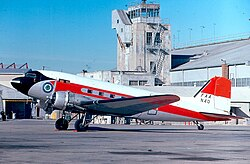
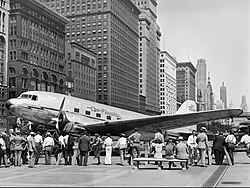
The aircraft was a Douglas DC-3, a widely used passenger and transport airplane of the period. It was registered as NC16008 and carried passengers and crew on the evening flight. The crash occurred near Trammel, Kentucky, in the mountainous region of eastern Kentucky. All people aboard the aircraft were killed.
The Flight
American Airlines Flight 63 was operating a regular service between Cleveland and Nashville, with intermediate stops. During the early 1940s, air travel in the United States was becoming increasingly important, although commercial aviation was still developing.
The Douglas DC-3 was one of the most successful airliners of its time. It was known for its reliability, speed, and ability to carry passengers over relatively long distances. During World War II, many aircraft of this type were also used for military transportation.
On October 15, 1943, Flight 63 departed on its scheduled journey. The aircraft was named Flagship Missouri, following American Airlines’ tradition of giving its aircraft names beginning with “Flagship.”
There were 21 people aboard, including the flight crew and passengers.
Weather Conditions
One of the major difficulties facing the flight was the weather. The aircraft was flying at night, and the region contained hills and mountains. Weather conditions in the area were not ideal for visual navigation.
At the time, pilots relied heavily on radio navigation, instruments, and weather information. Modern satellite navigation, weather radar, and sophisticated cockpit systems did not exist.
The flight was therefore taking place under conditions in which accurate navigation was extremely important.
The Final Part of the Flight
As Flight 63 continued toward Nashville, the aircraft was flying over eastern Kentucky. The area around the crash site was mountainous and contained high ridges.
At some point during the flight, the aircraft deviated from its intended course. The crew apparently became concerned about their position and attempted to determine where they were.
The DC-3 eventually flew toward mountainous terrain.
The aircraft struck a mountain near Trammel, Kentucky, in Letcher County. The impact occurred at night, making rescue efforts extremely difficult.
The airplane was destroyed in the crash, and there were no survivors.
The Crash Site
The crash happened in a remote part of Kentucky. The rugged landscape made it difficult for people on the ground to reach the aircraft.
When the accident was discovered, rescuers and local residents traveled toward the crash location. Because the aircraft had struck a mountain at high speed, the wreckage was scattered across the area.
The crash site was located far from major towns and transportation routes. This was common in aviation accidents involving aircraft flying over mountainous areas during this period.
The loss of the Flagship Missouri shocked the families of the passengers and the aviation community.
The Passengers and Crew
The people aboard Flight 63 included passengers traveling for different reasons. During World War II, American airlines carried civilians, business travelers, government personnel, and other passengers across the country.
The crew consisted of experienced aviation professionals responsible for safely operating the aircraft.
The loss of all 21 people aboard demonstrated the serious risks faced by airline crews and passengers during the early years of commercial aviation.
Air travel was considerably safer than it had been during the earliest years of aviation, but accidents could still have devastating consequences, especially when flights took place at night or over mountainous terrain.
Investigation
After the crash, investigators examined the wreckage and the circumstances surrounding the accident.
The investigation focused on several important questions. Investigators needed to determine the aircraft’s position before the crash, the weather conditions, the condition of the aircraft, and the actions of the crew.
There was no simple explanation such as an engine failure that completely explained the disaster. Instead, navigation and the aircraft’s position relative to the surrounding mountains became important parts of the investigation.
Investigators concluded that the aircraft had entered mountainous terrain while it was not in the correct position for its planned route.
The accident highlighted the dangers of controlled flight into terrain, a situation in which an aircraft that is still functioning and under the control of its pilots unintentionally flies into the ground or an obstacle.
Today, controlled flight into terrain is a major subject of aviation safety training. Modern aircraft use improved navigation systems, terrain-warning technology, and better weather information to reduce this risk.
Why the Accident Was Important
The American Airlines Flight 63 accident was important because it showed how difficult night flying could be in mountainous regions.
In the 1940s, pilots did not have many of the technological tools that are available today. They had to use instruments, radio signals, maps, landmarks, and their professional judgment.
If an aircraft became slightly off course, the consequences could be serious.
Mountains were especially dangerous because a pilot might not see them until it was too late. At night or in poor weather, visual references could disappear completely.
The Flight 63 disaster therefore became part of the history of aviation accidents that helped demonstrate the importance of accurate navigation and better flight procedures.
Aviation Technology in 1943
To understand the accident, it is useful to consider the technology available in 1943.
The Douglas DC-3 was an advanced aircraft for its time. It had two engines and could carry passengers comfortably. It was capable of long-distance flights and was widely respected by airlines and pilots.
However, the navigation equipment of the period was much less advanced than today’s systems.
Modern aircraft can use GPS, digital maps, satellite communications, weather radar, ground-proximity warning systems, and terrain databases. Pilots can also receive detailed information about their exact location.
In 1943, navigation depended much more heavily on radio beacons and pilot calculations.
This meant that even an experienced crew could face serious problems if weather, darkness, equipment limitations, or navigation errors combined.
Remembering the Victims
The crash of Flagship Missouri was not simply an aviation statistic. Every person aboard the aircraft had family, friends, and a reason for traveling that night.
For their relatives, the accident represented a sudden and tragic loss.
The disaster also affected American Airlines employees and the wider aviation industry. Each accident during this period provided investigators and aviation authorities with information that could be used to improve future operations.
The lessons learned from accidents such as Flight 63 contributed to the continuing development of safer navigation procedures and flight regulations.
Legacy of Flight 63
American Airlines Flight 63 – Flagship Missouri remains remembered as one of the notable aviation accidents of the 1940s.
The crash occurred during an important period in aviation history. Commercial airlines were expanding, aircraft technology was improving, and aviation was becoming an essential part of modern transportation.
At the same time, World War II placed enormous demands on aviation. Airlines operated in a difficult environment, and pilots often had to fly under challenging conditions.
The Flagship Missouri accident demonstrated that even a modern and reliable aircraft could be lost when navigation difficulties and mountainous terrain came together.
The accident also illustrates how aviation safety has changed over the decades. Today’s pilots have access to systems and information that were unimaginable in 1943. Terrain-warning systems, satellite navigation, improved weather forecasting, advanced communication equipment, and extensive pilot training have greatly reduced many of the risks faced by early airline crews.
Conclusion
The American Airlines Flight 63 – Flagship Missouri crash on October 15, 1943, was a tragic event in the history of American commercial aviation. The Douglas DC-3 was flying at night when it crashed into mountainous terrain near Trammel, Kentucky, killing all 21 people aboard.
The accident showed the dangers of night navigation in mountainous areas during an era when pilots had limited technological assistance. Although the DC-3 was a reliable and successful aircraft, navigation errors and difficult environmental conditions could still result in disaster.
Today, the story of Flight 63 serves as a reminder of how much aviation safety has developed. The lessons from accidents of the past helped create better navigation systems, improved operating procedures, stronger training, and safer aircraft.
The people who lost their lives aboard Flagship Missouri remain part of the long history of aviation, a history shaped by both remarkable progress and painful lessons.

Ajeet Yadav is an aviation enthusiast covering airline news, airports, aircraft, and industry developments through well-researched and reliable reporting.