









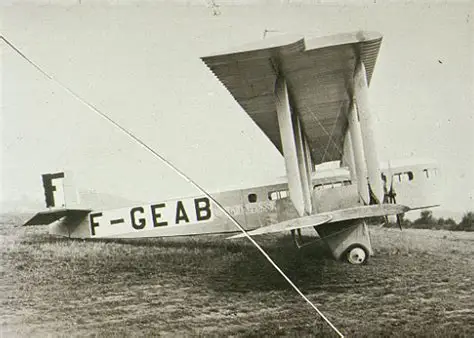
Air Union Farman F.63 Goliath Marden Crash 10 February 1930
The Air Union Farman F.63 Goliath Marden Crash was a tragic aviation accident that happened on 10 February 1930 near Marden Park, Surrey, England. The aircraft involved was a Farman F.63 Goliath operated by the French airline Air Union. It was flying on an international route between Paris and London when it crashed during the approach to Croydon Airport in poor weather. The accident resulted in the deaths of several people on board and became another reminder of the difficulties faced by early commercial airlines.
The crash happened at a time when European air travel was expanding quickly. Airlines were operating regular international passenger and mail services, but aircraft navigation, weather forecasting, airport lighting, and emergency procedures were still developing. Flights between Paris and London were becoming more common, yet the journey could still be dangerous, especially when pilots encountered fog or poor visibility.
Air Union and European Aviation
Air Union was one of France’s important airlines during the 1920s and early 1930s. It operated passenger and mail services connecting France with Britain and other European destinations.
The airline was created during the growth of commercial aviation after the First World War. Several aviation companies were combined to create larger organizations capable of operating regular scheduled services.
One of Air Union’s most important routes was between Paris and London. The service connected two major European cities and was part of the growing network of international air transportation.
At the time, flying between Paris and London was still a relatively new form of travel. Passengers could cross the English Channel much faster than by traditional sea and rail routes.
However, aircraft were not equipped with the sophisticated navigation and safety systems found on modern airliners.
The Farman F.63 Goliath
The aircraft involved in the accident was a Farman F.63 Goliath, a French twin-engine passenger aircraft.
The Goliath was developed from an earlier aircraft design created by the Farman brothers. The aircraft had originally been designed for military purposes during the First World War, but the end of the war created an opportunity to convert many large aircraft for civilian use.
The Goliath became one of the early aircraft used for passenger services in Europe.
The aircraft had a large fuselage and could carry several passengers. It was powered by two piston engines mounted on the wings.
The design was useful for commercial aviation because it could carry passengers and mail while offering reasonable range for European routes.
However, the Goliath was still based on aircraft technology from the early post-war period. Its performance, structure, and navigation equipment were very different from those of later commercial aircraft.
The Flight from Paris to London
On 10 February 1930, the Air Union Farman F.63 was operating a scheduled flight from Paris to London.
The aircraft was carrying passengers and crew and was expected to land at Croydon Airport, which was London’s principal airport at the time.
Croydon was an important center of international aviation. Aircraft from Britain and continental Europe regularly used the airport.
The journey across northern France and the English Channel was part of a route that pilots had become familiar with. Nevertheless, winter weather could make the trip difficult.
On this day, weather conditions near the London area were not ideal.
Difficult Weather Conditions
Weather was one of the greatest challenges for airline pilots in the early 1930s.
Modern aircraft can operate safely in conditions that would have been extremely difficult for pilots of the 1920s and 1930s. Modern aircraft have instrument landing systems, satellite navigation, weather radar, accurate forecasts, and detailed airport information.
Pilots in 1930 had far fewer resources.
They depended heavily on visual references and basic aircraft instruments. If fog or low cloud covered the ground, identifying the airport and surrounding terrain could become very difficult.
As the Farman approached the London area, the crew had to deal with poor visibility.
The aircraft was approaching Croydon when the situation became dangerous.
The Approach to Croydon
The pilot attempted to approach Croydon Airport.
At that time, pilots did not have the precise electronic approach systems that modern airports provide.
They often had to locate the airport visually and then descend toward the runway.
If the airport could not be seen clearly, the pilot might have to circle, wait for better visibility, or attempt to navigate using landmarks and radio information.
The Farman F.63 was flying in the area around Marden Park when the accident occurred.
The aircraft was unable to complete a safe approach.
The Crash at Marden
The Farman eventually crashed near Marden Park, close to Marden Park House in Surrey.
The aircraft came down in difficult terrain and was badly damaged.
The impact was severe and caused fatalities among the people aboard.
The crash was particularly tragic because the aircraft was close to its destination. The passengers had already completed most of their journey from Paris and were expecting to land at Croydon.
Instead, the final stage of the flight ended in disaster.
Rescue Efforts
After the aircraft crashed, people in the surrounding area quickly became aware of the accident.
Emergency assistance was organized, but rescue operations in 1930 were very different from those available today.
There were no modern airport emergency vehicles positioned around the crash site, especially because the accident happened away from the airport.
Local residents, police officers, and other emergency personnel had to reach the wreckage and help the survivors.
The damaged aircraft created significant obstacles for rescuers.
As with many aviation accidents of the period, the destruction of the aircraft made it difficult to reach everyone inside.
Investigation into the Accident
An investigation was carried out to determine why the Farman F.63 crashed.
Investigators examined the aircraft wreckage, the weather conditions, the pilot’s actions, and the circumstances of the approach.
The investigation of early aviation accidents depended heavily on physical evidence and eyewitness accounts.
There were no flight-data recorders or cockpit voice recorders. Investigators could not simply download a record of the aircraft’s altitude, speed, heading, and engine performance.
Instead, they had to reconstruct the accident from the available evidence.
Poor visibility was considered an important factor in the accident.
The approach to Croydon required the pilot to navigate in difficult weather. The surrounding hills and woodland near Marden Park created additional hazards.
The Danger of Controlled Flight into Terrain
One of the important lessons from accidents such as the Marden crash was the danger of flying into terrain while the aircraft was still under control.
A pilot may know the approximate location of an aircraft but still be unaware of the aircraft’s exact height above the ground.
This is especially dangerous in fog or low cloud.
Today, aircraft use terrain-awareness and warning systems to alert pilots when an aircraft is getting dangerously close to the ground.
Such technology did not exist in 1930.
Pilots therefore had to maintain a safe altitude and rely heavily on visual navigation.
The Importance of Croydon Airport
Croydon Airport was Britain’s most important international airport during this period.
It handled flights from many European airlines, including Air Union.
The airport was a major gateway for international travel and was particularly important for flights between Britain and France.
However, the area around Croydon included hills and wooded areas. Poor weather could make the approach difficult.
The Marden crash showed that the dangers associated with an airport did not disappear simply because an aircraft was close to its destination.
In fact, the approach and landing phases of a flight were among the most dangerous parts of early commercial operations.
Air Union and the Loss
The crash was a serious blow to Air Union.
Airlines depended on public confidence. Every accident could make passengers question whether air travel was safe.
Nevertheless, airlines continued to expand because aviation offered enormous advantages.
A journey that previously required a combination of ships and trains could increasingly be completed by aircraft.
Air Union continued operating flights after the accident and remained part of the development of European commercial aviation.
The company would later become involved in further changes within the French airline industry.
The Development of Aviation Safety
The Farman F.63 crash occurred during a period when aviation authorities were beginning to establish stronger safety standards.
Aircraft manufacturers were learning how to build stronger and more reliable airplanes.
Airlines were improving pilot training and maintenance systems.
Weather forecasting was becoming more useful, while radio communication and navigation technology were gradually improving.
Airports were also developing better lighting and approach procedures.
These improvements did not happen overnight.
Instead, aviation safety developed through years of experience. Every accident provided information about what could go wrong and what needed to be improved.
The Marden crash was part of this broader learning process.
Lessons for Pilots
The accident also highlighted the importance of careful decision-making during poor weather.
Pilots sometimes had to choose between continuing toward an airport and diverting to another location.
Without modern instruments, the decision could be extremely difficult.
A pilot who continued descending while unable to see the airport or surrounding terrain could accidentally enter a dangerous situation.
Later generations of pilots received increasingly detailed training in instrument flying, weather avoidance, navigation, and emergency procedures.
These developments greatly reduced the risks associated with poor visibility.
Why the Accident Is Remembered
The Farman F.63 Goliath was an important aircraft in the early history of European commercial aviation.
It represented the transformation of aircraft technology from military use to passenger transportation.
The Marden accident therefore forms part of the story of how civil aviation developed.
It also demonstrates the risks faced by early airline passengers. Flying was becoming more practical, but safety systems were still in their early stages.
The people aboard the Air Union aircraft were traveling on a normal international route. They could not have known that the final part of their journey would become a tragic event.
Conclusion
The Air Union Farman F.63 Goliath Marden Crash of 10 February 1930 was a tragic accident involving an early French passenger aircraft operating on the important Paris–London route.
The aircraft was approaching Croydon Airport when difficult weather and poor visibility created serious problems. The Farman F.63 eventually crashed near Marden Park in Surrey, resulting in loss of life.
The accident demonstrated the limitations of early commercial aviation. Pilots had limited navigation equipment, airports had basic approach systems, and there were no modern technologies to warn crews about nearby terrain.
The crash also highlighted the importance of good weather information, safe approach procedures, pilot training, and reliable navigation systems.
During the following decades, aviation changed dramatically. Aircraft became faster and stronger, engines became more reliable, radio navigation improved, and airports developed sophisticated landing systems. Pilot training also became much more structured.
The tragic 10 February 1930 Marden crash therefore represents more than an individual aviation disaster. It was part of the difficult learning process through which airlines, aircraft manufacturers, pilots, and governments gradually improved aviation safety.
The Farman Goliath helped open the way for commercial passenger travel in Europe, while accidents involving aircraft such as this one provided painful but valuable lessons. Those lessons contributed to the safer and more reliable international air travel that passengers experience today.

Ajeet Yadav is an aviation enthusiast covering airline news, airports, aircraft, and industry developments through well-researched and reliable reporting.