







Air Union Farman F.60 Goliath Monsures Crash: A Tragic Structural Failure in Early Commercial Aviation

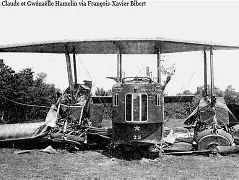
Air Union Farman F.60 Goliath Monsures Crash:
The Air Union Farman F.60 Goliath Monsures Crash was one of the deadliest commercial aviation accidents of the early 1920s and highlighted the engineering challenges faced by the world’s first passenger aircraft. The accident occurred during a scheduled international flight from Paris, France, to Croydon, England, when a Farman F.60 Goliath suffered a catastrophic structural failure in flight before crashing near Monsures, Somme, France. All six people on board lost their lives, making it one of the earliest fatal accidents involving a European commercial airliner.
The tragedy underscored the importance of structural integrity in aircraft design and contributed to the gradual development of stricter maintenance and airworthiness standards during the formative years of commercial aviation.
Background
The early 1920s marked the beginning of scheduled passenger air travel across Europe. Following World War I, many military aircraft manufacturers converted their designs into civilian passenger aircraft to meet the growing demand for faster international transportation.
One of the leading airlines of the period was Air Union, a French carrier established through the merger of several early aviation companies. The airline operated regular services between major European cities, including Paris and London, using the Farman F.60 Goliath, one of the first aircraft specifically adapted for passenger transport.
The Goliath was originally conceived as a heavy bomber during World War I, but after the war ended, its spacious fuselage made it ideal for conversion into a passenger aircraft. It could carry around a dozen passengers and quickly became a familiar sight on European air routes.
The Flight
The accident aircraft was a Farman F.60 Goliath, registration F-AEBY, operating a scheduled passenger flight from Le Bourget Airport in Paris to Croydon Airport near London.
The aircraft departed Paris with two crew members and four passengers, including Émile Pierrot, the Technical Director of Air Union. The flight progressed normally during its early stages as the aircraft climbed to an altitude of approximately 3,000 feet (900 meters) while heading north across northern France.
The Accident
As the aircraft cruised over the countryside near Monsures in the Somme department of France, witnesses on the ground observed something unusual.
According to historical accounts, a local witness described seeing what appeared to be an explosion in the air. Moments later, one of the aircraft’s wings separated from the fuselage, causing the Goliath to become uncontrollable.
Without sufficient lift, the aircraft entered a rapid descent before crashing into an open field. The impact completely destroyed the aircraft, and a post-crash fire quickly engulfed the wreckage.
All six occupants were killed instantly. There were no survivors.
Investigation
Investigators examined the crash site and discovered crucial evidence that pointed to the cause of the disaster.
One of the aircraft’s wings was found approximately 200 yards (180 meters) away from the main wreckage. Parts of the landing gear were also located hundreds of yards from the impact site, indicating that the aircraft had begun breaking apart while still in flight.
The official investigation concluded that the accident resulted from the structural failure of a wing. Once the wing detached, the aircraft became impossible to control, leaving the pilots with no opportunity to attempt an emergency landing.
Although investigators were able to determine the immediate cause, aviation engineering was still in its infancy, and the precise reason for the wing failure could not be fully established. Factors such as material fatigue, manufacturing limitations, or excessive aerodynamic stress may have contributed.
Victims
The crash claimed the lives of all six people aboard the aircraft.
Among the victims was Émile Pierrot, Air Union’s Technical Director, whose death represented a significant loss for the airline. The passengers also included two American citizens and one Finnish citizen, demonstrating the increasingly international nature of European commercial aviation during the early 1920s.
Why the Crash Was Significant
The Monsures accident became one of the earliest examples of a fatal structural failure in a commercial airliner.
Unlike many early aviation accidents caused by weather, pilot error, or engine failure, this tragedy resulted from the aircraft literally breaking apart in flight. The event highlighted that aircraft structures had to withstand repeated aerodynamic loads throughout their operational life.
The disaster prompted aircraft manufacturers and aviation authorities to place greater emphasis on:
- Structural strength testing.
- Improved aircraft inspections.
- Better maintenance procedures.
- Higher manufacturing standards.
- More rigorous certification requirements.
These principles later became fundamental to commercial aviation safety.
The Farman F.60 Goliath
The Farman F.60 Goliath occupies an important place in aviation history as one of the world’s first successful passenger airliners.
Built primarily from wood and fabric with twin piston engines, the aircraft represented cutting-edge technology for its time. However, materials and engineering methods during the early 1920s were still evolving, making structural failures more common than they are today.
Despite several accidents, the Goliath played a crucial role in demonstrating that scheduled passenger air transport could become commercially viable across Europe.
Legacy
The Air Union Farman F.60 Goliath Monsures Crash remains a significant milestone in the history of commercial aviation. Although tragic, it provided valuable lessons about aircraft design and structural reliability at a time when the aviation industry was rapidly expanding.
Modern aircraft are subjected to extensive structural testing, fatigue analysis, and continuous airworthiness inspections to ensure that failures like the one experienced at Monsures are extraordinarily rare. Technologies such as advanced composite materials, computerized stress analysis, and rigorous certification standards have dramatically improved aircraft safety over the past century.
Conclusion
The Air Union Farman F.60 Goliath Monsures Crash stands as one of the defining aviation accidents of the early twentieth century. During a scheduled flight from Paris to London, the aircraft suffered a catastrophic wing failure over Monsures, France, causing it to crash and kill all six people on board.
While the accident exposed the limitations of early aircraft engineering, it also accelerated improvements in structural design, maintenance practices, and safety oversight. Today, the lessons learned from tragedies such as the Monsures crash continue to influence the rigorous engineering and certification standards that make modern commercial aviation one of the safest forms of transportation.

Ajeet Yadav is an aviation enthusiast covering airline news, airports, aircraft, and industry developments through well-researched and reliable reporting.