










Air Union Blériot 155 Aldington Crash
On 18 August 1926, an Air Union Blériot 155 named Wilbur Wright, registration F-AIEB, crashed while attempting a forced landing at College Farm, Hurst, near Aldington, Kent, England. The aircraft was operating a scheduled passenger service from Le Bourget Airport in Paris to Croydon Airport. There were 15 people on board, consisting of two crew members and 13 passengers. Two passengers died at the crash site, while the pilot later died from his injuries. The remaining 12 people survived, although all were injured.
The Blériot 155
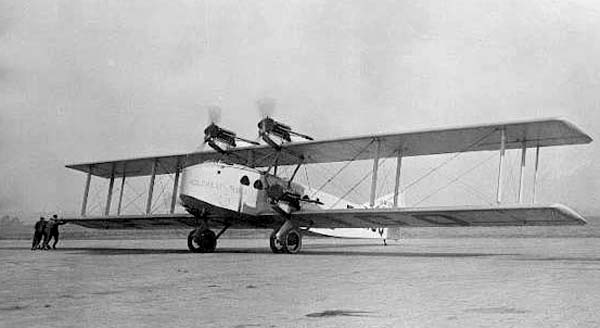
The Blériot 155 was a French four-engined passenger aircraft developed by Blériot for commercial airline operations. It was derived from the earlier Blériot 115 and Blériot 135 designs and was intended for passenger and mail services.
Only two Blériot 155 aircraft were built, both for Air Union, a French airline operating international services between Paris and London. The two aircraft were named Wilbur Wright and Clement Ader.
The aircraft involved in the Aldington accident was F-AIEB, named Wilbur Wright, construction number 2. It had been registered to Air Union on 27 June 1926 and had accumulated approximately 47¼ hours of flying time by the date of the accident.
The Blériot 155 was a large aircraft for its period, with four engines and a passenger cabin designed for international services. Air Union used the type on its cross-Channel route between Paris and London.
The Flight From Paris
On 18 August 1926, F-AIEB departed Le Bourget Airport, Paris, at approximately 12:30 p.m. local time, or 11:30 a.m. Greenwich Mean Time.
Its destination was Croydon Airport, which was then London’s principal airport for international scheduled services.
There were 13 passengers and two crew members aboard. The crew consisted of the pilot and a mechanic/radio operator. The aircraft was therefore carrying a total of 15 people.
The aircraft crossed northern France and proceeded toward the English Channel. At approximately 1:56 p.m. GMT, a radio message was sent to the station at Saint-Inglevert reporting that the aircraft was crossing the French coast near Berck-Plage.
The aircraft then began its Channel crossing.
Weather Over the English Channel
Weather conditions were poor during the crossing.
The aircraft encountered heavy drizzle and reduced visibility over the English Channel. Conditions near the English coast were particularly difficult.
Weather observations recorded at Lympne Airport at 1:15 p.m. GMT reported continuous rain and fog. Visibility was approximately 500 yards, while the cloud base was below 150 feet. Visibility had also deteriorated considerably during the preceding 20 minutes.
Lympne was an important aviation location in Kent and was used by aircraft operating cross-Channel services.
The poor weather meant that pilots arriving in southeastern England had limited visibility of the ground and had to deal with difficult conditions while approaching the area.
Engine Failure
As the Blériot 155 crossed the English coast, one of its engines reportedly failed.
The aircraft was equipped with four engines, and the Blériot 155 was capable of continuing flight after the loss of an engine. However, the combination of engine trouble and poor weather created difficult conditions for the crew.
The aircraft continued flying over Kent while the crew attempted to find a suitable location for an emergency landing.
The aircraft was approximately five miles west of Lympne Airport when the pilot decided to make a forced landing.
Attempted Forced Landing at College Farm
At approximately 2:30 p.m. GMT, the pilot attempted to land the aircraft in a large field at College Farm, Hurst, Aldington.
The field appeared suitable for an emergency landing, but the aircraft did not complete the landing safely.
During the approach, the Blériot 155 struck the roof of a barn. It then hit three stacks before crashing into the ground.
The aircraft came down close to people working at the farm. The farmer and two farm workers were reportedly only about 10 feet from the aircraft’s path when it crashed.
The impact severely damaged the aircraft and injured most of the people aboard.
Rescue at the Crash Site
The farmer and two farm workers immediately went to the wreckage and helped rescue the occupants.
Two passengers were able to get out of the aircraft without assistance. The remaining passengers were more seriously injured and had to be removed from the wreckage.
One woman was thrown partly through the side of the fuselage during the impact. Many of the injured suffered multiple fractures.
The local doctor attended the scene and assisted with the treatment and evacuation of the injured.
Because the accident occurred in a rural area, improvised stretchers were used. Farm hurdles were used to carry injured passengers from the crash site to a nearby barn, where they could be treated while ambulances were being arranged.
Ambulances were sent from Ashford, Hythe and Lympne.
The injured were subsequently transported to hospital in Folkestone.
Fatalities
Two passengers died as a result of the crash.
The victims included Robert Blaney, an American passenger from Boston, Massachusetts, and Hugo Rizzi, an Italian passenger. Historical records identify the two as among the passengers killed in the accident.
The pilot was seriously injured and was taken to hospital.
He died on 19 August 1926, one day after the accident.
The crash therefore resulted in three fatalities: two passengers and the pilot. Twelve people survived the accident, although they suffered injuries of varying severity.
The Pilot
The pilot was Pierre Charles Marcus de Lisle, commonly identified in contemporary records as Mr. Delisle.
He had considerable aviation experience. His flying career had begun with the French Army during the First World War, after which he entered commercial aviation.
He had been employed by Air Union for approximately three years at the time of the accident.
De Lisle survived the initial crash but suffered serious injuries. He died in hospital the following day.
The investigation into his death was conducted separately from the initial inquest into the deaths of the two passengers.
Investigation Into the Accident
An inquest into the deaths of the passengers began at College Farm on 19 August 1926, the day after the accident.
Evidence was presented concerning the aircraft’s condition, the circumstances of the flight and the events leading to the forced landing.
The aircraft had undergone an inspection before departing Paris. A certificate issued by Bureau Veritas indicated that the aircraft was considered fit to fly.
The investigation therefore examined the circumstances surrounding the engine failure and the emergency landing rather than finding evidence that the aircraft had departed Paris in an unairworthy condition.
Weather and Visibility
The weather conditions were an important part of the accident investigation.
The aircraft had crossed the English Channel in poor visibility and heavy drizzle. Conditions around southeastern England included rain, fog and a low cloud base.
The weather information recorded at Lympne showed that visibility had deteriorated significantly shortly before the accident.
These conditions affected the pilot’s ability to select and approach a landing area safely after the reported engine failure.
The aircraft eventually attempted to land at College Farm rather than reaching Lympne Airport.
Cause of the Accident
The immediate sequence of events was associated with an engine failure followed by a forced landing in poor weather.
The aircraft approached the field at College Farm but struck the roof of a barn before hitting three stacks and crashing.
The available historical record does not identify a specific internal mechanical component as the definitive cause of the engine failure. The aircraft had been inspected before the flight and had received documentation confirming its fitness for service.
The inquest returned verdicts of accidental death for the passengers who died.
An inquest into the pilot’s death was held at Folkestone on 26 August 1926. Evidence presented during the earlier proceedings included information about his aviation experience and his employment with Air Union. A verdict of accidental death was also returned in his case.
The Passengers
The 13 passengers aboard the aircraft included people of several nationalities.
Historical casualty records list eight American passengers, four British passengers and one Italian passenger.
Of the passengers, one American and one Italian were killed. The remaining passengers survived the accident, although many suffered injuries.
The accident therefore involved passengers from several countries travelling on one of the international routes that connected Britain and continental Europe during the 1920s.
Air Union’s Cross-Channel Service
Air Union was one of the major French airlines operating international services during the early development of European commercial aviation.
The Paris-Croydon route was one of its important services. Aircraft crossed the English Channel carrying passengers, mail and other commercial cargo.
The route required aircraft to operate over water and then land in an area where weather conditions could change rapidly.
The Aldington accident occurred during this period of expanding cross-Channel passenger operations.
The Blériot 155 Fleet
The Blériot 155 fleet consisted of only two aircraft.
The first aircraft, F-AICQ Clement Ader, was construction number 1. The second, F-AIEB Wilbur Wright, was construction number 2.
Both were operated by Air Union and were used on the Paris-London service.
The two aircraft were both lost in accidents during 1926.
F-AIEB crashed at Hurst, Aldington, on 18 August 1926 following an engine failure and attempted forced landing.
The second aircraft, F-AICQ, crashed at Leigh, Kent, on 2 October 1926 after an in-flight fire. All seven people aboard that aircraft were killed.
Consequently, both Blériot 155 aircraft built for Air Union were destroyed in accidents during the same year.
Disposal of F-AIEB
The Blériot 155 involved in the Aldington accident was destroyed during the crash and was not returned to service.
Its operational history ended at College Farm, Hurst, on 18 August 1926.
The accident became one of the significant cross-Channel air accidents in Britain during the 1920s, occurring during a period when commercial aviation was developing rapidly and scheduled international passenger services were expanding.
Conclusion
The Air Union Blériot 155 Aldington crash occurred on 18 August 1926 when F-AIEB, named Wilbur Wright, was operating a scheduled flight from Paris Le Bourget to Croydon.
The aircraft carried 13 passengers and two crew members. During the English Channel crossing, it encountered poor weather, including heavy drizzle and reduced visibility. An engine reportedly failed while the aircraft was crossing the English coast.
The pilot attempted a forced landing at College Farm, Hurst, Aldington, approximately five miles west of Lympne Airport. During the landing attempt, the aircraft struck a barn roof and three stacks before crashing into the ground.
Two passengers died at the scene and the pilot died in hospital the following day. The other 12 people aboard survived with injuries.
The investigation found that the aircraft had been inspected before the flight and had been certified as fit to fly. The deaths were recorded as accidental.
F-AIEB was one of only two Blériot 155 aircraft built. The other, F-AICQ Clement Ader, was destroyed in a separate accident at Leigh, Kent, on 2 October 1926. Both Blériot 155 aircraft operated by Air Union were therefore lost in accidents during 1926.

Ajeet Yadav is an aviation enthusiast covering airline news, airports, aircraft, and industry developments through well-researched and reliable reporting.