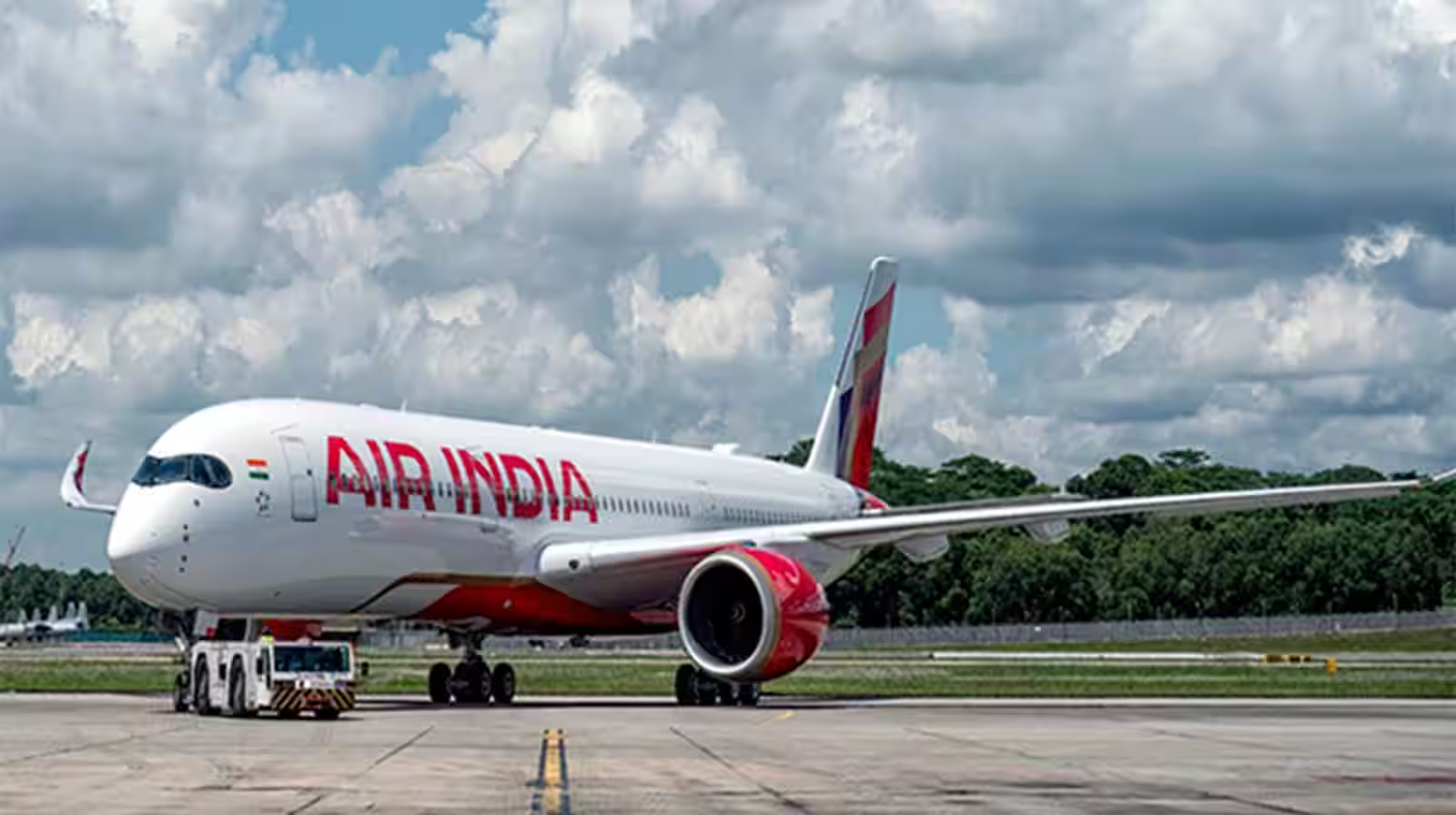









- Tata Group’s Air India transformation is redefining a 92-year legacy through modernisation, discipline, and global ambition.
- CEO Campbell Wilson’s vision blends large-scale restructuring — from fleet renewal to digital and cultural overhaul — with a revived sense of Indian identity and service.
- A parallel sustainability drive, spanning next-generation aircraft, SAF partnerships, and measurable efficiency gains, signals an airline determined to grow responsibly.
New Delhi.
For most of its 92-year history, Air India has been many things to many people — a national symbol, a bureaucratic relic, a source of nostalgia, and lately, a billion-dollar bet on the future of Indian aviation. But as the airline enters 2026, it is becoming something new: a blueprint for how a legacy carrier can rebuild itself not through public relations, but through patient, deep restructuring in a country where aviation itself is being rewritten.
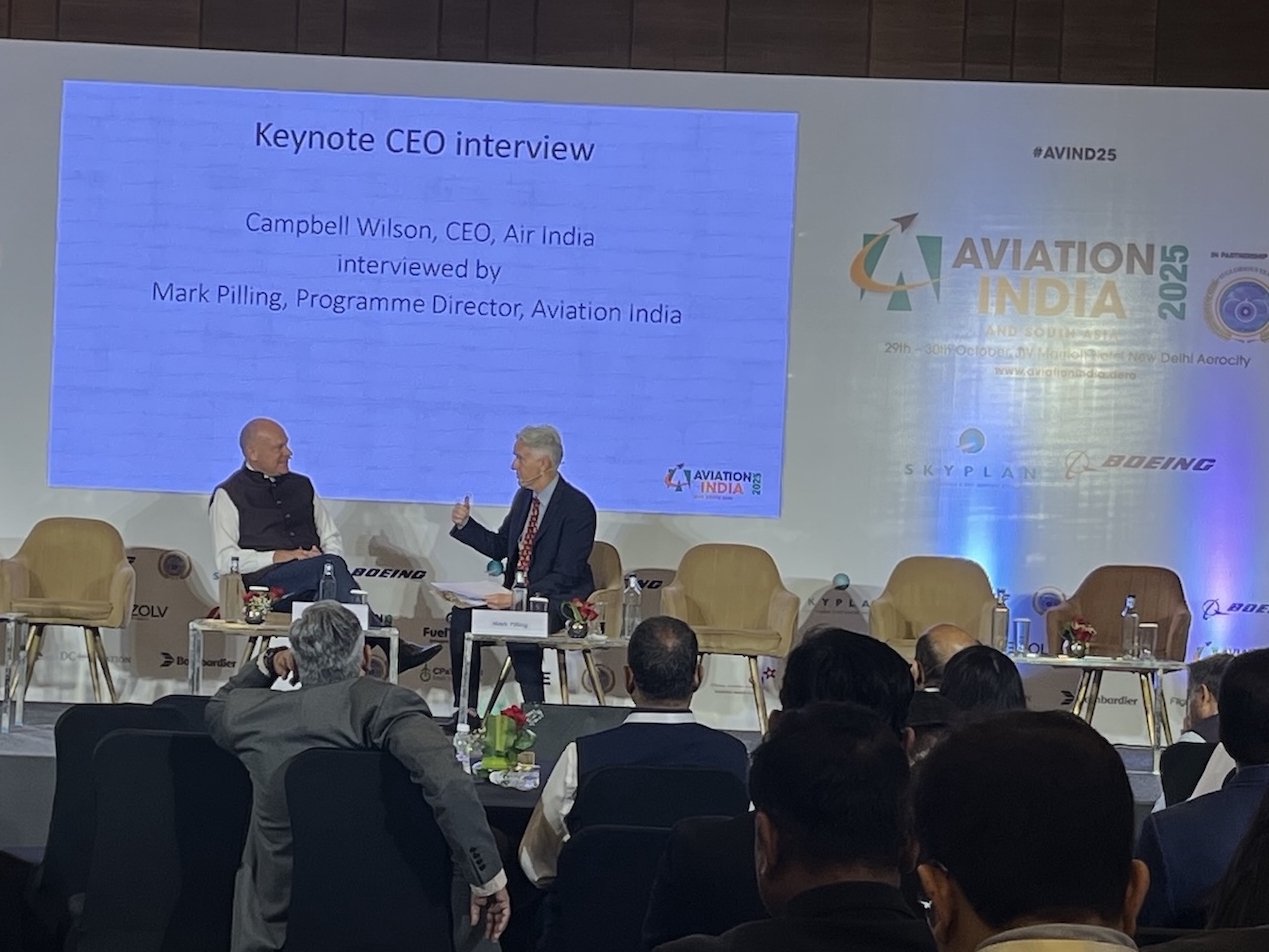
At the centre of this transformation is CEO & MD Campbell Wilson, who has spent three years steering Air India’s renaissance under the Tata Group. In a conversation that ranged from tragedy to technology, Wilson described a company that has moved beyond survival mode. Speaking at the Aviation India and South Asia Summit & Exhibition in New Delhi — the airline’s first public engagement in India since that tragic day — he outlined a vision of an airline not simply competing with Emirates or Singapore Airlines, but one that seeks to redefine what an Indian global carrier looks like.
“The service — that’s India’s secret sauce,” Wilson said, reflecting on what could once again make Air India stand out. “It’s a naturally warm and hospitable culture. Anyone can invest in a hard product. However, the true essence lies in the genuine hospitality provided by our crew.”
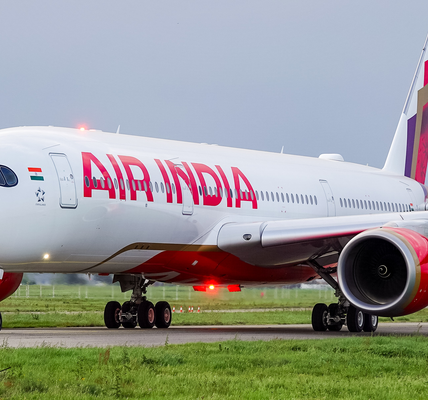
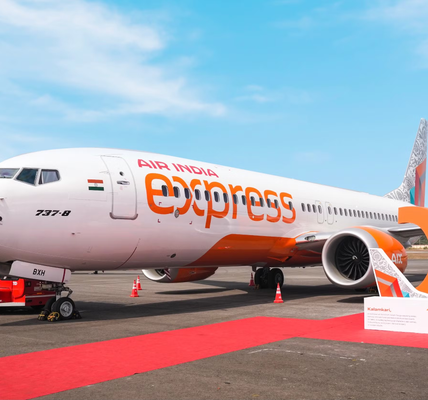
That’s not just branding. Behind the warmth, a silent revolution is unfolding across Air India’s operations. The airline has merged four carriers into one entity, onboarded 9,000 employees, replaced or upgraded over 140 IT systems, and consolidated 63 offices worldwide. The numbers alone are staggering: from barely 100 aircraft at the time of privatisation to nearly 300 today — and 524 more to come by 2031. Every six days, a new aircraft joins the fleet. Every six weeks, a new widebody.
By mid-2027, every Boeing 787 will have a refurbished cabin with new seats and inflight entertainment; the 777s will follow soon after.
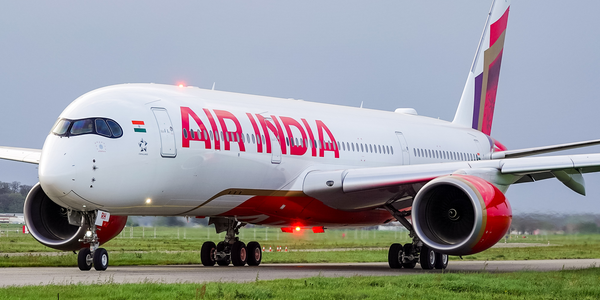
These aircraft will sit alongside a new generation of A350s already flying to London and New York — aircraft that Wilson believes “stack up very competitively” against the best in the world.
But for all the sleek interiors and record orders, the most radical change may be in mindset.
Air India’s revival is happening in real time — amid tragedy, wars, airspace closures, and the volatility of global geopolitics. Yet, Wilson insists that “uncertainty” is not a deterrent but a design feature of modern aviation. The past year has tested that philosophy.
From the aftermath of flight AI-171’s accident to regional conflicts and the closure of Middle Eastern and Pakistani airspace, Air India has absorbed shocks amounting to nearly four thousand crores in lost revenue. “It’s been a year of black swans,” Wilson admitted. “But it can’t derail us. It won’t. The mission remains: to make Air India a world-class global airline within five years.”
That mission is anchored in two realities. First, India’s outbound traffic has long been captured by foreign carriers. Nearly 70% of long-haul passengers from India still transit through hubs like Dubai, Doha or Istanbul. Second, India itself — with its fast-growing middle class, booming tourism, and massive diaspora — is now one of the few aviation markets still expanding at double digits. Air India’s task is not to build a fleet; it’s to reclaim those passengers with a product they can be proud of.
Wilson sees the opportunity in national terms. “Now is the time to capture it, to seize it,” he said. “To give something to the Indian consumer that they’ve not previously had.”
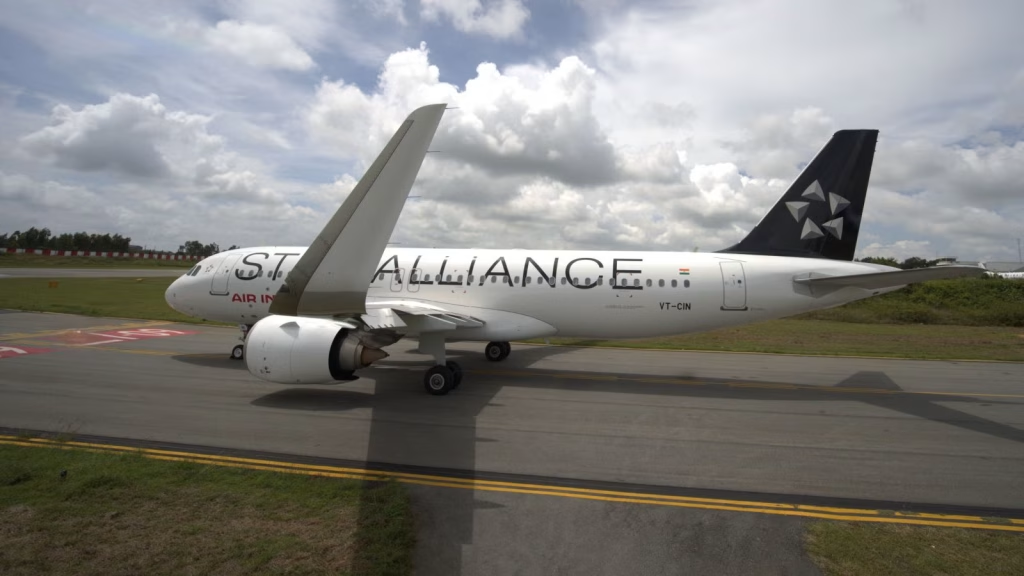
That may explain Air India’s measured stance on market liberalisation. While global carriers push for faster access to Indian routes, Wilson argues that opening the skies too fast could undermine domestic investment. “We’ve invested tens of billions of dollars in widebody aircraft to serve these markets directly,” he noted. “If the pace of liberalisation is too much, it undercuts that investment and the ecosystem it enables — manufacturing, tourism, and jobs.”
That ecosystem thinking is a recurring theme in Wilson’s approach. It’s visible in the ₹830-crore joint venture with Airbus for pilot training simulators in Gurugram—ten simulators, 5,000 pilots, and a plan to train thousands of engineers and cabin crews locally. It’s also seen in Air India’s decision to build its own maintenance and training infrastructure rather than depend entirely on third-party providers — a hedge against supply chain fragility that has crippled global aerospace over the past three years.
The transformation, however, is not cosmetic. It is cultural. The Air India that once struggled under public ownership is now expected to perform like a modern enterprise, but one that retains an Indian soul. That balancing act — between global competitiveness and national identity — may be its real differentiator.
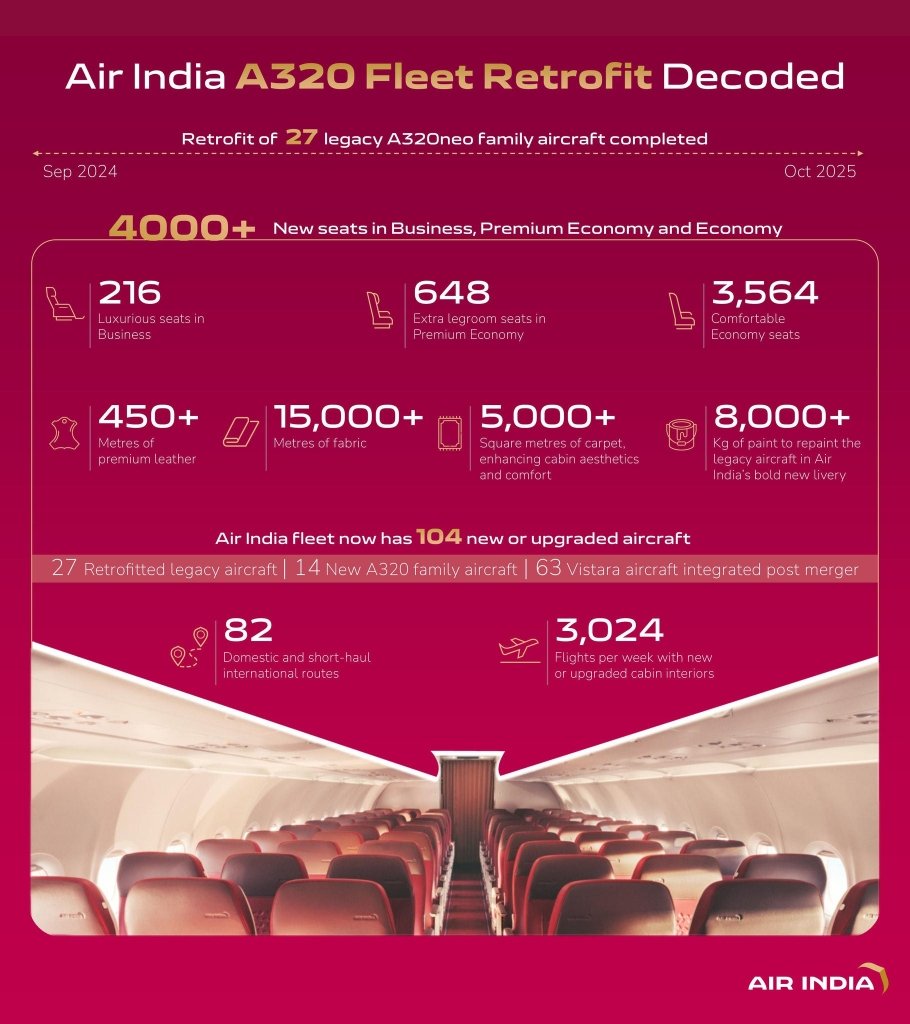
In the next two years, as refitted aircraft return to service and fresh deliveries ramp up, passengers will see the results. Domestic narrowbody cabins have already been upgraded across 104 aircraft. By early 2026, new 787s will enter service with bespoke interiors — the culmination of a design and certification process that began in mid-2022. “If I order a widebody today,” Wilson explained, “It’ll be delivered in 2032. A business-class seat alone can take four years to design and certify. A first-class seat can take seven.”
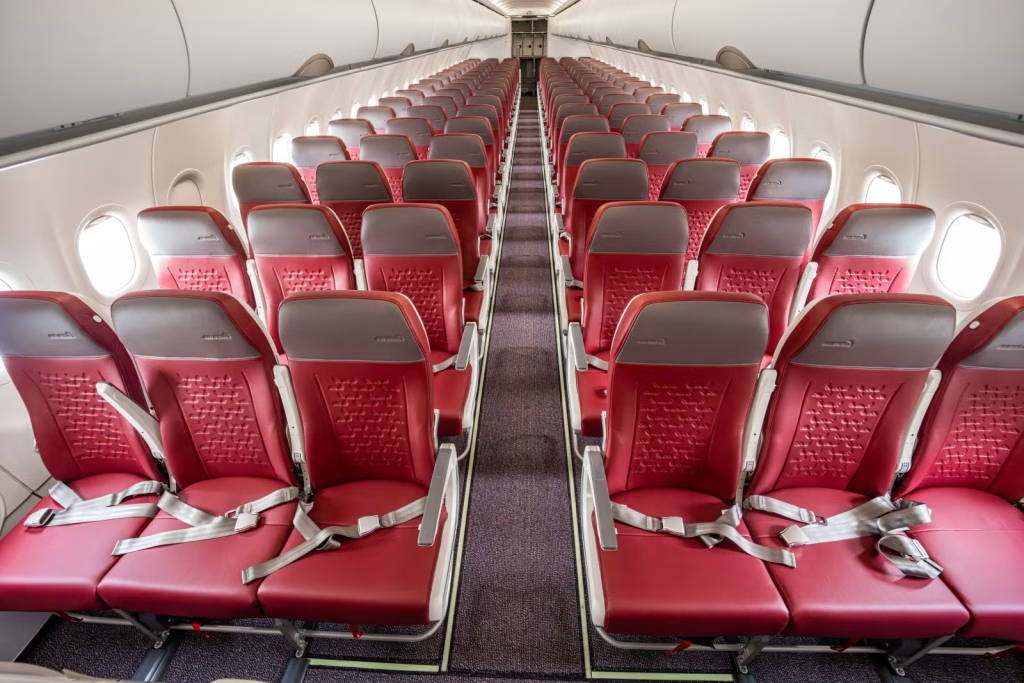
That glimpse into aviation’s hidden timelines underscores how deliberate Air India’s reinvention is. Quick fixes are impossible when your product takes years to materialise — and when your ambition is to compete with carriers that have spent decades building brand loyalty.
For now, the numbers speak for themselves. A flight takes off under the Air India group banner roughly every 65 seconds. Each one carries not just passengers, but a piece of a bigger national experiment — one where aviation becomes a tool of economic and cultural projection.
“The long term is very exciting and very real,” Wilson said. “We’re building an Air India that represents India in the way India wants to be represented.”
The new Air India is not just about reclaiming past glory. It’s about creating an airline ecosystem that grows with the country — resilient, globally credible, and unmistakably Indian.
Sustainability Takes Flight at Air India
If Air India’s fleet renewal is the face of its transformation, its sustainability agenda is its conscience — a quieter but equally ambitious revolution unfolding beneath the surface. The airline’s green transition now spans next-generation aircraft, cleaner flight operations, and ecosystem partnerships for Sustainable Aviation Fuel (SAF).
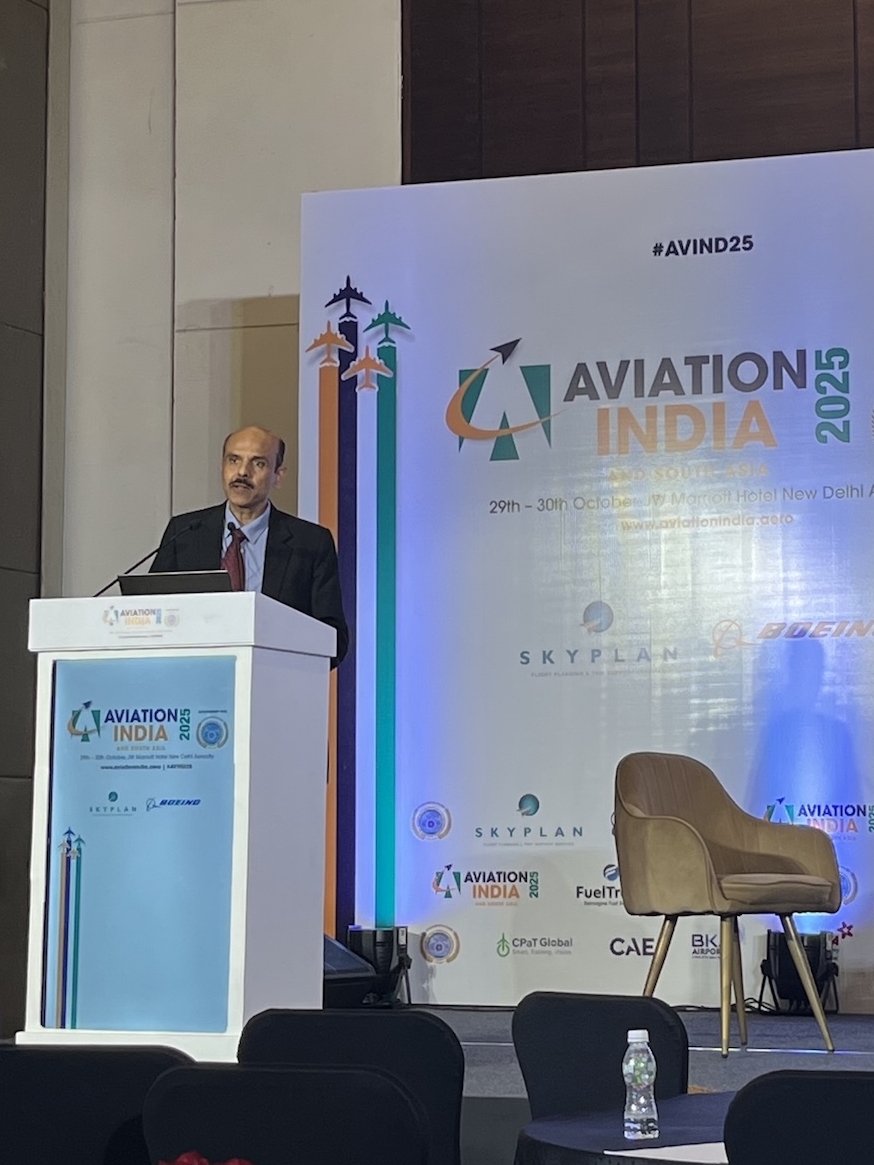
For P. Balaji, Group Head – Governance, Risk, Compliance & Corporate Affairs, Air India, this is not a parallel programme but “a central pillar of Air India’s revival story,” woven into how the airline measures progress and holds its leadership accountable.
“We’re investing in the most advanced and fuel-efficient aircraft available today,” Balaji said at the Aviation India and South Asia Summit & Exhibition in New Delhi. “That helps us become more efficient for every passenger we carry.”
The remark isn’t rhetoric; it reflects a structural shift in how Air India designs its fleet and network.
The new-generation wide-bodies — Airbus A350s and Boeing 787s — are being deployed on long-haul, non-stop routes to Europe and North America. That approach is as much an environmental choice as an economic one.
“Given India’s geography and its direct business links with global markets, non-stop flights mean fewer landings, shorter routes, and a smaller carbon footprint,” he explained. Each non-stop connection replaces multi-stop itineraries that once required refuelling in foreign hubs — a subtle but significant cut in emissions per passenger.
Behind the aircraft strategy is an equally determined push to build a domestic SAF value chain. Air India has partnered with the Council of Scientific and Industrial Research – Indian Institute of Petroleum (CSIR-IIP) on R&D and lifecycle emission studies, and works alongside the Ministry of Civil Aviation and the Ministry of Petroleum and Natural Gas under a joint task force to accelerate local production.
“Demand is not a problem,” Balaji noted. “Aircraft can already take every drop of SAF we produce. The challenge is scaling production — and that requires close collaboration between producers and users.” To that end, Air India’s memorandum with Indian Oil Corporation goes beyond offtake; it seeks to nurture the entire chain, from feedstock sourcing to refining and distribution.
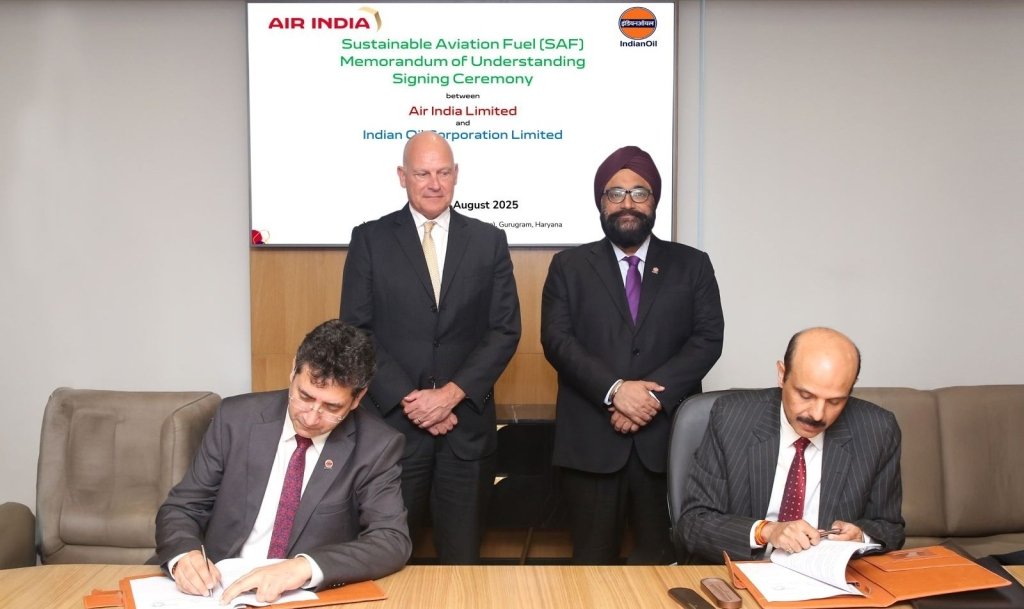
IOC recently became the first Indian company to earn ISCC CORSIA certification for SAF, with pilot-scale output expected around December 2025 or January 2026 — a milestone Balaji calls “a welcome sign” for India’s aviation sector and proof that the ecosystem approach is taking root.
While large-scale fuel transitions will take time, Air India is already seeing tangible gains from operational efficiency. Digital tools such as SITA OptiFlight and SITA eWAS now optimise climb profiles and route planning across the Boeing 737 and Airbus A320 fleets, with integration for wide-bodies underway.
On the ground, single-engine taxiing, autonomous aircraft towing, and systematic engine-wash cycles are reducing idle burn and emissions. “No step is too small,” Balaji said. “Each one adds up to meaningful savings and a smaller footprint.”
That attention to detail extends to everyday operations. Cabin provisioning is calibrated to passenger load and flight duration, reducing waste and weight. Nearly 85 per cent of single-use plastics have been eliminated, with complete removal targeted soon. Water loading is dynamic; technical manuals and maintenance logs are now fully digital, and packaging materials are being standardised for reuse.
Even Air India’s uniforms tell a story of renewal: redesigned attire for pilots, engineers, and ground staff uses 40–50 per cent recycled material, while retired uniforms are repurposed through certified recyclers. “These might look like small things,” Balaji said, “but together they create the culture of responsibility that makes the larger goals possible.”
Perhaps the most telling change lies in how sustainability is governed. Environmental metrics are now embedded in leadership KPIs and scorecards, tracked with the same rigour as operational and financial targets. “It’s not a campaign,” Balaji emphasised. “It’s a measure of how we perform and how our intensity is moving.”
That alignment ensures continuity across management cycles and reinforces the airline’s long-term decarbonisation agenda. Progress is reviewed not only in terms of fuel savings but in environmental intensity — emissions per unit of output — a metric Balaji says keeps everyone focused on tangible outcomes.
For Air India, sustainability is no longer a peripheral virtue but part of the airline’s identity as it redefines what an Indian global carrier can stand for. The initiatives — from cleaner fleets to SAF collaboration and daily operational discipline — mark a shift from compliance to conviction. They are about building credibility as much as capacity.
In that sense, Air India’s green journey mirrors its broader transformation: deliberate, data-driven, and deeply human in its intent. Each new aircraft, each kilogram of fuel saved, and each recycled uniform contributes to something larger — a belief that growth and responsibility can fly in formation.
As the airline scales across continents, it carries not just India’s flag but a quieter promise: that the country’s aviation future can be both ambitious and sustainable — globally credible, and unmistakably Indian.
Also Read: Airbus and Air India inaugurate advanced pilot training centre
With more than four decades across print and audiovisual media, Tirthankar (TG) Ghosh is a veteran journalist specialising in aviation, air cargo and logistics. His reporting combines deep industry knowledge, original research and sharp analysis to produce authoritative, evidence-led journalism.