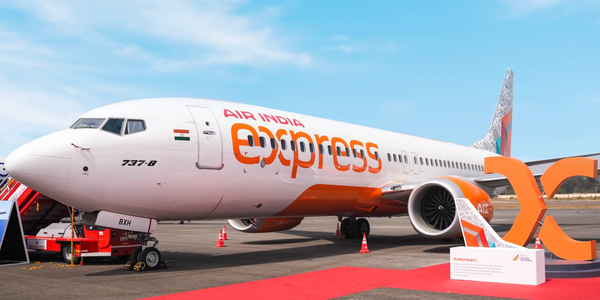
This Navratri, Air India Express is bringing the flavours of the festive season onboard with a specially curated Navratri meal featuring Sabudana Khichdi, Vrat Sheera and a Fruit Platter. The special meal is available across the airline’s expansive network covering…
Air India News Air India has announced some very good offers for students who want to travel during festival season or semester breaks. These deals will help students save money on both domestic and international flights. Air India is giving…
Airlines News Air travel in India may become more expensive as Air India, Air India Express, and Akasa Air have introduced or revised fuel surcharges on domestic and international flights from October 9, 2026. The decision comes amid rising Aviation…
From travelling to a new city for college to returning home for a semester break, students have plenty of reasons to travel through the academic year. Air India is offering students a flat 10% discount on domestic base fares on…
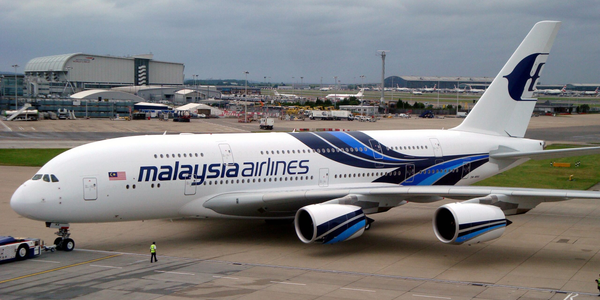
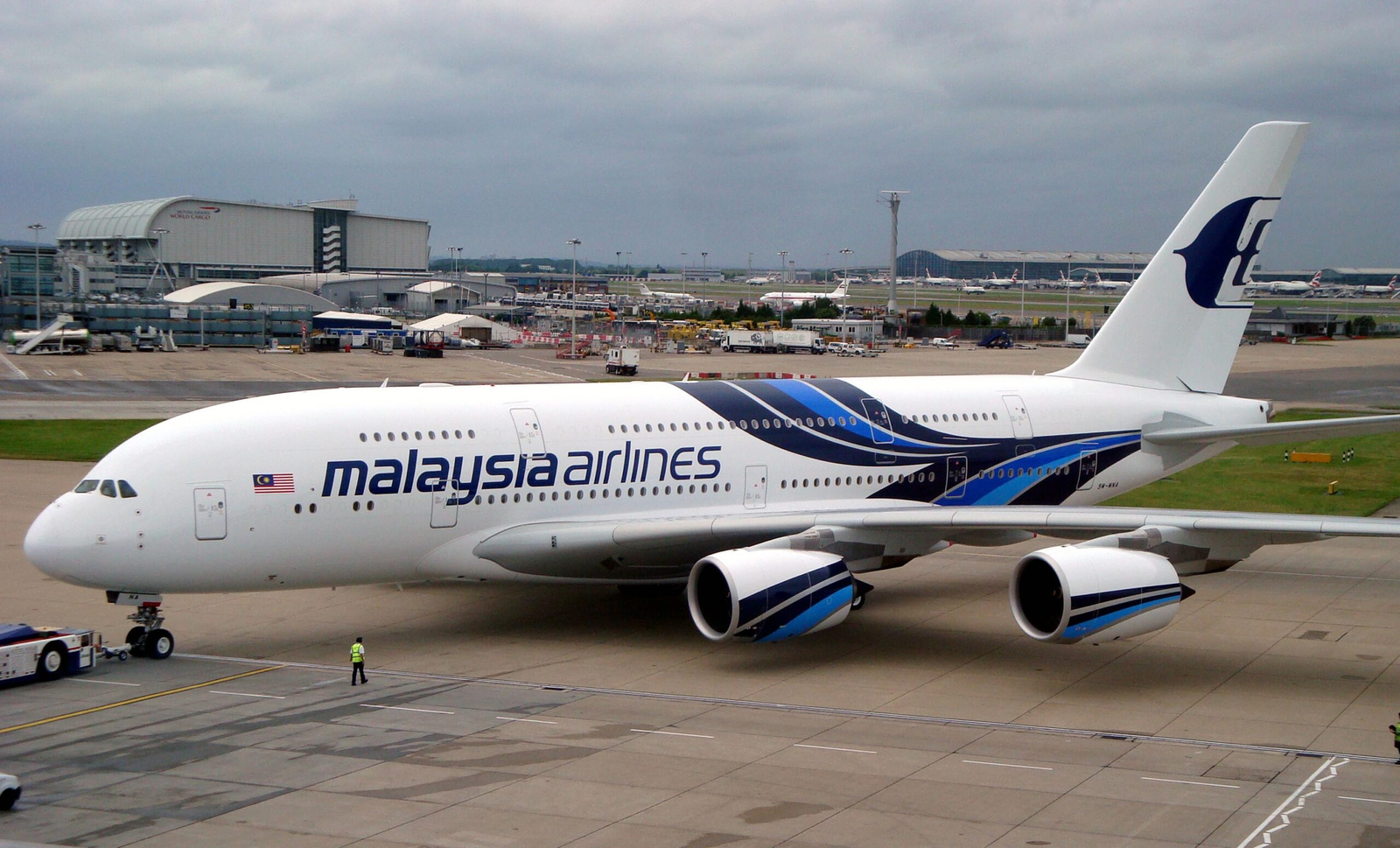
Chennai Airport News There was confusion at the international departure terminal of Chennai airport in the early hours of Monday. Malaysia Airlines flight MH181 to Kuala Lumpur was delayed after an “oxygen shortage” was cited. The flight was supposed to…
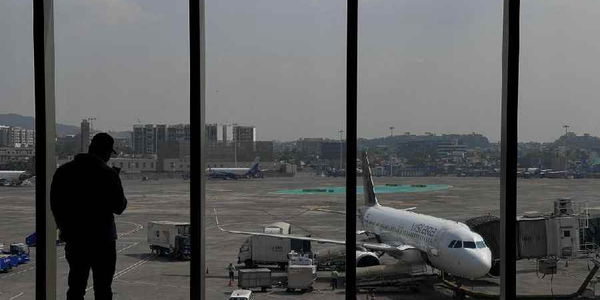
Mumbai Airport News Mumbai International Airport Ltd (MIAL), the operator of Mumbai airport, has told airlines that its plan to rationalise international flights has been put off by a few weeks. The plan included partially shifting operations to Navi Mumbai…
Delhi Airport News Customs officials at Delhi’s Indira Gandhi International Airport have arrested an Indian woman who was arriving from Bangkok. They allegedly found 16 kg of “hydroponic” cannabis in her baggage. The seized drugs are worth around Rs 5.62…
TWG Tea has opened its largest global flagship store, TWG Tea Gallery, at Singapore Changi Airport’s Terminal 3. The new store marks a major step in the luxury tea brand’s international expansion and strengthens its presence in the travel retail…
Textron Aviation is recognising 30 years of aircraft manufacturing in Independence, Kansas, while looking ahead to the facility’s continued role in supporting customers, developing aviation talent and producing industry-leading aircraft. Approximately 600 employees work across the 213-acre campus, where capabilities…
When customers need assistance away from a service center, it’s essential they have access to Original Equipment Manufacturer (OEM)-backed field support. Guided by customer feedback, Textron Aviation has recently brought its Mobile Service Units (MSUs), Go Teams and 1CALL together…
For generations, Cessna aircraft have been developed around a practical idea: give customers capable, reliable aircraft that help them accomplish what matters to them. Today, that thinking is helping shape the next generation of the Citation CJ4. The Cessna Citation…
India has had enough reasons for business aviation to grow: a wider corporate footprint, rising wealth, limited scheduled connectivity to many business destinations, and a business culture where time lost in travel can mean opportunities lost. Yet the sector remains…
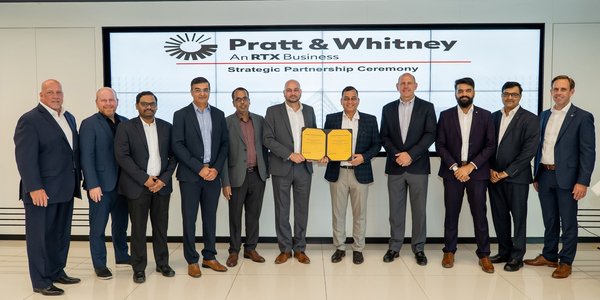
Bharat Forge Ltd. (BFL), a global leader in advanced forging and precision engineering, has secured a long-term contract with Pratt & Whitney Canada, a world-renowned aerospace engine manufacturer, for the supply of mission-critical aerospace engine components. The components will be…
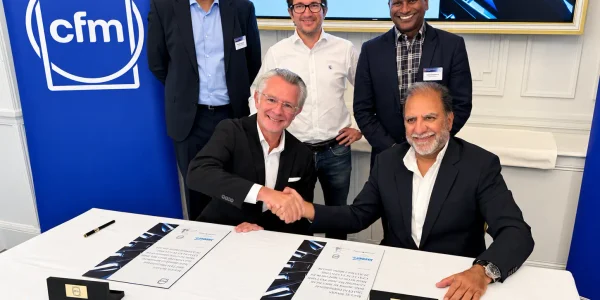
Jazeera Airways has selected CFM International LEAP-1A engines to power nine additional A320neo aircraft. In addition, Jazeera Airways and CFM have expanded the scope of their existing engine services agreement, which now covers the airline’s current and future fleet of…
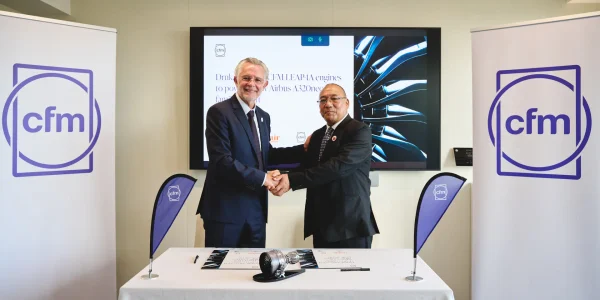
Drukair, Royal Bhutan Airlines, the national flag carrier of the Kingdom of Bhutan, announced today its selection of CFM International’s LEAP-1A engines to power five Airbus A320neo family aircraft. The order consists of three A320neo and two A321XLR aircraft, which…
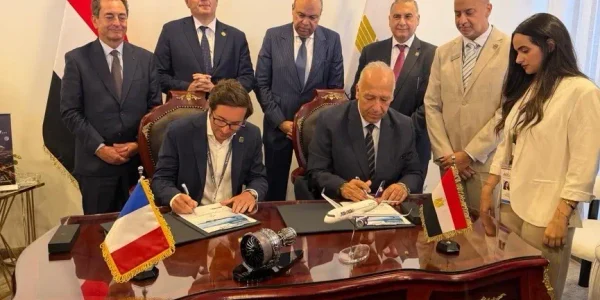
AIRCAIRO, a National Egyptian Airline, has chosen CFM International’s LEAP-1A engines for its growing Airbus A320neo fleet. The agreement includes CFM LEAP-1A engines for 15 aircraft, options for 15 more, and spare engines, bringing the total potential fleet to more…
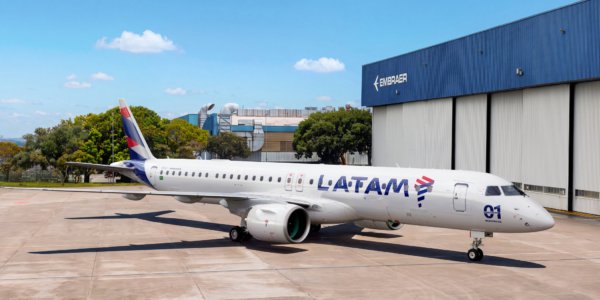
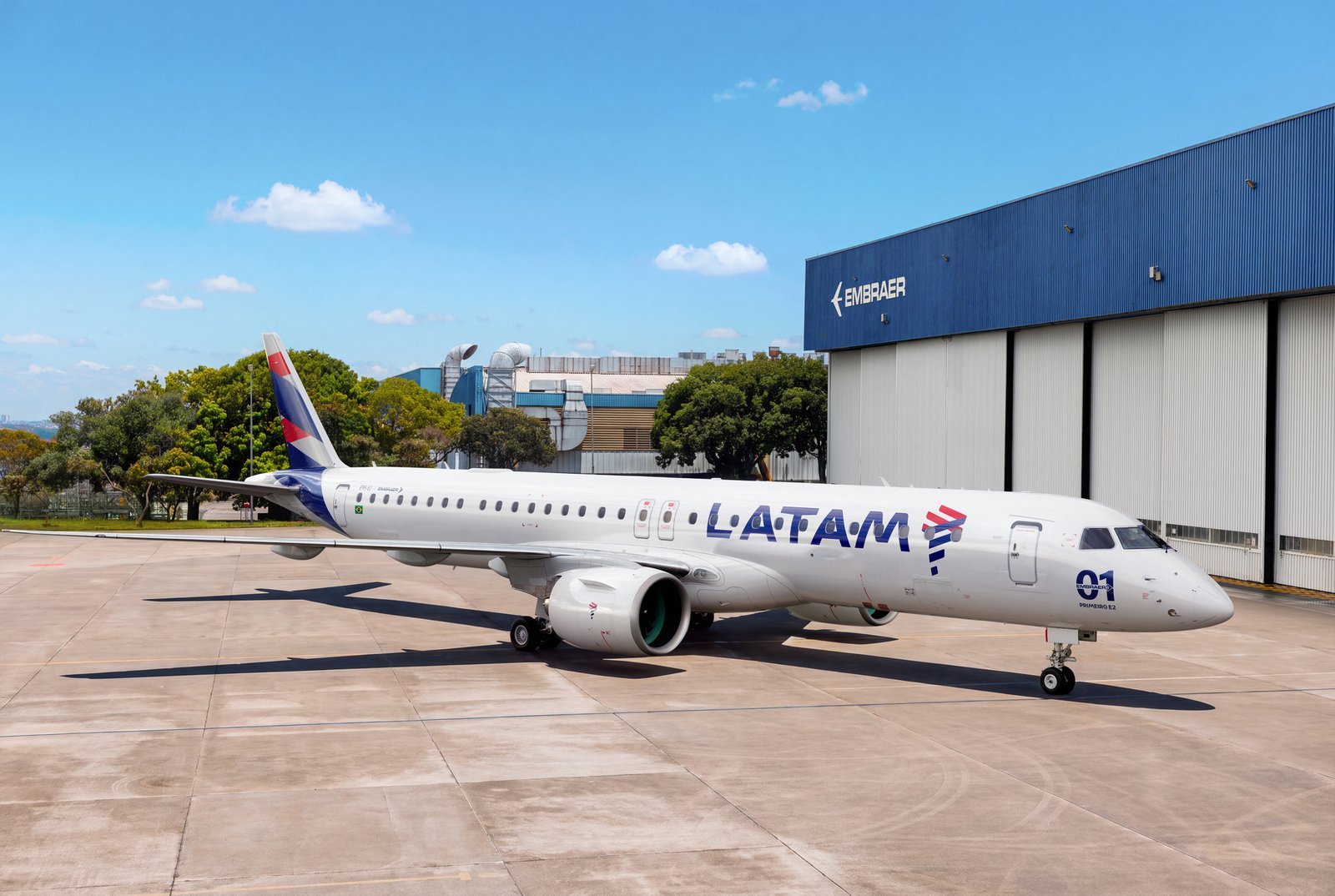
Embraer and LATAM Airlines Group S.A. have signed a Component Pool Program agreement to support the introduction of 24 Embraer E195‑E2 aircraft ordered by the airline. In addition to the 24 firm orders, the LATAM Group also holds 50 purchase…
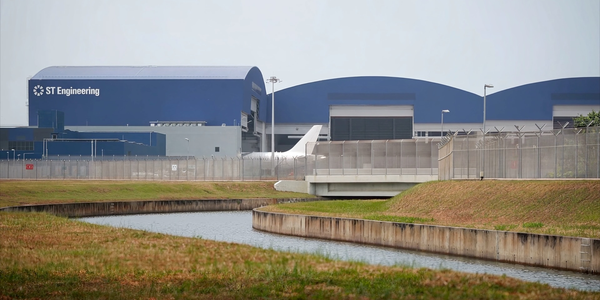
ST Engineering officially opened its new Commercial Aerospace airframe maintenance, repair and overhaul (MRO) facility at Changi Creek, located within Singapore’s Changi Airport, today. As ST Engineering’s fourth airframe MRO site in Singapore, the new facility expands the Group’s MRO capacity in…
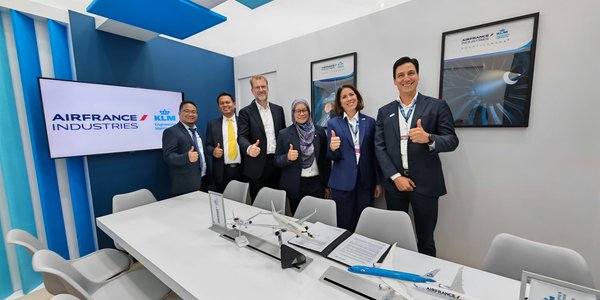
Air France Industries KLM Engineering & Maintenance (AFI KLM E&M) has signed a long-term agreement with Malaysia Airlines Berhad (MAB), the operator of Malaysia Aviation Group’s (MAG) A350 fleet, to provide comprehensive component support for its aircraft. The agreement builds…
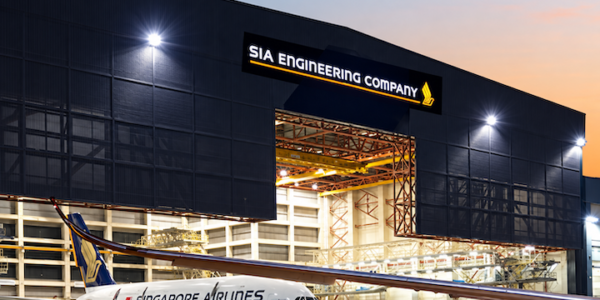
Air India and SIA Engineering Company (SIAEC) are in advanced discussions over wider maintenance cooperation in India, including a possible joint venture. The companies already work together on Air India’s Bengaluru base maintenance facility, but any broader commercial arrangement remains…
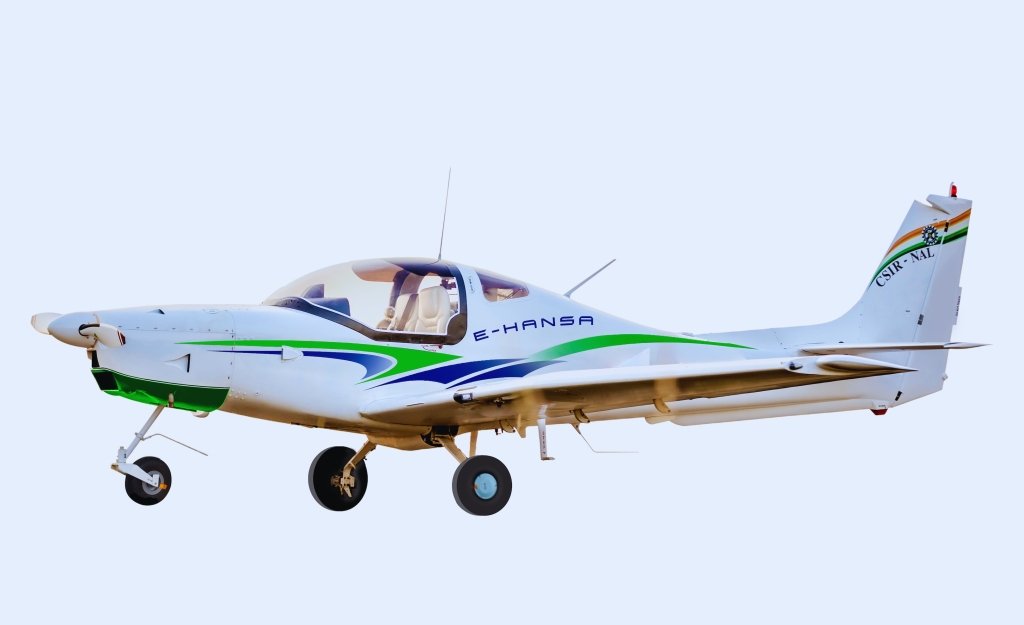
National Aerospace Laboratories (NAL) is advancing work on the E-Hansa Technology Demonstrator, India’s first indigenous electric trainer aircraft, marking a major step in homegrown electric-aviation capabilities.
The project is developing an in-house electric powertrain and composite airframe, expected to make the aircraft nearly 50% cheaper than imported alternatives.
Backed by IIST collaboration and government support for green aviation, the E-Hansa’s powerplant is expected to be tested within a year, with its maiden flight targeted in three to five years.
Injecting dynamism into India’s first attempt to develop an indigenous electric airplane, the Bengaluru-based National Aerospace Laboratories (NAL) has commenced work on an E-Hansa, a trainer aircraft. But the first variant will be a Technology Demonstrator (TD) designed to guide the evolution of an electric aviation ecosystem in the country.
The TD will showcase India’s capability to develop an indigenous electric engine and power plant in India. “The first version will be made to figure out what is to be done. We want to develop the power plant indigenously. Unlike the Hansa-3 and Hansa-NG, we want to make E-Hansa engine in India, an electric one which will come with multiple challenges,” NAL Director Dr. Abhay Anant Pashilkar told Aviation Jeta in an exclusive interaction.
Indigenisation is being pushed to dramatically reduce the costs. By current estimates, the made in India E-Hansa will work out to be about ₹2 crore, about 50% cheaper than a foreign-made equivalent.
The electric aircraft will be built on the upgraded Hansa-NG, featuring advanced glass cockpits for digital displays and enhanced situational awareness, a bubble canopy for improved pilot comfort and panoramic visibility, and electrically operated flaps, all enclosed in a lightweight composite airframe.
In collaboration with NAL, the Thiruvananthapuram-based Indian Institute of Space Science and Technology (IIST) is tasked with the development and technology demonstration of the powertrain for the E-Hansa.
Battery weight challenge
For NAL, the electric aircraft’s battery weight will pose a formidable technological challenge. As Dr Abhay explained:
“Energy density is the critical part. The question is how much energy you can store per kg of the battery weight. Ordinary lead-acid batteries used in automobiles will not work out. Then the Lithium chemistry comes in, but you have to handle them very carefully as it can explode. These are being used in automobiles, but the energy density achieved is not sufficient for airborne operations, as the battery weight starts dominating. The aircraft’s weight-carrying capacity reduces.”
The E-Hansa first variant, he said, will demonstrate that an electric power train can be developed indigenously. “In an internal combustion engine, like in Hansa-3 or the NG, the power train features the propeller, IC engine, fuel pump, etc. Whatever power train we are assembling for the E-Hansa, we will need to test it on the ground. It should be able to withstand many hours of continuous operation without much of a problem.”
Ensuring foolproof safety will be another key priority. “If something fails, there should be a backup like in a UPS. When we present all these concepts to the certification agency, they may allow us to put these on the aircraft and complete the first flight. It is not so simple that you buy an engine, make an airframe, buy the propeller, put in the avionics, test it on the ground and fly,” he said.
Range anxiety was a widespread concern in the early days of electric vehicles before steps were taken to improve the charging infrastructure. As efforts to reduce the aircraft battery weight gain ground, the range dynamics will come into play.
Dr Abhay elaborated: “To address this, we can think of adopting the modular battery model, where the aircraft lands, and the battery is removed and replaced with a new, fully charged one. Some of these ideas have to take shape, and the ground infrastructure too should support it. Only then will this EV revolution in the air take place.”
Hansa-NG avionics & airframe
The E-Hansa will stick with Hansa-NG’s avionics and airframe while entirely reworking the engine. “Then you will have to balance the weight and determine the battery location. Questions on how much to keep and where to keep will have to be addressed. When you replace the fuel tank with the battery, you have to rearrange it in such a way that the balance between the weight and centre of gravity is not disturbed. We are working on all these things now.”
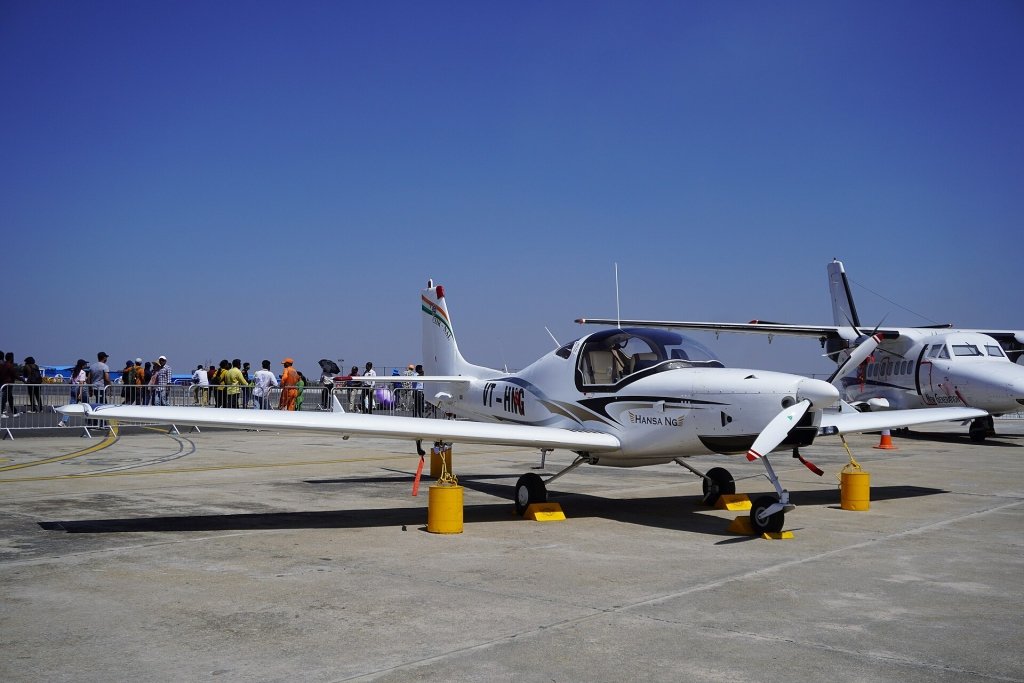
NAL Hansa NG at Aero India 2023. Photo: Wikipedia
The maiden flight of the E-Hansa TD is expected in three to five years, according to the NAL director. Work on designing the test bed has already commenced. He expressed confidence that the power plant could be ready in a year’s time. “By that time, our test rig will be ready, on which we will be testing ready-made motors. We are also making propellers; hope they will also get qualified,” he informed.
Parallel to IIST developing the electric powertrain, an Aeronautics Research and Development Board (AR&DB)-funded project, NAL has started procuring a readymade motor to set up a test rig. Dr Abhay said the focus will inevitably shift to the indigenous powertrain once it is ready.
NAL had started work on a composite lightweight airframe right from the first version of the Hansa. “We have mastered unidirectional and bidirectional composites, even materials that can withstand high temperatures. We have developed different types of resins and fibres that can withstand a certain temperature beyond which they start to lose their strength. It is a tailored material. The resins and fibres have to be made in good quantity. We do all these at NAL, and that’s why it was logical for us to think of Hansa as a first all-composite aircraft. We learnt a lot of things with Hansa and Hansa-3, even before the NG variant,” he explained.
Composite airframe positives
The adoption of a composite airframe has helped NAL considerably reduce the aircraft weight. The processes of co-bonding and co-curing, where multiple parts are cured and bonded together, have negated the need for rivets and fasteners. This resulted in a significant reduction in the number of parts.
Once the TD is ready, NAL will approach the Directorate General of Civil Aviation (DGCA) for clearance as a civil aircraft. A series of flight tests will follow to gain confidence and experience. The flight range will be expanded in phases, and the flight envelope and altitude will be improved.
In May this year, at a monthly review meeting with senior science and technology officials in New Delhi, Union Minister of State for Science and Technology Jitendra Singh had declared that the E-Hansa project was a step towards realising green aviation in India. The project, he said, was aligned to the Centre’s stated focus on clean energy adoption in aviation and broader climate goals.
An independent multimedia journalist based in Bengaluru, Rasheed has authored hundreds of deep-dive features on civil aviation, defence and related topics. His articles have appeared in The Hindu, Deccan Herald, The Times of India and multiple online news platforms. Kappan is also a media trainer and graphic cartoonist