















- Digitalisation in aviation has increased cyber threats, with 64% of 2023 attacks targeting airports.
- Global cybersecurity investments are rising, projected to reach USD 10.9 billion by 2032.
- India and IATA are enhancing aviation cybersecurity through partnerships and strategic initiatives.
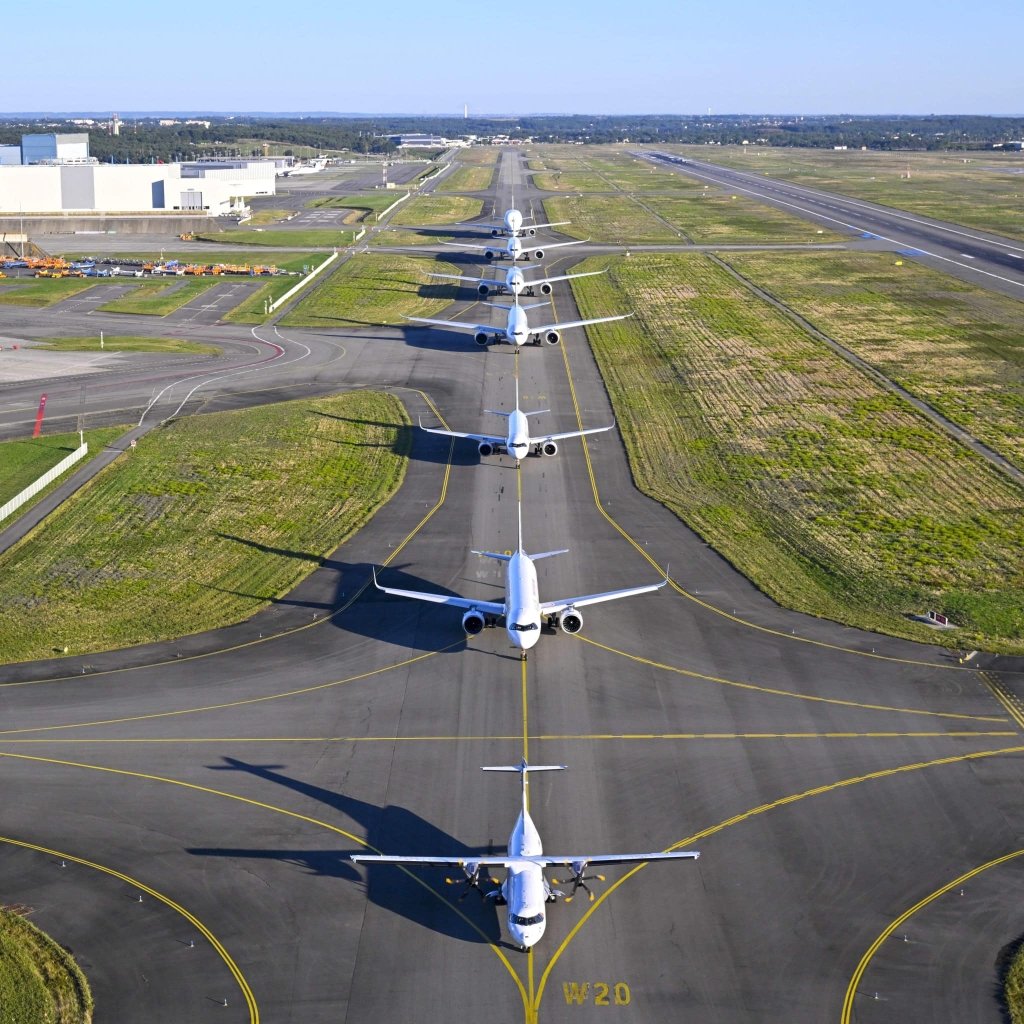
Cyber criminals and terrorists can now pose a serious threat to global aviation due to the increasingly digitalised nature of the industry. In the last 10 years, there has been a dramatic shift away from legacy analogue systems to a digital infrastructure backbone for the industry, ranging from airport reservation and ground handling systems, touchless travel and the aircraft themselves featuring extensive use of digital technologies.
Cyber threats are evolving at a rapid pace around the world, with the number of data breaches increasing every year and several aerospace actors affected by cyberattacks ranging from theft of personal data, to operations disruption and even supply chain corruption. All this has meant that there are far more entry points for cyber-attacks on the global aviation industry, and strict safety measures need to be instituted in order to sustain and assure safety, reliability and resilience.
Delta Air Lines, a major U.S. carrier and the largest airline in the world by revenue, assets, and market capitalisation in mid-July 2024, experienced a significant operational disruption following the 2024 CrowdStrike incident that included the cancellation of over 1,200 flights. “The reality is stark: our aviation industry is under constant threat from cyberattacks, up 74% since 2020. With the aviation sector contributing more than 5% of our GDP, USD 1.9 trillion in total economic activity, and supporting 11 million jobs, we have to wake up and take these aviation cyber threats seriously,” said U.S. Senator Maria Cantwell at a September 18, 2024, Congressional Hearing.
As per a report by HTF Market Insights released this March, the Global Aviation Cyber Security Industry market was projected to grow from USD 4.3 Billion in 2024 to USD 10.9 Billion by 2032, at a CAGR of 14.1% from 2025 to 2032. This is not surprising as airlines and the aviation industry as a whole are now prioritising investments in upgrading their cybersecurity infrastructure. A U.S. cybersecurity in aviation report released by Bridewell last year stated that 55% of aviation organisations experienced a ransomware attack in the previous 12 months and stated that “Accidental loss or disclosure of data was ranked as the top threat to civil aviation.”
An Airbus case study released in February this year stated that the aviation industry experienced a significant increase in cyberattacks in 2023, with airports being the primary targets. Out of 764 documented incidents, 486 attacks—accounting for 64%—were directed at airport facilities. To cater for these growing threats, in August 2023, the U.S. Federal Aviation Administration (FAA) introduced new cybersecurity regulations that mandated that airplane manufacturers and operators implement stringent measures to safeguard against hacking and other cyber threats that could compromise flight safety.
“Many other areas of the aircraft ecosystem can be compromised by a cyberattack and need to be managed accordingly. For several years now, the rise of a more connected, digital aircraft has increased risks of cyberattacks. Even though statistically less common, cyberattacks on the connectivity items of the aircraft are regarded as the most critical and impactful threats, prompting the need to mitigate the risk of a cybersecurity breach in this area,” the Airbus case study stated. An insight is also provided into the costs of such breaches and for example, a 1 hour operations disruption at a large airport at peak time has an estimated cost of USD 1 million. In general, the cost of a cyberattack is estimated at around USD 1 million.
India Stepping up Cybersecurity Efforts
India is also taking steps to ensure greater cyber security measures within its own aviation networks. In December 2024, the Ministry of Electronics and Information Technology announced a partnership with Three D Integrated Solutions Ltd. (Three DiS) to establish a Center of Excellence for advancing India’s airport systems and security. “Strategic Partnership to strengthen Indian market in Airport Navigation, Communication, and Security Systems under Atmanirbhar Bharat Vision,” the Ministry stated.

As part of this endeavour, Three DiS and the Society for Applied Microwave Electronics Engineering and Research (SAMEER), a premier R&D organisation under the Ministry of Electronics and Information Technology (MeitY), will collaborate to address key challenges in India’s fast-growing market for strategic and civilian airport navigation, communication systems, and security-related equipment.
Such Government led initiatives are welcome. In an April 2025 article, Shirin Pathare, Chief Relationship Officer [Gov], 63SATS Cybertech, quoted a CyberPeace Foundation study conducted between June and August 2024, which highlighted a significant surge in cyber threats directed at the Indian aviation sector. “The study unearthed a barrage of brute-force attacks targeting various protocols, including Telnet, MySQL, HTTP, and FTP. What’s particularly unsettling is the global origin of a significant portion of these attacks, indicating a concerted and potentially sophisticated effort to probe and potentially compromise our aviation systems.”
He stated several factors contributing to the growing interest from cyber adversaries in the aviation domain, such as aviation being designated as a critical infrastructure service, the vast amounts of sensitive passenger data handled by airlines and airports, an intricate web of systems connecting aircraft, airports, air traffic control, and various service providers. He points out that while “the DGCA has issued cybersecurity guidelines, consistent and comprehensive implementation across all stakeholders – airlines, airports, air navigation service providers, and ground handling agencies – remains a challenge.” With large portions of India’s aviation infrastructure being modernised, there remain many outdated systems and software in operation (particularly at airports), some of these could provide a window of opportunity for cyber criminals and terrorists.
As per Pathare, the rising tide of cyberattacks demands a proactive and multi-faceted approach, including a strengthened regulatory framework with a continuous review and enhancement of cybersecurity regulations to keep pace with emerging threats and global best practices along with the allocation of adequate resources for cybersecurity infrastructure upgrades, advanced threat detection systems, and skilled cybersecurity professionals. He also stated that it was important to foster a culture of information sharing and collaboration between government agencies, industry stakeholders, and cybersecurity experts, along with the creation of comprehensive cybersecurity awareness and training programs for all personnel, emphasising the importance of vigilance and best practices.
In March this year, the Ministry of Home Affairs (MHA) announced that it had strengthened cybercrime infrastructure through various initiatives, such as the Indian Cyber Crime Coordination Centre (I4C), cyber fraud mitigation centres, Suspect Registry, Cyber-Commando wing, and a National Cyber Threat Intelligence system, to proactively counter digital threats.
IATA at the Forefront of Cybersecurity
One of the most important industry wide initiatives is the International Air Transport Association (IATA) supported Aviation Cyber Security Strategy, whose work is work is guided by the Security Advisory Council (SAC) and Digital Transformation Advisory Council (DTAC). The IATA Aviation Cyber Security Strategy is primarily aimed at enhancing the industry’s capability to address ever-evolving cyber threats and focusses on three main principles; Communities of Trust: the development of communities of trust among the different stakeholders to tackle complex challenges over aviation cyber security and resilience; Information Exchange, Standards and Recommended Practices: the articulation and coordination of different activities and forums in support of better awareness and information exchange as well as the development of standards and recommended practices and guidance material and Center of Excellence: establishment of strong collaborations for increased knowledge and cross-pollination of ideas.
The IATA introduced the Aviation Cybersecurity Library and published relevant guidance materials in March 2023 to help the industry in its effort to increase posture and maturity.
It had earlier launched its Aviation Cybersecurity Strategic Partnership package in 2021 to facilitate exchanges and collaboration among cybersecurity organisations and Subject Matter Experts (SME). Moreover, IATA also entered into an MoU with the Consortium for Research and Innovation in Aerospace in Quebec (CRIAQ), the Israeli National Cyber Directorate (INCD), and EUROCONTROL to support the airline industry in the area of aviation cybersecurity.
The IATA’s last Aviation Cyber Threat eXchange (3CTX) Open Forum was held in Montreal last October wherein airlines exchanged and shared challenges over 3rd Party Cybersecurity Assurance Program as well as participated in Tabletop eXercise (TTX), with industry stakeholders, including ANSPs, OEMS and systems providers, academia and researchers as well as the broader cybersecurity community.
As per IATA, the overall goal of the 3CTX Open Forum is two-fold: firstly, to bring cybersecurity experts closer to civil aviation and, secondly, to increase their knowledge of the civil aviation ecosystem. IATA is involved in the aviation cybersecurity work at ICAO, including the Cybersecurity Panel (CYSECP), currently contributing to the Working Group on Cybersecurity Threat and Risks (WGCTR), and following the work of the Working Group on Cybersecurity Guidance Material (WGCGM).
It will also continue to support the yearly revision of the Cybersecurity Action Plan (CyAP), establishing the roadmap over the revision of the ICAO Annexes and documents relative to cybersecurity, as well as a study on international legal instruments. IATA is also involved in the ICAO Trust Framework Panel (TFP), where it closely follows the work of the following groups: Identity Management, Information Security and Trust Framework Considerations. IATA directly contributes to the EASA European Coordination Strategic Platform (ESCP) and the Rulemaking Task (RMT.0720) over the Management of information security risks, for which the EASA Opinion 03/2021 was issued in June 2021 and was adopted in June 2022 as the Commission Delegated Regulation (EU) 2022/1645.