











SNETA Farman Goliath North Sea Ditching (26 August 1921): One of Early Commercial Aviation’s Tragic Mysteries

SNETA Farman Goliath North Sea Ditching (26 August 1921): One of Early Commercial Aviation’s Tragic Mysteries
Accident Summary
| Particular | Details |
| Date | 26 August 1921 |
| Aircraft | Farman F.60 Goliath |
| Operator | Société Nationale d’Entreprises de Transports Aériens (SNETA) |
| Accident Type | Ditching (Emergency water landing) |
| Location | North Sea |
| Flight Type | Scheduled international passenger service |
| Route | England to Continental Europe (North Sea crossing) |
| Occupants | Crew on board (exact number not definitively recorded) |
| Fatalities | 2 (Both crew members missing and presumed dead) |
| Survivors | Not fully documented in surviving records |
| Aircraft Damage | Substantial; aircraft recovered from the sea |
| Probable Cause | Unknown (possibly mechanical failure or adverse weather) |
| Historical Significance | One of the earliest commercial aviation ditching accidents in Europe |
SNETA Farman Goliath North Sea Ditching (26 August 1921): One of Early Commercial Aviation’s Tragic Mysteries
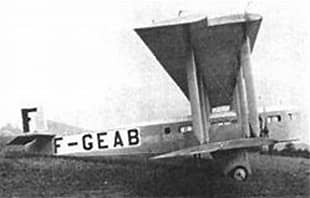
On 26 August 1921, one of the earliest recorded commercial aviation accidents occurred when a SNETA-operated Farman F.60 Goliath was forced to ditch into the North Sea during a scheduled international flight between England and continental Europe. Although the aircraft was eventually recovered from the sea, the tragedy resulted in the disappearance of both crew members, making it one of the enduring mysteries of early commercial aviation.
Background
The Farman F.60 Goliath was among the world’s first aircraft specifically adapted for commercial passenger transport. Originally designed as a heavy bomber during the First World War, the aircraft was converted into an airliner after the war ended. With its enclosed passenger cabin and twin-engine configuration, the Goliath became one of the pioneering aircraft that helped establish Europe’s first scheduled airline services.
The aircraft was operated by Société Nationale d’Entreprises de Transports Aériens (SNETA), a French airline that connected several European cities during the early 1920s. At the time, commercial aviation was still in its infancy. Flights were conducted with limited navigation equipment, unreliable weather forecasting, and engines that were far less dependable than those found in modern aircraft.
The Accident
On 26 August 1921, the Farman Goliath departed on a scheduled international service requiring a crossing of the North Sea. During the flight, the crew encountered difficulties that forced them to carry out an emergency ditching on the water.
The precise sequence of events remains uncertain because few official records survived. Historians believe the aircraft may have experienced a mechanical problem or encountered poor weather conditions, both common hazards during the early years of aviation. Crossing large stretches of water was especially dangerous since aircraft carried limited emergency equipment and rescue operations were often slow.
Following the ditching, search teams located and recovered the aircraft from the sea. Unfortunately, both crew members were never found and were presumed to have drowned. The available historical records do not clearly identify any passenger fatalities, and documentation from the period remains incomplete.
Investigation
Accident investigations in the early 1920s were significantly different from those conducted today. There were no cockpit voice recorders, flight data recorders, or sophisticated forensic techniques. Investigators depended largely on examining the recovered wreckage, collecting eyewitness accounts, reviewing maintenance records, and studying weather conditions.
Although the aircraft was recovered, the absence of the crew and the effects of prolonged exposure to seawater prevented investigators from establishing a definitive cause. Consequently, the accident has remained officially unresolved, with mechanical failure and adverse weather considered the most likely contributing factors.
Historical Significance
The North Sea ditching serves as an important reminder of the risks associated with the earliest era of commercial aviation. Airlines were pioneering international passenger travel at a time when aviation technology was still developing rapidly. Pilots routinely operated without radio communication, modern navigation aids, or comprehensive weather information.
The accident also highlighted the dangers of overwater operations and reinforced the need for improvements in aircraft reliability, pilot training, emergency procedures, and international search-and-rescue coordination. Lessons learned from early incidents such as this helped shape future aviation safety standards.
Legacy
Although overshadowed by later aviation disasters, the SNETA Farman Goliath North Sea ditching of 26 August 1921 remains a notable event in aviation history. It illustrates both the remarkable ambition and the considerable dangers faced by the pioneers of commercial air transport.
Today, the incident stands as a reminder of how far aviation safety has evolved over the past century. Modern aircraft benefit from advanced engineering, sophisticated navigation systems, continuous communication, and international safety regulations—developments made possible in part by learning from accidents like the North Sea ditching of 1921.

Ajeet Yadav is an aviation enthusiast covering airline news, airports, aircraft, and industry developments through well-researched and reliable reporting.