












BOAC Flight 777 The Tragic Downing Over the Bay of Biscay
The BOAC Flight 777 disaster, which happened on 1 June 1943, was one of the most tragic events involving a civilian passenger aircraft during the Second World War. The aircraft was a Douglas DC-3, operated by the British Overseas Airways Corporation (BOAC) on a scheduled flight from Lisbon, Portugal, to Whitchurch Airport near Bristol, England.
During the flight, the unarmed civilian aircraft was attacked by German Junkers Ju 88 fighters over the Bay of Biscay. The DC-3 was badly damaged and crashed into the sea. All 17 people aboard were killed, including the famous British actor Leslie Howard, known internationally for his role as Ashley Wilkes in Gone with the Wind.
The tragedy became particularly famous because of the mystery surrounding why German aircraft attacked a clearly scheduled civilian flight. For many years, people believed that the attack may have been connected with Leslie Howard or with a secret British mission. Later research involving German pilots suggested that the aircraft may have been mistaken for an Allied military aircraft. The exact circumstances have remained an important subject in aviation and wartime history.
BOAC During the Second World War
The British Overseas Airways Corporation, or BOAC, was Britain’s main long-distance airline during the Second World War.
It had been created in 1939 through the merger of Imperial Airways and British Airways Ltd.
BOAC operated important international routes during the war.
Its aircraft carried:
- Passengers
- Government officials
- Business representatives
- Important documents
- Diplomatic personnel
- Other essential travelers
Flying during wartime was very different from normal commercial aviation.
Civilian aircraft had to operate around military activity, restricted areas, enemy aircraft, and changing flight procedures.
The Aircraft – Douglas DC-3
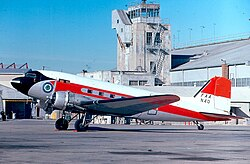
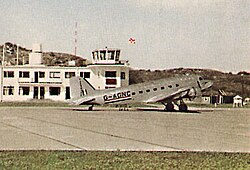
The aircraft used for Flight 777 was a Douglas DC-3, registered G-AGBB and known as Ibis.
The DC-3 was one of the most successful passenger aircraft of the period.
It was a twin-engine aircraft with a strong reputation for reliability.
The aircraft was capable of carrying passengers over considerable distances.
During the war, many DC-3 aircraft were used by both civilian and military organizations.
The BOAC aircraft was being operated as a civilian passenger aircraft.
The Flight From Lisbon
On 1 June 1943, the aircraft was scheduled to fly from Lisbon to Whitchurch, near Bristol.
Lisbon was an important location for wartime aviation.
Portugal was officially neutral during the Second World War.
Because of its neutral status, Lisbon became an important point for travel between Britain and other countries.
People could travel through Portugal when many other international routes were dangerous or impossible.
The Lisbon-Britain route was therefore strategically important.
The Passengers
There were 13 passengers and four crew members aboard the aircraft, making a total of 17 people. All 17 were killed.
One of the passengers was Leslie Howard, a well-known British actor and director.
Howard was famous for playing Ashley Wilkes in the 1939 film Gone with the Wind.
He was also involved in British wartime propaganda and public speaking.
His presence aboard the aircraft later attracted considerable attention to the accident.
Leslie Howard
Leslie Howard was more than a famous actor.
During the war, he participated in activities supporting the British war effort.
He traveled internationally and gave speeches.
His work made him a recognizable British public figure.
When news emerged that he had died aboard Flight 777, newspapers around the world reported the tragedy.
His death also encouraged speculation about whether the German attack had been deliberate.
Departure From Lisbon
The aircraft was originally scheduled to leave Lisbon at approximately 7:30 a.m.
The departure was delayed by a few minutes.
According to accounts of the flight, Leslie Howard had left the aircraft to collect a package that he had forgotten at customs.
The aircraft eventually departed at approximately 7:35 GMT.
The crew then began the long journey north toward Britain.
Crossing the Atlantic
The aircraft flew north-west from Portugal toward Britain.
Much of the journey involved flying over the Atlantic and the Bay of Biscay.
The Bay of Biscay was a dangerous area during the war.
German submarines operated in the Atlantic.
German aircraft also conducted patrols and attacks.
Allied aircraft regularly searched for German submarines.
Because of this military activity, civilian aircraft were at risk even when they were following scheduled routes.
The Bay of Biscay
The Bay of Biscay lies between the northern coast of Spain and western France.
It opens into the Atlantic Ocean.
During the Second World War, it became an important military area.
German aircraft operated from bases in occupied France.
Allied aircraft also operated over the region.
The skies above the Bay of Biscay could therefore be dangerous for any aircraft.
Radio Contact
The crew of Flight 777 maintained radio contact with the ground during the journey.
Whitchurch received regular information from the aircraft.
At about 10:54, the ground station received a final message reporting that the aircraft was being followed and attacked.
The reported position was approximately 46°30′N, 9°37′W, roughly 200 miles north-west of the Spanish coast.
This was the last known communication from the aircraft.
The German Fighters
The attacking aircraft were Junkers Ju 88 aircraft operated by the German Luftwaffe.
The Ju 88 was a fast and versatile German aircraft.
It could be used as a bomber, reconnaissance aircraft, or fighter.
The aircraft involved in the attack were heavily armed.
They were operating over the Bay of Biscay during a period of intense German anti-submarine activity.
The Attack
The German aircraft approached the BOAC DC-3.
The civilian aircraft had little ability to defend itself.
It was not a military aircraft.
The Ju 88s attacked it with cannon and machine-gun fire.
The DC-3 was severely damaged.
One account of the attack states that the aircraft’s left engine and wing caught fire.
The damaged aircraft began to lose control.
The radio operator sent a desperate message reporting the attack.
Soon afterward, the aircraft crashed into the Bay of Biscay and sank.
No Survivors
There were no survivors.
The aircraft crashed into the sea far from land.
The ocean made rescue extremely difficult.
The loss of all 17 people was a terrible tragedy.
At the time, there was no practical way for a damaged civilian aircraft in the middle of the Bay of Biscay to receive immediate rescue.
The News Reaches Britain
When the aircraft failed to arrive, concern quickly spread.
BOAC eventually announced that the aircraft was overdue and presumed lost.
The loss of Leslie Howard made the story particularly prominent in the British and international press.
People wanted to know why a civilian passenger aircraft had been attacked.
The circumstances appeared mysterious.
Why Was the Aircraft Attacked?
One of the biggest questions surrounding Flight 777 was why German fighters would attack a civilian aircraft.
The aircraft was flying a scheduled route.
It was not carrying weapons.
It was not a military bomber.
It was a civilian DC-3.
Several theories were developed.
One theory suggested that German intelligence believed Winston Churchill might be aboard the aircraft.
Another theory suggested that Leslie Howard himself had been targeted.
Other explanations suggested that the Germans simply mistook the aircraft for an Allied military aircraft.
The Churchill Theory
One popular theory claimed that the Germans believed British Prime Minister Winston Churchill was aboard the flight.
Churchill was a major German target.
If German intelligence believed that he was traveling on the aircraft, attacking it would have been a significant military operation.
However, there is no firm evidence that Churchill was actually aboard.
Historical research has therefore questioned this explanation.
The Leslie Howard Theory
Another theory focused on Leslie Howard.
Howard was a famous actor and an active supporter of Britain during the war.
Some writers suggested that German intelligence wanted to kill him because of his propaganda activities.
His fame made the theory attractive.
However, later evidence from German pilots involved in the attack suggested that they did not know Leslie Howard was aboard the aircraft.
The Wolfram Theory
Another explanation has focused on Charles James, a British businessman and expert connected with the important wartime trade in wolfram, also known as tungsten.
Tungsten was strategically valuable because it was used in military manufacturing.
Some researchers have suggested that passengers connected with wartime intelligence or trade may have been of interest to German intelligence.
However, these theories remain debated.
German Pilot Accounts
Decades after the accident, researchers interviewed some of the German pilots involved.
According to accounts presented by historian Christopher H. Goss, the German pilots said that they did not know they were attacking a civilian airliner.
They reportedly believed the aircraft was an Allied military aircraft.
The German aircraft had been searching for German U-boats.
Bad weather affected their operation.
When the U-boats could not be located, the fighters continued searching the area.
The civilian DC-3 was then spotted.
The Mistaken Identity Explanation
According to this later German account, the Ju 88 pilots saw the aircraft at a distance.
Because of the conditions and the aircraft’s appearance, they believed it was an enemy aircraft.
The attack began.
Only after the attack was underway did the German formation leader reportedly recognize that the aircraft was a civilian DC-3.
By then, however, the aircraft had already suffered fatal damage.
The German pilots reportedly stopped their attack after recognizing the aircraft.
Historical Debate
The mistaken-identity explanation has been accepted by some researchers but questioned by others.
This is understandable.
The attack occurred during wartime.
Records from the period can be incomplete.
Different witnesses remembered events differently.
German military records and later interviews provide useful information, but they do not necessarily answer every question.
Therefore, historians continue to discuss the exact reason for the attack.
The Mystery of Flight 777
The mystery surrounding the flight has helped make it one of the best-known wartime aviation incidents.
If the aircraft had simply suffered a mechanical accident, it might have become a relatively obscure aviation event.
Instead, it was attacked by enemy fighters.
The presence of a famous actor aboard created further public interest.
The possible connection with British intelligence and wartime diplomacy made the story even more fascinating.
Leslie Howard’s Final Journey
Leslie Howard’s death became one of the most memorable aspects of the accident.
He had been a major Hollywood and British film star.
His performances had made him internationally famous.
His death during a civilian flight was shocking.
He was only 50 years old.
His career was interrupted at a time when he was also contributing to Britain’s wartime efforts.
The Effect on BOAC
The loss of Flight 777 demonstrated the dangers faced by BOAC crews.
The airline had to consider how civilian aircraft could safely operate near areas of military activity.
After the attack, BOAC changed some of its procedures.
Flights from Lisbon were later routed differently and operated under the cover of darkness.
This reflected the seriousness of the danger.
Search and Rescue
The day after the attack, an Allied aircraft searched the area.
A Short Sunderland flying boat from No. 461 Squadron of the Royal Australian Air Force searched near the location where Flight 777 had gone down.
Sunderland itself encountered German Ju 88 fighters during the search.
This shows how dangerous the Bay of Biscay remained.
Even aircraft attempting to search for survivors could come under attack.
The Bay of Biscay War
The Bay of Biscay was a major area of the Atlantic war.
German U-boats used the Atlantic to attack Allied shipping.
German aircraft protected and searched for submarines.
Allied aircraft hunted the U-boats.
This created a dangerous environment in which civilian aircraft could become involved in military operations.
Flight 777 was caught in this wider conflict.
Aviation Safety in 1943
Modern aviation safety systems did not exist in 1943.
Aircraft did not have modern transponders.
There was no satellite navigation.
There were no digital flight-management systems.
There was no modern traffic-alert system.
Civilian aircraft operating near wartime military aircraft were therefore much more vulnerable.
The Importance of Identification
One major lesson from Flight 777 is the importance of identifying aircraft correctly.
Modern military and civilian aviation uses many systems to identify aircraft.
These include radio communication, transponders, flight plans, radar, and identification procedures.
In wartime, however, identification can become extremely difficult.
An aircraft may be detected before its identity is known.
The Role of Communication
Communication was also extremely important.
Flight 777 remained in contact with Whitchurch until shortly before the attack.
The final radio message provided valuable evidence about what happened.
The message showed that the crew knew they were being followed.
It also indicated that the aircraft was under attack.
This final communication became one of the most important pieces of information about the accident.
The Human Side of the Disaster
The technical story is important, but the human story is even more important.
Seventeen people were aboard the aircraft.
They included four crew members and thirteen passengers.
Each passenger had a personal life and family.
The crew members were performing their normal duties.
None expected that their scheduled journey would become a wartime tragedy.
Remembering the Victims
Among the victims was Leslie Howard, but the other sixteen people should not be forgotten.
The accident is sometimes remembered mainly because of the famous actor.
However, every person aboard Flight 777 had equal value.
They were passengers and aviation professionals who lost their lives in an international wartime tragedy.
Impact on Aviation History
Flight 777 is important because it shows how closely civilian aviation and military operations could become connected during the Second World War.
An aircraft could be operating a normal passenger service and still become involved in military events.
This was especially true in areas such as the Bay of Biscay.
The incident also illustrates the dangers of operating regular international flights during wartime.
A Famous Aviation Mystery
The Flight 777 disaster remains one of the most discussed aviation mysteries of the Second World War.
For many years, people wondered whether the attack had been deliberate.
Some believed that Leslie Howard was the target.
Others believed Churchill was the intended passenger.
Later research suggested a simpler explanation: the German pilots may have mistaken the civilian DC-3 for an Allied military aircraft.
The available evidence does not completely eliminate all debate.
Legacy of the DC-3
The Douglas DC-3 itself went on to become one of the most successful aircraft in aviation history.
Thousands were produced.
The aircraft served civilian and military operators around the world.
It was valued for its reliability, range, and versatility.
The loss of one DC-3 during the war did not change the aircraft’s remarkable historical reputation.
The End of the Flight
The last moments of Flight 777 were extremely brief.
The crew reported that they were being followed.
The German fighters opened fire.
The aircraft was damaged.
The crew attempted to continue flying.
But the damage was too severe.
The DC-3 fell into the sea.
The aircraft sank in the Bay of Biscay, taking all 17 people aboard with it.
Lessons From the Disaster
Several important lessons can be taken from Flight 777.
First, civilian aircraft can become vulnerable when operating near military zones.
Second, accurate aircraft identification is essential.
Third, wartime flight routes must take military activity into account.
Fourth, communication can provide critical information during an emergency.
Finally, aviation safety requires cooperation between civilian and military organizations.
How Aviation Changed After the War
The Second World War accelerated many aviation technologies.
Radar became more advanced.
Aircraft navigation improved.
Radio systems became more reliable.
Air traffic control developed.
Aircraft became faster and more capable.
International aviation regulations also became more organized.
These changes helped make commercial aviation much safer.
Modern Air Travel
A passenger flying internationally today has access to technology that the crew of Flight 777 could not have imagined.
Modern aircraft use satellite navigation.
They communicate through advanced radio and data systems.
Air traffic controllers can track aircraft.
Aircraft can transmit their identity and position.
Weather systems provide detailed information.
Military and civilian aircraft also operate under carefully defined procedures.
Remembering 1 June 1943
The date 1 June 1943 remains an important date in British aviation history.
BOAC Flight 777 was not a military aircraft.
It was a scheduled civilian passenger flight.
Its destruction showed how dangerous the wartime skies could be.
The tragedy affected families in Britain and other countries.
It also became a lasting symbol of the risks faced by civilian air travelers during the Second World War.
Conclusion
The BOAC Flight 777 disaster of 1 June 1943 was one of the most tragic events in wartime commercial aviation.
The Douglas DC-3, known as Ibis, was flying from Lisbon to Whitchurch near Bristol when it was intercepted over the Bay of Biscay by German Junkers Ju 88 fighters. The aircraft was attacked, severely damaged, and crashed into the sea. All 17 people aboard were killed.
The death of the famous actor Leslie Howard made the tragedy internationally famous. His presence also led to many theories about why the aircraft had been attacked.
For decades, some people believed that German forces had deliberately targeted the aircraft because they thought important British figures might be aboard. Other theories connected the attack with Howard’s wartime activities or British intelligence.
Later research involving German pilots suggested that the Ju 88 crews may have mistaken the civilian DC-3 for an Allied military aircraft. According to this account, the German aircraft were conducting operations connected with the U-boat war in the Bay of Biscay and did not initially realize that they had encountered a civilian airliner.
The exact circumstances remain a subject of historical discussion.
What is certain is that seventeen people lost their lives.
The accident also demonstrated the enormous risks of civilian aviation during wartime. The Bay of Biscay was an active military area, and civilian aircraft had to operate in skies filled with submarines, fighters, bombers, and reconnaissance aircraft.
The tragedy helped demonstrate the importance of safe flight routes, aircraft identification, communication, and coordination between civilian and military aviation.
Today, modern aircraft have advanced navigation, radar, communication, tracking, and warning systems. Civilian aircraft operate under strict procedures designed to prevent them from becoming involved in military operations.
The people aboard Flight 777 did not have these protections.
The story of BOAC Flight 777 is therefore more than the story of an aircraft being shot down. It is a story about war, aviation, human loss, uncertainty, and the development of aviation safety.
The seventeen passengers and crew members should be remembered not simply as names in an accident report, but as people whose lives ended during one of the most dangerous periods in modern history.
Their story remains an important part of the history of commercial aviation and a reminder of the terrible risks faced by civilian travelers during the Second World War.

Ajeet Yadav is an aviation enthusiast covering airline news, airports, aircraft, and industry developments through well-researched and reliable reporting.