


















Eastern Air Lines Flight 21 Crash 26 February 1941
The Eastern Air Lines Flight 21 crash was a tragic aviation accident that happened on 26 February 1941 near Atlanta, Georgia, United States. The aircraft was a Douglas DC-3 operated by Eastern Air Lines. It was carrying passengers and crew on a scheduled flight from New York to Brownsville, Texas, with several stops along the way.
The aircraft crashed while approaching Candler Field, the airport serving Atlanta at the time. There were 16 people aboard, including 13 passengers and three crew members. Eight people died and eight survived. Among the survivors was Eddie Rickenbacker, the famous World War I flying ace and president of Eastern Air Lines.
The accident became an important event in American aviation history because investigators found that an incorrectly set altimeter was a major factor. The investigation also identified weaknesses in cockpit procedures. These findings helped show why careful instrument checks and standardized cockpit procedures are essential for safe flying.
Eastern Air Lines
Eastern Air Lines was one of the important American airlines during the early development of commercial aviation.
During the 1930s and early 1940s, the airline operated routes across the eastern and southern United States. It carried passengers, mail, and cargo between major cities.
Air travel was becoming more popular, and aircraft such as the Douglas DC-3 made commercial flying faster and more practical.
Eastern Air Lines had experienced pilots and modern aircraft for its time. However, aviation technology in 1941 was still developing, and pilots depended heavily on their instruments, radio communication, weather reports, and personal judgment.
The Aircraft
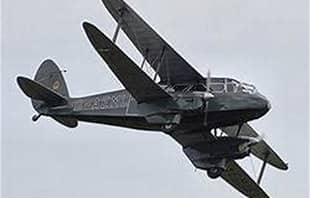
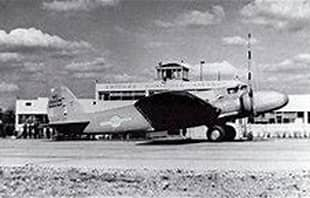
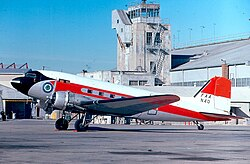
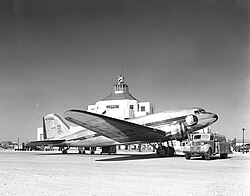
Flight 21 was operated by a Douglas DC-3/DST-318A, registration NC28394. The aircraft was part of the famous DC-3 family.
The DC-3 was one of the most successful aircraft designs of the 1930s.
It had two engines and was designed to carry passengers over relatively long distances. It was faster and more comfortable than many earlier passenger aircraft.
The DC-3 became a major part of American commercial aviation. During the Second World War, military versions of the aircraft were also used extensively.
The Flight Route
Eastern Air Lines Flight 21 was scheduled to travel from New York to Brownsville, Texas.
Its planned route included stops at:
- New York
- Washington, D.C.
- Atlanta
- New Orleans
- Houston
- Brownsville
The aircraft departed from the New York area during the evening of 26 February 1941.
It first traveled toward Washington and then continued south toward Atlanta. The flight was expected to continue toward Texas after the Atlanta stop.
Weather Conditions
Weather became an important part of the accident.
The weather information available to the crew indicated that conditions would become worse as the aircraft traveled south.
The forecast for Atlanta included an overcast sky, light rain, fog, and a lowering ceiling. The Civil Aeronautics Board’s investigation later examined these conditions in detail.
Flying at night in fog and rain was much more difficult than flying in clear weather.
Modern aircraft have sophisticated weather radar and navigation systems. In 1941, pilots had far fewer tools.
Approach to Atlanta
At approximately 11:38 p.m. Central Standard Time, Flight 21 contacted the Eastern Air Lines operator in Atlanta.
The crew reported that it had passed the Stone Mountain reporting point and was beginning its descent.
The company operator gave the crew the current weather information and the altimeter setting for Candler Field.
The aircraft then communicated with the Atlanta control tower. The crew reported that it was making an approach. Later, the aircraft reported its position near the Atlanta radio range station.
Everything appeared to be progressing toward a normal landing.
But the aircraft was actually lower than the crew believed.
What Is an Altimeter?
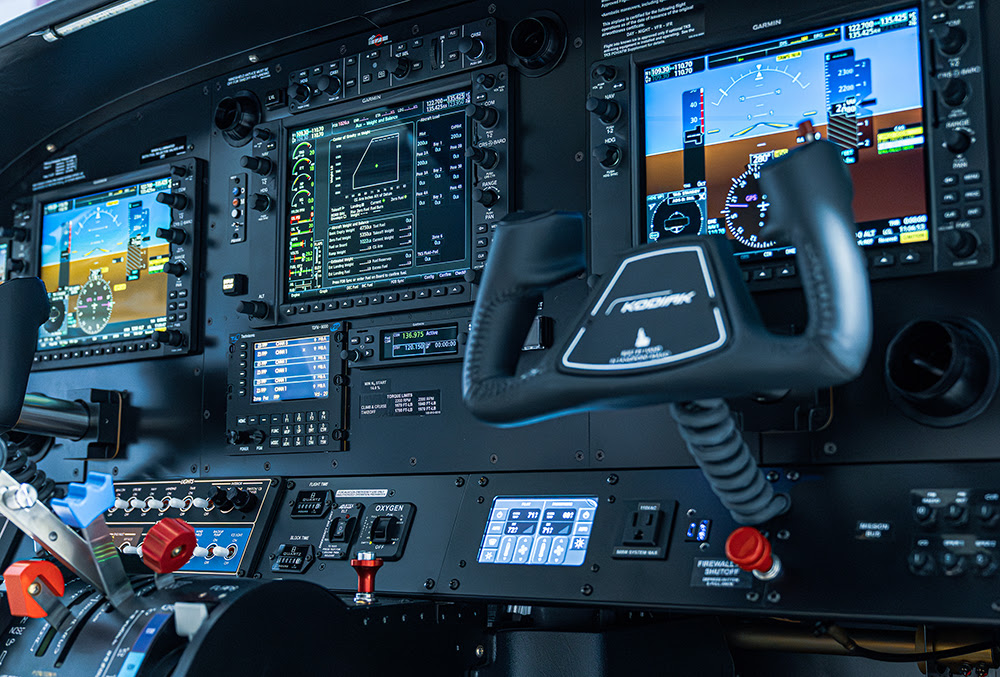
An altimeter is one of the most important instruments in an aircraft.
It tells the pilot how high the aircraft is above a reference level.
An altimeter works by measuring atmospheric pressure.
Because atmospheric pressure changes with weather and location, pilots must set the instrument correctly.
If the wrong pressure setting is used, the altimeter can display an incorrect altitude.
Even a relatively small error can be dangerous when an aircraft is close to the ground.
The Incorrect Setting
After the crash, investigators examined the aircraft’s instruments.
They found that the approach altimeter was set to 29.92 inches of mercury.
The correct setting for Candler Field was 28.94 inches.
This difference was approximately one inch of mercury. The Civil Aeronautics Board determined that this error could produce a significant difference between the altitude shown on the instrument and the aircraft’s actual altitude.
The company operator had transmitted the correct setting to the aircraft earlier in the approach.
One of the pilots acknowledged receiving it.
However, the approach altimeter apparently was not correctly adjusted.
The Final Approach
The aircraft continued toward the airport.
Because of the incorrect altimeter setting, the crew believed the aircraft was at a higher altitude than it actually was.
The weather was poor.
It was nighttime.
Visibility was limited.
The aircraft was descending toward Candler Field.
The combination of darkness, fog, rain, and the incorrect instrument setting created a dangerous situation.
The Crash
The aircraft was flying in the area southeast of Atlanta.
Investigators later determined that the aircraft first struck the tops of several small pine trees.
It continued forward for a short distance.
The right wing then struck a poplar tree.
The aircraft crashed into a dense group of pine trees and was heavily damaged.
The crash occurred at approximately 11:50 p.m.
Search for the Wreckage
One particularly difficult part of the accident was that the wreckage was not immediately found.
The crash occurred at night in a wooded area.
The aircraft had disappeared from normal communication.
Searchers eventually located the wreckage at approximately 6:30 a.m. the following morning.
Several survivors were still alive inside or near the wreckage.
The delay in locating the aircraft made the rescue operation even more difficult.
The Victims
There were 16 people aboard the aircraft.
They included:
- 13 passengers
- 3 crew members
Eight people died.
Eight people survived.
The accident affected families across several parts of the United States.
Eddie Rickenbacker
One of the most famous people aboard Flight 21 was Eddie Rickenbacker.
Rickenbacker was a famous World War I fighter pilot and had become president of Eastern Air Lines.
He was traveling on airline business.
He suffered extremely serious injuries in the crash.
His injuries included severe head injuries, broken bones, pelvic injuries, and damage to his left eye. Despite the severity of his condition, he survived. His survival became one of the most widely reported aspects of the accident.
Rickenbacker’s Recovery
Rickenbacker’s injuries were extremely serious.
He spent a long period recovering in hospital.
His survival attracted considerable public attention because of his reputation as a World War I hero and aviation leader.
His recovery also demonstrated the importance of emergency medical care following aircraft accidents.
He eventually recovered from his injuries and continued his work in aviation.
Investigation by the Civil Aeronautics Board
The accident was investigated by the Civil Aeronautics Board (CAB).
The CAB was the federal agency responsible for investigating civil aviation accidents at the time.
It was the predecessor of the modern National Transportation Safety Board.
Investigators arrived at the accident site and carefully examined the wreckage.
They also collected information from survivors and witnesses.
Examination of the Wreckage
Investigators examined the aircraft’s engines, propellers, instruments, and controls.
Some parts were removed and taken to Eastern Air Lines’ maintenance facility for detailed inspection.
The investigation found no evidence that an engine failure had caused the aircraft to crash.
Instead, attention focused on the aircraft’s approach, navigation, and altimeter settings.
Reconstructing the Final Moments
The investigators used evidence from the trees and wreckage to reconstruct the aircraft’s path.
The aircraft had first struck the tops of small pine trees.
It then continued across a small valley.
After traveling approximately 1,500 feet, the right wing struck a poplar tree.
The aircraft then crashed into the surrounding pine trees. This evidence showed that the aircraft had been flying dangerously low before the final impact.
The Role of the Altimeter
The incorrect altimeter setting became one of the most important findings.
The correct airport pressure had been communicated to the aircraft.
However, the approach altimeter was apparently not set correctly.
Because the instrument showed a higher altitude than the aircraft actually had, the pilots continued their descent without realizing how close they were to the ground.
This type of accident is now commonly described as controlled flight into terrain.
The aircraft was still under the pilots’ control, but it struck the ground or obstacles because its position relative to the terrain was not correctly understood.
Cockpit Procedures
The CAB also identified another important issue.
At that time, Eastern Air Lines did not have a uniform cockpit procedure requiring both pilots to make a complete check of the aircraft’s controls and instruments during landing operations.
The Board considered this an important contributing factor.
Today, airline crews use detailed checklists.
Both pilots have specific duties.
Instrument settings are cross-checked.
Approach procedures are standardized.
These practices help prevent a single mistake from becoming a major accident.
The CAB’s Probable Cause
The Civil Aeronautics Board concluded that the probable cause was the captain’s failure to properly check the altimeters to make sure they were correctly set and functioning before beginning the landing approach.
The Board also identified the lack of a standardized cockpit procedure requiring both pilots to conduct a complete instrument and control check as a significant contributing factor.
This conclusion was important because it focused attention not only on individual pilot actions but also on airline operating procedures.
Importance of Checklists
The Flight 21 accident shows why checklists are so important.
A pilot may receive correct information but still fail to enter it correctly into an instrument.
A checklist provides a second opportunity to catch the mistake.
Modern airline crews use standardized procedures for nearly every stage of flight.
These include:
- Pre-flight checks
- Takeoff checks
- Climb checks
- Cruise checks
- Descent checks
- Landing checks
Such procedures reduce the risk of human error.
Aviation Technology in 1941
Flight 21 also shows how different aviation technology was in 1941.
Pilots did not have:
- GPS
- Digital altitude displays
- Ground-proximity warning systems
- Satellite communication
- Modern radar coverage
- Electronic flight-management computers
- Automated terrain alerts
The crew depended heavily on traditional instruments and radio navigation.
This made accurate instrument settings especially important.
Night Flying
Night flying presented additional challenges.
Pilots could not easily see terrain.
Airport lights might be difficult to distinguish.
Clouds and fog could hide the ground.
When approaching an airport at night, pilots had to depend heavily on instruments.
An incorrect altimeter setting could therefore become extremely dangerous.
Weather and Human Factors
The accident was not caused by one simple problem.
Weather created poor visibility.
Night conditions reduced visual references.
The aircraft was approaching an airport.
The altimeter was incorrectly set.
Cockpit procedures did not provide an effective cross-check.
Together, these factors created a dangerous situation.
This is an important lesson in aviation safety: accidents are often caused by a combination of factors rather than one isolated mistake.
Improvements After the Accident
The accident investigation helped highlight the importance of standardized cockpit procedures.
The CAB later recommended further examination of Eastern Air Lines’ operating procedures.
It also studied the need for better requirements concerning aircraft instruments.
Such work contributed to the broader development of aviation safety standards.
The Legacy of Flight 21
Eastern Air Lines Flight 21 became an important case in aviation safety history.
The accident demonstrated that even a modern aircraft with experienced pilots could be lost because of an incorrect instrument setting.
It also demonstrated why airlines need strong procedures that allow crew members to check each other’s work.
The Human Side of the Accident
Although aviation historians often focus on technical causes, the human story is equally important.
The passengers were traveling for many different reasons.
The crew was performing a normal airline duty.
None expected the flight to become a disaster.
Families waited for their relatives to arrive.
Instead, they received news of a crash.
The loss affected many people beyond the aircraft itself.
Eddie Rickenbacker’s Survival
Rickenbacker’s survival gave the accident an unusual place in American aviation history.
He had already survived dangerous combat flying during World War I.
He then survived one of the most serious aviation accidents involving his airline.
His recovery became a story of determination and resilience.
Importance for Modern Aviation
The lessons from Flight 21 remain relevant.
Modern pilots are trained to cross-check important information.
Airlines use standardized checklists.
Approach procedures are carefully designed.
Altimeter settings are communicated clearly.
Modern aircraft also have warning systems that can alert crews when they are dangerously close to terrain.
These systems provide additional protection that was not available in 1941.
Remembering the Victims
The eight people who died in the Flight 21 accident should remain an important part of the story.
They were not simply numbers in an accident report.
They were passengers and crew members with families, careers, and personal lives.
The accident reminds us that improvements in aviation safety often came through painful experiences.
Conclusion
The Eastern Air Lines Flight 21 crash of 26 February 1941 was a tragic accident that occurred during an important period in the development of American commercial aviation.
The flight was operated by a Douglas DC-3 and was traveling from New York toward Brownsville, Texas, with a scheduled stop in Atlanta. As the aircraft approached Atlanta at night, it encountered poor weather conditions, including fog and rain.
The crew received the correct altimeter setting for Candler Field. However, the approach altimeter was apparently set incorrectly. The aircraft therefore indicated a higher altitude than its actual altitude.
While descending toward the airport, the aircraft flew dangerously low and struck trees before crashing in a wooded area southeast of Atlanta.
Eight of the 16 people aboard were killed, while eight survived. One of the survivors was Eddie Rickenbacker, the famous World War I flying ace and president of Eastern Air Lines. He suffered severe injuries but eventually recovered.
The Civil Aeronautics Board conducted a detailed investigation. Investigators examined the wreckage, engines, instruments, weather information, and survivor testimony.
The Board concluded that the probable cause was the captain’s failure to properly check the altimeters before beginning the landing approach. A major contributing factor was the lack of a standardized cockpit procedure requiring both pilots to make a complete check of instruments and controls.
The accident became an important lesson in aviation safety.
Today, pilots use detailed checklists and cross-check important instrument settings. Modern aircraft also have advanced navigation and terrain-warning systems. These developments are the result of many decades of experience and lessons learned from accidents such as Flight 21.
The story of Eastern Air Lines Flight 21 is therefore not only about a tragic crash. It is also about the gradual development of modern aviation safety.
It demonstrates the importance of accurate instruments, careful communication, standardized procedures, crew cooperation, and constant attention during landing.
Most importantly, the event reminds us that behind every aviation accident are real people whose lives were changed forever. The victims of Flight 21 are remembered as part of the history of American aviation, while the lessons from their tragedy continue to influence the way commercial aircraft are operated today.

Ajeet Yadav is an aviation enthusiast covering airline news, airports, aircraft, and industry developments through well-researched and reliable reporting.